If you are asking “laser vs GPS rangefinder, which is better?”, the honest answer is that neither wins every time. The better device is the one that matches how you play, where you play and what rules you play under. This guide skips the technical theory and helps you decide.
If you want the technology explained first, read our breakdown of the difference between laser and GPS rangefinders. This article starts where that one ends: choosing.
The Short Answer
- Choose a laser if you want to measure to a specific target (a flag, a tree, a bunker lip) and you play different courses.
- Choose GPS if you want fast, effortless numbers to the front, middle and back of the green, plus hazard distances you cannot see.
- Choose a hybrid if you want both and your budget allows it. See what a hybrid golf rangefinder is.
How Each One Gets Its Number
A laser rangefinder fires a laser pulse at a target and measures the time it takes to return. You aim, press a button and read the distance to exactly what you aimed at. Our guide on how a laser golf rangefinder works covers the details.
A GPS rangefinder uses satellite positioning to find where you stand, then compares that position with a mapped model of the course stored in the device. It does not need a line of sight to the target. Our guide on how a GPS golf rangefinder works explains this further.
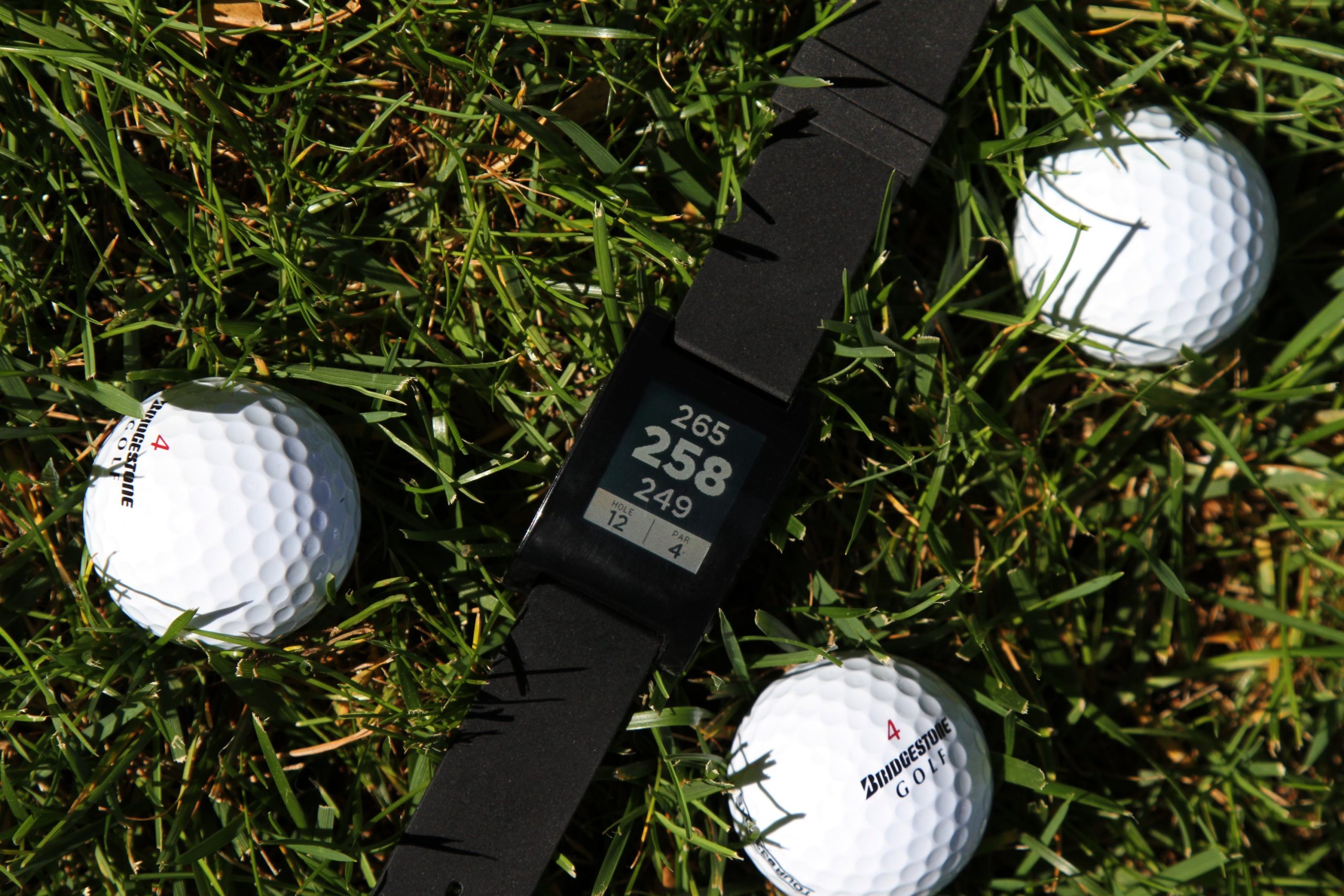
That one difference drives everything below. A laser measures what is in front of you. GPS tells you what a map says is there.
Side-by-Side Comparison
| Factor | Laser | GPS |
|---|---|---|
| Measures to | Any target you can aim at | Preset points on a mapped course |
| Needs course maps | No | Yes |
| Blind shots and hidden hazards | Weak, needs line of sight | Strong |
| Speed of use | Slower, you must aim and steady | Fast, often automatic |
| Skill needed | Some practice to lock the flag | Very little |
| Works on new or unmapped courses | Yes | Only if the course is in the database |
| Subscription or updates | Usually none | Varies by brand and model |
| Battery | Typically a replaceable battery | Often rechargeable, and screens drain it |
Features and pricing vary a lot between models, so check the current specifications of any device before you buy.
Where a Laser Rangefinder Wins
Precision to the flag
A laser gives you the distance to the pin itself, not to the middle of the green. When the flag is cut tight to one side, that difference can change your club. Technology such as PinSeeker, which helps lock onto the flag, makes this even easier.
Any course, anywhere
Because a laser does not rely on a database, it works at a municipal course you have never seen, a resort abroad or a driving range. There is nothing to download and nothing to go out of date.
Measuring to anything
You can range a tree, a bunker face, the edge of a water hazard or a spot to lay up. This is useful for course management, not just approach shots.
Confidence in the number
You see the target through the lens as you measure it. Many players trust a number more when they have aimed at the object themselves. Read more about how accurate golf rangefinders are in real conditions.
Where a GPS Rangefinder Wins
Blind shots and hidden hazards
Doglegs, blind tee shots and hazards behind a hill are where GPS shines. It does not need to see the target, so it can show carry distances to trouble you cannot see from the tee.
Speed and pace of play
With GPS you glance and go. There is no aiming, no steadying your hands and no re-shooting because you hit the background. This helps if you struggle with the shakes or want to keep up the pace. See our tips on golf pace of play.
Ease for beginners
Locking onto a small flag at distance takes practice. GPS gives a usable front, middle and back number without that learning curve, which is often enough for a new golfer. If you are just starting out, our golf accessories for beginners guide helps you decide what to buy first.
Windy or poor visibility days
In wind, rain, fog or low light, a laser can struggle to lock and hold steady. GPS is unaffected by those conditions in the same way.
Weaknesses You Should Know About
Laser weaknesses
- It needs a clear line of sight, so blind shots are a problem.
- Hand shake can make locking onto a distant flag frustrating.
- It can read the trees or the background behind the flag if you are not careful.
- It cannot show you a hazard you cannot see.
GPS weaknesses
- It only knows the courses in its database, and those maps can be outdated if the course changes.
- It gives you the green’s center, not the flag. Flag positions change daily.
- Some models require a subscription or paid updates for full course coverage.
- Accuracy depends on satellite signal and the quality of the course map.
Which Is Better for Your Type of Golfer?
Beginner
GPS is usually the easier start. It is simple, fast and needs little technique. A basic laser is also fine if you are happy to practice aiming. At this stage, knowing roughly how far you hit each club matters more than a perfect number. Our guide on distance control practice shows how to build that.
Regular player at one home course
GPS is a strong choice. Your home course will be mapped and kept current, and you will play fast. You may still want a laser if you often check flag positions precisely.
Golfer who plays many different courses
A laser is safer. You never have to worry about whether a course is in the database. If you also play blind-heavy courses, consider a hybrid.
Competitive or tournament player
Check the rules first. Under the USGA rules, distance-measuring devices are allowed by default, but a committee can ban them with a local rule. Features that measure slope, wind or other conditions are generally not permitted in play unless a local rule allows them. Our USGA rules overview is a good starting point, and you can confirm current wording on the USGA Rules Hub. Always read the local rules for your event. Many laser models offer a way to switch off slope.
Hilly or heavily wooded course
GPS helps with blind shots and elevation-heavy layouts. A laser with slope can help with uphill and downhill shots in casual rounds, where it is allowed.
Golfer on a tight budget
Do not assume one type is always cheaper. Prices vary by brand and features, and change often, so compare current prices from the retailer before deciding. Keep in mind total cost: subscriptions, batteries and replacement.
Should You Own Both?
Some serious golfers carry a laser and use a GPS watch or phone app at the same time. The GPS gives them layup and hazard numbers, and the laser confirms the flag. This works, but it can be more than most players need. A hybrid golf rangefinder combines the two in one device, which suits players who want both without carrying extras.
Common Questions
Is a laser rangefinder more accurate than GPS?
To a specific target, usually yes. A laser measures what you aim at, while GPS gives distances to mapped points. For the center of the green, both are typically accurate enough for club selection. Learn what a device actually reads in our guide on what a golf rangefinder measures on the course.
Is GPS easier to use than a laser?
Generally yes. GPS needs no aiming, so most beginners find it quicker. A laser takes a little practice.
Do I need to pay for GPS course updates?
It depends on the brand and model. Some include course data, others charge for updates or full access. Check before you buy.
Can I use a rangefinder in a tournament?
Often yes, but it depends on the local rules of the event. Confirm in advance, and disable any slope or wind feature if required.
Which should I buy first?
If you play many courses or want flag precision, start with a laser. If you want speed and simplicity at a regular course, start with GPS.
A Simple Way to Decide
- Where do you play? One mapped course points to GPS. Many different courses point to a laser.
- What frustrates you? Slow aiming points to GPS. Not trusting a generic center number points to a laser.
- What are the rules? If you play tournaments, make sure the device is legal or that its slope function can be turned off.
- What is your budget? Compare current prices and check for subscriptions.
- Still torn? Look at a hybrid.
Final Verdict
A laser rangefinder is the better tool when precision to the flag and freedom to play any course matter most. A GPS rangefinder is better when speed, simplicity and seeing hidden hazards matter most. For most beginners at a home course, GPS is the gentler start. For most improving players who want exact pin numbers, a laser is hard to beat. If you cannot choose, a hybrid covers both.
Whichever you pick, learn your own club distances first. A good number only helps if you know what to do with it. If you want to understand the basics further, start with what a golf rangefinder is, how it works and the golf rules, or look at a detailed example in our Bushnell Pro X3+ LINK review.