
Golf Accessories for Beginners: The Complete Buying Guide

Quick Answer
The essential golf accessories for beginners are balls, tees, a glove, towel, ball marker, divot tool, water bottle, sunscreen, and weather protection. Pair them with the right beginner golf clubs, and you’ll have everything needed for practice sessions and your first rounds.
Start With These Essentials
- Golf balls: Carry at least nine inexpensive balls because losing several is normal.
- Tees: Pack long driver tees and a few shorter tees for irons or hybrids.
- Golf glove: Wear one on your lead hand for better grip and blister protection.
- Towel: Use it to clean clubfaces, grips, and golf balls during the round.
- Green tools: Bring a ball marker and divot repair tool for proper course care.
- Personal protection: Carry water, sunscreen, a hat, and rain gear when conditions require them.
Simple Buying Rule
- Buy useful basics first, then add technology or training aids after you know what your game needs.
Golf accessories for beginners should make the game easier, safer, and more comfortable. They shouldn’t turn your golf bag into an expensive storage locker.
I use a simple test when choosing beginner gear: will this item solve a problem during the next round? This guide separates genuine essentials from accessories that can wait.
In This Guide
- Which Golf Accessories Do Beginners Really Need?
- What Belongs in a Beginner’s Golf Bag?
- How Do You Choose Golf Balls, Tees, and a Glove?
- Which Accessories Help With Comfort, Weather, and Course Care?
- Which Optional Golf Accessories Are Worth Buying?
- How Much Should a Beginner Spend on Golf Accessories?
- Frequently Asked Questions
Which Golf Accessories Do Beginners Really Need?
Beginners need accessories that keep the ball in play, protect their hands, maintain equipment, and prepare them for changing weather. Balls, tees, a glove, towel, marker, and divot tool cover most immediate needs.
A golf accessory is any supporting item used alongside your clubs and bag. It can help with setup, comfort, course care, practice, or distance measurement.
Essential, useful, and optional gear
Not every product labeled “essential” deserves space in your bag. I divide accessories into three practical groups.
- Essential: You may need the item during almost every round.
- Useful: It solves a common problem but isn’t always necessary.
- Optional: It adds convenience, information, or enjoyment.
A beginner’s essential group includes balls, tees, a glove, towel, marker, and divot repair tool. Water and sun protection also belong here during warm-weather rounds.
Useful accessories include a club brush, rain gloves, umbrella, valuables pouch, and alignment sticks. Their value depends on the course and conditions.
- Practice needs: Alignment sticks, a putting gate, or impact spray may help.
- Walking needs: A light bag, supportive shoes, and reusable water bottle matter more.
- Wet conditions: Rain gloves, a rain hood, and extra towel become priorities.
- Unfamiliar courses: A basic GPS device or rangefinder may improve club selection.
Accessories versus golf equipment
Clubs, balls, and bags are often grouped as golf equipment. Tees, towels, gloves, and repair tools usually fall under accessories.
The distinction matters less than usefulness. A golf ball may technically count as equipment, but no beginner can play without one.
The USGA’s guidance on clubs confirms that a player may carry no more than 14 clubs. Beginners can carry fewer, which leaves room and weight capacity for practical accessories.
Why carrying less often works better
Too much gear makes a bag heavy and disorganized. It also creates more decisions when a beginner should focus on one shot.
My preferred starting point is a small, repeatable kit. Keep the same items in the same pockets after every round.
- Top or side pocket: Glove, tees, marker, and divot tool.
- Large pocket: Rain layer, hat, and spare towel.
- Ball pocket: Nine to twelve balls for a full round.
- Insulated pocket: Water and a small snack, when available.
- Protected pocket: Phone, keys, and wallet in a sealed pouch.
This layout prevents searching while other players wait. Faster access also supports better pace of play.
Section Takeaway: Start with accessories that solve predictable on-course problems. A lighter, organized bag serves beginners better than a collection of gadgets.
What Belongs in a Beginner’s Golf Bag?
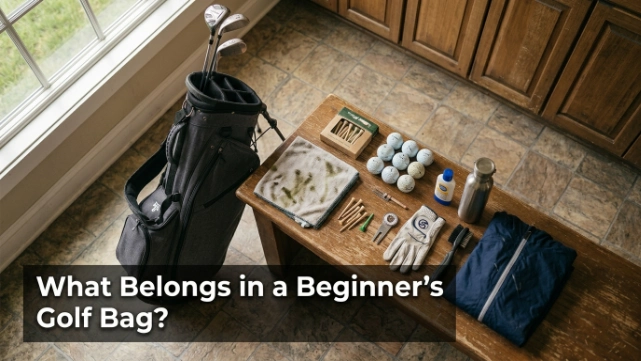
A beginner’s bag should contain balls, two tee lengths, one glove, a towel, ball marker, divot tool, pencil, water, sunscreen, and basic weather protection. These items prepare you for normal course conditions.
Use this checklist before leaving home. It covers the accessories I would prioritize for a first nine-hole or 18-hole round.
| Accessory | Suggested Quantity | Why You Need It | Priority |
|---|---|---|---|
| Golf balls | 9–12 | Replaces lost or damaged balls | Essential |
| Long tees | 10–15 | Provides consistent driver tee height | Essential |
| Short tees | 5–10 | Supports iron, hybrid, or fairway-wood tee shots | Essential |
| Golf glove | 1 plus an optional spare | Improves grip and reduces rubbing | Essential |
| Golf towel | 1–2 | Cleans balls, grooves, grips, and hands | Essential |
| Ball marker | 1–2 | Marks the ball’s position on the green | Essential |
| Divot repair tool | 1 | Repairs pitch marks on putting greens | Essential |
| Water bottle | 1 | Supports hydration throughout the round | Essential |
| Club brush | 1 | Removes dirt from clubface grooves | Useful |
| Rangefinder or GPS | 1 | Provides distance information | Optional |
Golf balls and tees
Carry more balls than you expect to lose. Nine may cover a careful round, while twelve offers a safer margin.
A beginner doesn’t need premium tour balls. Affordable two-piece balls usually provide durability, distance, and enough feedback for early development.
Pack both long and short tees. A long tee works with a driver, while a short tee suits irons and hybrids.
Glove, towel, and cleaning brush
Most right-handed golfers wear a glove on the left hand. Most left-handed golfers wear one on the right.
A towel removes water, sand, soil, and grass from the clubface. Clean grooves improve contact and make the ball’s reaction more predictable.
- Wet corner: Use it for mud and dirty golf balls.
- Dry section: Reserve it for grips, hands, and your face.
- Second towel: Carry one during rain if space allows.
A small nylon brush helps with dried soil. Avoid aggressive wire brushes on finishes that may scratch easily.
Ball marker and divot repair tool
A flat coin can serve as a ball marker. A dedicated marker is easier to keep with your golf gear.
A divot repair tool fixes the indentation made when a ball lands on the green. Insert it around the mark and gently push the edges inward.
Don’t lift the center upward. That motion can tear roots and slow the green’s recovery.
You can use the full beginner golf checklist when preparing for lessons, range sessions, or your first round.
Section Takeaway: Build the bag around balls, tees, grip, cleaning, and green care. Everything else should earn its space through regular use.
How Do You Choose Golf Balls, Tees, and a Glove?
Choose golf balls for price and durability, tees for consistent height, and a glove for close contact without tightness. Fit and repeatability matter more than branding at this stage.
Choosing a beginner-friendly golf ball
A golf ball’s construction affects feel, spin, durability, and price. Many affordable balls use a durable cover over a large core.
These are commonly called two-piece balls. They usually suit beginners who lose balls and don’t yet need specialized short-game performance.
- Price: Choose a ball you can lose without changing your swing strategy.
- Visibility: White, yellow, or another bright color should be easy to track.
- Feel: Softer models may feel more comfortable around the green.
- Consistency: Use one model for several rounds before comparing another.
- Condition: Avoid balls with deep cuts, cracks, or badly damaged covers.
Compression describes how much a ball deforms when struck. It influences feel, but beginners shouldn’t select a ball from compression alone.
Titleist, Callaway, TaylorMade, Srixon, Bridgestone, and other major brands offer value-priced models. Store-brand and recycled options can also reduce early costs.
Refinished balls have their outer appearance restored. I prefer sound used balls without repainting because their original model remains easier to identify.
Our guide to golf ball construction and performance explains covers, layers, compression, and spin in more detail.
Finding the correct tee length
Long tees make it easier to position a driver ball above the clubface’s top edge. Exact height depends on the driver and swing.
Short tees work for clubs that need less elevation. You may also push a long tee farther into the ground.
- Driver: Start with a tee around 2.75 to 3.25 inches long.
- Fairway wood: Tee the ball only slightly above the turf.
- Hybrid: Use a low tee that creates a clean lie.
- Iron: Tee it just above ground level.
Wooden tees are inexpensive and biodegradable, but they break more often. Plastic tees last longer and may remain visible after impact.
Neither material fixes a swing. Consistent tee height provides the more meaningful benefit.
How should a golf glove fit?
A glove should fit like a second skin, with no loose material across the palm. Your fingertips should reach the ends without painful pressure.
Close the fastening securely without stretching it to its limit. A loose glove can bunch during the swing.
- Cabretta leather: Offers a soft feel but needs more care around moisture.
- Synthetic material: Usually provides durability and lower maintenance.
- Hybrid design: Combines leather contact areas with flexible synthetic panels.
- Rain glove: Creates better traction when both glove and grip become wet.
Try several sizes because brands use different patterns. Cadet sizing may fit golfers with shorter fingers and wider palms.
Remove the glove between shots if your hand sweats heavily. Let it air-dry flat after the round instead of leaving it crumpled.
Pro tip: Ask a PGA professional or qualified club fitter to check your grip size and hand position if you experience pain or repeated blisters.
Section Takeaway: Choose repeatable, affordable basics. The best beginner ball, tee, or glove is one that fits your game and removes distractions.

Which Accessories Help With Comfort, Weather, and Course Care?
Supportive shoes, hydration, sun protection, layered clothing, and rain gear can influence a round more than electronic gadgets. Weather preparation also protects your hands and equipment.
Golf shoes and comfortable alternatives
Golf shoes provide traction during the swing and while walking uneven ground. Spikeless models often feel comfortable on firm, dry courses.
Beginners can wear supportive athletic shoes when a facility permits them. Check the course policy before arriving.
- Fit: Leave enough toe space for several hours of walking.
- Traction: Inspect the sole pattern, especially for wet or sloped ground.
- Water resistance: Prioritize it if you play early mornings or damp courses.
- Stability: Look for secure heel support without uncomfortable pressure.
Break new shoes in before playing 18 holes. A range session or short walk can expose rubbing points early.
Socks matter too. Moisture-managing golf or athletic socks can reduce friction and discomfort.
Sun and hydration accessories
A round may keep you outside for several hours. Bring more sun and hydration support than a short range session requires.
- Water bottle: Choose a leak-resistant bottle that fits your bag.
- Sunscreen: Use broad-spectrum protection and follow its reapplication directions.
- Hat: A cap or brimmed hat adds shade for your face and eyes.
- Sunglasses: Secure, comfortable lenses help during bright conditions.
- Snack: Pack something simple that tolerates heat and bag movement.
Don’t count on every course having frequent water stations. Refill before teeing off when facilities permit.
Rain and cold-weather gear
A compact rain jacket is more useful than a heavy coat during a passing shower. Choose one that permits shoulder movement.
An umbrella helps most when riding or using a bag with an umbrella holder. It can become awkward during strong wind.
- Rain hood: Covers clubheads while keeping them accessible.
- Rain gloves: Gain traction as the gloves and grips become wet.
- Extra towel: Keeps grips dry while the first towel handles mud.
- Hand warmers: Help maintain comfort between cold-weather shots.
- Layered top: Adds warmth without restricting your swing.
Stop playing and follow course instructions when lightning threatens. No accessory makes an exposed golf course safe during a thunderstorm.
Course-care accessories and etiquette
Good course care begins with a divot tool, marker, and willingness to repair damage. Use them without delaying the group behind you.
The Rules of Golf from The R&A explain player conduct, equipment, bunkers, greens, and other on-course situations.
- Pitch marks: Repair yours and one nearby mark when time allows.
- Bunkers: Rake disturbed sand and leave the rake where the course requests.
- Divots: Replace or fill them according to the facility’s procedure.
- Putting lines: Avoid standing on another player’s intended line.
- Trash: Keep broken tees and wrappers out of the playing areas.
Review what to pack in our guide covering what to bring to a golf course. It also helps prevent common first-round omissions.
Course clothing policies vary. Check the facility’s website and use this beginner golf dress code guide before visiting somewhere new.
Section Takeaway: Comfort and weather protection deserve priority because they affect every shot. Prepare for the forecast, course policy, and length of your round.
Which Optional Golf Accessories Are Worth Buying?
A rangefinder, GPS device, alignment sticks, and simple valuables pouch can become worthwhile after your essential kit is complete. Buy each item to solve a known problem.
Rangefinder versus golf GPS
A laser rangefinder measures distance to a visible target. A GPS device estimates locations using mapped course information.
| Feature | Laser Rangefinder | Golf GPS |
|---|---|---|
| Primary reading | Distance to a selected visible target | Mapped distances to course features |
| Common advantage | Direct flag or hazard measurement | Front, middle, and back green guidance |
| Common limitation | Requires a visible target and steady aim | Depends on course mapping and battery life |
| Beginner value | Useful after carry distances become consistent | Helpful for simple course navigation |
Many beginners gain enough information from course markers or a permitted phone app. Learn approximate club distances before paying for greater precision.
Slope-adjusted distance features may be restricted during competition. Check the event’s local rules and disable prohibited functions when required.
Alignment sticks and practice tools
Alignment sticks provide references for foot position, target line, ball position, and swing drills. Two driveway markers can perform the same basic job.
Use training aids carefully. A poorly understood device can reinforce the wrong movement.
- Alignment sticks: Useful for aim and setup practice.
- Putting gate: Helps reveal the ball’s starting direction.
- Impact spray: Shows where the ball contacts the clubface.
- Phone tripod: Records swing video from a consistent position.
- Practice net: Requires safe spacing, secure installation, and regular inspection.
Pro tip: Let a certified instructor select drills before buying specialized swing trainers. The correct tool depends on the movement you’re trying to change.
Useful organization accessories
A valuables pouch keeps small personal items together. Choose a water-resistant design with an easy zipper.
A few inexpensive organizers can prevent damage and wasted time. Keep them simple.
- Small pouch: Holds tees, markers, and the divot tool.
- Sealed bag: Protects electronics during unexpected rain.
- Glove holder: Helps gloves dry flat between rounds.
- Identification tag: Makes a misplaced bag easier to return.
- First-aid pouch: Holds personal basics without replacing professional care.
Accessories beginners can usually skip
Expensive launch monitors, large collections of training aids, and multiple premium gloves aren’t necessary for starting. Their value grows only with a defined use.
Decorative headcovers can protect clubs, but every iron doesn’t need one. Loose iron covers may also slow club selection.
- Tour-level ball stock: Wait until losing balls becomes less frequent.
- Premium electronics: First learn your usual club distances.
- Specialized trainers: Buy only after identifying a specific swing issue.
- Oversized organizers: Avoid anything that adds more weight than convenience.
- Duplicate gadgets: Choose one reliable distance or cleaning method.
As of 2026, golfers can choose from watches, handheld GPS units, phone apps, and laser devices. More data doesn’t automatically create better decisions.
Section Takeaway: Optional accessories should answer a question or remove a recurring frustration. Delay technology purchases until your playing habits become clear.
How Much Should a Beginner Spend on Golf Accessories?
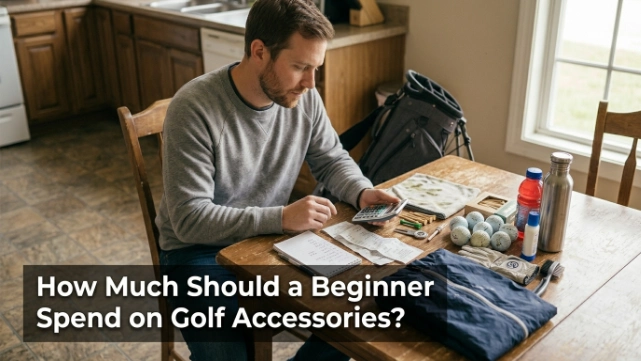
A practical beginner accessory kit can cost about $50 to $120 before shoes, rainwear, or electronics. Buying used balls and basic tools keeps the starting total lower.
Prices vary by brand, material, and location. Treat the following ranges as planning estimates rather than fixed retail prices.
| Budget Level | Typical Contents | Estimated Total | Best For |
|---|---|---|---|
| Starter | Used balls, tees, glove, towel, marker, repair tool | $50–$75 | Lessons, range practice, and occasional rounds |
| Prepared | Starter kit plus brush, spare glove, sunscreen, bottle, and rain layer | $80–$150 | Regular recreational play |
| Technology added | Prepared kit plus an entry-level GPS or rangefinder | $150–$350+ | Golfers who play often and track distances |
Buy in three stages
Staged buying prevents wasted money. It also lets experience reveal what your local course demands.
- Before your first round: Buy balls, tees, one glove, towel, marker, divot tool, water bottle, and sunscreen.
- After three rounds: Add items that would have solved repeated comfort or weather problems.
- After learning your distances: Consider a rangefinder, GPS device, or structured practice aid.
This plan separates urgent needs from attractive packaging. It also creates time to compare products.
Where beginners can save money
Golf balls create the easiest savings. Used balls in sound condition cost less and remain suitable for casual play.
Tees, markers, and basic repair tools don’t require premium branding. Some courses provide pencils, scorecards, and simple tees.
- Buy basic versions: Simple tools often perform the same core task.
- Use multipacks carefully: Purchase only quantities you’ll use.
- Check included items: Beginner club sets may already include a bag and headcovers.
- Compare local prices: Pro shops, sporting-goods stores, and online retailers vary.
- Ask experienced golfers: They may have spare towels, tees, or practice tools.
Where spending more can help
Shoes, gloves, and rain protection depend on fit and comfort. Paying slightly more can make sense when it improves durability or prevents distraction.
A fitted glove is more useful than several poor-fitting gloves. Waterproof shoes may also justify their cost for frequent morning play.
- Footwear: Prioritize fit, stability, and the conditions you play.
- Rainwear: Look for freedom of movement and useful weather protection.
- Golf bag: Consider weight, strap comfort, pocket layout, and stand stability.
- Rangefinder: Choose clear optics, simple controls, and a secure carrying case.
A club fitting can guide equipment purchases when your swing becomes repeatable. Shaft flex, club length, loft, and lie angle affect clubs rather than accessories.
Pro tip: Work with a qualified fitter before changing club specifications. Avoid choosing shaft flex or lie angle from guesswork alone.
A final pre-round check
Inspect consumable and weather items the evening before playing. Charging electronics in the parking lot is an avoidable problem.
- Count balls: Pack at least nine, or more for a difficult course.
- Restock tees: Include both long and short options.
- Check the glove: Replace one that has torn or become stiff.
- Review weather: Add sunscreen, layers, or rain gear as needed.
- Charge devices: Check the GPS, rangefinder battery, and phone.
- Fill water: Prepare enough hydration for the conditions.
If you’re new to the entire game, this complete beginner golf guide connects equipment, lessons, practice, etiquette, and first-round preparation.
For personalized equipment help, consult a qualified instructor through the PGA of America or a reputable local fitting professional.
Section Takeaway: Spend about $50 to $120 on a useful starter kit, then add gear gradually. Fit, comfort, and genuine need should guide every upgrade.
Frequently Asked Questions
How many golf balls should a beginner carry?
A beginner should carry at least nine to twelve golf balls for an 18-hole round. Pack more when playing a course with heavy rough, water hazards, or out-of-bounds areas.
Does a beginner need a golf glove?
A glove isn’t mandatory, but it improves traction and can reduce blisters. Right-handed players usually wear it on the left hand, while left-handed players normally wear it on the right.
Can a coin be used as a golf ball marker?
Yes. A small coin can mark the ball’s position on the putting green. Place it directly behind or beside the ball before lifting the ball.
Does a beginner need a rangefinder?
No. Course markers, scorecards, and permitted GPS apps provide enough information for many beginners. A rangefinder becomes more helpful after you develop reasonably consistent club distances.
Are expensive golf balls better for beginners?
Expensive balls aren’t automatically better for beginners. Affordable, durable balls usually offer better value while ball loss remains common. Consistent use of one model matters more than paying a premium.
What golf accessories make good beginner gifts?
A fitted glove, quality towel, tee pack, divot tool, ball marker, or reusable water bottle makes a practical gift. Avoid fitted footwear and specialized training aids unless you know the golfer’s needs.
What should a beginner remove from an overloaded golf bag?
Remove duplicate tools, excess balls, unused training aids, old scorecards, damaged gloves, and unnecessary electronics. Keep essential weather protection, hydration, and safety items available.
Final takeaway: Build your golf accessory kit around the problems you’ll face during a real round. Start small, organize everything, and upgrade only when experience gives you a clear reason.
Pack the essentials before your next practice session. You’ll spend less time searching through your bag and more time learning the game.