
What to Bring to a Golf Course: A Complete Checklist for Every Golfer

Starting your first round of golf can feel overwhelming. Many golfers spend time thinking about clubs, swing technique, and course rules but forget the simple question: what to bring to a golf course? Showing up without essential gear can make your round uncomfortable, slow down your group, and affect your overall experience.
Whether you are playing your first nine holes, joining friends for a weekend round, or preparing for a serious competition, bringing the right equipment helps you stay comfortable and focused. The best golf setup is not about carrying everything you own—it is about bringing the items that improve your performance and enjoyment.
This guide explains the essential items every golfer should pack, from clubs and golf balls to clothing, accessories, and personal supplies. You will also learn what beginners often forget, what experienced players prioritize, and when professional advice may help you choose better equipment.
Quick Answer
When deciding what to bring to a golf course, pack your golf clubs, golf balls, tees, gloves, proper clothing, golf shoes, water, snacks, sunscreen, and basic accessories like a towel and ball marker. Beginners should focus on comfort, preparation, and having reliable equipment rather than carrying unnecessary items.
Essential Things to Bring to a Golf Course
A successful golf round starts before you reach the first tee. Your equipment should support your game, not create extra stress.
Here are the most important items every golfer should have:
1. Golf Clubs
Your golf clubs are the most important equipment you bring. They allow you to handle different situations on the course, from long drives to short approach shots and putting.
A standard golf bag usually contains:
- Driver
- Fairway woods
- Hybrid clubs
- Irons
- Wedges
- Putter
Most beginners do not need a complete professional-level set immediately. A smaller collection of reliable clubs can help you learn faster.
Beginner tip: A basic set with forgiving clubs is usually better than buying expensive advanced clubs designed for experienced players.
Golf clubs must also follow equipment rules if you are playing official competitions. The USGA Rules of Golf equipment guidelines explain important regulations regarding clubs, balls, and other equipment.
2. Golf Balls
Many new golfers underestimate how many golf balls they need. Lost balls are common, especially when learning.
Bring:
- At least 6–12 golf balls for beginners
- More if you are playing a difficult course
- Balls that match your skill level
Different golf balls are designed for different players.
| Golf Ball Type | Best For | Benefits | Limitation |
|---|---|---|---|
| Distance balls | Beginners | More distance and durability | Less control around greens |
| Soft-feel balls | Intermediate players | Better feel and comfort | May cost more |
| Tour balls | Advanced players | Maximum spin and control | Less forgiving and expensive |
Beginners usually benefit from durable, affordable balls because losing several during a round is normal.


3. Golf Tees
Golf tees are small but essential. Without them, you cannot properly start a hole on most tee boxes.
Bring:
- Wooden tees
- Plastic tees
- Different tee heights
Many golfers prefer longer tees for drivers and shorter tees for irons or par-3 holes.
A simple habit can prevent frustration: keep extra tees in a small pocket of your golf bag or accessory pouch.
4. Golf Glove
A golf glove improves grip and helps prevent blisters.
Most golfers wear a glove on their non-dominant hand:
- Right-handed golfers usually wear a glove on their left hand
- Left-handed golfers usually wear a glove on their right hand
A quality glove should feel comfortable without being too tight.
Replace your glove when you notice:
- Torn areas
- Smooth leather
- Reduced grip
- Excess stretching
A worn glove can affect your swing because your hands may slip during impact.
5. Golf Shoes
Golf shoes provide stability during your swing. Regular sneakers may not offer enough traction, especially on wet grass.
Look for:
- Comfortable fit
- Waterproof materials
- Good grip
- Proper support
There are two common types:
- Spiked golf shoes: Provide excellent traction but may feel heavier.
- Spikeless golf shoes: More comfortable for walking and casual play.
Comfort matters because golfers often walk several miles during a round.
Clothing and Weather Protection
Golf is an outdoor sport, so your clothing choices can directly affect your comfort.
Wear Proper Golf Clothing
A typical golf outfit includes:
- Collared golf shirt
- Golf pants or shorts
- Comfortable socks
- Weather-appropriate layers
Many golf courses have dress codes. Before visiting an unfamiliar course, check their clothing requirements.
A good outfit should allow:
- Full shoulder movement
- Comfortable walking
- Protection from weather conditions
Prepare for Changing Weather
Weather can change quickly during a golf round.
Bring:
- Rain jacket
- Extra towel
- Hat or visor
- Sunglasses
- Windbreaker
- Extra socks
Beginner mistake: Many golfers check the weather before leaving home but forget that a four-hour round can experience changing conditions.
Golf Accessories That Make Your Round Easier
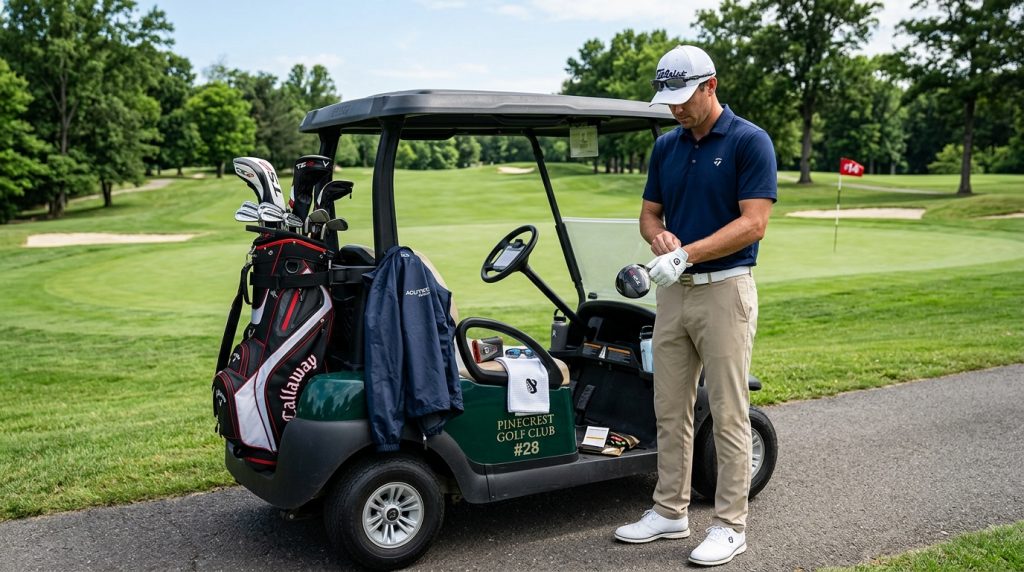
Small accessories can improve your comfort and efficiency.
Golf Towel
A towel helps you:
- Clean clubs
- Remove grass and dirt
- Keep grips dry
A wet or dirty club face can affect ball contact.
Ball Marker and Divot Tool
These items are simple but important.
Bring:
- Ball marker
- Divot repair tool
Repairing ball marks helps maintain course quality and shows respect for other golfers.
Golf Rangefinder or GPS Device
Distance measurement tools help golfers choose the correct club.
Options include:
- Laser rangefinders
- GPS watches
- Smartphone golf apps
Before using any device during competition, understand the rules. The R&A guidance on distance measuring devices explains when these tools are allowed.
Water and Snacks
Golf rounds can last several hours, especially when walking.
Bring:
- Water bottle
- Electrolyte drinks
- Small snacks
Good options include:
- Nuts
- Protein bars
- Fruit
- Energy snacks
Staying hydrated helps maintain focus during the later holes.
Beginner Golf Course Checklist
If you are playing your first round, this simple checklist covers the basics.
| Item | Why You Need It | Beginner Priority |
|---|---|---|
| Golf clubs | Allows you to play | Essential |
| Golf balls | Needed throughout the round | Essential |
| Tees | Used on starting shots | Essential |
| Glove | Improves grip | Essential |
| Golf shoes | Provides stability | Recommended |
| Towel | Cleans equipment | Recommended |
| Water | Prevents fatigue | Essential |
| Sunscreen | Protects skin | Recommended |
| Rangefinder | Helps with distances | Optional |
| Extra clothing | Handles weather changes | Recommended |
What Not to Overpack for a Golf Round
Many beginners think more equipment automatically means better preparation. However, carrying unnecessary items can make your bag heavier and distract you.
Avoid bringing:
- Too many clubs you rarely use
- Excessive golf balls
- Unnecessary gadgets
- Heavy accessories
A lighter golf bag allows you to focus more on your game.
Expert Tip
Expert Tip: Pack your golf bag the night before your round. A simple checklist prevents forgotten essentials and lets you start your game feeling relaxed instead of rushed.
How to Prepare Your Golf Bag Before Leaving Home
A few minutes of preparation can improve your entire experience.
Follow these steps:
- Check your clubs and clean them.
- Add enough golf balls and tees.
- Pack your glove and towel.
- Check weather conditions.
- Fill your water bottle.
- Confirm the course dress code.
- Arrive early enough to warm up.
A professional golfer prepares before every round. Beginners can develop the same habit with a simple routine.
Common Mistakes Golfers Should Avoid
Many uncomfortable golf experiences happen because players forget basic preparation.
Avoid these mistakes:
- Arriving without enough golf balls: Beginners often lose more balls than expected.
- Wearing uncomfortable shoes: Foot pain can affect concentration and enjoyment.
- Ignoring weather conditions: Rain and heat can quickly change your experience.
- Carrying too many unnecessary items: Extra weight creates fatigue.
- Skipping warm-up: Cold muscles can reduce performance and increase injury risk.
- Not checking course rules: Some courses have specific clothing or equipment requirements.
When to Get Help From a Golf Pro or Fitter
Most beginners can start with basic equipment, but professional guidance becomes valuable when your game develops.
Consider getting help if:
- Your clubs feel uncomfortable
- You consistently hit poor shots despite practice
- You are unsure which clubs to buy
- Your swing speed has changed
- You want to improve distance and accuracy
A golf professional can analyze your swing and recommend suitable equipment. A club fitting can help match your clubs to your height, swing speed, and playing style.
Organizations like the PGA of America provide player development resources and professional instruction information for golfers looking to improve their skills.
Essential Golf Bag Setup by Skill Level
| Golfer Level | Recommended Items | Focus |
|---|---|---|
| Beginner | Basic clubs, balls, glove, tees, towel, water | Comfort and learning |
| Intermediate | Complete club set, rangefinder, extra accessories | Improving performance |
| Advanced | Custom equipment, specialized tools, practice aids | Precision and consistency |
FAQs
What should a beginner bring to a golf course?
A beginner should bring golf clubs, balls, tees, a glove, golf shoes, water, sunscreen, and a towel. Focus on comfort and basic preparation rather than expensive equipment.
How many golf balls should I bring for a round?
Most beginners should bring at least 6–12 golf balls. If you are playing a difficult course or still learning, carrying extra balls is a smart choice.
Do I need special clothes for golf?
Yes. Most golf courses require appropriate clothing, usually including a collared shirt and golf-appropriate pants or shorts. Always check the course dress code.
Should I bring a golf rangefinder?
A rangefinder is helpful but not required. Beginners can play without one while learning basic distance judgment and club selection.
Do I need golf shoes to play?
Golf shoes are recommended because they provide better traction and stability, but some casual golfers can begin with comfortable athletic shoes depending on course rules.
What accessories are most useful in a golf bag?
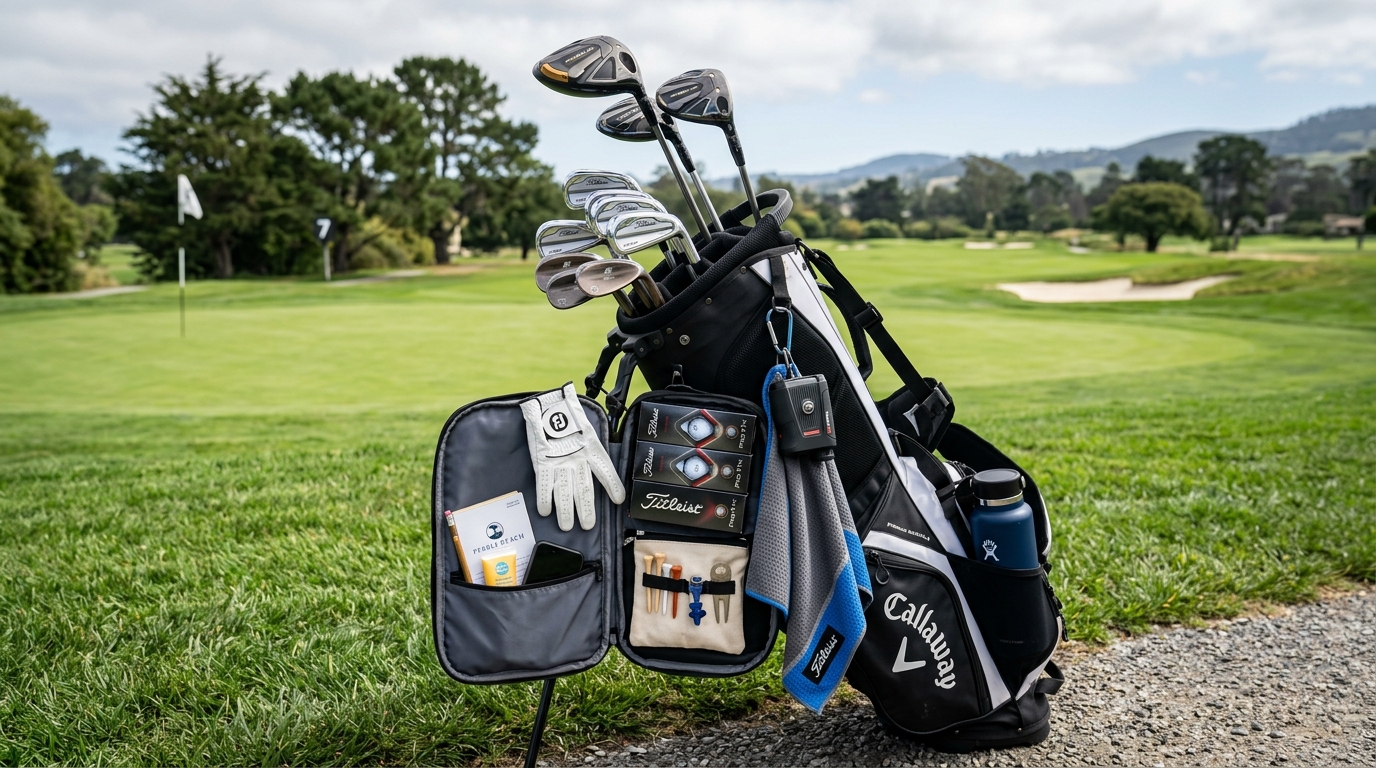
The most useful accessories include a towel, ball marker, divot repair tool, sunscreen, water bottle, and extra tees.
Should I bring my own golf clubs to every course?
If possible, yes. Using familiar clubs helps you feel comfortable. Some courses also offer rental clubs for beginners.
Conclusion
Knowing what to bring to a golf course helps you enjoy your round, avoid unnecessary problems, and focus on improving your game. The essentials are simple: reliable clubs, enough golf balls, comfortable clothing, proper shoes, hydration, and a few useful accessories.
Beginners do not need expensive equipment to have a great experience. The best approach is to bring what supports your skill level, learn the basics, and upgrade your gear as your game improves.
Before your next round, prepare your golf bag, check the weather, and arrive ready to enjoy the course. A well-prepared golfer starts every round with more confidence and a better chance to improve.