
Course Mistakes: 12 Golf Course Errors That Ruin Your Score
Quick Answer
The most costly course mistakes are choosing the wrong tees, aiming at every flag, forcing risky recovery shots, and ignoring hazards. Better golf course management means selecting shots that reduce double bogeys, keep the ball in play, and match your normal ability.
Mistakes to Fix First
- Wrong tees: Play a distance that gives you realistic approach shots.
- Driver everywhere: Choose the club that leaves the safest next shot.
- Flag hunting: Aim toward the green’s widest section unless the pin is accessible.
- Hero recoveries: Return the ball to safety before chasing lost strokes.
- Poor preparation: Check the scorecard, local rules, weather, and course conditions.
- Slow play: Prepare early, use ready golf safely, and keep pace with the group ahead.
A Simple Test
- Before every shot, identify the safest target and the trouble that must be avoided.
Course mistakes often cost more shots than a slightly imperfect swing. I’ve watched solid rounds unravel because one ambitious decision turned a routine bogey into a triple.
This guide explains the common golf course mistakes beginners and mid-handicap players make. You’ll learn how to plan each hole, avoid penalties, manage misses, and play at a comfortable pace.
In This Guide
- What Are Golf Course Management Mistakes?
- What Mistakes Should You Avoid Before the Round?
- Which Tee-Shot Mistakes Cost the Most Strokes?
- Why Do Golfers Make Poor Approach-Shot Decisions?
- How Should You Handle Trouble and Pace of Play?
- How Can You Build a Smarter Course Strategy?
- Frequently Asked Questions
What Are Golf Course Management Mistakes?
Golf course management mistakes are poor decisions about targets, clubs, risk, and positioning. They differ from swing faults because the decision can be wrong even when the strike is good.
Course management is the process of planning shots around your normal distances and dispersion. Dispersion means the area where your typical shots finish, including misses.
A sensible plan doesn’t require perfect golf. It gives an ordinary shot enough room to produce an acceptable result.
Strategy Versus Execution
Suppose a right-handed golfer faces water along the green’s right edge. Aiming directly at a right-side flag leaves almost no room for a push or fade.
A shot toward the center may finish 25 feet away. That feels conservative, yet it usually protects par and removes a large number from play.
| Situation | Risky Choice | Smarter Choice | Main Benefit |
|---|---|---|---|
| Narrow par 4 | Driver toward trouble | Fairway wood to the widest area | Fewer penalty shots |
| Tucked pin | Aim at the flag | Aim at the green’s center | More greens reached |
| Ball behind trees | Attempt a small opening | Pitch sideways to safety | Limits the damage |
| Long forced carry | Use maximum distance | Lay up to a trusted yardage | Avoids the hazard |
You don’t need to remove every aggressive shot. Take the risk when the possible reward matters and your normal shot can clear the danger.
Section Takeaway: A smart decision gives your common miss somewhere safe to finish.
What Mistakes Should You Avoid Before the Round?

Many bad rounds begin before the opening tee shot. Choosing unsuitable tees and skipping basic preparation creates problems on every hole.
1. Playing Tees That Are Too Long
The back tees aren’t a test of courage. They’re designed for players who can cover the required yardages with reasonable consistency.
Move forward if most par-four approaches require a fairway wood or hybrid. A comfortable setup should let you use a useful mix of clubs.
The scorecard’s total yardage helps, but it doesn’t tell the whole story. Review forced carries, elevation changes, par-three lengths, and prevailing wind.
- Check forced carries: Your normal carry distance must clear them, not your best-ever total distance.
- Review par threes: Four long-iron or wood approaches indicate the course may be too long.
- Consider conditions: Cold air, wind, and wet fairways reduce practical playing distance.
- Ignore group pressure: Players in one group can use different tees.
2. Arriving Without a Plan
I like to arrive early enough for a short warm-up and a quick scorecard review. Ten purposeful shots tell me more than racing through a large bucket.
Learn where the first hole’s danger sits. Starting with a clear target reduces tension and prevents a rushed club choice.
- Carry enough balls, tees, water, and weather protection.
- Read posted local rules and cart restrictions.
- Confirm the day’s hole locations when that information is available.
- Warm up with wedges before longer clubs.
- Finish with the club planned for the opening tee.
*Pro tip: Ask a PGA of America professional to help select suitable tees or build a warm-up routine around your mobility and current ability.*
Section Takeaway: Choose manageable tees and arrive with enough time to make calm decisions.
Which Tee-Shot Mistakes Cost the Most Strokes?
The biggest tee-shot mistake is automatically reaching for the driver. The best club is the one that creates the easiest route to your target score.
3. Using Driver on Every Par Four
Driver often makes sense on a wide hole. It becomes less valuable when extra distance brings bunkers, water, or out-of-bounds into play.
Work backward from your preferred approach distance. If a 200-yard shot leaves a comfortable short iron, driver may add risk without a useful reward.
4. Aiming Down the Middle Without Reading the Hole
“Aim down the middle” sounds safe, but hazards rarely sit symmetrically. The fairway’s best side depends on its width, shape, and the next shot.
Favor the side opposite severe trouble. If out-of-bounds runs down the right, move your target left while keeping your usual shot shape in mind.
5. Aiming Where You Hope the Ball Will Go
Plan around your common pattern, not the perfect shot you imagine. A golfer who usually fades should allow enough room for that curve.
This doesn’t mean aiming into another hazard. Choose a target where both a straight ball and a normal curve remain playable.
- Pick a distant target: Use a tree, bunker edge, or building to establish direction.
- Choose an intermediate mark: Find a spot a few feet ahead of the ball.
- Align the clubface first: Point it at the intended starting line.
- Set your body second: Build your stance around the clubface.
On one short par four I play, driver leaves a narrow landing area between trees and a bunker. A hybrid leaves 135 yards and removes both problems.
The shorter club doesn’t guarantee par. It makes double bogey much harder to create.
*Pro tip: A certified instructor can measure your shot pattern and show whether alignment or clubface control causes your frequent miss.*
Section Takeaway: Select tee clubs according to landing space and the next shot—not habit or ego.


Why Do Golfers Make Poor Approach-Shot Decisions?
Poor approach strategy usually starts with an unrealistic target or distance. Many golfers aim at the flag and choose a club based on their longest strike.
6. Attacking Every Flag
A flag near the green’s edge isn’t automatically your target. Aiming toward the middle provides more room for imperfect contact and directional misses.
Ask where a missed shot would leave the easiest recovery. Short-siding yourself means missing beside the green with little space between your ball and the hole.
That position often demands a high, soft pitch. Most recreational golfers score better by leaving a longer but simpler chip.
7. Using Total Distance Instead of Carry Distance
Carry distance measures how far the ball travels through the air. Total distance includes the bounce and roll after landing.
Hazards care about carry. If water ends at 145 yards, a club that sometimes carries 142 remains a poor choice.
- Use a rangefinder, GPS device, sprinkler marker, or course yardage book.
- Find the distance to the front, center, and back of the green.
- Account for wind, temperature, elevation, and lie.
- Select a club using your normal carry rather than a career-best shot.
8. Ignoring the Lie
A clean fairway lie and deep rough don’t produce identical results. Rough can reduce control and make predictable contact harder.
Uneven lies also change balance and ball flight. A ball below your feet commonly requires more stability and a conservative target.
When the lie looks uncertain, choose extra loft and return the ball to a useful position. Trying to create full distance often compounds the original miss.
9. Leaving an Awkward Layup
A layup should finish at a distance you can handle. Don’t hit the longest available club unless it creates the best next shot.
For example, a 90-yard approach may suit your full wedge better than a delicate 45-yard pitch. Measure your dependable wedge distances during practice.
Section Takeaway: Use normal carry numbers, aim away from severe trouble, and leave recoveries you can execute.
How Should You Handle Trouble and Pace of Play?
Trouble becomes expensive when a player tries to recover every lost yard immediately. The safer goal is preventing one mistake from creating two more.
10. Attempting the Hero Shot
A narrow gap between trees can look tempting. However, a low branch or poor lie may make that route far less realistic than it appears.
Before trying the difficult shot, answer three questions:
- Can I make clean contact from this lie?
- Can my normal ball flight fit through the available opening?
- Does success produce a meaningfully better score than pitching out?
If any answer is no, play toward safety. Accepting one recovery stroke is better than bouncing deeper into trouble.
11. Forgetting the Rules Around a Lost Ball
A provisional ball can save time when the original may be lost outside a penalty area or out-of-bounds. You must announce that it’s provisional before playing it.
The Rules normally allow three minutes to search after you or your caddie begins looking. Review the current USGA Rules resources before using a relief procedure in competition.
12. Falling Behind the Group Ahead
Your position is generally behind the group ahead, not just ahead of the group behind. Prepare your club and yardage while others play, provided you don’t distract them.
The R&A’s ready-golf guidance supports playing out of turn safely and responsibly in stroke play. The USGA also recommends making a stroke within 40 seconds once you can play without interference.
- Watch every shot so lost balls are easier to locate.
- Take several clubs when walking away from a cart.
- Read putts while another player prepares.
- Place bags and carts toward the next tee.
- Record scores after leaving the green.
Ready golf never overrides safety. Don’t play when you could endanger, distract, or interfere with someone else.
Section Takeaway: Escape trouble first, understand the applicable rule, and stay connected to the group ahead.
How Can You Build a Smarter Course Strategy?
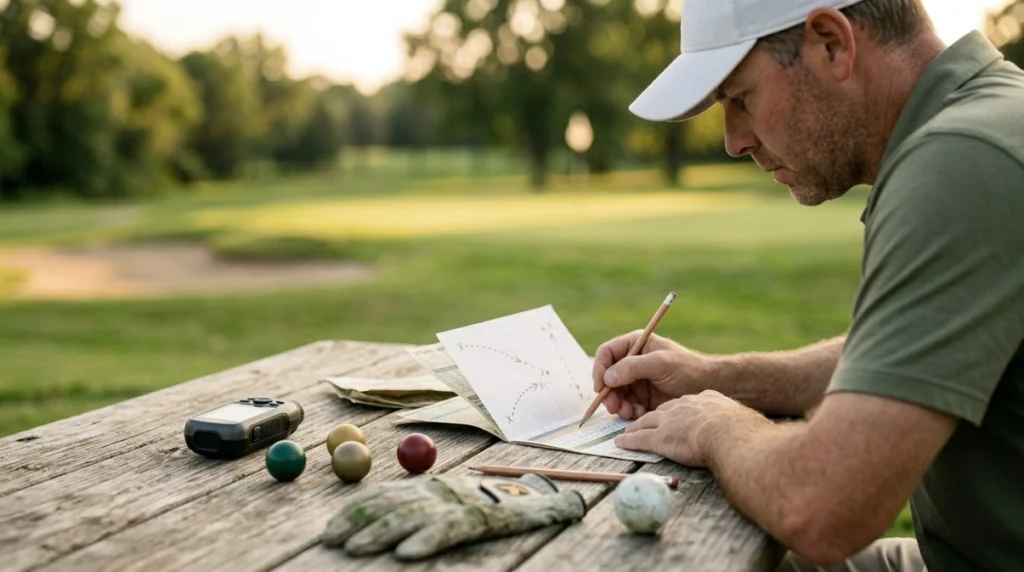
A useful strategy is simple enough to follow under pressure. Build it around your normal distances, typical miss, and the hole’s largest danger.
Use the Traffic-Light Method
Classify each shot before selecting a target. This quick system helps separate genuine opportunities from unnecessary gambles.
- Green: Good lie, open target, and a club you trust. Play positively.
- Yellow: Moderate trouble or an uncertain lie. Favor the safer side.
- Red: Severe hazard, blocked route, or unreliable contact. Return to safety.
Plan Backward From the Green
Study the green before choosing a tee-shot target. Its angle, bunkers, slopes, and flag location may make one side of the fairway more useful.
The PGA’s course-management guidance recommends identifying the trouble around the fairway or green before committing to a shot. That habit shifts attention from the flag to the safest scoring route.
Track Decisions, Not Only Scores
After the round, record where poor choices caused penalties or difficult recoveries. Separate those decisions from ordinary mishits.
A short review might include:
- Tee shots where a shorter club offered a wider landing area.
- Approaches aimed toward dangerous flags.
- Recovery attempts that failed to return the ball to safety.
- Layups that left uncomfortable wedge distances.
- Shots affected by an incorrect carry estimate.
Choose one decision pattern to improve during your next round. Trying to correct everything at once makes the plan difficult to remember.
As of 2026, golfers can access detailed GPS maps and portable rangefinders at many price points. Technology helps, but it can’t choose an appropriate target for you.
*Pro tip: Work with a certified golf instructor or club fitter to establish reliable carry-distance ranges for every club.*
Section Takeaway: Classify risk, work backward from the green, and review your decisions after every round.
Frequently Asked Questions
What is the most common golf course mistake?
The most common mistake is choosing a target that requires a near-perfect shot. A better target gives your typical miss room while avoiding penalties, blocked approaches, and short-sided recoveries.
Should beginners always aim for the center of the green?
The center is a strong default target for beginners. You can adjust away from bunkers, water, or severe slopes, but chasing edge pins usually adds risk without creating enough scoring benefit.
Should I use a driver on every par four and par five?
No. Use driver when its added distance improves the next shot without exposing you to excessive danger. A fairway wood, hybrid, or iron may be better on narrow holes or where hazards pinch the landing area.
How do I stop making double bogeys?
Reduce penalty shots and avoid following one mistake with another. Aim away from severe hazards, pitch out from blocked positions, use realistic carry distances, and favor simple recovery shots.
How do I choose the correct tees?
Choose tees that let you reach most par fours with manageable approach clubs. Consider forced carries, par-three lengths, wind, elevation, and course conditions instead of relying only on total yardage.
Is it better to lay up or attempt a long carry?
Lay up when your normal carry cannot clear the hazard with a reasonable margin. Attempt the carry when the lie is good, the required distance is comfortable, and success offers a meaningful advantage.
What does ready golf mean?
Ready golf means playing out of turn in stroke play when it is safe and responsible. It helps groups maintain pace, but players must never endanger, distract, or interfere with anyone else.
Play the Course You Have Today
You don’t need a rebuilt swing to eliminate many course mistakes. Better targets, realistic clubs, and disciplined recoveries can improve your score immediately.
Before your next shot, identify the major danger and your safest useful target. Make the simple decision, commit to it, and let the score take care of itself.