
Fairway Wood Explained: A Practical Guide for Golfers

Long approach shots can be frustrating. A driver is difficult to hit from the ground, while a long iron may not launch high enough. This is where a fairway wood can help.
In this Fairway Wood Explained guide, you will learn what the club does, how different fairway woods compare, and which loft may suit your game. You will also find practical advice on setup, swing technique, fitting, cost, durability, and common buying mistakes.
Quick Answer
A fairway wood is a long-distance golf club designed for shots from the fairway, light rough, or tee. It has a smaller head and more loft than a driver. Fairway woods can produce strong distance with a higher flight, although lower-lofted models require reliable contact and enough swing speed.
What Is a Fairway Wood?
A fairway wood is a metal-headed club that sits between the driver and the longest irons or hybrids in a typical golf bag.
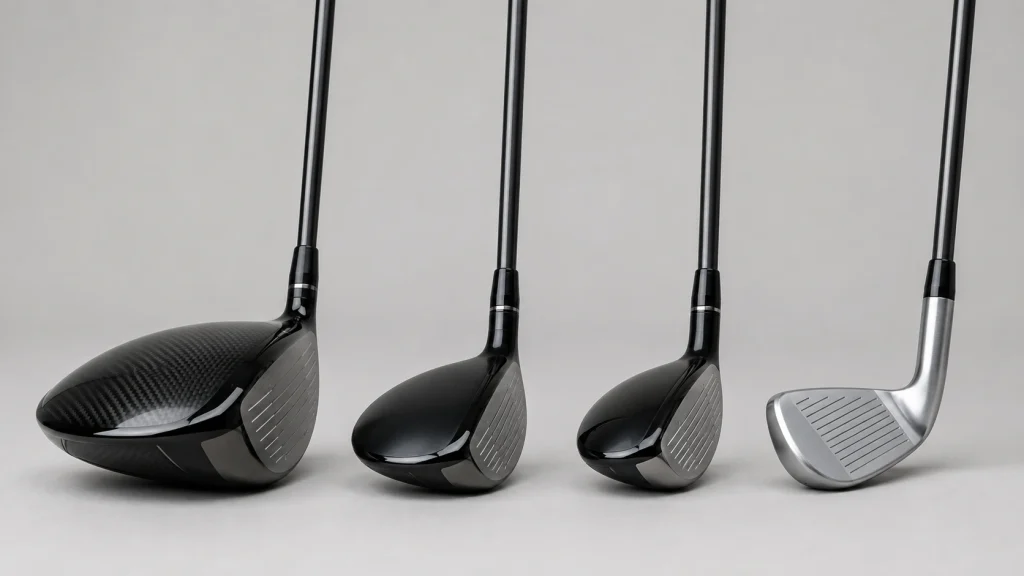
Despite the traditional name, modern fairway woods usually have stainless steel, titanium, carbon-composite, or multi-material heads rather than wooden heads. Their shallow faces and wide soles help golfers launch the ball from short grass.
Common fairway woods include:
- 3-wood: Usually the longest and lowest-lofted fairway wood
- 4-wood: A useful middle option between a 3-wood and 5-wood
- 5-wood: Higher launching and generally easier to hit than a 3-wood
- 7-wood: A forgiving replacement for certain long irons or hybrids
- 9-wood: A high-launch option for golfers who need extra carry and stopping power
A fairway wood can be used for tee shots, long approaches, layups, recovery shots from light rough, and occasionally low-running shots around the green.
How a Fairway Wood Works
The shape of a fairway wood helps create distance without requiring the extremely low loft or large head of a driver.
Loft
Loft is the angle of the clubface. More loft normally helps the ball launch higher, while less loft can produce a lower, longer flight when contact is solid.
Fairway wood lofts vary by manufacturer, but the following ranges are common:
| Club | Typical loft range | General ball flight | Best suited to |
|---|---|---|---|
| 3-wood | 13–16 degrees | Low to mid | Tee shots and maximum distance |
| 4-wood | 16–17 degrees | Mid | Golfers wanting distance with easier launch |
| 5-wood | 17–19 degrees | Mid to high | General fairway use |
| 7-wood | 20–22 degrees | High | Long approaches and moderate swing speeds |
| 9-wood | 23–25 degrees | Very high | Easier carry and soft landings |
These numbers are only starting points. Two clubs carrying the same number may have different lofts, lengths, and head designs. TaylorMade’s official comparison of a 3-wood and 5-wood also illustrates how added loft and a shorter shaft can make a 5-wood easier to launch.
Clubhead shape
A fairway wood has a broad sole that can move across the turf more easily than a narrow long-iron sole. Its head is shallower and much smaller than a driver head.
The lower profile can help move the center of gravity closer to the ground. That supports launch, especially when the ball is sitting cleanly on the fairway.
Shaft length
Fairway woods have longer shafts than most hybrids and irons but shorter shafts than drivers. A longer shaft can generate speed, although it also makes controlling the strike more difficult.
This is one reason a 5-wood or 7-wood may produce better results than a 3-wood for a beginner. The shorter shaft and additional loft can improve contact, launch, and confidence.


Fairway Wood vs. Driver, Hybrid, and Long Iron
These clubs may cover similar distances, but they do different jobs.
| Club | Main strength | Main limitation |
|---|---|---|
| Driver | Maximum tee-shot distance | Not designed for normal fairway lies |
| Fairway wood | Distance with a relatively high launch | Difficult from deep rough or poor lies |
| Hybrid | Forgiveness and versatility | Usually shorter than a comparable fairway wood |
| Long iron | Precise flight and distance control | Demands consistent contact and speed |
A fairway wood normally produces more speed and distance than a similarly lofted hybrid because it has a larger head and longer shaft. A hybrid is often easier from rough and uneven lies.
Choose clubs by shot results, not by the number printed on the sole. If your 5-wood and 3-wood travel almost the same distance, carrying both may not add useful value.
What Is a Fairway Wood Used For?
Long shots from the fairway
A fairway wood can help cover considerable distance on a par 5 or long par 4. It works best when the ball is sitting cleanly on short grass.
The goal does not always have to be reaching the green. A controlled shot into a comfortable wedge distance may be the smarter choice.
Tee shots that prioritize control
A 3-wood or 5-wood can be useful when a hole is narrow or when a driver would bring a hazard into play. The shorter shaft may improve center contact and directional control.
However, a fairway wood is not automatically straighter. Poor alignment or an open clubface can still produce a large miss.
Shots from light rough
The rounded sole can move through light rough, but fairway woods are less reliable when the ball is buried. Thick grass can grab the hosel, slow the head, and close the clubface.
If less than half the ball is visible, consider a hybrid, iron, or simple layup instead.
High approaches into greens
A 5-wood or 7-wood can launch higher than a long iron. The steeper landing angle may help the ball stop sooner, making these clubs valuable on long approaches.
Firm greens, wind, slope, and ball type will still affect how far the shot rolls after landing.
Which Fairway Wood Is Best for Your Skill Level?
Beginners
Many beginners assume they need a 3-wood because it promises the most distance. In practice, its lower loft and longer shaft can make it one of the hardest clubs to hit from the ground.
A 5-wood or 7-wood is often a more practical starting point. It can provide:
- Easier launch
- Better carry on moderate strikes
- More confidence at address
- Greater usefulness from the fairway
- More consistent distance
Intermediate golfers
An intermediate player may benefit from combining a stronger fairway wood for tee shots with a higher-lofted model for approaches.
For example, a golfer could carry a 4-wood and 7-wood instead of a traditional 3-wood and 5-wood. The best combination is the one that creates clear distance gaps.
Faster, consistent players
Golfers with higher swing speed and reliable center contact may gain more from a low-lofted 3-wood. They can use its flatter flight for distance from the tee or fairway.
Low loft is not automatically better, though. A shot that launches too low may carry less distance even if its ball speed is high.
Expert Tip: Test fairway woods from the ground as well as from a tee. A club that performs beautifully from a perfect tee may be much less useful from an ordinary fairway lie.
How to Hit a Fairway Wood
A fairway wood swing should feel smooth and balanced. You do not need to scoop the ball into the air.
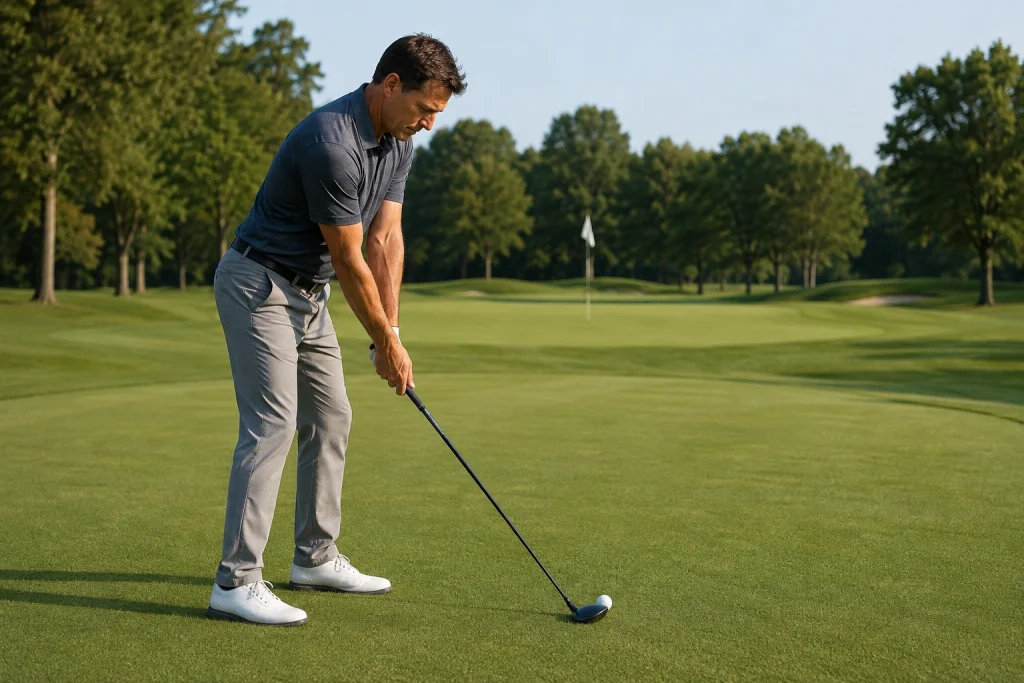
Basic setup
- Use a stable stance. Position your feet around shoulder width apart.
- Place the ball forward of center. It should generally sit inside the lead heel, but not as far forward as a driver ball.
- Distribute your weight evenly. Avoid leaning dramatically behind the ball.
- Sole the club lightly. Do not press it heavily into the turf.
- Keep your hands comfortable. Excess grip pressure can restrict speed and rhythm.
Swing through the ball
Make a complete turn and maintain a controlled tempo. Let the club’s loft create the height.
The ideal strike from the fairway is usually level to slightly downward. The club should contact the ball first and may brush the grass just beyond it. You do not need a deep iron-style divot.
Focus on finishing in balance rather than swinging at maximum effort.
Hitting a fairway wood from a tee
Use a short tee. The ball should sit slightly above the grass, with its center near the upper half of the clubface.
Teeing it at driver height can encourage contact too high on the face or under the ball. Keep the same smooth rhythm you would use from the fairway.
A simple practice drill
Draw or imagine a line on the practice mat directly behind the ball.
Make several half-speed swings with the goal of brushing the ground at or just after the ball. If the club repeatedly strikes well behind the line, check your balance and ball position before adding speed.
How to Choose the Right Fairway Wood
Start with the required job
Decide what you actually want the club to do.
Ask yourself:
- Do I need a reliable alternative to driver?
- Do I need more carry on long approach shots?
- Am I replacing a long iron or hybrid?
- Do I normally play from firm or soft fairways?
- Can I launch a lower-lofted club from the ground?
- Does the club create a useful distance gap?
A tee-shot club and an approach club may require different lofts and head designs.
Compare carry distance, not one perfect shot
Do not select a fairway wood based on the longest ball you hit during a demo. Look at your average carry, launch, strike pattern, and left-to-right dispersion.
You should also compare the club with those already in your bag. Ideally, each club should cover a distinct distance rather than duplicate another club.
Consider shaft flex and weight
Shaft labels such as regular, stiff, or senior are not standardized across every manufacturer. Flex is only one part of the shaft.
Weight, length, bend profile, and overall feel also influence timing. A shaft that is too heavy may be tiring, while one that is too light may feel difficult to control.
Look at forgiveness and head design
Game-improvement fairway woods often have larger profiles, rearward weighting, and higher launch characteristics. Compact heads may appeal to golfers who prefer workability and a traditional appearance.
For most beginners and intermediate golfers, reliable launch and center contact are more valuable than maximum shot-shaping control.
Understand adjustable models
Some fairway woods allow loft, lie, or weight changes. Adjustment can influence launch, spin, face angle, and shot shape. Titleist’s fairway metal adjustment guide provides an example of how one manufacturer uses different loft and lie combinations.
Follow the instructions for your exact model. Do not assume every hosel chart works in the same direction.
For competitive play, set the club before your round. Under the USGA Rule covering player equipment, a player must not make a stroke with a club after deliberately changing its playing characteristics during the round.
Cost, Quality, and Durability
A current premium fairway wood can be expensive, but a higher price does not guarantee better results. Materials, adjustability, branding, and research costs all affect the selling price.
Previous-generation and used clubs may offer excellent value. Before purchasing a used fairway wood, inspect:
- The face for cracks or severe dents
- The crown for structural damage
- The hosel for movement or separation
- A graphite shaft for splits, deep scratches, or soft spots
- The grip for hardening, slickness, or cracking
- Adjustable components for missing or damaged parts
Normal sole scratches usually affect appearance more than performance. Damage around the shaft or clubface deserves greater caution.
Use a headcover and avoid hitting from gravel, roots, or exposed cart paths. A well-maintained fairway wood can remain useful for many seasons, even after newer models enter the market.
If buying used, you can also consult the USGA’s equipment database and conforming club information when tournament conformity is important.
Common Mistakes Golfers Should Avoid
- Buying a 3-wood only because it should go farther. More loft may produce better carry and consistency.
- Trying to lift the ball. Scooping often causes thin or topped shots.
- Playing the ball too far forward. This can move the low point behind the ball.
- Swinging at maximum effort. Extra tension usually reduces strike quality.
- Using a fairway wood from buried rough. Choose a safer club and return the ball to play.
- Ignoring distance overlap. Two clubs with different numbers may still travel nearly identical distances.
- Testing only from a tee. Fairway performance matters if that is the club’s intended job.
- Choosing shaft flex by age or ego. Base the decision on ball flight, contact, speed, and feel.
- Changing an adjustable setting without recording the original position. Photograph or write down the starting configuration.
- Focusing only on total distance. Carry, stopping power, and dispersion are equally important.
When to Get Help From a Golf Pro or Fitter
Consider professional help when you cannot launch any fairway wood consistently, repeatedly top the ball, or see a large distance gap between range shots and course shots.
A lesson may be the best first step if the problem affects several clubs. A fitting is more useful when your swing is reasonably repeatable but you need the correct loft, shaft, length, or head design.
During a fitting, ask to compare:
- 3-, 4-, 5-, and 7-wood options
- Fairway woods against hybrids
- Shots from a tee and the ground
- Average carry rather than best-shot distance
- Strike location and dispersion
- Different shaft weights and lengths
The PGA of America explains how a golf club fitting works and can help golfers understand what to expect. A qualified fitter should explain the data clearly without pressuring you to purchase the most expensive option.
FAQs
Is a fairway wood only used from the fairway?
No. You can use one from a tee, light rough, closely cut areas, or occasionally around a green. The lie and required shot should determine whether it is a sensible choice.
Is a 3-wood or 5-wood better for beginners?
A 5-wood is usually easier to launch because it has more loft and a shorter shaft. Beginners should still test both because swing speed, confidence, and intended use vary.
Why do I keep topping my fairway wood?
Common causes include trying to lift the ball, standing up during the downswing, playing the ball too far forward, or shifting weight away from the target. Practice at reduced speed before making equipment changes.
Should I hit down on a fairway wood?
The strike should generally be level to slightly downward from the ground. Contact the ball first and brush the turf afterward. Avoid both a steep chopping action and an upward scooping motion.
Can a 7-wood replace a long iron?
Yes. A 7-wood can replace a 3-iron, 4-iron, or sometimes a similarly lofted hybrid. Compare actual carry distance because club numbers do not create universal distance equivalents.
How many fairway woods should I carry?
Many recreational golfers carry one or two. The correct number depends on distance gaps, course conditions, and whether you prefer woods, hybrids, or long irons. Remember that the total bag is limited to 14 clubs under the Rules of Golf.
How often should I replace a fairway wood?
There is no fixed replacement schedule. Replace it when it is damaged, no longer fits your swing, or fails to cover the distance you need. Cosmetic wear alone is rarely a strong reason to upgrade.
Conclusion
A fairway wood offers useful distance from the tee and short grass, but choosing the lowest loft is not always the smartest decision. Launch, carry, consistency, and distance gaps matter more than the number on the club.
The central lesson from this Fairway Wood Explained guide is simple: select the club that performs the required job on ordinary swings. For many beginners, that may be a forgiving 5-wood or 7-wood rather than a demanding 3-wood.
Test several lofts from realistic lies, compare average results, and seek a lesson or professional fitting if contact remains inconsistent. Use those results to build a golf bag that makes long shots more manageable and helps you play with greater confidence.