Interlocking Grip: How It Works, Benefits, Problems, and Proper Technique
Quick Answer
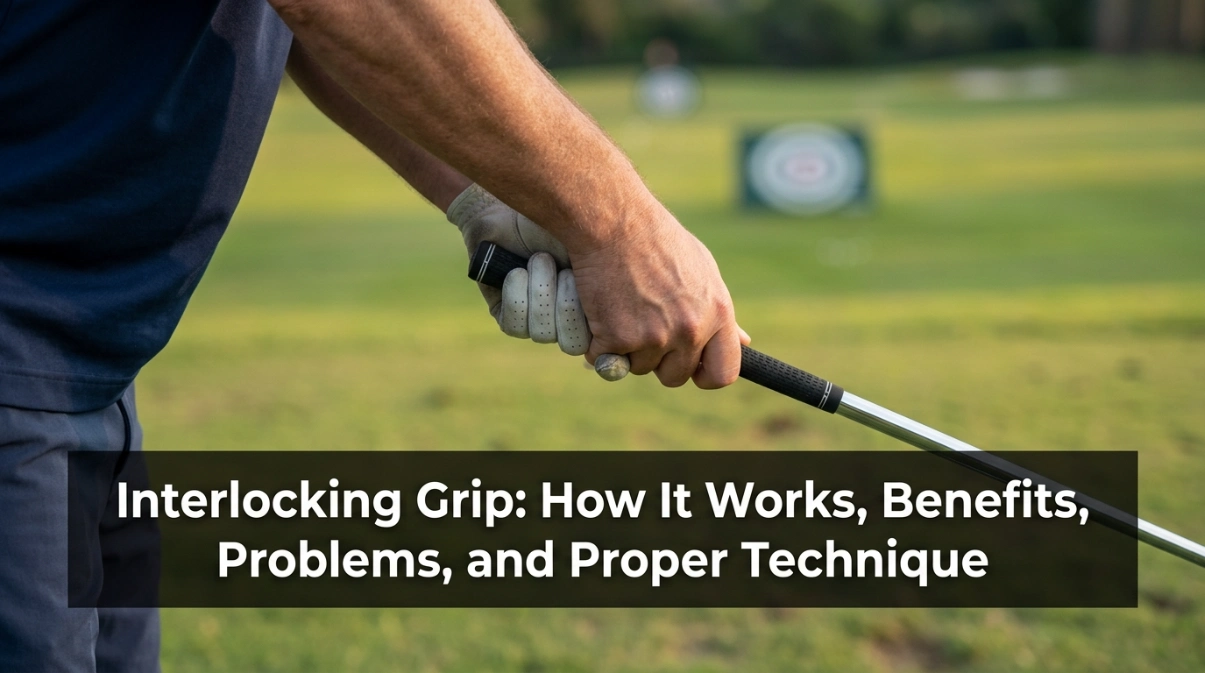
The interlocking grip is a golf grip where the trail-hand little finger locks together with the lead-hand index finger. It connects both hands closely and can help them work as one unit during the swing. It is one of the three common full-swing grip styles golfers can use while learning the basic golf setup.
How to use an interlocking golf grip
- Place the lead hand: Hold the club mainly through the fingers rather than burying it deep in the palm.
- Add the trail hand: Bring the lower hand onto the grip so both hands sit close together.
- Interlock the fingers: Link the trail pinky with the lead index finger instead of laying the pinky over it.
- Keep pressure moderate: Hold the club securely without squeezing hard enough to tense your forearms.
- Check hand position: Both hands should feel connected without the interlocked fingers being forced or painful.
Best fit
- Try it if an overlap grip feels loose, your hands tend to separate, or you simply prefer a more connected feeling.
The interlocking grip looks like a tiny detail, but it changes how your two hands connect to the golf club.
I like teaching grip changes before swing changes because the hands influence nearly everything that follows. A comfortable grip gives you a much better starting point than trying to repair compensations later.
This guide explains exactly how the interlock works, who may like it, how it compares with other grips, and the mistakes worth avoiding.
In This Guide
What Is an Interlocking Grip in Golf?
An interlocking grip connects the hands by linking the little finger of the trail hand with the index finger of the lead hand.
For a right-handed golfer, that means the right pinky and left index finger interlock. A left-handed golfer reverses those hands.
Definition: The interlocking grip is a full-swing hand-placement method that physically joins one finger from each hand instead of overlapping them or keeping all ten fingers separately on the club.
The connection sits between the two hands. It does not mean twisting the fingers tightly together.
- Right-handed golfer: right pinky interlocks with the left index finger.
- Left-handed golfer: left pinky interlocks with the right index finger.
- Overlap grip: the trail pinky rests over the lead-hand fingers instead of interlocking.
- 10-finger grip: every finger remains directly on the club.
The interlock is far from an experimental technique. Jack Nicklaus, Tiger Woods, and Rory McIlroy are well-known examples of elite golfers who have used it.
That does not make the interlock automatically superior. Successful players have also used overlapping and 10-finger grips.
The important question is whether your grip lets the hands cooperate while keeping the clubface manageable.
If you’re still building your basic setup, my complete beginner golf guide covers grip, stance, ball position, equipment, and early practice in more detail.
Why do golfers interlock their fingers?
The main reason is connection. The linked fingers can make the two hands feel less independent during the swing.
Some golfers immediately prefer that unified feeling. Others feel restricted and perform better with an overlap.
Neither reaction is wrong.
Pro tip: If your grip creates finger, wrist, or hand discomfort, ask a PGA professional or qualified fitter to check your hand placement and grip size rather than forcing the position.
How Do You Use an Interlocking Golf Grip?
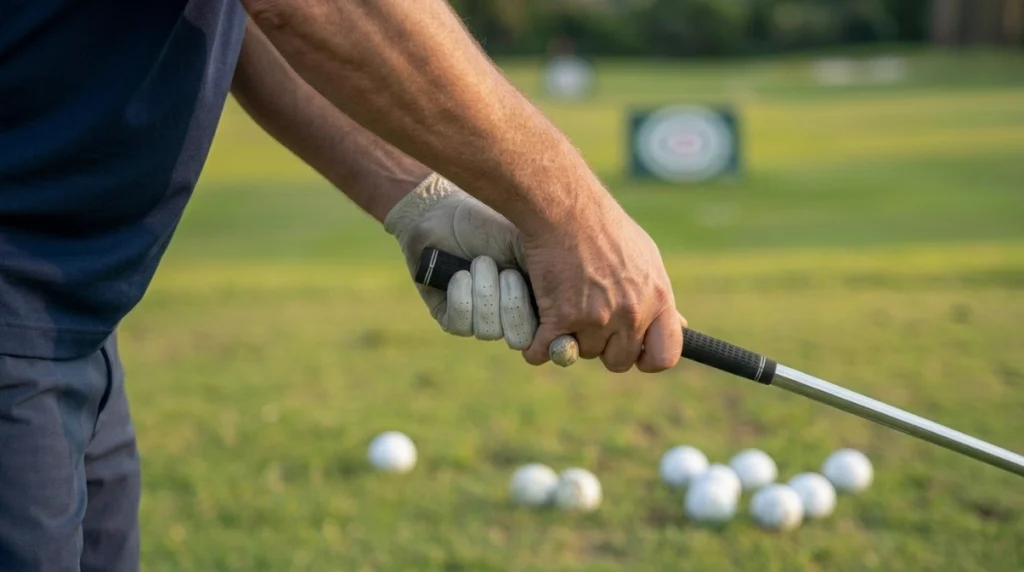
Build the interlocking grip from the lead hand first, then fit the trail hand into place. Avoid beginning by hooking the two fingers together and squeezing.
The fingers should connect naturally after each hand is placed correctly.
Step 1: Place the lead hand on the club
Start with the club running diagonally through the fingers of your lead hand.
For most full-swing grips, placing the handle mainly in the fingers gives the wrists more freedom than burying it across the palm.
- Hold the club in front of you at a comfortable angle.
- Set the handle across the base area of your lead-hand fingers.
- Close the fingers around the grip.
- Let the heel pad of the hand sit securely over the handle.
- Keep the thumb resting down the upper side of the grip rather than wrapping underneath.
Step 2: Add the trail hand
Bring your trail hand underneath the lead hand while keeping the handle in the fingers.
The palm of the trail hand should sit close to the lead thumb rather than leaving a large gap between the hands.
Step 3: Interlock the correct fingers
Now link the trail-hand pinky with the lead-hand index finger.
You only need enough connection to keep the hands together. Digging the fingers deeply into each other can create pressure and discomfort.
Step 4: Check your grip pressure
You need enough pressure to control the club without strangling it.
- Your forearms should not feel rigid.
- Your fingers should not hurt.
- The club should not move independently inside your hands.
- Your wrists should still feel able to hinge naturally.
Grip pressure often increases during a difficult shot or after a poor swing. I check it before practice swings because tension can creep in without being obvious.
Step 5: Hit short shots before full swings
Do not judge a new grip after three full-speed drivers.
Start with chips and half-swings, then move into short irons before adding speed.
- Make 10 slow rehearsal swings.
- Hit short wedge shots.
- Progress to half-swings with a short iron.
- Hit controlled 7-iron shots.
- Add longer clubs only after the grip feels stable.
A structured learning process matters more than rushing. The guide on how long it takes to learn golf explains why fundamentals usually improve through repeated, focused practice.
Section Takeaway: Build the interlock after placing each hand correctly. The fingers connect the hands; they should not become the main source of grip pressure.
What Are the Benefits of an Interlocking Grip?
The biggest potential benefit is a compact connection between the hands. Golfers who dislike feeling their hands separate may find the interlock reassuring.
It can also feel comfortable to golfers whose hand size or finger length makes an overlap less secure.
It can help the hands feel like one unit
The physical link makes it harder for the hands to feel completely independent.
That sensation can help a golfer who tends to reposition the lower hand during the swing.
It may suit golfers who dislike the overlap
With an overlapping grip, the trail pinky rests on or between fingers of the lead hand.
Some golfers find that arrangement secure. Others feel as though the trail hand is barely attached.
The interlock provides a different connection without requiring all ten fingers to remain independently on the handle.
It works at the highest level
Professional success does not prove one grip is best, but it does show the interlock is a legitimate technique.
Golfers such as Nicklaus, Woods, and McIlroy demonstrate that an interlocked connection can work with powerful, technically different swings.
You can find broader instructional resources through the PGA of America and professional golf coverage through PGA Tour.
It can give smaller hands a secure feeling
Golfers with smaller hands are often encouraged to test the interlock because it brings the hands closely together.
However, hand size alone should not decide your grip style. Finger comfort, grip diameter, hand position, and personal feel also matter.
It can expose excessive grip pressure quickly
This sounds like a disadvantage, but it can become useful feedback.
If you squeeze too hard while interlocking, the connected fingers often feel the pressure immediately.
- Pain between the fingers can signal excessive force.
- White knuckles may indicate unnecessary tension.
- Rigid forearms often accompany excessive hand pressure.
- A restricted wrist hinge may indicate poor placement or tension.
When I test a grip change, I pay more attention to centered contact and start direction than one long shot. A grip needs to survive ordinary swings, not just produce one perfect ball.
Section Takeaway: The interlock’s main value is hand connection, not automatic extra power. Its usefulness depends on comfort, control, and repeatability.


Interlocking vs Overlapping Grip: Which Is Better?
Neither grip is universally better. The better choice is the one that keeps your hands connected without causing tension or interfering with clubface control.
The overlap and interlock mainly differ in how the trail pinky connects to the lead hand.
| Grip Type | Finger Connection | Typical Feel | Worth Testing If |
|---|---|---|---|
| Interlocking | Trail pinky and lead index finger lock together | Closely connected | Overlap feels loose or unstable |
| Overlapping | Trail pinky rests over the lead-hand fingers | Connected with less finger entanglement | Interlock feels cramped or restrictive |
| 10-finger | All ten fingers remain on the club | Separate, familiar hand placement | Both interlock and overlap feel uncomfortable |
Does the interlock create more power?
Do not choose it because someone promises automatic extra distance.
Clubhead speed depends on the entire swing. Grip style is only one part of how you control the club.
Is interlocking better for small hands?
It can feel secure for some golfers with smaller hands, but there is no rule requiring smaller-handed golfers to interlock.
A golfer with larger hands may also love it. Personal anatomy and comfort matter more than a simple size label.
Is overlap better for large hands?
Some larger-handed golfers find the overlap spacious and natural because fewer fingers compete for room around the handle.
Again, test the options instead of treating that pattern as a law.
For equipment-related comfort, your grip’s physical diameter matters too. My golf beginner checklist explains why grip size and general club fit deserve attention.
The Golf Digest instruction library also provides examples of how different accomplished golfers use both overlap and interlock styles.
What Problems Can an Interlocking Grip Cause?
An interlocking grip can become uncomfortable when golfers force the fingers together or squeeze too hard.
The grip itself is not supposed to hurt.
Finger discomfort
Pain around the interlocked fingers is a warning sign, not something you need to tolerate until your hands “toughen up.”
Check how deeply the fingers are hooked together and how hard you’re squeezing.
Too much grip pressure
A tight interlock can create tension through the hands and forearms.
That tension may make the club feel harder to swing freely.
- Relax the fingers slightly.
- Check whether the handle sits correctly in the fingers.
- Make slow practice swings.
- Compare the feeling with an overlap grip.
- Check whether your grips are too small or too large.
Placing the club too much in the palm
Changing to an interlock does not fix poor overall hand placement.
You can interlock perfectly and still hold the handle in an awkward position.
Using the interlock as a slice or hook cure
A different connection can change how the club feels, but ball curvature has multiple causes.
Clubface direction and swing path are major parts of ball flight, so changing grip style blindly may simply exchange one compensation for another.
If you are working through a persistent directional miss, qualified instruction is more reliable than switching grip styles after every range session.
Pro tip: Ask a certified golf instructor to check both your hand orientation and finger connection if your normal miss changes sharply after a grip adjustment.
Changing too much at once
Grip changes can make a familiar club feel unfamiliar for several practice sessions.
Avoid changing grip style, stance, backswing, ball position, and equipment at the same time.
Test one change and track the results.
Section Takeaway: Discomfort, excessive pressure, and poor hand placement are signs to adjust the grip. Never force an interlock simply because a famous golfer uses one.
Should You Switch to an Interlocking Grip?
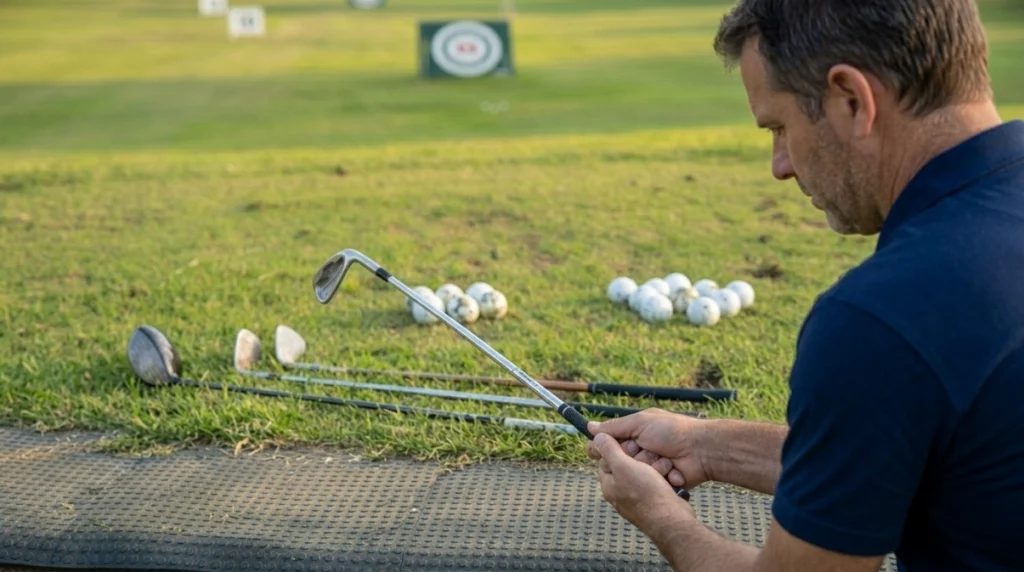
Try an interlocking grip if it gives you a secure, comfortable connection and helps both hands feel coordinated.
Keep your current grip if it already produces comfortable, repeatable control.
The interlock is worth testing when:
- Your trail hand feels disconnected with an overlap grip.
- Your overlapping pinky frequently slips out of position.
- You prefer a compact connection between the hands.
- The 10-finger grip feels too independent.
- A coach recommends testing it for your hand structure or setup.
Stay with another grip when:
- The interlock causes finger pain.
- Your hands feel cramped.
- Your wrists feel restricted.
- Your existing grip works consistently.
- You are changing only because another player uses it.
A simple range test
Give each grip enough shots to judge the pattern rather than one result.
| Test | What to Watch |
|---|---|
| 10 short wedge shots | Comfort and centered contact |
| 10 half 7-irons | Start direction and strike consistency |
| 10 normal 7-irons | Dispersion and tension |
| 5 controlled drivers | Whether the grip remains stable at speed |
Do the same test with your previous grip on another set of balls.
Compare comfort, strike pattern, start line, and overall dispersion. Do not choose solely from your longest shot.
The official USGA and The R&A remain useful references for the equipment and Rules framework of golf, while a local professional can help with technique.
As of 2026, there is still no universal requirement that golfers use an overlap, interlock, or 10-finger connection for ordinary full swings. Your goal is a functional grip that supports predictable contact and control.
Section Takeaway: Test the interlock rather than assuming it is better. Comfort, centered contact, and predictable ball flight are more useful evidence than copying another golfer.
Interlocking Grip FAQs
What is an interlocking grip?
An interlocking grip is a golf grip in which the trail-hand little finger locks with the lead-hand index finger. The connection joins the hands closely so they can work together while holding the club.
Which fingers interlock in a golf grip?
For a right-handed golfer, the right pinky interlocks with the left index finger. For a left-handed golfer, the left pinky interlocks with the right index finger.
Do Tiger Woods and Jack Nicklaus use an interlocking grip?
Yes. Tiger Woods and Jack Nicklaus are two famous golfers associated with the interlocking grip. Rory McIlroy is another elite player known for using an interlocked hand connection.
Is an interlocking grip good for beginners?
Yes, beginners can use an interlocking grip if it feels comfortable. It is not automatically better than an overlap or 10-finger grip, so new golfers should focus on correct hand placement, moderate pressure, and reliable contact.
Does an interlocking grip help a slice?
Not automatically. A slice involves clubface and swing-path conditions, while interlocking describes how your hands connect. Changing your grip may influence clubface control, but it should not be treated as a guaranteed slice fix.
Why does my interlocking grip hurt?
The fingers may be hooked too deeply, your pressure may be excessive, or the grip size may not suit your hands. Stop if you feel pain and check the setup with a qualified instructor or fitter if discomfort continues.
Should I use interlock or overlap?
Use whichever style feels secure, comfortable, and repeatable. Try both with short shots and irons before comparing full swings. Choose based on contact, directional control, tension, and comfort rather than popularity.
Final Takeaway
The interlocking grip is a proven way to connect your hands, but it is not a shortcut to a perfect golf swing.
Place the club correctly in your hands first. Then link the trail pinky and lead index finger without squeezing them together aggressively.
Compare the interlock with your current grip using controlled practice shots. Pay attention to comfort, contact, start direction, and dispersion.
If it feels secure and repeatable, keep working with it. If it hurts or restricts your hands, another grip style may fit you better.
Your grip should make controlling the club easier—not give you one more thing to fight during the swing.