
Is Golf Hard to Learn? A Practical Guide for New Golfers

Golf can look frustratingly difficult when you are standing over the ball for the first time. The club feels unfamiliar, the ball is small, and experienced golfers make the swing look easier than it really is.
So, is golf hard to learn? Golf has a challenging learning curve, but the basic skills are achievable for most people. You do not need a perfect swing, expensive clubs, or exceptional athletic ability to begin enjoying the game.
This guide explains why golf feels difficult, how long improvement usually takes, which skills to learn first, what equipment you need, and when professional instruction may save you time and frustration.
Quick Answer
Golf is moderately hard to learn because it combines technique, coordination, distance control, course management, and mental focus. However, most beginners can learn basic putting, chipping, and ball striking within several practice sessions. Playing consistently takes longer, but structured practice and a few professional lessons can make the process much easier.
Why Is Golf Hard to Learn?
Golf is difficult because a successful shot depends on several small movements working together at the correct time.
You must control your grip, posture, alignment, balance, clubface, and swing path while striking a stationary ball with a relatively small clubface. A slight change in one area can send the ball in a completely different direction.
The Golf Swing Is a Precision Movement
A powerful swing is not necessarily a good swing. The clubface must return to the ball at an effective angle while the club travels along a suitable path.
Beginners often focus on swinging harder. However, extra effort can disturb balance and make the clubface more difficult to control.
Consistent contact matters more than maximum speed when you are learning.
Every Shot Requires a Different Skill
Golf is not one repeated movement. A full round may require:
- Tee shots with a driver
- Iron shots from the fairway
- Recovery shots from rough
- Pitch shots near the green
- Bunker shots
- Short chips
- Putts of different speeds and slopes
A beginner may hit acceptable shots on the practice range but struggle on the course because the lie, target, distance, and pressure change with every shot.
Golf Gives Immediate but Sometimes Confusing Feedback
When a shot goes wrong, the result is obvious. The difficult part is identifying the cause.
A ball that curves right could result from an open clubface, an outside-to-inside swing path, poor alignment, an unsuitable grip, or a combination of several factors. Without reliable feedback, beginners may try random corrections and create new problems.
Progress Is Not Always Steady
You may practice well one day and struggle the next. This is normal.
Golf improvement often happens in stages. A golfer learns a movement, temporarily loses consistency while adjusting, and then becomes more reliable after additional practice. One poor session does not mean your technique has stopped improving.
Is Golf Hard to Learn but Easy to Play?
The basic idea of golf is simple: move the ball from the teeing area into the hole using as few strokes as possible.
Playing a casual round is therefore relatively easy once you understand basic safety and etiquette. Playing consistently well is much harder.
A beginner does not need to:
- Hit every fairway
- Reach every green in regulation
- Play from the longest tees
- Keep an official handicap immediately
- Use the same equipment as an advanced golfer
You can enjoy golf while making mistakes, using shorter tees, picking up after reaching a sensible stroke limit, or playing only nine holes.


How Long Does It Take to Learn Golf?
There is no fixed learning period. Progress depends on your coordination, fitness, practice quality, instruction, equipment, and expectations.
The following timeline offers a realistic general guide.
| Learning period | Realistic beginner milestone |
|---|---|
| First 1–3 sessions | Learn grip, posture, alignment, putting, and small chip shots |
| 2–6 weeks | Make occasional solid contact with wedges and mid-irons |
| 1–3 months | Play nine holes from forward tees with basic confidence |
| 3–6 months | Develop a more repeatable swing and improve distance control |
| 6–12 months | Make better club selections and manage common course situations |
| Beyond one year | Continue improving consistency, scoring, strategy, and specialty shots |
These milestones assume regular, focused practice. Hitting balls occasionally without a clear goal may produce slower progress.
Do not judge improvement only by your score. Better contact, fewer lost balls, improved putting distance, and smarter decisions are meaningful signs of progress.
The Easiest Way to Learn Golf
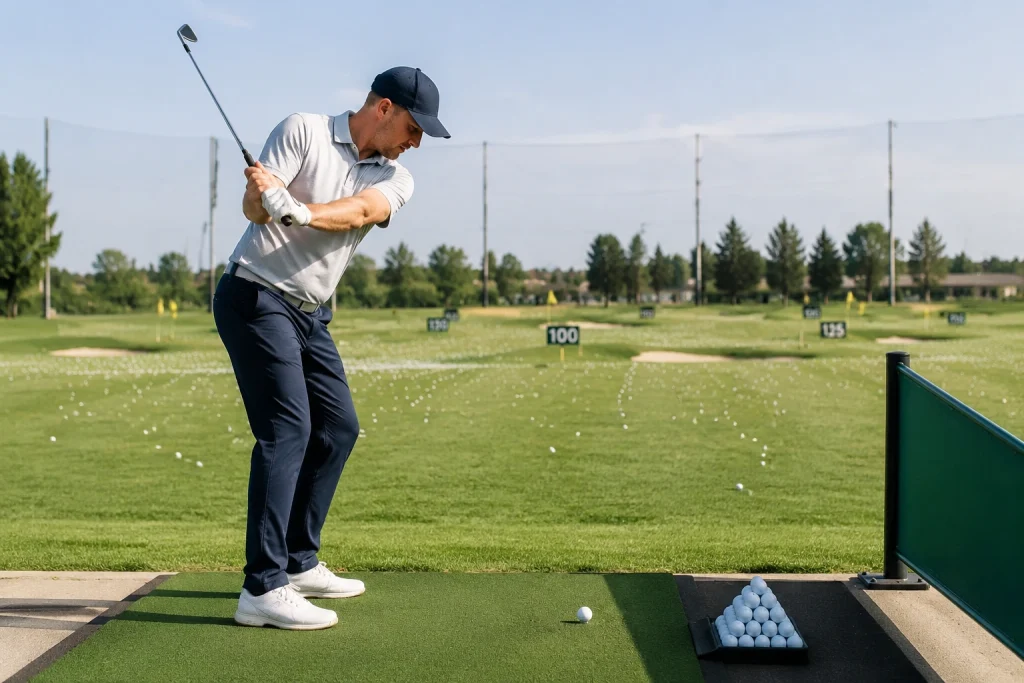
Trying to learn every part of golf at once can make the game feel unnecessarily difficult. A better approach is to develop simple skills in a logical order.
1. Begin With Putting
Putting uses the smallest swing and allows you to learn alignment, clubface control, and distance judgment without worrying about generating power.
Practice rolling the ball toward a target rather than trying to make every putt. Your first goal should be leaving the ball close enough for an easy second putt.
2. Learn Small Chip Shots
A basic chip introduces clean contact while keeping the swing short and manageable.
Use a pitching wedge or another comfortable short iron. Keep your movement controlled and focus on brushing the grass around the ball.
3. Progress to Half-Swings
Half-swings help you develop balance and centered contact. They are easier to repeat than full swings and make swing errors easier to identify.
Use a wedge or mid-iron. Swing at approximately 50–70% effort until you can launch the ball reasonably consistently.
4. Add Longer Clubs Gradually
Long irons, fairway woods, and drivers are harder to control because they have longer shafts and less loft.
Do not rush to hit the driver simply because it is designed for distance. Learn reliable contact with shorter clubs first, then introduce longer clubs as your balance improves.
5. Practice With a Specific Target
Avoid hitting a bucket of balls as quickly as possible.
Instead:
- Choose one target.
- Decide which club and shot you will use.
- Complete your setup routine.
- Hit one ball.
- Observe the strike, direction, and balance.
- Make only one small adjustment.
This process resembles real golf more closely than repeatedly hitting without a target.
6. Learn Basic Rules and Etiquette
You do not need to memorize the entire rulebook before playing. Start with safety, order of play, penalty areas, lost balls, bunkers, and care of the course.
The USGA Rules Education resources include beginner-friendly videos, diagrams, quizzes, and a free introductory course covering common situations. (USGA)
What Makes Golf Easier to Learn?
Several practical decisions can shorten the learning curve.
Suitable Beginner Equipment
Beginner-friendly clubs normally have larger clubheads, more perimeter weighting, and designs intended to help launch the ball.
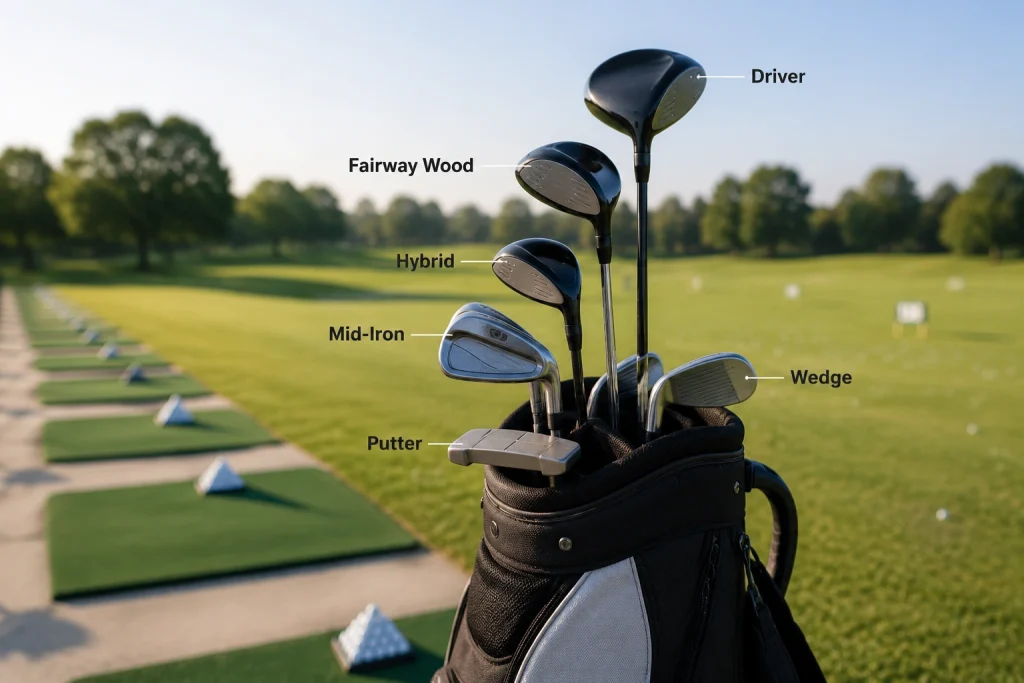
A new golfer rarely needs a full 14-club set. A practical starter setup may include:
- Driver or fairway wood
- Hybrid
- Mid-iron
- Short iron
- Pitching or sand wedge
- Putter
A reduced set costs less, feels less confusing, and encourages you to learn a few dependable clubs.
Regular Short Practice Sessions
Two focused 30-minute sessions are often more productive than one exhausting session in which concentration and technique gradually decline.
Divide your time between putting, chipping, and full-swing practice rather than spending the entire session hitting drivers.
Forward Tees and Shorter Courses
Choose tees that allow you to reach most holes with manageable shots. Playing from tees that are too long can lead to forced swings, lost balls, slow play, and unnecessary frustration.
Par-3 courses, short courses, and nine-hole rounds are excellent learning environments.
Beginner Lessons or Clinics
A lesson can help you establish a functional grip, posture, and setup before poor habits become familiar.
The PGA of America’s beginner coaching programs describe instruction built around swinging, chipping, putting, etiquette, basic rules, personalized goals, and progress tracking. (PGA of America)
Group clinics can be particularly useful because they are often less expensive than private instruction and allow beginners to learn in a relaxed environment.
Expert Tip: Record a short face-on and down-the-line video of your swing occasionally. Compare your balance and setup—not your appearance—to the specific movement your coach has asked you to practice.
What Makes Golf Harder Than Necessary?
Golf becomes more difficult when beginners use unsuitable equipment, practice without a plan, or expect professional-level results too soon.
Starting With Full-Power Driver Swings
The driver is one of the longest and least forgiving clubs in the bag. Repeatedly swinging it at maximum effort can create tension, poor balance, and inconsistent contact.
Begin with wedges and irons. Add speed only after you can finish the swing under control.
Changing Technique After Every Bad Shot
One poor shot does not always require a swing change.
Golf contains natural variation. Ground conditions, balance, fatigue, alignment, and simple timing errors can all affect an individual shot. Constantly changing your grip, posture, or swing thought makes it harder to develop a repeatable movement.
Using Advanced Clubs
Traditional blade-style irons and low-lofted long irons can be demanding. They may provide control for skilled players but offer less assistance on off-center strikes.
Most beginners benefit from forgiving cavity-back irons, hybrids, and clubs with suitable shaft weight and flex.
Practicing Only on Perfect Lies
Driving-range mats make every lie predictable. A golf course does not.
As your contact improves, practice from grass, light rough, slopes, bunkers, and different putting surfaces. Introduce these situations gradually rather than attempting difficult recovery shots immediately.
Golf Equipment, Cost, Quality, and Durability
Golf can become expensive, but beginners do not need premium equipment to learn effectively.
New Versus Used Clubs
Used clubs can offer excellent value when they are in suitable condition. Check for:
- Worn or slippery grips
- Cracked shafts
- Loose clubheads
- Severe face damage
- Incorrect club length
- Shaft flex that is clearly too stiff or too soft
Cosmetic scratches rarely affect normal beginner performance. Structural damage and badly worn grips are more important concerns.
Does Expensive Equipment Make Golf Easier?
Higher-priced equipment may provide premium materials, adjustability, fitting options, or improved feel. It does not automatically correct poor contact or clubface control.
A reasonably modern, forgiving set in the correct general size is usually enough for learning. Spend first on practice, comfortable shoes, replacement grips, or instruction rather than buying multiple clubs to solve the same swing problem.
Golf Ball Selection
Beginners frequently lose balls, so premium tour-level balls may not provide good value.
Choose an affordable ball with a consistent model and feel. Using the same type helps you become familiar with its distance and behavior around the green.
When a Fitting Becomes Valuable
A basic fitting may be helpful when:
- Standard clubs feel noticeably too long or short
- You are unusually tall or short
- You have limited mobility
- Your shots fly unusually low or high with several clubs
- You are ready to purchase a long-term set
- Your swing has become reasonably repeatable
A detailed fitting is most useful when the golfer can produce enough consistent shots for the fitter to identify meaningful patterns.
How to Make Your First Round Easier
Your first round should focus on safety, pace, and experience rather than score.
Use this simple plan:
- Play nine holes instead of 18.
- Choose forward tees.
- Carry enough affordable golf balls.
- Use your most dependable club from the tee.
- Pick up the ball when a hole becomes frustrating.
- Prepare while another player is taking a safe shot.
- Limit practice swings.
- Keep pace with the group ahead.
The R&A’s pace-of-play guidance explains how player behavior, course setup, and practical management can help rounds move efficiently. (Randa)
Never hit while another person is within range or standing where a ball, club, stone, or broken tee could strike them. Wait until the area is clearly safe.
Common Mistakes Golfers Should Avoid
- Trying to lift the ball: Golf clubs are designed with loft. Focus on striking the ball and allowing the club to launch it.
- Swinging too hard: Excess effort often reduces balance, contact, and clubface control.
- Ignoring alignment: Many apparent swing problems begin because the golfer is aiming somewhere other than the intended target.
- Buying equipment too quickly: Learn with rental, borrowed, or affordable beginner clubs before investing in a premium set.
- Practicing only the driver: Putting, chipping, and pitching influence a large portion of beginner scoring.
- Using too many swing thoughts: Choose one simple practice objective rather than controlling several body movements at once.
- Playing tees that are too long: This increases difficulty and can slow the entire group.
- Ignoring pain: Mild muscle fatigue can occur, but sharp or persistent pain is a reason to stop and review your movement.
- Comparing yourself with experienced golfers: Their swing reflects years of practice. Measure your progress against your previous performance.
When to Get Help From a Golf Pro or Fitter
Consider working with a golf professional when you repeatedly miss the ball, cannot identify why shots curve, or feel overwhelmed by conflicting advice.
Professional help is especially valuable when:
- You are completely new and want a safe starting technique
- The ball repeatedly curves severely in one direction
- You cannot make consistent contact after several practice sessions
- Swinging causes discomfort
- You are preparing to play your first full course
- Online tips have created too many competing swing thoughts
- You want a practice plan based on your goals
A club fitter may be more appropriate when your technique is functional but the equipment feels physically unsuitable or produces a consistent performance problem.
Instruction and fitting solve different issues. A coach improves how you move and strike the ball. A fitter helps match equipment to your body, delivery, speed, and typical impact pattern.
Does a Handicap Help Beginners?
A Handicap Index is not required for casual beginner golf, but it becomes useful when you want to track progress or play fairly with golfers of different abilities.
The World Handicap System is designed to provide a consistent measure of playing ability and allow golfers with different skill levels to compete on a fair basis. (USGA)
Do not wait for a “good enough” score before tracking your game. Honest scores create a realistic starting point and make future improvement easier to recognize.
FAQs
Is golf hard for someone with no sports experience?
Golf can be learned without previous sports experience. Coordination may develop more slowly at first, but good instruction, short swings, and regular practice can help. Balance and patience are more important than exceptional strength.
What is the hardest part of learning golf?
Most beginners find consistent ball striking the hardest skill. The challenge is returning the clubface to the ball with suitable balance, path, and timing. Short-game distance control can also take time to develop.
Can I teach myself to play golf?
You can learn basic skills through structured self-practice, videos, and beginner resources. However, one or two lessons can identify setup problems that may be difficult to notice alone.
How often should a beginner practice golf?
Two or three focused sessions per week can produce steady improvement. Even 20–30 minutes is useful when the practice has a clear purpose. Include putting and chipping rather than hitting only full shots.
Do I need expensive golf clubs to learn?
No. Beginners need clubs that are reasonably suitable, safe, and in serviceable condition. Forgiving used clubs or a smaller starter set can provide everything required for early development.
Should a beginner use a driver?
A beginner can use a driver, but it should not dominate practice. Start with controlled swings and prioritize balance. A fairway wood, hybrid, or mid-iron may be easier to use during early rounds.
At what age is it too late to learn golf?
There is no standard age limit. Adults can begin later in life by adjusting swing length, practice intensity, equipment, and course selection to suit their mobility and fitness.
Conclusion
So, is golf hard to learn? It is challenging enough to remain interesting, but it is not too difficult for the average beginner.
The key is separating learning from mastery. You can learn basic putting, chipping, ball striking, safety, and etiquette within a manageable period. Consistent scoring and advanced shot control take much longer.
Begin with short shots, practice at a controlled speed, use forgiving equipment, and play from suitable tees. Seek help from a golf professional when confusion, discomfort, or repeated swing problems prevent progress.
Your next step is simple: choose one club, one target, and one basic skill to practice. Build reliable contact first, and allow distance and complexity to develop gradually.