
Why Are Golf Towels So Thick? The Practical Reason Golfers Use Them

Quick Answer
Golf towels are thick because extra fabric, raised fibers, and textured weaves help them absorb water, lift mud, and clean clubface grooves without becoming useless after a few wipes. A thicker golf towel also gives you enough material to keep one section damp for cleaning and another section dry for grips and hands. You can see similar purpose-built designs throughout Golf Digest’s golf equipment coverage.
Why the extra thickness helps
- More absorption: Extra fibers give moisture more material to move into during wet rounds.
- Better cleaning: Raised loops or waffle pockets help loosen grass, sand, and soil from a clubface.
- Useful when damp: A substantial towel can hold a damp cleaning area without soaking the entire towel immediately.
- More durability: A well-made towel tolerates repeated wiping, washing, clipping, and dragging around a golf bag.
- Better separation: Larger, thicker towels make it easier to reserve different areas for clubs, balls, grips, and hands.
Simple buying rule
- Choose enough thickness to clean effectively, but not so much that the towel stays soaked and heavy all round.
If you’ve ever compared a golf towel with a thin kitchen cloth, the difference feels obvious. A proper club-cleaning towel often feels denser, deeper, and more textured.
That isn’t just for a premium look. As a golfer, I care more about whether the towel still works on the back nine after wet grass, bunker sand, and muddy clubfaces.
In This Guide
Why Are Golf Towels So Thick?
Golf towels are thick mainly because they need to manage moisture and debris repeatedly. One towel may clean dozens of clubfaces and several golf balls during an 18-hole round.
A thin cloth can work for a quick wipe. It loses usefulness faster once it becomes wet, muddy, or covered in grass.
Definition: Golf towel thickness is the substantial feel created by the towel’s fiber density, pile, weave, and construction. A towel can feel thick because of deep cotton loops, raised microfiber, or a three-dimensional waffle weave.
The key point is that thickness and texture work together. Simply making a towel bulky doesn’t automatically make it better.
Golf creates a messy cleaning job
Golf clubs regularly contact wet turf, loose soil, sand, and grass. Wedges and short irons can collect debris across the hitting surface after a single shot.
A golf towel therefore needs enough material to keep cleaning without simply smearing that debris around.
- Morning dew: Moisture can cover the sole and face after approach shots.
- Mud: Soft fairways can leave soil packed across irons and wedges.
- Sand: Bunker shots can leave fine grit across the clubhead.
- Wet golf balls: Rain or damp grass can require repeated drying.
- Sweaty hands: Warm rounds create another reason to reserve a dry section.
This is why tour-style towels can look oversized compared with normal cleaning cloths. The extra surface area gives each part of the towel a job.
Does a Thick Golf Towel Clean Club Grooves Better?
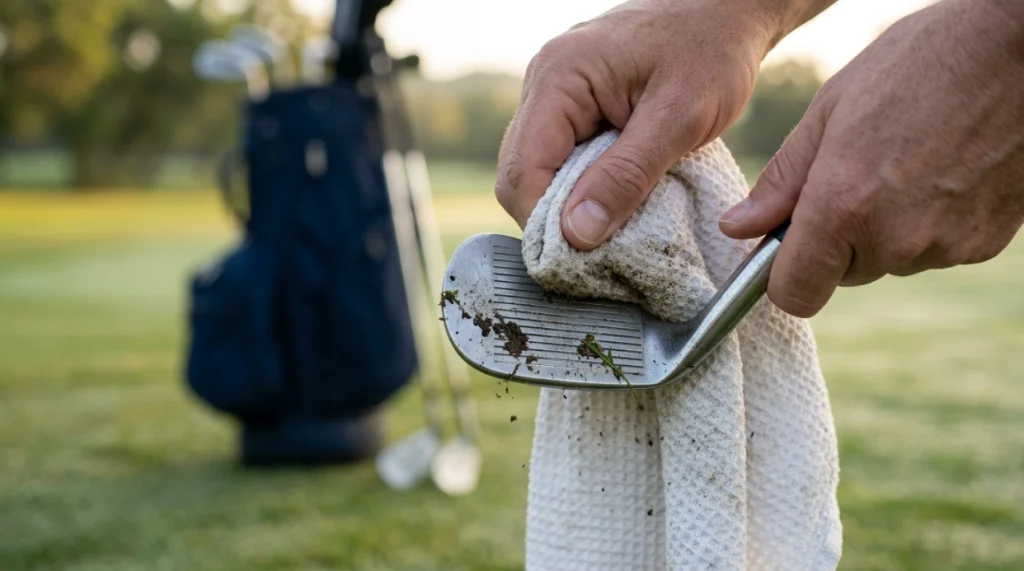
A thick towel can clean grooves more effectively when its surface has useful texture. Waffle microfiber and terry loops can reach across uneven areas better than a smooth, flat cloth.
Thickness alone isn’t the magic ingredient. Texture, moisture, and technique matter just as much.
Why grooves matter when cleaning clubs
Iron and wedge faces contain precisely designed grooves. The USGA’s equipment guidance explains that groove dimensions and spacing are controlled under the Equipment Rules.
That makes the clubface a poor place to let dried mud build up. Dirt can sit across the face and inside the recessed areas.
I prefer a simple two-stage routine rather than aggressively scrubbing the club.
- Dampen part of the towel: Use enough water to soften fresh dirt without soaking everything.
- Wipe the face and sole: Let the towel’s texture lift loose material.
- Check the grooves: Remove anything that remains rather than grinding grit into the finish.
- Finish with a dry area: Give the head a final wipe before returning it to the bag.
A waffle pattern is useful here because its raised and recessed texture gives the fabric more contact points. Terry cloth uses small loops that create a similarly textured surface.
A smooth towel can still remove moisture. It simply offers less mechanical texture for stubborn debris.
What Makes a Golf Towel Feel Thick?
The material matters, but construction often matters more. Cotton terry and microfiber can both feel substantial while behaving differently when wet.
As of 2026, both remain common golf-towel choices. Waffle microfiber is especially popular when quick drying and club cleaning are priorities.
Cotton terry towels
Cotton terry uses raised loops of yarn. Those loops create the plush thickness most people associate with bath towels.
The result feels soft and substantial. Cotton also works well when you want a comfortable towel for hands, moisture, or a classic large caddie-style setup.
- Main strength: Soft feel and generous moisture capacity.
- Tradeoff: Thick cotton can stay damp longer after becoming saturated.
- Best fit: Golfers who value feel, size, and a traditional towel.
Microfiber towels
Microfiber uses extremely fine synthetic fibers. It can feel lighter than heavy cotton while still providing a dense cleaning surface.
Many golf versions use a waffle pattern instead of a flat finish. That texture helps the towel contact dirt around a clubface.
- Main strength: Efficient cleaning with relatively quick drying.
- Tradeoff: Feel varies widely between inexpensive and better-made microfiber.
- Best fit: Golfers who clean clubs frequently throughout the round.
Waffle weave is a construction, not a fiber
This distinction causes plenty of confusion. A waffle towel gets its name from the grid-like structure of the fabric, not necessarily the raw material.
That three-dimensional structure increases usable surface texture without requiring a huge, fluffy pile.


Thick vs. Thin Golf Towels: Which Is Better?
A thick golf towel is usually better for frequent club cleaning and wet conditions. A thin towel wins when low weight, compact storage, and fast drying matter most.
Neither design is automatically right for every golfer.
| Feature | Thick Golf Towel | Thin Golf Towel |
|---|---|---|
| Moisture capacity | Usually higher because more fabric is available | Lower during repeated wet cleaning |
| Cleaning texture | Often deeper when terry or waffle construction is used | Can be effective but offers less material depth |
| Drying | Can take longer, especially with heavy cotton | Usually dries faster |
| Bag space | Takes more room and adds more wet weight | Compact and easier to pack |
| Best use | Muddy courses, wet grass, frequent club cleaning | Dry weather, range sessions, backup towel |
For me, the most practical setup isn’t the thickest towel available. It’s one substantial towel that stays useful without becoming a waterlogged weight hanging from the bag.
During persistent rain, two towels can work better than one giant towel. Keep one exposed for dirty clubs and protect the second for grips and hands.
How Thick Should a Golf Towel Be?
Choose thickness according to how you play, not according to which towel feels most luxurious in the shop. Your conditions and cleaning routine should drive the decision.
There isn’t one required golf-towel thickness under the Rules of Golf. Towels are practical accessories rather than standardized club specifications.
Choose a thicker towel when:
- You regularly play on wet or muddy courses.
- You walk through heavy morning dew.
- You clean the clubface after most shots.
- You want one damp area and one dry area.
- You prefer a large towel draped over the bag.
Choose a lighter towel when:
- You carry your bag and minimize weight.
- You mostly play in dry conditions.
- You already carry a separate club brush.
- You want something that dries quickly between rounds.
- You need a small backup towel rather than a primary cleaning towel.
Don’t judge thickness by appearance alone. A bulky towel with poor construction can be less useful than a lighter waffle microfiber towel.
The R&A Equipment Rules are useful when you need official information about regulated golf equipment. For a towel, however, function and convenience are the deciding factors.
How Should You Use and Care for a Thick Golf Towel?
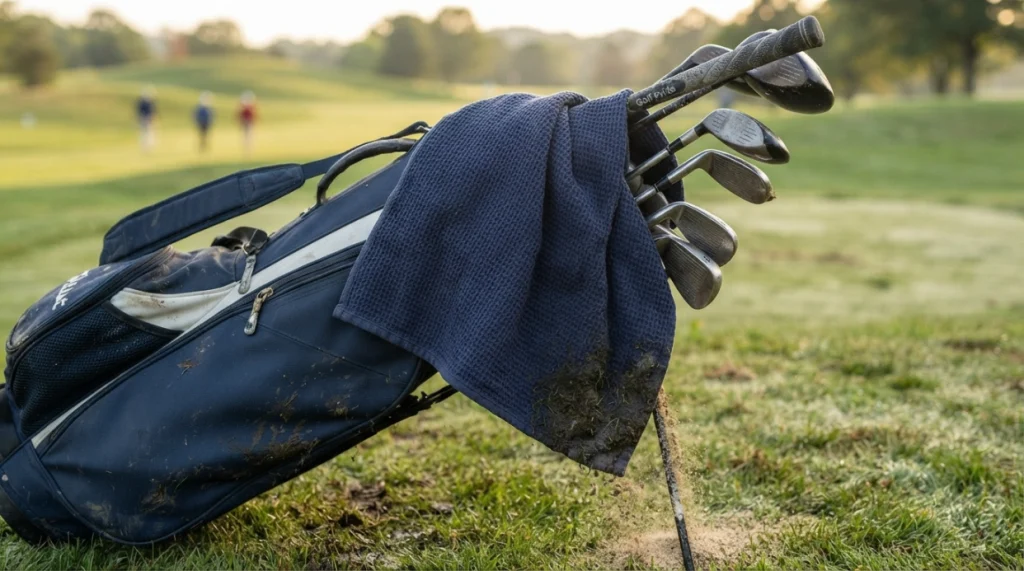
A good golf towel lasts longer when you separate dirty cleaning from dry wiping. That also keeps grit away from grips, hands, and delicate club finishes.
My preferred setup is simple enough to repeat every round.
- Wet one end: Use the damp area for mud, grass, and golf balls.
- Keep the middle cleaner: Use it for lighter clubface wiping.
- Protect one dry section: Reserve it for grips and hands.
- Shake out debris: Don’t keep folding loose sand back into the fabric.
- Wash after dirty rounds: Soil left in the towel makes the next cleaning less effective.
Don’t let a thick towel stay wet in the bag
A damp towel stuffed into a closed pocket dries slowly. Hang it where air can circulate after your round.
Follow the towel manufacturer’s washing instructions. Fabric softeners can change how some microfiber products handle moisture, so check the care label before adding them.
Inspect the towel for embedded grit before wiping polished or painted surfaces. A soft towel isn’t helpful if abrasive debris is trapped inside it.
If you’re working on your wider equipment routine, the USGA Equipment Standards and R&A equipment resources provide official guidance about clubs, balls, grooves, and other regulated equipment.
Frequently Asked Questions
Why are golf towels thicker than normal towels?
Golf towels are often made with substantial terry loops, dense microfiber, or waffle construction because they must repeatedly handle water, mud, sand, and grass. The extra material also lets golfers keep separate damp and dry sections during a round.
Are thick golf towels more absorbent?
They often have greater moisture capacity because they contain more usable fabric, but thickness isn’t the only factor. Fiber type and weave also influence absorption, drying speed, and how the towel behaves once wet.
Is microfiber or cotton better for a golf towel?
Microfiber usually suits golfers who prioritize quick drying and frequent club cleaning. Cotton terry offers a softer, heavier feel and can hold plenty of moisture. The best choice depends on weather, bag weight, and personal preference.
Why do golf towels have a waffle texture?
Waffle construction creates a raised grid with recessed areas. This gives the towel extra texture for contacting dirt around a clubface while allowing a microfiber towel to remain relatively light and quick drying.
Should I wet my golf towel before playing?
You can dampen one section before the round if you expect to clean muddy clubs or golf balls. Keep another section dry. Soaking the entire towel removes your dry area and adds unnecessary weight.
Do professional golfers use thick towels?
Large caddie-style and textured microfiber towels are common around high-level golf because players and caddies clean equipment throughout a round. The exact towel varies, but having enough usable surface area is more important than maximum thickness.
Can a golf towel be too thick?
Yes. An excessively bulky towel can become heavy when saturated, take longer to dry, and occupy unnecessary bag space. The ideal towel provides enough absorbency and cleaning texture without becoming inconvenient.
Final takeaway: Golf towels are thick for practical reasons. The extra material and textured construction help manage moisture, lift dirt, clean clubfaces, and preserve a usable dry section during a full round.
Choose the towel that matches your course conditions and routine rather than buying the thickest option available. Keep part of it damp, protect part of it dry, and clean it before the next round.