
Strong Golf Grip: What It Is, Benefits, Problems, and How to Use It

Quick Answer
A strong golf grip means your hands are rotated more toward your trail side on the handle than they would be with a neutral grip. For a right-handed golfer, that usually means seeing more knuckles on the lead hand and positioning the trail hand slightly underneath the club. It can help some players square the clubface, reduce a slice, and produce a draw, but an excessively strong grip can also encourage hooks and a closed clubface. Review the fundamentals of a proper golf grip before making a major change.
Signs of a Strong Golf Grip
- More lead-hand knuckles: A right-handed player may see three or more knuckles at address.
- Hands rotated right: Both hands sit farther clockwise around the handle for a right-handed golfer.
- Trail hand underneath: The palm and fingers of the lower hand tend to sit more beneath the grip.
- Closed-face tendency: The position can make it easier for some golfers to return the face less open.
- Draw potential: A strong grip can support a right-to-left ball flight for a right-handed player.
Before Changing Your Grip
- Make small adjustments and watch your starting direction, curve, and contact instead of rotating both hands dramatically at once.
A strong golf grip can be a useful swing adjustment, but “strong” does not mean squeezing the club harder. It describes how your hands are positioned around the handle.
I like to treat grip changes as a ball-flight experiment rather than a permanent fix. A small change can help, while an extreme change may simply replace a slice with a hook.
In This Guide
What Is a Strong Golf Grip?
A strong golf grip is a hand position where the hands are rotated toward the golfer’s trail side relative to a neutral position. For a right-handed player, the hands rotate clockwise around the handle.
For a left-handed golfer, the direction is reversed. The important point is that “strong” describes orientation, not grip pressure.
Definition: A strong golf grip places the hands farther toward the trail side of the club than a neutral grip, influencing how the wrists and clubface can move during the swing.
What does a strong lead-hand grip look like?
Set the club down normally and look at your lead hand. A noticeably strong position usually exposes more knuckles than a neutral position.
The “V” formed between your lead thumb and index finger also tends to point farther toward your trail shoulder. Treat that observation as a reference, not a universal measurement.
- Right-handed golfer: The left hand rotates farther clockwise.
- Left-handed golfer: The right hand rotates farther counterclockwise from the player’s perspective.
- Club placement: The handle should still feel supported rather than trapped awkwardly in the palm.
- Pressure: Hold the club securely without creating excessive tension in the forearms.
What does the trail hand do?
The trail hand should complement the lead hand rather than fight it. With a stronger grip, that hand commonly sits somewhat farther underneath the handle.
The palms should feel like they can work together. If one hand is strong and the other is dramatically weak, controlling the face can become more complicated.
The PGA of America is also a useful starting point when you want professional instruction instead of making major swing changes alone.
Section Takeaway: A strong grip describes hand rotation around the handle, not how tightly you squeeze it. Both hands should work together rather than being placed in conflicting positions.
Strong vs Neutral vs Weak Golf Grip: What Changes?
A strong, neutral, and weak grip mainly differ in hand orientation. None is automatically correct for every golfer.
Your swing direction, wrist movement, clubface control, mobility, and preferred shot shape all affect which position works best.
| Grip Position | Lead Hand | Typical Face Tendency | Possible Ball-Flight Tendency |
|---|---|---|---|
| Strong | Rotated toward trail side | Can encourage less-open or more-closed delivery | May support a draw or hook |
| Neutral | Between strong and weak | Balanced starting reference | Often used as a baseline for straighter flight |
| Weak | Rotated toward target side | Can make the face easier to leave open | May support a fade or slice tendency |
The table shows tendencies, not guarantees. Ball flight also depends on where the clubface points relative to the swing path at impact.
Is a neutral grip always better?
No. A neutral position is useful because it provides a sensible reference point, especially for a beginner.
However, golfers have different release patterns and physical characteristics. A slightly stronger position may be more functional for one player than a textbook-neutral grip.
Golf instruction becomes more useful when you connect hand position with actual ball flight. That is why I prefer testing small changes instead of chasing a photograph of a “perfect” grip.
Section Takeaway: Strong, neutral, and weak grips are reference positions rather than absolute rules. Judge a grip by repeatable contact and clubface control, not appearance alone.
What Are the Benefits of a Strong Golf Grip?
A stronger grip can help certain golfers deliver the clubface in a less-open position. That makes it particularly interesting to players who fight a persistent fade or slice.
It can also feel more natural for golfers whose wrist action makes a neutral grip difficult to square consistently.
1. It may help a golfer who leaves the face open
A slice often involves a clubface that is open relative to the swing path. Strengthening the grip may make it easier for some golfers to change that face relationship.
That does not mean every slice is a grip problem. Alignment, swing path, contact location, and setup can create similar results.
2. It may make a draw easier to produce
A draw curves from right to left for a right-handed golfer. The direction reverses for a left-handed player.
A stronger grip can support that pattern when it works with the rest of the swing. The grip alone cannot guarantee a draw.
3. It can reduce the need for conscious hand manipulation
Some players feel they must rapidly rotate their hands to stop the ball leaking right. A suitable grip may let the wrists and clubface behave more naturally.
That can simplify the swing thought. Simpler is usually easier to repeat under pressure.
- Watch the ball’s starting direction.
- Track how much it curves.
- Notice whether contact stays centered.
- Check whether your finish remains balanced.
- Change only one grip variable at a time.
When I evaluate a grip change on the range, I care more about the pattern than one perfect shot. A single draw proves very little if the next four balls start left and keep turning left.
Pro tip: If changing your grip causes wrist, hand, elbow, or forearm discomfort, stop forcing the position and ask a certified golf instructor or qualified fitter to check your setup.
Section Takeaway: The main practical benefit of a strong grip is clubface management. It can help certain golfers reduce an open-face pattern, but it must match the rest of the swing.


Can a Strong Golf Grip Cause Problems?
Yes. A grip can become too strong for the golfer’s release pattern, creating an excessively closed clubface and shots that start or curve too far left for a right-handed player.
The opposite directions apply to a left-handed golfer.
Hooking the ball
A hook is the classic warning sign. The ball curves aggressively toward the golfer’s lead side because the face-to-path relationship creates too much curvature.
If your normal fade suddenly becomes a severe hook after strengthening your grip, you may have moved too far.
Pulling shots left
A strong grip does not only affect curve. Depending on your swing, it may also contribute to a clubface that points left of the target at impact.
A ball that starts left and stays left is different from a hook. Pay attention to both start line and curvature when diagnosing the change.
Reducing loft at impact
Hand and wrist conditions influence the club’s delivered loft. A grip that encourages a more closed or de-lofted delivery can change trajectory.
That may be useful in some swings and troublesome in others. Do not judge the change only by whether the ball travels farther.
Creating excessive tension
Some golfers hear “strong grip” and squeeze harder. That is a separate issue.
Excessive pressure can make the hands, wrists, and forearms feel rigid. Your goal is secure control without unnecessary tension.
- Too many hooks: Move gradually toward neutral.
- Low pulls: Check face orientation and overall setup.
- Forearm tension: Reduce pressure rather than rotating the hands again.
- Inconsistent contact: Recheck hand placement before changing swing mechanics.
The USGA publishes the Rules of Golf and equipment standards, while grip technique itself remains a coaching and performance choice within the equipment rules.
Section Takeaway: A strong grip can be overdone. Hooks, pulls, uncomfortable tension, and an overly closed clubface are signs that the grip deserves another look.
How Do You Use a Strong Golf Grip Correctly?
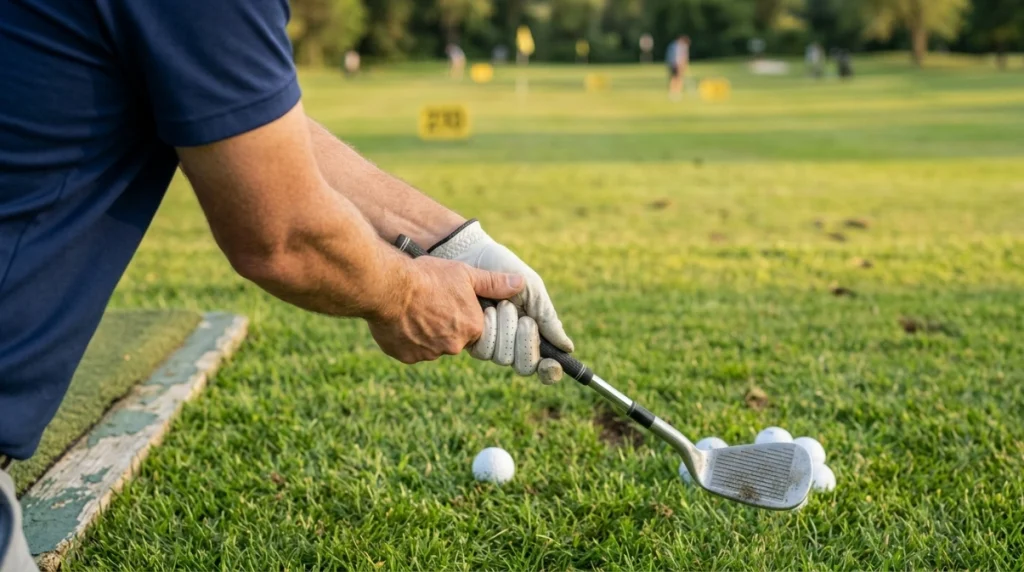
Start from neutral and strengthen the position in small increments. This gives you a clean reference and makes the resulting ball-flight changes easier to understand.
Avoid rotating your hands as far as possible on the first attempt.
- Set the clubface first. Place the club behind the ball with the face aimed at your intended target.
- Place the lead hand. Hold the handle comfortably through the fingers and rotate the hand slightly toward the trail side.
- Check the knuckles. Notice how many lead-hand knuckles you can see without forcing the wrist.
- Add the trail hand. Let it fit against the lead hand so the two hands feel coordinated.
- Reduce excess pressure. The club should feel secure without crushing the handle.
- Hit short shots first. Begin with controlled wedge or short-iron swings before moving to the driver.
- Read the ball flight. Track contact, start line, trajectory, and curve.
How many knuckles should you see?
Knuckle count is a useful visual checkpoint, but it should not become an obsession. Hand shape, wrist anatomy, camera angle, and how the club sits can change what you see.
A neutral grip often shows roughly two lead-hand knuckles from the golfer’s viewpoint. A stronger grip generally exposes more.
Should the grip sit in your fingers or palm?
For a conventional full-swing grip, positioning the handle through the fingers of the lead hand generally allows the hand and wrist to support the club effectively. Let the heel pad sit securely over the handle.
Do not copy an extreme position simply because it works for another golfer. Grip size, hand size, and swing style all change what feels functional.
What grip pressure should you use?
Use enough pressure to control the club without allowing it to slip. You should not feel as though your forearms are locked before the takeaway begins.
Grip pressure can increase naturally during a fast swing. The mistake is starting with unnecessary tension.
The R&A provides authoritative rules resources for golfers worldwide, which can be useful alongside instruction as you learn the game.
Pro tip: A PGA professional can check your grip from face-on and down-the-line views before you rebuild your swing around a hand position that may not suit you.
Section Takeaway: Build a strong grip gradually from a neutral reference. Then use ball flight and comfort to decide whether the change improves your swing.
Who Should Consider a Strong Golf Grip?
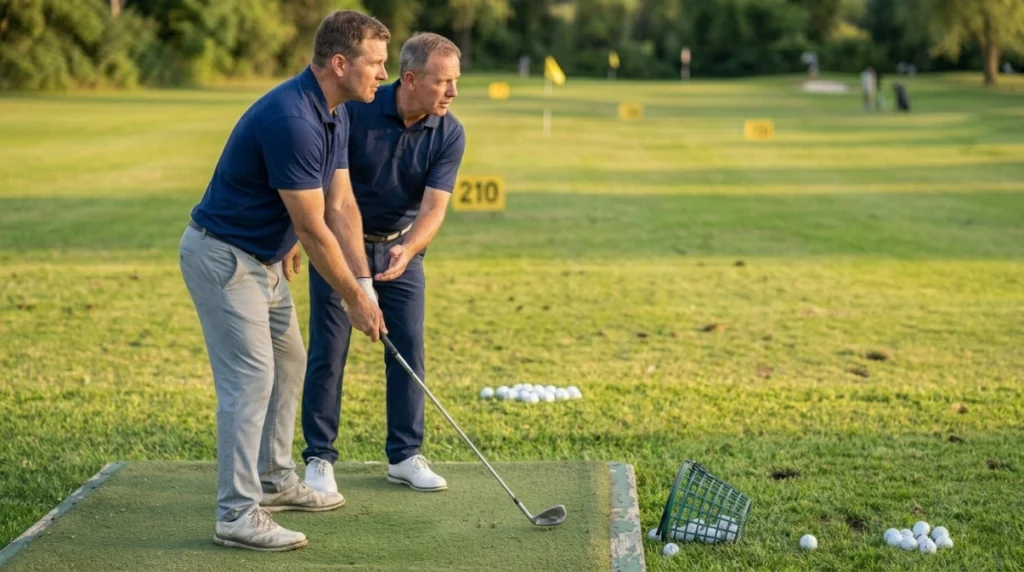
A strong golf grip is most worth testing when your current hand position contributes to a predictable clubface problem. It should solve a specific issue rather than become a change made because it sounds powerful.
Golfers who consistently leave the face open may be candidates. Players who already hook the ball usually need more caution.
A strong grip may suit you if:
- Your shots repeatedly curve toward the trail side.
- Your clubface tends to arrive open at impact.
- Your current grip feels unusually weak or unstable.
- A qualified instructor has identified grip orientation as part of your ball-flight problem.
- A slightly stronger position produces better contact without creating hooks.
Be cautious with a stronger grip if:
- You already fight a hook.
- Your shots frequently start toward the lead side.
- Your trail hand already sits dramatically underneath the handle.
- You feel wrist discomfort when rotating the hands.
- Your existing grip produces predictable, controlled ball flight.
Beginners often benefit from learning a neutral reference first. That makes later adjustments easier to understand because you know what changed.
A stronger grip can still be perfectly functional for a beginner when it fits naturally. The important goal is consistency, not forcing every golfer into the same photograph.
I would also avoid changing the grip, stance, backswing, and ball position during one practice session. When four variables move together, you cannot tell which change produced the result.
Section Takeaway: Use a strong grip when it addresses a clear clubface or ball-flight pattern. Keep your current grip if it already produces comfortable, repeatable shots.
Strong Golf Grip FAQs
Does a strong golf grip fix a slice?
A strong grip can help some golfers reduce a slice by making it easier to return the clubface less open. However, slices can also come from swing path, setup, alignment, and strike location. Treat the grip as one diagnostic variable rather than an automatic cure.
Does a strong golf grip cause a hook?
It can contribute to a hook when the grip causes the clubface to become too closed relative to the swing path. If strengthening your grip turns a mild fade into severe leftward curvature for a right-hander, move gradually back toward neutral.
Is a strong golf grip good for beginners?
A slightly strong grip can work for a beginner, but learning a neutral reference first makes troubleshooting easier. Beginners should focus on comfortable hand placement, reasonable grip pressure, balanced setup, and predictable contact before making extreme grip adjustments.
Does a strong grip mean squeezing the golf club harder?
No. “Strong” describes the rotation and orientation of the hands around the handle. Grip pressure describes how tightly you hold it. You can have a strong hand position while still using comfortable pressure without excessive forearm tension.
How many knuckles should show with a strong golf grip?
A strong lead-hand position commonly shows more knuckles than a neutral grip, often around three or more for a right-handed golfer. Use knuckle count only as a checkpoint because hand shape, wrist anatomy, and viewing angle can change the appearance.
Can you use a strong grip with a driver and irons?
Yes. A golfer can use the same general grip orientation with both drivers and irons. However, ball position, delivered loft, swing path, and impact conditions differ by club, so monitor whether the grip produces consistent results throughout the bag.
Do professional golfers use strong grips?
Professional golfers use a range of grip styles because their release patterns and swings differ. The existence of successful strong, neutral, and weaker grips at high levels reinforces an important point: the grip must work with the golfer’s overall motion.
Should You Try a Strong Golf Grip?
A strong golf grip is worth testing if you struggle to control an open clubface or repeatedly lose shots toward your trail side. Make the adjustment gradually and judge it by your complete shot pattern.
Watch contact, starting direction, curve, trajectory, and comfort. Those clues tell you far more than simply counting knuckles.
Keep the change when it makes your ball flight easier to predict. Move back toward neutral if it creates hooks, pulls, tension, or discomfort.
The goal is not to own the strongest grip possible. It is to build a grip that lets you return the clubface consistently and swing without unnecessary manipulation.
Start with small changes, hit controlled shots, and let the ball flight tell you whether your grip is helping.