
How Do You Use a Golf Towel to Clean Golf Grips?

Quick Answer
To clean golf grips with a golf towel, lightly dampen a clean section of the towel, wrap it around the grip, and wipe from the butt end toward the shaft. Rotate the club as you wipe, then use a separate dry section to remove all moisture before playing. For deeper maintenance, check the manufacturer’s golf grip care guidance.
Quick Grip-Cleaning Steps
- Wet one section: Make part of the towel damp rather than soaking wet.
- Wrap the grip: Hold the towel firmly around the grip without squeezing water into it.
- Wipe and rotate: Turn the club while moving the towel along the entire gripping surface.
- Target dirty areas: Give extra attention to spots where your thumbs and palms sit.
- Dry completely: Finish with a clean, dry section before putting the club back in your bag.
Best On-Course Habit
- Keep one part of the towel damp for cleaning and another part completely dry for grips and hands.
A golf towel can do more than wipe mud from an iron face. I also use mine to keep golf grips cleaner when sweat, dust, sunscreen, moisture, and normal hand oils start making them feel slick.
In This Guide
How Do You Clean Golf Grips With a Golf Towel?
The easiest method is to use a slightly damp section for cleaning and a completely dry section for finishing. You don’t need to soak the grip during a round.
Definition: Cleaning a golf grip means removing surface moisture, dirt, sweat, skin oils, sunscreen, and other residue that can reduce the grip’s clean, textured feel.
Step 1: Choose a clean part of the towel
Don’t start with the same muddy section you just used on a wedge. Sand and grit belong on the club-cleaning side of the towel, not on your grips.
- Use a clean towel surface.
- Keep obvious mud and sand away from the grip.
- Separate your club-cleaning area from your grip-drying area.
Step 2: Lightly dampen the towel
Add enough water to make the fabric damp. It should feel moist in your hand without dripping when you squeeze it lightly.
I usually wet one corner before the round. That leaves most of the towel available for drying grips, hands, clubfaces, and golf balls when appropriate.
Step 3: Wrap the towel around the grip
Place the damp section around the top of the grip. Apply light, even pressure with your hand.
- Start near the butt end of the club.
- Wrap the towel around the grip.
- Rotate the club as you wipe.
- Work down toward the lower end of the grip.
- Repeat on any visibly dirty areas.
Pay extra attention to the thumb and palm zones. Those areas often collect the most residue because your hands contact them repeatedly.
Step 4: Dry the grip before swinging
This step matters as much as cleaning. Move to a completely dry section and wipe the entire grip again.
Run your hand over the surface afterward. If the grip still feels wet, give it another dry pass before hitting a shot.
Section Takeaway: A damp wipe removes light surface grime, but the final dry wipe is what makes the grip ready for play again.
Should You Use a Wet or Dry Golf Towel on Grips?
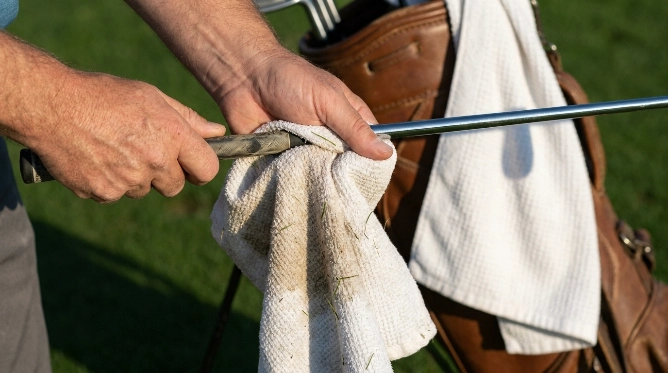
Use both. A damp towel works better for loosening normal residue, while a dry towel removes moisture and handles quick maintenance during play.
I think of the two sections as having different jobs. The damp area cleans; the dry area finishes.
| Grip Condition | Towel Setup | Suggested Routine | Best Use |
|---|---|---|---|
| Light sweat or moisture | Dry towel | 1-2 complete wipes | Between shots |
| Dust or light residue | Damp then dry | 2-3 gentle passes | During or after a round |
| Heavy buildup | Deeper cleaning method | Follow grip-maker care instructions | Between rounds |
| Rain-soaked grip | Clean dry towel | Dry until no surface moisture remains | Wet-weather play |
When a dry towel is enough
A dry towel is usually enough when the grip is only wet from rain, humidity, or your hands. Wrap the fabric around the grip and twist the club gently inside it.
- Use a genuinely dry section.
- Dry your hands at the same time.
- Check the grip before addressing the ball.
The PGA of America is also a useful resource for broader playing and equipment-care guidance.
When water helps
Water becomes more useful when dirt and oily residue are sitting on the grip. A damp towel can loosen that surface film better than repeatedly rubbing it with dry fabric.
Don’t turn the grip into a sponge. More water doesn’t automatically mean better cleaning.
Section Takeaway: Use moisture to loosen grime, then remove that moisture completely before you play.
What Type of Golf Towel Works Best for Cleaning Grips?
A clean microfiber or soft cotton golf towel works well for routine grip care. The more important factor is keeping a clean section available.
Golfers often focus on towel material and forget towel management. A premium towel covered in bunker sand isn’t the towel I want wrapped around a grip.
- Microfiber: Lightweight, absorbent, and easy to keep on a golf bag.
- Cotton: Soft and familiar, with good moisture absorption.
- Waffle texture: Useful when you also want the towel for clubface cleaning.
- Large caddie towel: Provides plenty of room for separate wet and dry zones.
- Compact towel: Easier to carry but offers less clean surface during a wet round.
Keep the grip section separate
My preferred setup is simple. I reserve one end for dirty clubheads and the opposite end for hands and grips.
If conditions are especially muddy, I carry a second small towel. That prevents wet soil and bunker sand from spreading across every usable section.
What about magnetic and clip-on towels?
The attachment style doesn’t change how well the fabric cleans a grip. It changes how quickly you can reach the towel during a round.
- Carabiners work well on bag loops.
- Magnets can make cart-side access convenient.
- Center-slit caddie towels can hang over clubs or bag hardware.
- Tri-fold towels keep a compact profile.
Accessibility matters more than it sounds. If the towel is buried inside a pocket, most golfers won’t use it consistently.


How Often Should You Clean Golf Grips?
Wipe your grips whenever they feel dirty, sweaty, or wet during play. Give them a more complete cleaning between rounds when normal towel wiping no longer removes the buildup.
There isn’t one perfect calendar schedule for every golfer. Climate, frequency of play, hand perspiration, sunscreen use, and grip material all change how quickly residue accumulates.
During a round
- Dry the grip after rain.
- Wipe it after noticeable sweat buildup.
- Clean your hands before returning them to the grip.
- Use a damp section only when residue needs loosening.
Hot, humid rounds are when I pay the most attention. A quick wipe takes seconds and is easier than waiting until several clubs feel dirty.
After a round
Check the grips while you’re cleaning the rest of the bag. A grip that still feels dirty after a towel wipe may need a deeper cleaning at home.
Follow the cleaning instructions provided by the grip manufacturer. Different grip materials and surface designs can call for different care.
Know when cleaning isn’t enough
Cleaning can’t reverse normal material wear. A grip can be perfectly clean and still be worn out.
- Look for smooth or polished areas.
- Check for cracking or crumbling.
- Notice areas where the original surface texture has disappeared.
- Inspect the places where your thumbs normally rest.
If the grip itself is deteriorating, replacement makes more sense than aggressive scrubbing. The USGA equipment rules on golf grips are useful when you also want to understand the equipment requirements that apply to grip design.
Section Takeaway: Clean grips as conditions demand, but don’t mistake permanent wear for removable dirt.
What Grip-Cleaning Mistakes Should You Avoid?
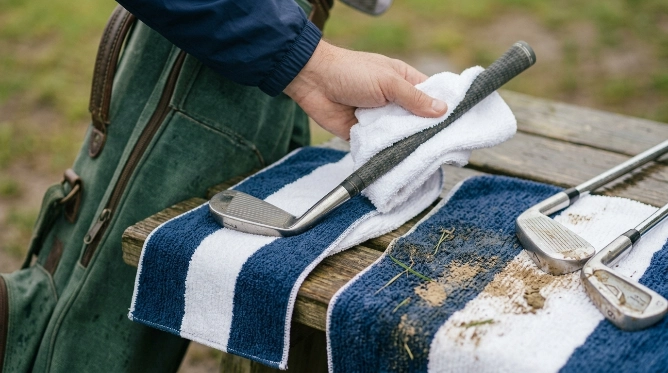
The biggest mistake is using the dirtiest part of your towel on the grip. That can move sand, mud, and grass residue from the clubhead directly to the surface your hands touch.
Using too much water
A slightly damp towel usually handles routine on-course cleaning. Saturating the grip makes drying harder and leaves you waiting longer before the club feels ready.
Skipping the drying step
Don’t clean a grip and immediately make a swing while it is still wet. Finish with a separate dry section first.
- Dry the entire grip.
- Dry your hands.
- Check for remaining slippery spots.
Scrubbing aggressively during the round
Routine towel cleaning should be gentle. You are trying to lift surface contamination rather than grind at the grip material.
If a few gentle passes aren’t enough, save the deeper cleaning for after the round. Follow the care instructions for your specific grip.
Using one wet section for everything
I see this more often than any other towel problem. A golfer wets the entire towel, cleans clubs with it, then has nothing dry available when rain reaches the grips.
A better approach is to deliberately create zones.
- Dirty zone: Clubfaces, grooves, grass, and mud.
- Damp clean zone: Light grip cleaning.
- Dry zone: Grips, hands, and final drying.
That simple organization makes one towel far more useful across 18 holes.
Frequently Asked Questions
Can you clean golf grips with just a towel?
Yes. A damp golf towel works well for routine surface cleaning when the grip has light dirt, sweat, or hand residue. Follow with a dry section before playing. Heavy buildup may require a deeper cleaning method recommended by the grip manufacturer.
Should you wet a golf towel before cleaning grips?
Lightly wet one section rather than soaking the whole towel. The damp fabric helps loosen surface grime, while keeping another section dry gives you a way to remove moisture before you use the club again.
Can you use the same towel for golf clubs and grips?
Yes, but separate the towel into different areas. Keep muddy clubheads and bunker sand on one section, then reserve a cleaner section for grips and hands. Carrying a second towel can be useful during wet or muddy rounds.
Can a dirty grip affect how the club feels in your hands?
It can. Sweat, dirt, sunscreen, skin oils, and moisture can change how the grip surface feels. Cleaning removes surface contamination, although it can’t restore grip material that has become smooth, cracked, or permanently worn.
Should I use a microfiber or cotton towel on golf grips?
Either can work for routine cleaning. Microfiber is lightweight and dries quickly, while cotton offers a soft, absorbent surface. Cleanliness matters more than the label, so avoid using a section covered with grit or mud.
How do you keep grips dry in the rain?
Protect part of your towel from the rain and reserve it only for grips and hands. Dry the grip immediately before each shot, keep spare gloves available, and avoid laying the dry section of your towel on wet ground.
Final Takeaway
Using a golf towel to clean golf grips is simple: dampen one clean section, wipe while rotating the club, and finish with a completely dry section. Keep the dirty club-cleaning area separate from the part that touches your grips.
In 2026, I still consider this one of the easiest equipment-care habits to build into a round. It takes only a few seconds and keeps your towel doing more than just cleaning grooves.
Start with a simple wet-and-dry towel setup on your next round. If a grip stays slick or looks physically worn after cleaning, inspect the grip itself rather than scrubbing harder.