
How Do You Use a Golf Towel to Clean a Putter?

Quick Answer
To clean a putter with a golf towel, lightly dampen one section of the towel, wipe the face and sole to loosen dirt, then use a clean dry section to remove the remaining moisture. Pay particular attention to sand, grass, and grit around the face before putting the club back into its headcover. The USGA club-face equipment guidance is also useful if you want to understand how putter faces are regulated.
Quick putter-cleaning steps
- 1. Check the face: Look for sand, soil, grass, moisture, or other debris.
- 2. Dampen a corner: Use enough water to loosen dirt without soaking the entire towel.
- 3. Wipe gently: Clean the face, sole, heel, and toe without aggressive scrubbing.
- 4. Dry the head: Use a separate dry section of the towel before replacing the headcover.
- 5. Check again: Make sure no visible grit remains where the ball contacts the face.
Simple habit
- Keep one section of your golf towel slightly damp and another section dry throughout the round.
If you’re wondering, how do you use a golf towel to clean a putter, the process is much simpler than cleaning heavily soiled irons. A putter usually needs gentle wiping, moisture control, and regular attention to the face.
I like dealing with dirt as soon as I see it. It takes seconds on the green and prevents dried mud or sand from riding around under the headcover for the rest of the round.
In This Guide
- How do you clean a putter with a golf towel?
- Should a golf towel be wet or dry for cleaning a putter?
- What parts of a putter should you clean?
- What type of golf towel works best on a putter?
- How often should you clean your putter?
- What putter-cleaning mistakes should you avoid?
- Frequently asked questions
How Do You Clean a Putter With a Golf Towel?
The easiest method is a damp-wipe-and-dry routine. Use moisture to loosen debris, gentle towel pressure to lift it, and a dry section to finish the job.
Definition: A golf towel is an equipment-care cloth used during a round to remove moisture, dirt, grass, sand, and other debris from golf equipment.
Step 1: Inspect the putter face
Before wiping anything, look at the face under decent light. Sand grains and dried soil are easier to remove when you know exactly where they are.
This matters most around the area where you normally strike the ball. PGA instruction regularly emphasizes the importance of centered contact when putting.
Step 2: Use the damp section first
Wet a small part of the towel rather than soaking the whole thing. I want the fabric damp enough to soften dirt but not dripping down the shaft.
- Fold the damp portion over two or three fingers.
- Wipe across the face with light pressure.
- Move to a clean part of the towel as debris transfers onto it.
- Wipe the sole if grass or soil has collected underneath.
For ordinary course dirt, repeated gentle passes work better than aggressive scrubbing.
Step 3: Dry the putter completely
Switch to a dry section and wipe the face, sole, heel, toe, and any recessed areas you can reach easily. The clubhead should feel dry before the headcover goes back on.
I pay extra attention after early-morning rounds. Dew can leave the putter damp even when the face doesn’t look dirty.
Step 4: Give the face one final check
Turn the putter toward the light and look for remaining grit. If you can still see dirt, repeat the damp-and-dry process.
PGA putting guidance highlights how centered contact affects start direction and speed, which is one reason I prefer starting every putt with a visibly clean hitting surface. You can read more about putter-face contact and centered strikes from the PGA of America.
Section Takeaway: Use a damp section to loosen debris, a clean section to remove it, and a dry section before replacing the headcover.
Should a Golf Towel Be Wet or Dry for Cleaning a Putter?
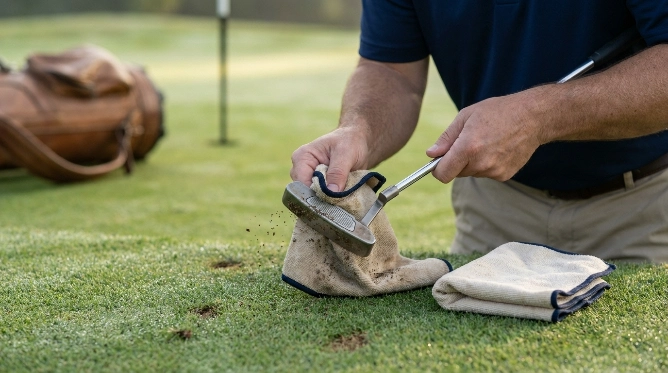
Ideally, it should be both. Reserve one area for damp cleaning and another for drying.
A dry towel works well for loose grass, dust, fingerprints, or light moisture. It struggles more with soil that has dried onto the sole or face.
When should you use a damp towel?
Use a damp section when the putter has visible mud, sticky soil, grass residue, or dried water marks that won’t lift with a dry wipe.
- Muddy conditions: Moisture helps soften dried soil.
- Sandy greens: A damp wipe can pick up fine particles before drying.
- Morning dew: Use the dry portion more often because the putter is already exposed to moisture.
- After rain: Focus on drying rather than adding more water unnecessarily.
Don’t soak the clubhead
There’s rarely a reason to drench a putter during a round. Excess water can collect in cavities and makes drying harder.
I prefer squeezing out the towel before attaching it to my bag. You want useful moisture, not a towel that drips every time you grab it.
What Parts of a Putter Should You Clean?
Start with the face, but don’t stop there. The sole, heel, toe, cavities, shaft, and grip can all pick up dirt or moisture.
Putter face
The face gets priority because it contacts the golf ball. Wipe away visible grit before it dries.
Putter faces vary widely, including milled metal faces and designs with inserts. The R&A publishes detailed Rules of Equipment covering club and putter construction.
Sole
The sole often picks up grass, sand, fertilizer residue, and wet soil when the putter is set on the ground. A damp towel usually removes this quickly.
Heel, toe, and cavities
Mallet putters can have several recessed areas where dirt and water collect. Use a folded corner of the towel to reach those areas without forcing fabric into tight openings.
Shaft and grip
Wipe the shaft if it gets wet, particularly before storage. For the grip, keep a clean towel section separate from the dirty section used on the clubhead.
That’s an easy habit to overlook. I don’t want sand from the sole transferred directly onto the part of the club I’m holding.


What Type of Golf Towel Works Best on a Putter?
Microfiber and cotton both work well when they’re clean and soft. The better choice depends on whether you prioritize quick drying, absorbency, or a plush feel.
| Cleaning Option | Best Use | Moisture Use | Main Advantage | Main Caution |
|---|---|---|---|---|
| Microfiber golf towel | Routine face and sole cleaning | Damp or dry | Fine fibers pick up light debris well | Keep grit out of the fabric |
| Cotton terry towel | Drying wet equipment | Damp or dry | High practical absorbency and soft feel | Can remain wet longer |
| Dry towel section | Final drying before headcover | Dry only | Removes leftover surface moisture | Less effective on dried mud |
| Soft club-cleaning brush | Stubborn debris on suitable surfaces | Usually used with light moisture | Reaches textured areas | Check manufacturer guidance before using on inserts or special finishes |
Why I like separating wet and dry areas
A large towel gives you enough space to create two working zones. I keep the lower corner damp and leave the opposite end dry.
That setup also prevents me from drying a freshly cleaned putter with the same muddy fabric I just used on the sole.
How Often Should You Clean Your Putter?
Check the putter whenever you see visible dirt or moisture, and give it a final wipe after the round. You don’t need an elaborate cleaning routine after every hole.
During the round
I make a quick visual check before putting whenever conditions are sandy, muddy, or wet. A basic wipe normally takes only a few seconds.
- Wipe immediately after setting the putter on muddy ground.
- Dry it after heavy dew or rain.
- Check the face after bunker-adjacent or sandy greens.
- Keep the headcover reasonably clean and dry.
After the round
Before putting the bag away, remove any remaining dirt and make sure the putter is dry. This is also a good time to inspect the headcover for trapped sand or moisture.
The PGA’s guide on putter design and fitting illustrates how much putters can differ in head shape, balance, loft, and construction. Those differences are one reason I follow the manufacturer’s care instructions whenever a finish or face insert needs special treatment.
Section Takeaway: Clean when you see debris, dry after exposure to water, and give the putter one final check before storage.
What Putter-Cleaning Mistakes Should You Avoid?
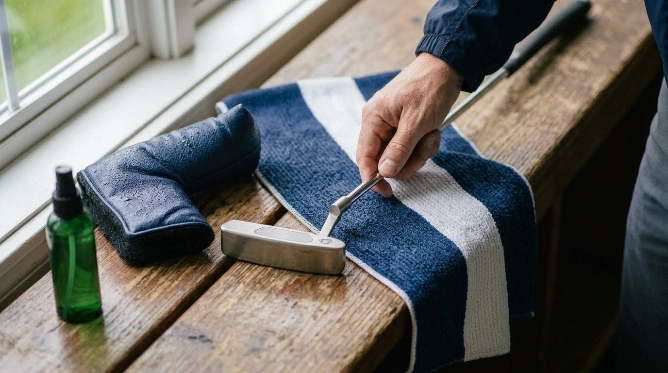
The biggest mistake is trying to make a putter spotless with excessive force. Gentle cleaning is usually enough for normal on-course dirt.
Don’t scrub trapped sand across the finish
If the towel is carrying grit from an earlier shot, switch to a cleaner section. Dragging abrasive particles repeatedly across a finish defeats the purpose of careful cleaning.
Don’t reach immediately for harsh chemicals
Putters can use different metals, coatings, paints, and face inserts. A cleaner that’s harmless on one club may not suit another finish.
For deeper cleaning at home, follow the putter manufacturer’s care directions. When uncertain, water and a soft clean cloth are the conservative starting point.
Don’t put a wet club into a damp headcover
This is the mistake I see as easiest to avoid. Dry the clubhead and check the inside of the headcover before packing everything away.
Don’t use the dirtiest towel section on the face
A towel might look clean from a distance while holding fine sand in its fibers. Rotate to fresh fabric during a dirty round.
Don’t assume every face should be brushed the same way
Some putters have metal faces, while others use inserts or specialized finishes. The safest cleaning method can therefore vary by model.
If you’re uncertain about a particular putter, check its manufacturer instructions instead of aggressively brushing it. Equipment requirements themselves also distinguish putters in several areas, as shown in the official R&A and USGA equipment guidance.
Section Takeaway: Use clean fabric, light pressure, limited moisture, and manufacturer-specific care whenever your putter has an unusual insert or finish.
Frequently Asked Questions
Can I use a microfiber golf towel on my putter?
Yes. A clean microfiber golf towel works well for routine putter cleaning because you can use one section damp and another dry. Make sure the fabric isn’t carrying sand or grit from earlier club cleaning.
Should I wet my golf towel before cleaning my putter?
You can lightly dampen part of the towel when the putter has mud or dried debris. Leave another section dry so you can remove moisture before replacing the headcover.
Can I clean a putter face after every hole?
Yes, although a full cleaning usually isn’t necessary. I check for dirt, sand, grass, and moisture and wipe only when needed.
Can I use the same golf towel for my irons and putter?
Yes, but separate the working areas. Use one part for heavily soiled irons and keep a cleaner section available for the putter, grips, or other surfaces where transferred grit is undesirable.
Should I use a golf brush on my putter?
A towel is normally enough for routine cleaning. Before using a brush, especially on a putter with an insert, coating, or specialty finish, check the manufacturer’s cleaning instructions and avoid unnecessarily aggressive bristles.
Why should I dry my putter before putting the headcover on?
Drying keeps unnecessary moisture from being trapped against the clubhead inside the headcover. It also gives you one final chance to remove grass, soil, or sand before storage.
Do I need a special golf towel just for my putter?
No. A clean cotton or microfiber golf towel can handle the job. A separate towel becomes useful when your main towel regularly gets saturated or heavily covered in sand and mud.
The simplest routine is easy to remember: inspect, damp-wipe, dry, and cover. Once that becomes part of your putting routine, keeping the face clean takes only seconds and doesn’t require another complicated piece of golf gear.
For anything related to your stroke, face angle, or inconsistent contact rather than simple cleaning, a PGA professional can help separate equipment issues from technique problems.