
Golf Glove Guide: How to Choose the Right Fit, Hand, and Material

Quick Answer
Choose a golf glove that fits like a second skin, without loose material around the palm or fingertips. Right-handed golfers usually wear it on the left hand, while left-handed golfers wear it on the right. Include one spare glove in your beginner golf equipment checklist.
What to Look For
- Correct hand: Buy the glove for your lead hand, which sits highest on the club.
- Snug fit: The material should lie flat across your palm and fingers.
- Secure closure: Leave some adjustment room instead of pulling the tab completely across.
- Suitable material: Leather prioritizes feel, while synthetic materials often improve durability and flexibility.
- Weather protection: Use dedicated rain or winter gloves when normal gloves cannot provide a secure grip.
Fast Fit Check
- Make a fist and hold a club before buying. The glove should not pinch, wrinkle, or restrict movement.
A golf glove looks like a small purchase, yet it directly affects your only connection with the club. The wrong size can bunch, slip, wear quickly, and make light grip pressure difficult.
I use this golf glove guide to explain hand selection, sizing, materials, weather options, care, and replacement. It covers what beginners need while answering the fit questions experienced golfers often overlook.
In This Guide
What Is a Golf Glove, and Do You Need One?
A golf glove is a close-fitting covering designed to improve contact between your lead hand and the club grip. It can also reduce rubbing, help manage moisture, and protect areas prone to blisters.
Definition: A golf glove creates a thin, consistent contact layer between the golfer’s hand and the club without binding the hand to the grip.
You do not have to wear one during normal play. Many golfers still prefer one because bare skin becomes slippery when the hand sweats or the grip gets damp.
What does a golf glove actually do?
The glove mainly supports grip consistency. It does not correct clubface position, swing path, poor contact, or an unsuitable club grip.
- Improves friction: The palm material helps the lead hand maintain contact with the grip.
- Manages moisture: Breathable panels and moisture-wicking materials can reduce dampness.
- Reduces rubbing: The glove limits direct friction against the skin during repeated swings.
- Provides feedback: Wear patterns can reveal excessive pressure or movement.
- Supports confidence: A secure connection can make the club feel less likely to twist or slip.
The glove works with the club’s rubber or synthetic grip. A hardened, dirty, or worn grip can still slip, regardless of glove quality.
If you are assembling your first set, focus on suitable clubs before premium accessories. This guide to the clubs beginners actually need explains how to build a practical starter bag.
Is a golf glove required under the Rules of Golf?
No rule requires you to wear a glove. However, a glove used in competition must meet the equipment requirements governing features that could create an unfair advantage.
The USGA Equipment Rules for gloves permit a plain, fitted glove made with smooth material across the gripping surfaces. They restrict excessive padding, binding features, adhesive gripping surfaces, weights, and devices that control hand position.
Ordinary gloves from established golf brands are designed with these requirements in mind. Check with the competition committee if you use an unusual training, medical, or heavily padded glove.
Can beginners play without a glove?
Yes, especially during short putting or chipping sessions. A beginner can also practice without one to learn how different grip pressures feel.
For full swings, a glove usually makes practice more comfortable. It becomes more useful during warm weather, long range sessions, or rounds played with firm grips.
Putting is personal. Many golfers remove the glove because they prefer direct feedback, while others leave it on to keep their routine simple.
A glove should never encourage squeezing. The PGA’s grip fundamentals explain why hand placement affects the clubface and shot direction.
Pro tip: Ask a PGA professional to check your hand placement if your glove repeatedly tears or develops one concentrated wear spot.
Section Takeaway: A golf glove improves contact and comfort, but it cannot replace sound grip technique or well-maintained club grips.
Which Hand Should You Wear a Golf Glove On?
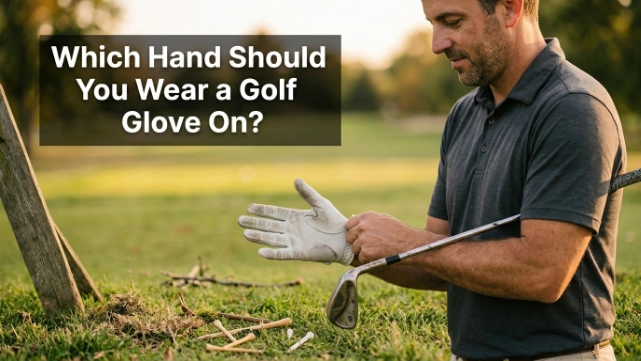
Wear a golf glove on your lead hand. That is the hand positioned closest to the end of the grip when you address the ball.
- Right-handed golfer: Wear the glove on your left hand.
- Left-handed golfer: Wear the glove on your right hand.
This labeling can confuse new golfers. A package marked “left hand” normally means the glove is made to be worn on the left hand, not used by a left-handed player.
Why does the glove go on the lead hand?
The lead hand maintains substantial contact with the club throughout the swing. It also experiences friction where the handle crosses the fingers and the heel of the palm.
The trail hand supports the grip but usually sits lower. Because it does not experience the same contact pattern, most golfers do not need a standard glove on that hand.
I always check the label and physically try the glove before buying. Packaging language varies, and assuming “right-handed glove” means “for a right-handed player” can produce the wrong purchase.
Can you wear gloves on both hands?
Yes. Wearing two gloves is practical during rain, cold weather, extended practice, or when a golfer needs extra skin protection.
Specialized rain and winter gloves are commonly sold in pairs. Both hands need reliable contact when the handles become wet or temperatures reduce hand movement.
Some golfers also use two gloves in dry conditions. Comfort and control matter more than copying another player’s routine.
Should you wear the same glove for every club?
One standard glove can be used with drivers, fairway woods, hybrids, irons, and wedges. You do not need a different glove for each category.
You may remove it for putting or delicate greenside shots. That choice concerns feel rather than a rule or equipment requirement.
If club categories remain unfamiliar, this overview of the different types of golf clubs explains what each one does. Knowing the club’s role makes equipment decisions easier.
Does hand dominance always determine glove hand?
Not always. The direction in which you swing determines the lead hand, not the hand you use for writing or throwing.
A right-handed person may play golf left-handed. That golfer would normally wear a glove on the right hand.
Before ordering online, address an imaginary ball. The hand closest to the grip cap is the hand that usually needs the glove.
Section Takeaway: Choose the glove for your lead hand—left for most right-handed golfers and right for most left-handed golfers.
How Should a Golf Glove Fit?
A golf glove should fit closely across every part of the hand without restricting movement. Think “second skin,” not a loose winter glove.
Loose fabric can move between the hand and grip. A glove that is too tight can pull at the seams, limit finger movement, and become uncomfortable.
What does a correct fit look like?
- Fingertips: Each finger reaches the end without leaving a pocket of loose material.
- Palm: The material lies flat when your hand is open.
- Knuckles: You can make a fist without sharp pulling or numbness.
- Thumb: The seam sits comfortably without twisting across the grip.
- Closure: The tab fastens securely while leaving room for adjustment.
- Wrist: The cuff stays in place without cutting into your skin.
FootJoy’s official golf glove fitting guide recommends a tight fit across the palm and fingers. It also advises leaving about one-quarter inch of the closure surface uncovered.
That uncovered area matters because leather and blended materials can relax during use. A closure already pulled completely across has little adjustment room left.
How do you measure for a golf glove?
Brand charts commonly use two measurements. Measure the length of your middle finger and the circumference around your knuckles, excluding the thumb.
- Place your hand flat with the fingers naturally together.
- Measure from the base to the tip of your middle finger.
- Wrap a flexible tape around the knuckles of your open hand.
- Keep the tape flat without pulling it tightly.
- Compare both measurements with the manufacturer’s current chart.
Do not assume one brand’s medium matches another brand’s medium. Patterns vary across FootJoy, Titleist, Callaway, TaylorMade, Ping, Cobra, Mizuno, and Srixon.
Try the exact model whenever possible. Even two gloves from one manufacturer may use different cuts or combinations of leather and stretch fabric.
What is a cadet golf glove?
A cadet glove generally has shorter fingers and a broader palm than the equivalent regular size. It is a hand-shape option, not a beginner or junior category.
Try cadet sizing when a regular glove fits across the palm but leaves extra material at several fingertips. Moving to a smaller regular size may make the palm too tight.
How can you tell if a glove is too big?
- Material bunches in the palm.
- The fingertips have visible empty space.
- The glove twists while holding a club.
- The closure pulls completely across with no adjustment room.
- Wrinkles appear when your hand closes around the grip.
An oversized glove often wears faster because the loose material rubs against itself and the club grip. It can also hide changes in grip pressure.
How can you tell if a glove is too small?
- The cuff does not reach the wrist comfortably.
- The closure barely catches.
- Seams pull sharply across the palm.
- Your fingers feel restricted, numb, or pinched.
- The glove is difficult to remove without excessive pulling.
A new leather glove may feel snug, but it should not hurt. Make several slow practice swings before deciding.
Pro tip: If sizing remains uncertain, ask a golf retailer or certified fitter to compare regular and cadet models while you hold a club.
Section Takeaway: Correct sizing means smooth material, full finger contact, free movement, and some closure adjustment remaining.

Which Golf Glove Material Is Best?
Leather offers the closest feel, synthetic material emphasizes durability and flexibility, and hybrid gloves balance both. The best choice depends on climate, practice volume, budget, and personal preference.
| Glove Type | Typical Feel | Durability | Weather Use | Best For |
|---|---|---|---|---|
| Cabretta leather | Soft and thin | Moderate with proper care | Best kept reasonably dry | Players prioritizing feedback |
| Synthetic | Flexible and supportive | Often higher | Good for regular all-weather use | Frequent practice and value |
| Hybrid | Leather feel in key areas | Moderate to high | Versatile in normal conditions | Balanced everyday performance |
| Rain glove | Textured and secure when wet | Designed for wet use | Rain and high humidity | Wet-weather rounds |
| Winter pair | Thicker and warmer | Varies by construction | Cold and windy conditions | Maintaining warmth and movement |
Cabretta leather gloves
Cabretta leather is popular because it can provide a soft, close connection with the grip. Premium tour-style gloves often use thin leather across most or all of the palm.
The tradeoff is care. Leather can become stiff, stretched, or misshapen when repeatedly soaked, crushed, or dried with direct heat.
A leather glove suits golfers who prioritize feel and willingly rotate or maintain their gloves. It may be unnecessary for a beginner who practices several times each week.
Synthetic golf gloves
Synthetic gloves use manufactured materials designed for flexibility, shape retention, breathability, or durability. Many models include stretch panels across the knuckles.
These gloves often suit range practice and warm climates. They can provide reliable everyday performance without the delicate feel of thin leather.
Hybrid golf gloves
A hybrid glove combines materials in different zones. It may use leather across the palm and thumb with synthetic or stretch fabric across the back.
This approach targets feel where the hand contacts the grip. Flexible panels can then improve movement, ventilation, or durability.
Callaway, FootJoy, Ping, Titleist, TaylorMade, Cobra, Mizuno, and Srixon all offer changing glove ranges. Compare construction rather than buying only by logo.
The official FootJoy glove comparison guide shows how material combinations differ in moisture management, breathability, durability, and feel.
Are expensive golf gloves better?
A higher price often buys softer leather, thinner construction, detailed stitching, or a tour-oriented fit. It does not guarantee longer life or a better fit for your hand.
Start with fit and intended use. A durable synthetic glove that fits correctly is more useful than a premium leather model that wrinkles across your palm.
As of 2026, model names, prices, and material blends continue to change. Check the manufacturer’s current specifications before comparing two products.
Section Takeaway: Select material by fit and playing conditions—leather for close feel, synthetic for durability, or hybrid construction for balance.
What Golf Glove Should You Use in Rain, Heat, or Cold?
Normal gloves work in mild, dry conditions. Rain, humidity, heat, and cold require different strategies because moisture and temperature change how securely you can hold the club.
What type of glove works best in rain?
Use dedicated rain gloves, usually as a pair. Their textured synthetic or knit palms are designed to maintain contact when moisture reaches the glove and grip.
For example, FootJoy describes its RainGrip pair as having a quick-drying back and a knit palm intended for wet or humid conditions. This construction differs from a thin leather glove that you try to keep dry.
- Carry the pair in a sealed section of your bag.
- Keep club grips under an umbrella or rain hood.
- Dry the handle before every shot when possible.
- Use a separate towel for hands and grips.
- Allow wet gloves to air-dry after the round.
Rain gloves may feel unfamiliar at first. Test them on the range before depending on them during a competitive round.
How should you manage gloves in hot weather?
Choose ventilation, moisture-wicking panels, and a secure fit. Rotate two or three gloves instead of saturating one glove for the entire round.
I clip the resting glove to the outside of my bag, keeping the palm open. Stuffing it into a pocket traps moisture and encourages it to dry in a wrinkled shape.
Remove the glove between shots when practical. This allows your hand and the glove to dry while reducing unnecessary stretching.
Do winter golf gloves affect feel?
Winter gloves are thicker because warmth becomes part of their job. You may notice less direct feedback compared with a thin leather glove.
That small loss of feel can be worthwhile if cold hands reduce movement or grip security. Wear both gloves so the hands stay equally protected.
- Warm your hands before reaching the first tee.
- Keep spare gloves inside a dry bag compartment.
- Use hand warmers between shots, not against bare skin for extended periods.
- Avoid gloves so bulky that they change your normal hand placement.
What should you pack for changing conditions?
A standard glove, rain pair, towel, and resealable bag cover most situations. Add winter gloves when the forecast calls for low temperatures or strong wind.
This list of what to bring to a golf course can help you prepare the rest of your bag. Check the weather before leaving home.
Stop play and follow course instructions when lightning threatens. Equipment preparation supports comfort, but these essential golf safety tips should always take priority.
Section Takeaway: Keep normal gloves dry, rotate them in heat, and carry purpose-built pairs for rain or cold.
How Long Does a Golf Glove Last?
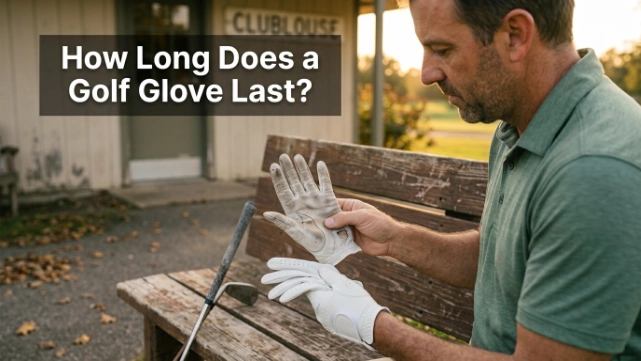
A golf glove has no fixed number of rounds. Its lifespan depends on material, fit, grip pressure, practice volume, weather, storage, and club-grip condition.
A glove may last many rounds for one golfer and wear quickly for another. Inspect its condition instead of replacing it on an arbitrary schedule.
What are the signs that a golf glove needs replacing?
- Loss of grip: The palm feels polished or slippery when dry.
- Permanent stretching: Material bunches despite the glove originally fitting correctly.
- Hard texture: Leather has dried stiff and no longer conforms to the hand.
- Holes or thinning: The palm, thumb, or fingers show worn areas.
- Damaged closure: The tab will not remain secure.
- Twisted seams: The glove no longer sits naturally around the fingers.
Do not wait for a complete tear. A stretched or glazed palm can stop providing the consistent contact you bought the glove to create.
Why does a golf glove wear out in the palm?
Common causes include excessive grip pressure, a loose fit, worn club grips, and holding the handle too far into the palm. Repeated rubbing concentrates stress in one area.
A hole near the heel pad can indicate that the end of the grip moves against the glove. Check hand placement before assuming the glove is defective.
Abrupt wear can also come from rough or damaged club grips. Clean the grips and replace them when the rubber becomes hard, cracked, smooth, or visibly worn.
Pro tip: Ask a certified instructor to inspect your grip if several gloves develop the same hole. Replacing gloves alone will not correct repeated friction.
How should you store a golf glove?
- Remove it gently instead of pulling one finger sharply.
- Lay the glove flat and smooth the fingers into shape.
- Let it air-dry at room temperature after use.
- Keep it away from heaters, dryers, and direct high heat.
- Store it flat in its original sleeve or a glove holder.
- Keep clean, dry gloves separate from wet towels.
Never leave a damp leather glove crumpled in the bottom of the bag. It may dry with deep wrinkles and a distorted finger shape.
Should you wash a golf glove?
Follow the manufacturer’s care instructions because leather, synthetic, and weather gloves differ. Aggressive detergents, machine washing, and high heat can damage some materials.
For light surface dirt, use a barely damp cloth when the care label permits it. Let the glove dry naturally while lying flat.
How many golf gloves should you own?
Most regular golfers benefit from one active glove and one dry spare. Players in hot, rainy, or humid climates may rotate three or more.
Mark gloves by purpose if you keep several. A practice glove can absorb range wear while a better-fitting glove remains ready for rounds.
Rotation does not eliminate wear, but it gives each glove time to dry. That helps preserve fit and keeps a wet glove from becoming your only option.
Section Takeaway: Replace a glove when fit, texture, or grip deteriorates, and extend its usefulness by rotating, air-drying, and storing it flat.
Golf Glove Frequently Asked Questions
Do I need a golf glove as a beginner?
No, a glove is not mandatory. However, it can reduce rubbing and provide a more consistent connection during full swings, especially during long practice sessions or warm weather.
Should a new golf glove feel tight?
It should feel snug rather than painful. The palm should remain smooth, the fingertips should reach the ends, and you should be able to make a fist without pinching or numbness.
Why do golfers remove their gloves to putt?
Many golfers prefer direct hand-to-grip feedback on short putts. Removing the glove is a personal routine, not a rule, and leaving it on is completely acceptable.
Can I use a batting, cycling, or work glove for golf?
You can use another glove during casual practice if the facility allows it. For competition, check that the design complies with equipment rules and does not include prohibited padding, binding, adhesive, or hand-positioning features.
What color golf glove is best?
Color has little effect on normal performance. White makes dirt and wear easy to see, while darker colors may hide stains but can still become worn or slippery.
Are men’s and women’s golf glove sizes different?
Size ranges and patterns may differ, but the correct choice is whichever model fits your hand properly. Use the manufacturer’s measurements instead of relying only on a gender label.
Can a golf glove fix a slice or hook?
No. A glove may improve contact with the grip, but ball curvature depends on clubface angle, swing path, impact location, and other factors that require technique or equipment evaluation.
Final takeaway: Start with the correct hand and a second-skin fit. Choose material for your playing conditions, carry a dry spare, and replace the glove when it becomes stretched, stiff, torn, or slippery. Try several sizes with a club before buying whenever possible.