
Golf Safety Tips: Essential Rules Every Golfer Should Follow

Golf is often viewed as a relaxing sport, but every round includes potential risks. A poorly aimed shot, slippery course conditions, lightning, dehydration, or incorrect equipment use can quickly turn an enjoyable day into an unsafe situation. Whether you are a beginner learning your first swing or an intermediate golfer improving your game, following proper Golf Safety Tips helps protect you and everyone around you.
Many golfers focus on improving their distance, accuracy, and score but overlook basic safety habits. Staying aware of your surroundings, respecting course etiquette, and using equipment correctly are just as important as learning swing mechanics.
This guide explains the most important golf safety practices, including how to avoid injuries, protect other players, handle weather risks, use equipment safely, and know when professional guidance can improve your game.
Quick Answer
Golf Safety Tips include staying aware of other players, waiting until the course is clear before hitting, using proper equipment, warming up before playing, protecting yourself from weather conditions, and following golf course rules. Safe habits create a better experience for everyone on the course.
Why Golf Safety Matters
Golf may not involve constant physical contact like football or basketball, but it still carries risks. A golf ball can travel at high speeds, and an unexpected shot can cause serious injuries if players are not paying attention.
Safety is important because golf is played in shared spaces. A single careless action can affect:
- Playing partners
- Golfers on nearby holes
- Course staff
- Spectators
- Yourself
A safe golfer understands that good etiquette and good safety habits go together. Respecting others on the course is part of becoming a better golfer.
Organizations such as the United States Golf Association (USGA) emphasize the importance of playing by the rules and maintaining proper conduct because golf depends heavily on player responsibility and awareness.
Essential Golf Safety Tips Every Player Should Know
1. Always Check Your Surroundings Before Hitting
One of the most important safety rules in golf is making sure the area ahead is clear before taking a shot.
Before swinging:
- Look where your ball may travel.
- Check whether another group is within range.
- Make sure course workers are safely away.
- Wait if there is any doubt.
A golfer should never hit simply because they are ready. A few seconds of awareness can prevent serious injuries.
Avoid These Common Situations:
- Hitting while another golfer is searching for a ball nearby
- Driving a cart too close to players
- Swinging a club near others without warning
- Playing through another group without permission
2. Learn Proper Golf Course Etiquette
Golf etiquette is not only about being polite. Many traditional golf habits exist because they improve safety.
Important etiquette practices include:
- Stay quiet while another player swings.
- Stand at a safe distance from other golfers.
- Avoid walking in another player’s putting line.
- Repair divots and ball marks.
- Follow the course’s local rules.
The R&A Rules of Golf provides guidance on how golfers should behave and play fairly while maintaining respect for other players.
Following etiquette helps create a safer environment and prevents unnecessary distractions.
3. Protect Yourself During Your Swing
A golf swing involves fast movement and significant force. Poor technique or lack of preparation can increase the chance of injury.

Warm Up Before Playing
Many golfers arrive at the course and immediately begin hitting long shots. This increases the risk of muscle strains, especially in the:
- Lower back
- Shoulders
- Wrists
- Elbows
- Hips
A simple warm-up routine can include:
- Light walking for a few minutes
- Shoulder rotations
- Gentle stretching
- Practice swings
- Short shots before full swings
Never treat the first tee shot as your warm-up.
Use Proper Swing Technique
Incorrect mechanics can create unnecessary stress on your body.
Common warning signs include:
- Back pain after every round
- Elbow discomfort
- Limited shoulder movement
- Loss of balance during swings
If pain continues, improving your technique with professional instruction may prevent long-term problems.
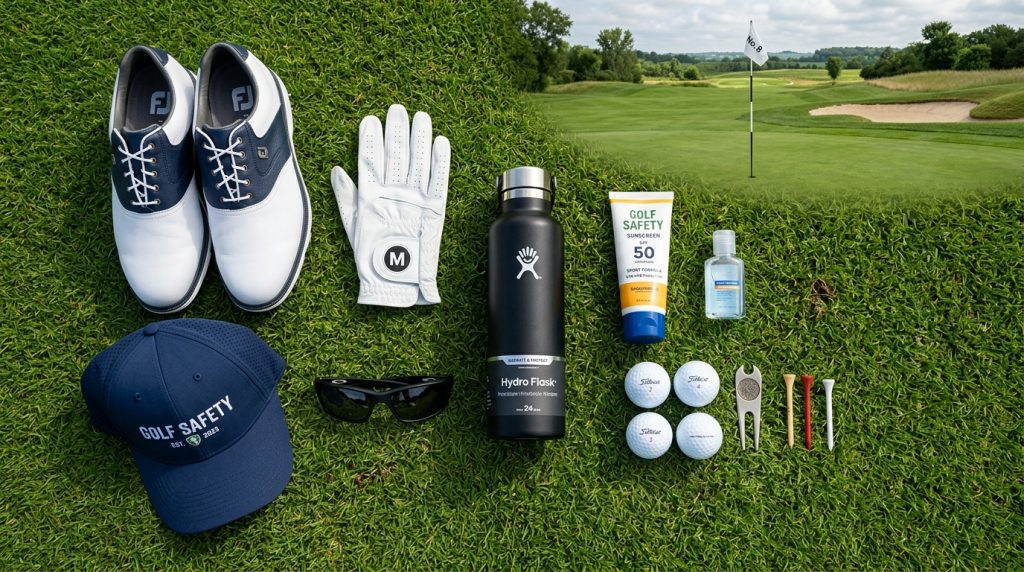
4. Wear the Right Golf Gear
The right equipment improves both performance and safety.
Essential Safety Equipment for Golfers
| Equipment | Safety Benefit | Beginner Consideration |
|---|---|---|
| Golf shoes | Improve stability and prevent slipping | Choose comfortable shoes with good grip |
| Gloves | Improve club control | Replace worn gloves regularly |
| Sunglasses | Protect eyes from sunlight | Select sports-friendly designs |
| Hat or visor | Reduces sun exposure | Helpful during long rounds |
| Rain gear | Improves comfort in wet weather | Carry lightweight options |
| Sunscreen | Protects skin from UV exposure | Reapply during long rounds |
Golf shoes are especially important because unstable footing can affect your swing and increase injury risk.
5. Be Careful Around Golf Clubs
Golf clubs can cause injuries even when players are not hitting the ball.
Safe club habits include:
- Do not swing clubs near other people.
- Keep clubs inside your golf bag when walking.
- Avoid throwing clubs after a bad shot.
- Check your surroundings before practice swings.
A practice swing can be just as dangerous as a real shot if someone is standing too close.
6. Understand Weather Safety on the Course
Golfers often continue playing through changing weather conditions, but certain conditions require extra caution.
Lightning Safety
Lightning is one of the biggest weather risks in golf because courses are open areas with limited protection.
If lightning is nearby:
- Stop playing immediately.
- Move to a safe shelter.
- Avoid standing under isolated trees.
- Do not continue because you are “almost finished.”
The National Weather Service lightning safety guidance recommends seeking proper shelter during thunderstorms because open outdoor areas provide little protection.
Heat and Sun Protection
Long golf rounds can expose players to several hours of sunlight.
To reduce heat-related problems:
- Drink water regularly.
- Wear breathable clothing.
- Use sunscreen.
- Take breaks when needed.
- Avoid excessive alcohol during hot conditions.
Signs of heat problems include:
- Dizziness
- Weakness
- Confusion
- Severe fatigue
Do not ignore these symptoms.
7. Use Golf Carts Safely
Golf carts are convenient, but careless driving can cause accidents.
Golf Cart Safety Rules
- Drive slowly around turns.
- Keep both feet inside the cart.
- Avoid steep slopes unless permitted.
- Do not overload the cart.
- Follow course cart-path rules.
Common mistakes include speeding downhill and making sharp turns on uneven ground.
8. Choose the Right Equipment for Your Skill Level
Using unsuitable equipment can create safety and performance problems.
For example:
- Clubs that are too long may affect control.
- Incorrect shaft flex can create inconsistent swings.
- Poor grip size can increase hand and wrist strain.
A beginner does not need the most expensive equipment. They need equipment that matches their body type, strength, and ability.
Beginner vs Experienced Golfer Safety Considerations
| Area | Beginner Golfer | Experienced Golfer |
|---|---|---|
| Swing control | Focus on learning safe mechanics | Maintain efficient technique |
| Equipment | Prioritize comfort and forgiveness | Optimize performance and fitting |
| Course awareness | Learn etiquette and spacing | Help maintain safe pace |
| Injury prevention | Warm up and avoid overuse | Monitor recurring issues |
| Weather planning | Prepare basic protection | Adjust strategy based on conditions |
Expert Tip

Expert Tip: Always develop the habit of looking ahead before every shot. Experienced golfers do this automatically because awareness is one of the biggest differences between casual and responsible play.
When to Get Help From a Golf Pro or Fitter
Not every safety problem can be solved through practice alone. Professional guidance can help when you notice ongoing issues.
Consider working with a golf professional or club fitter if you experience:
- Repeated swing-related injuries
- Difficulty controlling your clubs
- Poor balance during swings
- Uncomfortable equipment
- Persistent wrist, elbow, shoulder, or back pain
A golf instructor can correct unsafe movement patterns, while a club fitter can recommend equipment that better matches your physical characteristics and playing style.
Professional help is especially valuable for beginners because learning correct habits early prevents problems later.
Common Mistakes Golfers Should Avoid
Many safety problems happen because golfers become focused on their score and forget basic awareness.
Avoid these mistakes:
- Hitting without checking if the course is clear
- Standing too close to another golfer’s swing
- Ignoring weather warnings
- Playing through severe pain
- Using worn-out golf shoes with poor grip
- Driving golf carts too quickly
- Skipping warm-up before playing
- Using clubs that do not match your ability level
Small changes in behavior can significantly improve safety.
Golf Safety Tips for Beginners
New golfers should focus on developing safe habits from their first round.
A beginner checklist:
- Learn basic golf etiquette before playing.
- Practice swings in a safe area.
- Understand when it is your turn to play.
- Carry water and sun protection.
- Wear appropriate footwear.
- Ask experienced golfers when unsure.
- Never rush your shot because others are waiting.
Confidence comes from preparation. A safe golfer usually becomes a better golfer because they can focus more clearly on improving their game.
FAQs
1. What are the most important golf safety tips for beginners?
The most important tips are checking your surroundings before hitting, learning golf etiquette, warming up properly, using suitable equipment, and protecting yourself from weather conditions.
2. Can golf cause injuries?
Yes. Golf can cause injuries, especially from poor swing mechanics, overuse, incorrect equipment, or insufficient warm-up. Common problem areas include the back, shoulders, wrists, and elbows.
3. Should golfers stop playing during lightning?
Yes. Golfers should stop immediately during lightning conditions and seek proper shelter. Continuing to play during storms creates unnecessary risk.
4. Are golf shoes necessary for safety?
Golf shoes are not required for casual practice, but they provide better traction and stability. This can help prevent slipping and improve swing control.
5. How can beginners avoid hitting someone with a golf ball?
Always check that the area ahead is clear, wait until other players are safely positioned, and shout a warning such as “Fore!” if a shot may accidentally travel toward someone.
6. Should I get golf lessons to improve safety?
Lessons can help if you struggle with balance, repeated injuries, or poor swing mechanics. A professional can identify unsafe movement patterns and improve technique.
7. How often should golfers replace equipment for safety?
Replacement depends on usage. Golf shoes, gloves, and grips should be checked regularly because worn materials can reduce control and stability.
Conclusion
Golf is a rewarding sport because it combines skill, strategy, and outdoor activity. However, enjoying the game also requires responsibility. Following proper Golf Safety Tips protects you, your playing partners, and everyone sharing the course.
Simple habits like checking your surroundings, using the right equipment, preparing for weather, and maintaining good etiquette can prevent many common problems.
Whether you are playing your first round or improving your handicap, safe decisions help you enjoy golf for many years. Build these habits into every round, and you will become not only a better golfer but also a more respected member of the golf community.