Posture Basics for Golf: Build a Balanced, Athletic Setup
Quick Answer
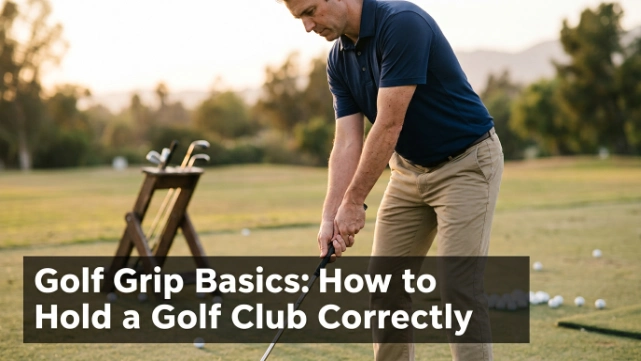
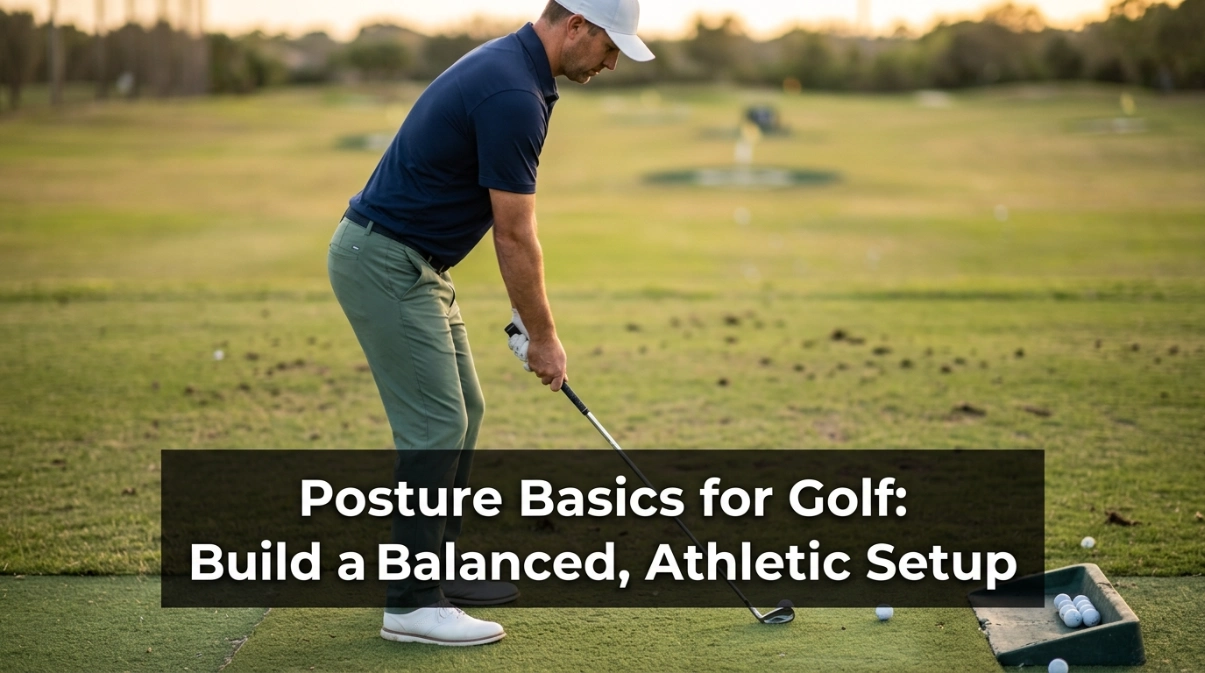
Good golf posture starts with a balanced stance, a forward hinge from the hips, slight knee flex, and relaxed arms hanging below the shoulders. Your spine should feel long rather than rounded, while your pressure stays centered through your feet. The PGA’s posture guidance also emphasizes maintaining that athletic position as you rotate through the swing.
Five posture basics to check
- Hinge from hips: Tip your upper body forward from the hip joints instead of rounding your lower back.
- Soften the knees: Use a small, athletic knee flex rather than squatting deeply.
- Let arms hang: Your arms should drop naturally from the shoulders without reaching toward the ball.
- Center your pressure: Avoid settling heavily into either your toes or heels.
- Stay relaxed: Keep your shoulders, neck, hands, and jaw free from unnecessary tension.
Fast verification
- Set up in front of a mirror or record a down-the-line video and check whether your hips are back, arms hang freely, and balance feels centered.
Posture basics don’t get as much attention as swing speed or club path, but they affect almost everything that happens after you address the ball. A balanced golf posture gives your hips and torso room to turn while allowing your arms to swing naturally.
I’ve seen golfers chase complicated swing fixes when their real problem started before the club moved. In this guide, I’ll show you how I check posture from the ground up and how you can build a repeatable setup without trying to copy somebody else’s body shape.
In This Guide
What Is Proper Golf Posture and Why Does It Matter?
Proper golf posture is the athletic body position you create before beginning your swing. It should give you enough stability to stay balanced while leaving enough freedom to rotate your hips, torso, and shoulders.
Definition: Golf posture is the relationship between your feet, knees, hips, spine, shoulders, arms, and head while addressing the ball.
It isn’t about forcing your back into one perfect angle. Body proportions, mobility, club length, and the shot you’re playing all influence what your setup looks like.
Posture creates space for the swing
A useful setup leaves room between your body and the club. When you hinge correctly from your hips, your arms can hang instead of reaching for the ball.
- Better hip movement: Your pelvis has room to rotate instead of immediately moving toward the ball.
- Freer arm swing: Relaxed arm hang reduces the need to manufacture space during the downswing.
- Improved balance: Centered pressure gives you a stronger base for turning in both directions.
- Repeatable distance from the ball: A consistent setup makes it easier to return the club near the same impact area.
Golf Digest’s address-posture guidance makes the same point: good posture should look balanced and athletic, with the hips supporting the upper body’s forward tilt.
Good posture does not mean staying frozen
The phrase “maintain your spine angle” can mislead beginners. Your body is rotating, tilting, extending, and changing shape throughout a real golf swing.
The goal is not to lock yourself in the address position. You want to preserve enough inclination toward the ball to deliver the club without suddenly standing up or collapsing downward.
As of 2026, this remains one of the simplest fundamentals worth checking before making a major swing change. Setup is easier to control than many movements that happen at full speed.
Section Takeaway: Good posture creates balance and room to move. Think athletic and adjustable, not rigid.
How Do You Set Up With Correct Golf Posture?
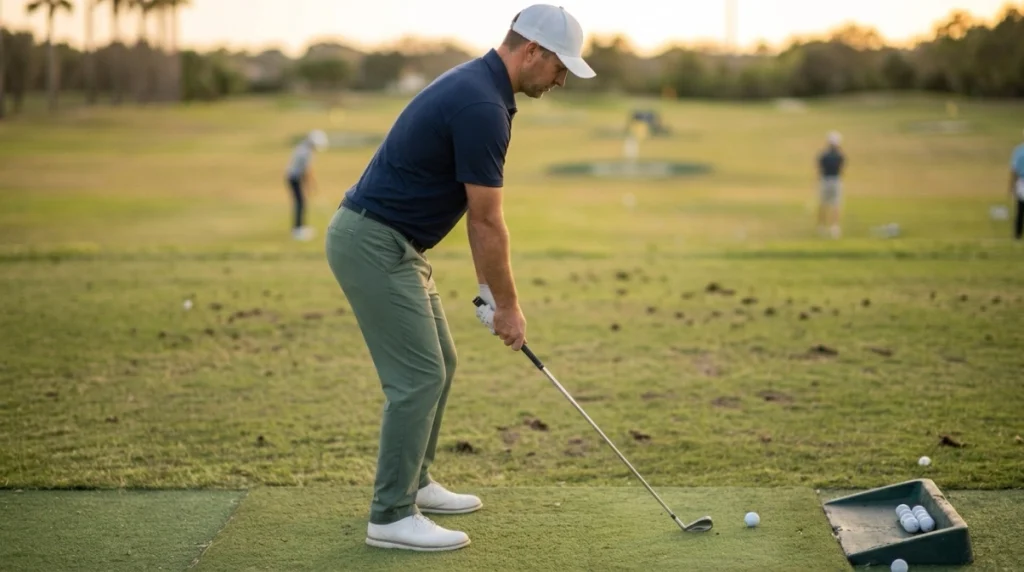
Start tall, establish your stance, hinge from your hips, soften your knees, and let your arms fall naturally. Building posture in that order prevents the common habit of squatting first and then reaching for the club.
1. Stand tall before bending
Begin with your spine comfortably upright and your feet placed for the shot. For a stock mid-iron, roughly shoulder-width is a useful starting point.
Don’t worry about looking like a tour player. Your goal is to create a neutral starting position that you can reproduce.
2. Hinge from the hip joints
Push your hips slightly behind you as your upper body tips toward the ball. Imagine closing a car door behind you with your backside.
The movement should come mainly from the hip joints. Avoid curling your shoulders and upper back simply to get your hands closer to the ground.
3. Add only a little knee flex
Once you hinge, soften your knees enough to feel athletic. You shouldn’t feel as though you’re sitting deeply into an invisible chair.
Too much knee bend often shifts pressure toward the heels. Too little can make the setup stiff and reduce your ability to move comfortably.
4. Let your arms fall
Allow both arms to hang underneath your shoulders. From there, bring your hands together and take your normal grip.
This is one of my favorite range checks because it removes guesswork. If you must reach noticeably forward to find the club, reconsider your distance from the ball.
5. Find centered pressure
Feel the ground through the whole foot rather than loading only the toes or heels. Your exact sensation can vary, but you should feel difficult to push off balance.
- If you feel your toes gripping hard, you may be leaning too far toward the ball.
- If your toes feel unusually light, you may be sitting too far into your heels.
- If your legs feel locked, reset and add a small amount of softness.
- If your thighs burn before swinging, you may be crouching too much.
The PGA also recommends building a balanced, athletic stance and allowing the arms to hang naturally beneath the shoulders in its stance and alignment guidance.
Pro tip: If you can’t find a comfortable setup or your posture changes every swing, have a PGA professional check it in person instead of forcing a position that doesn’t suit your body.
Section Takeaway: Build posture from tall to tilted. Hinge first, soften the knees second, then let your arms hang.
What Should Each Part of Your Body Feel Like?
A good setup should feel supported from the ground and relaxed above it. No single body part needs to be exaggerated.
| Body area | Useful baseline | Common mistake | What you may feel |
|---|---|---|---|
| Feet | Stable with pressure centered | Leaning heavily onto toes or heels | Wobbling before or during the swing |
| Knees | Soft, slight flex | Deep squat or locked legs | Tired thighs or stiffness |
| Hips | Hinged back from the hip joints | Tucked underneath or pushed excessively back | Limited rotation or poor balance |
| Spine | Long, comfortable forward inclination | Rounded shoulders or excessive lower-back arch | Tension before takeaway |
| Arms | Hanging naturally below shoulders | Reaching or pulling hands too close | Tight shoulders and inconsistent spacing |
| Head | Comfortably aligned with the spine | Chin buried against the chest | Restricted shoulder turn |
Your chin should have room beneath it
“Keep your head down” is one of golf’s most overused instructions. Forcing the chin into your chest can make turning the shoulders harder.
Instead, keep your eyes on the ball while allowing your head and neck to sit naturally with the rest of your spine.
Your shoulders should feel relaxed
Rounded shoulders often appear when a golfer bends from the upper back rather than the hips. Excessive tension can also pull the shoulders upward toward the ears.
Take your address, breathe out, and feel your arms get heavier. That relaxed sensation is usually more useful than trying to force your shoulder blades into an artificial position.
Your backside should feel slightly behind your heels
A hip hinge naturally moves your pelvis backward as your torso moves forward. That counterbalance helps keep your center of mass over a stable base.
If your hips move toward the ball during the downswing, you may lose the space created at address. Golf Digest’s 2026 stay-in-posture drill specifically addresses this common early-extension pattern.
Section Takeaway: The lower body supports you while the upper body stays relaxed enough to turn. Nothing should feel forced before you start the club back.
Does Golf Posture Change With Different Clubs?
Yes, but the core posture basics remain the same. Club length, ball position, stance width, and distance from the ball change how upright or tilted your setup appears.
Driver posture
The driver is the longest standard club in the bag, so you’ll normally stand farther from the ball than with an iron. Your stance is also commonly wider for stability.
- Use a wider base than with a short iron.
- Keep the ball forward, commonly near the inside of the lead heel.
- Let the arms extend naturally rather than stretching them.
- Allow the setup to look slightly taller because of the club’s length.
Mid-iron posture
A 7-iron is a useful reference club for checking posture. The middle length makes it easier to see whether you’ve found a natural blend of hip hinge, knee flex, and arm hang.
When I’m checking setup on the range, I often prefer a mid-iron before moving to the extremes of driver or wedge. It gives a clearer baseline without demanding an unusually wide or narrow stance.
Wedge posture
Shorter wedges bring you closer to the ball and can make your body appear slightly more tilted. Your stance may also narrow for controlled shots.
Don’t compensate for a short club by hunching your shoulders. Keep the same hip-hinge concept and let the club’s shorter length change the geometry naturally.
Putter posture
Putting posture varies widely because putter length, technique, and eye position differ between players. You still want balance, a comfortable hip hinge, and relaxed shoulders.
The Titleist Performance Institute notes that hinging from the hips can help golfers avoid hunching and allow the shoulders and arms to work more freely during a putting stroke.
- Driver: Wider, slightly taller-looking athletic setup.
- Mid-iron: Neutral reference posture for full swings.
- Wedge: Narrower stance and naturally closer position.
- Putter: Comfort and free shoulder movement take priority.
Section Takeaway: Don’t manufacture a different posture for every club. Keep the same foundation and let club length and shot requirements create the small changes.
What Are the Most Common Golf Posture Mistakes?
The biggest posture mistakes are usually exaggerations: too much knee flex, too much forward reach, too much rounding, or too much effort to look “perfect.” Fixing the setup often means doing less.
Squatting instead of hinging
This happens when the golfer bends the knees first and sits backward. The hands then need to find the club from a position that feels cramped.
Reset by standing tall and pushing the hip joints backward before adding knee flex.
Rounding the upper back
A rounded posture often appears when someone reaches downward from the shoulders instead of folding from the hips. It can also make the neck and shoulders feel tight.
Think about keeping your chest comfortably open without aggressively arching your lower back.
Standing too far from the ball
Reaching for the club pulls pressure toward the toes and creates tension in the arms. It may also make it harder to stay balanced when the swing starts.
Let your arms hang first. Then position yourself so the grip meets your hands rather than forcing your hands toward the grip.
Standing too close to the ball
When you’re crowded, your arms and hands have less space to travel. Some golfers react by lifting the torso during the downswing to create room.
Your goal isn’t a fixed hand-to-leg measurement. You want enough clearance for your arms to hang and swing without feeling trapped.
Putting pressure entirely on the toes or heels
Good posture should feel hard to disturb. If you’re already falling toward one edge of your feet, your body may make compensations as soon as the club gains speed.
- Too much toe pressure: Check whether you’re reaching or leaning toward the ball.
- Too much heel pressure: Check whether you’re sitting too deeply into your knees.
- Unstable side-to-side: Check stance width and whether you’re locking either knee.
Trying to keep the head completely still
Your eyes can stay focused on the ball without freezing your head. A rigid neck can restrict the natural turn of your upper body.
Think “stable enough to see the ball,” not “head locked in place.”
Section Takeaway: Most posture faults become easier to diagnose when you check balance, hip hinge, arm hang, and tension before analyzing the swing itself.
Which Drills Help Improve Golf Posture?

The best posture drills give you immediate feedback without requiring a full-speed swing. Use a mirror, a golf club, or your phone to check positions before adding speed.
Drill 1: Hip-hinge rehearsal
- Stand upright with your feet around shoulder-width apart.
- Place your fingertips on the front of your hip joints.
- Push your hips backward while tipping your chest forward.
- Keep your spine comfortably long.
- Add a small amount of knee flex.
- Let your arms fall below your shoulders.
Repeat this five to ten times without a club. You’re teaching yourself the order of the movement rather than chasing a specific angle.
Drill 2: Club-down-the-back check
Hold a club along your back while standing upright, then rehearse your hip hinge. The club gives you feedback if you’re dramatically rounding or over-arching.
Don’t try to flatten every natural curve in your spine. This is a feel drill, not a medical posture assessment.
Drill 3: Arm-hang check
- Build your normal golf stance without holding a club.
- Let both arms hang completely loose.
- Bring your palms together naturally.
- Notice where your hands meet.
- Place the club there and reassess your distance from the ball.
This quickly exposes excessive reaching. I like using it after a few poor strikes because posture can gradually drift during a long range session.
Drill 4: Shoulder-turn posture drill
Place a club across your shoulders and take your golf posture. Make slow turns back and through while keeping your balance.
You’re not trying to hold your head at an exact height. Focus on rotating without suddenly standing upright as soon as your shoulders move.
Drill 5: Down-the-line phone check
- Place your phone safely on a tripod behind the hands-to-target line.
- Record your address and several normal swings.
- Check whether your arms hang naturally at setup.
- Watch whether your hips immediately move toward the ball in transition.
- Compare several swings rather than judging one attempt.
Use video as feedback, not as a reason to chase a tour player’s exact angles. Your limb lengths and mobility may produce a different-looking posture.
Pro tip: If video shows a major posture change that you can’t correct with slow rehearsals, a certified instructor can identify whether the cause is setup, movement pattern, or equipment fit.
Section Takeaway: Rehearse posture slowly before hitting balls. The best drill is the one that gives you clear feedback you can reproduce on the course.
Golf Posture FAQ
How much should I bend my knees in a golf stance?
Your knees should have a small, athletic flex rather than a deep squat. You should feel stable and ready to move without loading heavily into your heels or creating tension in your thighs.
Should my back be straight in golf posture?
Your spine should feel comfortably long, but it doesn’t need to be artificially flat. Hinge from the hip joints and avoid excessive rounding or exaggerated lower-back arching.
Where should my weight be at address?
For a normal full swing, start with balanced pressure through your feet rather than leaning heavily toward the toes or heels. Exact pressure distribution changes with the club and shot, but you should feel stable before starting.
Should my arms hang straight down in a golf stance?
Your arms should hang naturally beneath the shoulders without obvious reaching or crowding. The exact hand position varies with your body proportions and the club you’re using.
Why do I stand up during my golf swing?
Standing up can result from several causes, including poor spacing, limited rotation, balance problems, or the hips moving toward the ball. Check your setup first, then use slow-motion video or professional instruction to identify the actual cause.
Does poor posture cause fat or thin golf shots?
Poor posture can contribute to inconsistent contact because it changes balance, spacing, and how your body moves around the ball. Fat and thin shots can also have many other causes, so posture should be one checkpoint rather than an automatic diagnosis.
Can clubs that are too long or short affect golf posture?
Yes. Club length influences how far you stand from the ball and how much you need to tilt at address. If your equipment consistently forces an uncomfortable position, a professional fitting can help determine whether the clubs suit your proportions and swing.
Your next step: Before changing your takeaway, downswing, or release, spend five minutes checking your posture. Build the stance from the ground up, hinge from the hips, let your arms hang, and make a few balanced half-swings before increasing speed.
Good golf posture won’t make every shot perfect. It does give every swing a much better place to start.