
How Often Should You Wash a Golf Towel?

Quick Answer
Wash a golf towel whenever it becomes visibly dirty, smells musty, stays damp after a round, or starts transferring grime instead of removing it. For many golfers, that means every one to three rounds, but a muddy or rain-soaked towel should usually be washed after the same round. Always let the care label override general advice, and follow sensible towel washing guidance for detergent and drying.
When I Would Wash It
- After muddy rounds: Wash it after the round when soil, grass, or bunker sand covers a large section.
- After wet rounds: Wash or thoroughly dry a rain-soaked towel rather than leaving it damp inside the bag.
- Every few rounds: A lightly used towel in dry conditions can often go two or three rounds before washing.
- When it smells: A sour or musty odor is a clear signal that cleaning is overdue.
- When absorbency drops: Wash the towel when residue or heavy dirt makes it less effective.
Simple Rule
- If you wouldn’t want the towel touching a clean grip or golf ball, it’s probably time to wash it.
How often should you wash a golf towel? There isn’t one fixed schedule because course conditions can change dramatically from one round to the next.
I’ve had dry rounds where a towel barely picked up more than dust, and wet mornings where it looked filthy before the back nine. The useful approach is to judge the towel by moisture, dirt, odor, and how you’re using it.
In This Guide
- How Often Should You Wash a Golf Towel?
- What Are the Signs Your Golf Towel Needs Washing?
- What Changes How Often a Golf Towel Needs Washing?
- Does Golf Towel Material Affect Washing Frequency?
- Should You Wash Your Golf Towel After Every Round?
- How Can You Keep a Golf Towel Cleaner Between Washes?
- Frequently Asked Questions
How Often Should You Wash a Golf Towel?
Most golfers should wash a golf towel every one to three rounds, or sooner whenever it becomes muddy, wet, gritty, or smelly. Usage matters more than a strict calendar.
A towel used through 18 holes of wet fairways may need washing immediately. One carried during a dry nine-hole round might still be perfectly usable next time.
Definition: A golf towel is a reusable cloth carried on a golf bag, cart, or person for removing dirt and moisture from clubs, balls, grips, hands, and related equipment when permitted.
I don’t count rounds blindly. When I finish playing, I look at what the towel collected and decide whether it belongs back on the bag.
- Dry, clean conditions: About two or three rounds may be reasonable.
- Normal mixed conditions: Washing every one or two rounds keeps buildup under control.
- Muddy fairways: Wash after the round.
- Rain or heavy dew: Wash or fully dry the towel immediately.
- Heavy bunker use: Wash when noticeable grit remains trapped in the fabric.
The point isn’t to make a golf towel look showroom-new. It’s to keep the cloth clean enough to remove dirt rather than spread it.
A clean towel also gives you a useful dry section for grips and hands. The PGA of America recommends keeping a towel nearby to keep grips clean and dry, particularly in hot conditions.
What Are the Signs Your Golf Towel Needs Washing?
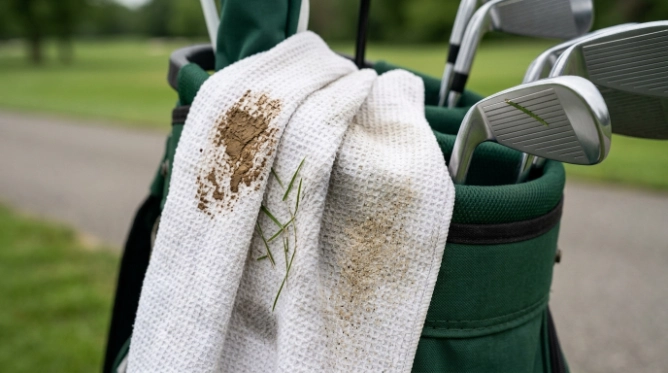
Visible grime, lingering odor, trapped grit, persistent dampness, and reduced absorbency are the clearest signs. Any one of them can justify washing the towel before another round.
Color alone isn’t a perfect test. A dark towel may hide dirt long after a white towel would look filthy.
Look for these warning signs
- Mud buildup: Soil covers large parts of the towel or fills a waffle texture.
- Grass residue: Clippings and turf remain embedded after the towel dries.
- Grit: Sand or soil can still be felt when you rub the fabric between your fingers.
- Musty odor: The towel smells unpleasant even after it has dried.
- Oily areas: Sunscreen, skin oils, or food residue leave slick patches.
- Poor absorbency: Water sits on the surface instead of soaking into the towel normally.
- Dirt transfer: Wiping a clubface or grip leaves another dirty mark instead of cleaning it.
The grit test matters to me most. A towel may appear clean while fine bunker sand is still caught inside its fibers.
I don’t want that same gritty section rubbing across polished clubheads, grips, or a ball. Washing becomes worthwhile before visible staining gets severe.
Don’t ignore a damp towel
A towel doesn’t have to look dirty to need attention. Moisture trapped inside a closed golf bag can leave it stale and unpleasant.
If washing isn’t practical immediately, hang the towel in open air after the round. Never leave it balled up wet in a pocket.
What Changes How Often a Golf Towel Needs Washing?
Weather, turf conditions, the number of holes played, and how you use the towel all affect washing frequency. Two golfers can play the same course and finish with completely different towels.
| Playing Situation | Likely Washing Frequency | Main Reason |
|---|---|---|
| Dry nine-hole round | Every 2-3 rounds | Limited moisture and soil |
| Typical 18-hole round | Every 1-2 rounds | Routine turf, sweat, and clubface dirt |
| Wet or muddy course | After the round | Heavy moisture and soil buildup |
| Frequent bunker play | After 1 round if gritty | Sand trapped in the weave |
| Hot, humid conditions | Every 1-2 rounds | Sweat, sunscreen, and moisture |
Wet courses shorten the cleaning interval
Soft fairways put more soil on irons and wedges, which means more dirt ends up in the towel. Morning dew can also keep the cloth damp for hours.
After one soggy round, I treat the towel as laundry rather than equipment ready for the next tee time. Waiting rarely improves it.
How you use the towel matters
A golfer who wipes every iron after every shot will soil a towel faster than someone who uses it occasionally. That’s not a reason to clean clubs less often.
Instead, divide the towel into working zones. Use one area for mud and clubfaces while protecting another for grips and hands.


Does Golf Towel Material Affect Washing Frequency?
Yes, because microfiber, cotton, and waffle-weave towels hold dirt and moisture differently. The sewn-in care label should always control the actual washing method.
The washing schedule still depends mostly on dirt and moisture. Material changes how carefully you should clean the towel once that point arrives.
Microfiber golf towels
Microfiber uses extremely fine synthetic fibers that are good at collecting moisture, soil, and small particles. That same structure can also hold onto lint and residue.
- Wash when dirt becomes embedded in the fibers.
- Keep microfiber away from lint-heavy laundry when practical.
- Avoid fabric softener when maximum absorbency matters.
- Use the temperature and drying method specified on the care label.
Fabric softener can leave a coating that reduces towel absorbency. That’s one reason I keep it out of loads containing towels I use for equipment cleaning.
Cotton golf towels
Cotton is absorbent and familiar to wash, but that doesn’t mean every cotton golf towel has identical care requirements. Embroidery, printing, trim, magnets, or attachments can change the instructions.
Heavy cotton can also stay wet longer than expected. Make sure it is fully dry before returning it to a bag pocket.
What about waffle-weave towels?
Waffle describes the towel’s textured weave rather than one specific fiber. A waffle towel may be microfiber, cotton, or a blend.
The recessed texture can collect grass and dirt effectively. Shake loose debris out before washing so the machine isn’t handling unnecessary sand and soil.
Should You Wash Your Golf Towel After Every Round?
No, a golf towel doesn’t automatically need machine washing after every round. A clean, dry towel used lightly in good weather can often be used again.
Washing after every round makes more sense when the towel has become dirty or wet. Condition-based cleaning is more practical than following a rigid routine.
Wash it immediately after these rounds
- Heavy rain or prolonged drizzle
- Muddy or waterlogged fairways
- Frequent shots from wet rough
- Large amounts of bunker sand
- Strong sweat or sunscreen buildup
- A towel left wet inside the bag
On the other hand, don’t wash a towel just because you completed 18 holes. Inspect it first.
If it only has one small dirty section, you may be able to rinse that area and hang the towel to dry. Follow the manufacturer’s instructions when spot cleaning.
Remember the rules when cleaning your golf ball
A clean golf towel doesn’t mean you can wipe your golf ball whenever you choose. Under USGA Rule 14.1c, a ball lifted from the putting green may be cleaned, while specific exceptions apply elsewhere.
The R&A’s Rule 14 guidance sets out the same cleaning restrictions. Always separate equipment-care habits from what the Rules permit during play.
How Can You Keep a Golf Towel Cleaner Between Washes?
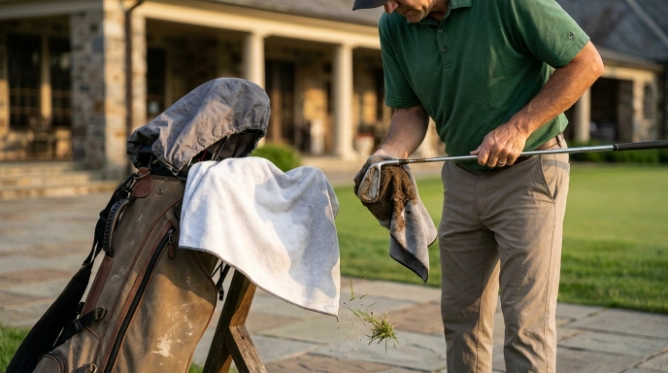
Use separate wet and dry areas, remove dirt before it dries, and air the towel after every round. Those habits can make the towel more useful without forcing unnecessary wash cycles.
Use a wet side and a dry side
I like keeping one portion slightly damp for clubface dirt while protecting the opposite end for drying. It stops the entire towel becoming one muddy, soaked piece of fabric.
An oversized caddie towel makes this particularly easy. Smaller towels need a little more discipline.
- Dirty zone: Clubfaces, grooves, mud, and grass.
- Dry zone: Grips, hands, and final drying.
- Clean zone: Golf-ball cleaning when the Rules permit it.
Remove dirt while it’s fresh
Fresh turf and soil usually wipe away more easily than dried mud. A quick wipe after a shot can prevent layers of debris building on both the club and towel.
When the towel itself gets overloaded with dirt, switch to a cleaner section. Don’t keep rubbing the same muddy patch across every club.
Air it out after the round
Before storing your bag, unclip or unfold the towel and let it dry in moving air. This simple habit makes a big difference after humid or dewy rounds.
If the towel is obviously dirty, shake loose grass and sand outdoors before putting it in the laundry. Removing debris first keeps the cleaning job simpler.
Section Takeaway: A two-zone towel routine, quick dirt removal, and complete drying can reduce unnecessary washing while keeping the towel useful from the first tee through the final green.
Frequently Asked Questions
Can you use the same golf towel for several rounds?
Yes. A towel that remains clean, dry, odor-free, and free from grit can often be used for several rounds. Inspect it after each outing rather than automatically washing or reusing it.
Is it bad to leave a wet golf towel on your bag?
It’s better to remove or unfold it and let it dry completely. Leaving a damp towel compressed inside a bag or pocket can encourage musty odors and make it unpleasant before the next round.
Can you machine-wash golf towels?
Many golf towels are machine washable, but check the care label first. Special attachments, embroidery, magnets, printed designs, and blended fabrics may require different temperatures or washing methods.
Should you use fabric softener on a golf towel?
I avoid fabric softener when absorbency is important, especially with microfiber. Softening products can leave residue on towel fibers and reduce how readily the cloth absorbs moisture.
How often should you wash a microfiber golf towel?
Wash microfiber when it becomes visibly dirty, gritty, smelly, damp, or less effective at cleaning. Depending on conditions, that may mean after one muddy round or after several lighter, dry rounds.
Should a muddy golf towel be washed immediately?
Yes, once you’ve removed loose dirt and checked its care instructions. Shake or rinse away heavy soil first rather than putting thick mud and bunker sand directly into the washing machine.
How many golf towels should you carry?
One towel is enough for many golfers, but two can be useful in wet weather. You can dedicate one to dirty clubfaces while keeping the second cleaner and drier for grips and hands.
The simplest answer is to wash a golf towel when its condition tells you to. For most golfers, every one to three rounds is a useful starting point, not an unbreakable rule.
Check for mud, moisture, grit, odor, and reduced absorbency after each round. Keep it clean enough to help your equipment rather than simply move yesterday’s course dirt around.