
Can You Machine Wash Golf Towels? A Complete Care Guide

Quick Answer
Yes, you can machine wash most golf towels, including many microfiber and cotton models. Check the care label first, remove loose grass and sand, and use a mild detergent with a cool or warm cycle. For example, Club Glove’s microfiber towel care instructions specify hand or machine washing in cold water with mild detergent.
Best Machine-Washing Routine
- Check the label: Manufacturer instructions should override general laundry advice.
- Remove debris: Shake out grass, bunker sand, dried soil, and other loose material.
- Use mild detergent: You rarely need aggressive chemicals for normal golf-course dirt.
- Choose moderate temperatures: Cold water is a cautious starting point for microfiber.
- Skip unnecessary additives: Fabric softener can leave residue on absorbent fibers.
- Dry completely: Never return a damp towel to a closed golf bag.
My Simple Rule
- If the towel handled mud, wet grass, bunker sand, sweat, or a rainy round, I wash or thoroughly dry it before putting it back on my bag.
Can you machine wash golf towels without ruining their absorbency or texture? In most cases, yes, and machine washing is the method I use for routine golf towel care.
The important part is matching the wash routine to the material. Microfiber, cotton, waffle-weave towels, embroidered towels, and towels with clips or magnets can need slightly different treatment.
In This Guide
Can You Put Golf Towels in the Washing Machine?
Most everyday golf towels can go in a washing machine when their care labels allow it. Machine washing is especially practical after muddy, wet, or humid rounds where simple rinsing will not remove everything trapped in the fabric.
A golf towel is an absorbent cloth used to manage dirt and moisture around your equipment. Golfers commonly use one on clubfaces, grooves, balls when the Rules permit cleaning, hands, and other gear.
I usually judge a towel by what happened during the round rather than following a rigid calendar. A dry towel that only wiped a few clean irons does not need the same treatment as one covered with wet fairway soil.
- Routine dirt: Machine washing is usually the easiest choice.
- Heavy mud: Shake or rinse away thick deposits first.
- Delicate embroidery: Consider a gentle cycle or hand washing.
- Removable hardware: Take clips or carabiners off before washing when possible.
- Unknown care instructions: Use the most cautious method until you identify the material.
One overlooked issue is grit. Sand trapped inside a heavily dirty towel can keep moving through the fabric during washing, so removing loose debris first makes sense.
There is also a golf-specific reason to keep towels clean. Once the fibers become loaded with dirt, the towel can start spreading grime rather than lifting it from the clubface.
Remember that using a towel on a golf ball does not automatically mean you may lift and clean the ball anywhere. The USGA’s Rule 14 cleaning guidance explains when a lifted ball may and may not be cleaned.
Section Takeaway: Most golf towels are suitable for machine washing when the care label permits it, but remove course debris and detachable hardware before starting the cycle.
How Should You Machine Wash a Golf Towel?
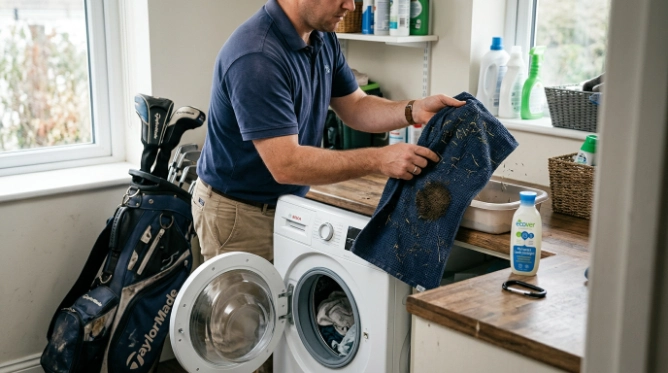
The best routine is simple: remove debris, pretreat concentrated dirt, choose an appropriate wash setting, and dry the towel completely. I avoid making towel care more complicated than it needs to be.
1. Shake out grass and bunker sand
Take the towel outside and shake it thoroughly. Pay attention to waffle pockets and folded sections where sand can collect.
If the towel has thick wet mud on it, I rinse that area first. Sending a layer of course soil directly into the washer does not improve the cleaning process.
2. Remove detachable accessories
Take off a removable carabiner, clip, or similar attachment. Hard accessories can bang against the washer and catch on other fabrics.
If the attachment cannot be removed, check the manufacturer’s directions. An embroidered or specialty towel may deserve a gentler cycle.
3. Pretreat obvious stains
Put a small amount of suitable detergent on muddy or oily sections. Gently work it through the affected fabric instead of aggressively scrubbing the towel.
- Treat concentrated mud before the main wash.
- Check sunscreen or oily marks separately.
- Avoid mixing cleaning chemicals unless their labels specifically permit it.
- Do not assume stronger chemicals mean a cleaner towel.
4. Choose a sensible machine setting
I favor cold water for microfiber when I do not have a reason to use something warmer. A normal or gentle cycle is usually enough for ordinary golf-course dirt.
The sewn-in care label remains the deciding factor. Fiber blends, printed graphics, embroidery, magnetic components, and special finishes can change the instructions.
5. Give the towel room to wash
A packed washer makes it harder for water and detergent to move through dirty fabric. I would rather wash a smaller load than squeeze muddy towels among a full load of clothes.
Separating golf towels from lint-heavy items can also make sense, particularly with microfiber. Fine microfiber can collect loose fibers from cotton garments and bath towels.
6. Remove it when the cycle finishes
Do not leave the clean towel wet inside the washing machine for hours. Hang it promptly or dry it according to the care label.
Section Takeaway: Shake, pretreat, wash gently, and dry promptly. That routine handles most dirty golf towels without unnecessary chemicals or aggressive washing.
What Settings Are Best for Different Golf Towel Materials?
There is no single washing setting that fits every golf towel. Material and construction matter more than the words “golf towel” on the package.
| Towel Type | Cautious Starting Point | Main Concern | My Approach |
|---|---|---|---|
| Microfiber | Cold water, mild detergent | Residue, lint, excessive heat | Wash with similar low-lint items |
| Cotton or Terry | Follow care label | Shrinkage or lint | Use normal detergent without overloading |
| Waffle Microfiber | Cold water, gentle or normal cycle | Debris trapped in texture | Shake thoroughly before washing |
| Embroidered Towel | Cool, gentle wash | Thread wear or snagging | Reduce contact with rough hardware |
| Towel With Clip or Magnet | Depends on attachment | Hardware in washer or dryer | Detach hardware when designed to be removable |
Microfiber golf towels
Microfiber is common because its fine synthetic fibers create plenty of surface area for collecting water and dirt. Waffle textures add small recesses that can grab debris from clubfaces.
As one concrete manufacturer example, Club Glove lists its 17-by-40-inch Microfiber Caddie Towel as suitable for hand or machine washing in cold water with mild detergent.
Cotton golf towels
Cotton behaves more like an ordinary traditional towel, but you should still read the label. Printed logos, colored dyes, blended fibers, and decorative stitching can affect recommended temperatures.
Cotton can also release lint. I keep that in mind before combining a cotton towel with the microfiber cloths I use on golf equipment.
Towels with special attachments
Magnetic towels and towels with clips need an extra check before going into the machine. The fabric may be washable while the attachment requires different treatment.
Never force a non-removable component through a wash or dry cycle because another towel with a similar design survived it. Construction varies from product to product.
Section Takeaway: Treat the care label as the final authority. Microfiber often benefits from cool, simple washing, while cotton, embroidery, and hardware require their own checks.


What Should You Avoid When Washing Golf Towels?
The easiest way to damage a golf towel is to treat every dirty towel like a heavily stained household rag. More heat, detergent, and chemicals are not automatically better.
- Excess detergent: More soap can mean more residue left in the fibers.
- Fabric softener: It can coat absorbent fibers and reduce the clean, grabby feel golfers want.
- Unnecessary high heat: Synthetic towels rarely need extreme temperatures for routine cleaning.
- Heavy lint loads: Microfiber can collect fibers released by cotton items.
- Rough hardware: Zippers, hooks, and exposed fasteners can snag towel loops.
- Ignoring mud: Remove thick soil and loose sand before washing.
I also avoid leaving a towel attached to the bag after a soaked round. Even a perfectly washed towel is not useful if it returns to the bag damp and develops a musty smell.
This matters most during wet-weather golf. PGA guidance for playing in rain recommends carrying multiple towels and making an effort to keep clubs and grips dry, which is another reason I like starting a rainy round with clean towels. See the PGA’s rainy-golf guidance for broader wet-weather advice.
Can Golf Towels Go in the Dryer?
Some golf towels can go in a dryer, but the care label should determine the temperature. When I am uncertain about a synthetic towel, air drying is the conservative choice.
Dryer heat matters because not every towel uses the same fabric, edging, print, thread, or attachment system. A setting that works for one cotton towel may not be suitable for another microfiber design.
Air drying
Air drying requires little guesswork and avoids unnecessary dryer heat. Spread the towel open instead of leaving it folded into a damp bundle.
Good airflow is more important than making the process complicated. I usually hang mine soon after washing and return it to my golf bag only when it feels completely dry.
Tumble drying
If the manufacturer approves machine drying, follow its temperature guidance. Low heat is a cautious option for many synthetic products, but the individual label takes priority.
The same rule applies after playing in rain. Take wet gear out of the bag rather than storing everything in a closed compartment overnight.
How Often Should You Wash a Golf Towel?
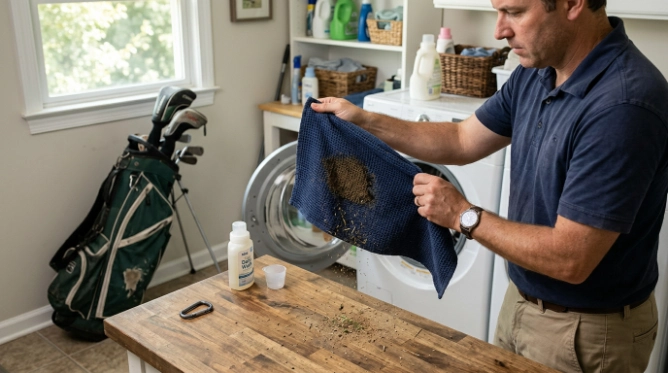
Wash frequency should depend on use and course conditions. A golfer playing firm, dry fairways may keep a towel cleaner much longer than someone playing several wet rounds.
I inspect the towel when I unload my bag. Appearance, smell, dampness, and how much dirt it collected tell me more than simply counting rounds.
- After a muddy round: Wash it promptly.
- After heavy rain: Wash or thoroughly dry it before storage.
- After light use: Hang it up and inspect it before the next round.
- If it smells musty: Wash it and check the golf bag for trapped moisture.
- If it spreads dirt: It needs cleaning even if it does not look terrible.
During a normal round, I like keeping one part of my towel damp for clubface dirt while protecting another section for drying. On genuinely rainy days, a separate dry towel works even better.
Clean towels also make equipment care easier. Fresh mud and grass wipe away more readily when the towel itself is not already saturated with several rounds of grime.
If you clean a golf ball with your towel, remember that the Rules determine when cleaning is permitted. The R&A’s official Rule 14 provides the full marking, lifting, cleaning, and replacing procedure.
Section Takeaway: Wash based on actual condition, not a fixed number of rounds. Mud, rain, odor, and heavy contamination are stronger signals than the calendar.
Frequently Asked Questions
Can you machine wash a microfiber golf towel?
Yes, many microfiber golf towels are machine washable. Check the manufacturer’s label first, shake out sand and grass, and use the specified temperature and detergent instructions.
Should I wash golf towels separately?
You do not always need a completely separate load, but separating dirty golf towels can be useful. I especially avoid washing microfiber with heavily lint-producing cotton items when practical.
Can you use regular detergent on golf towels?
Regular mild laundry detergent works for many washable golf towels. Use the amount recommended by the detergent manufacturer and avoid assuming that extra detergent will remove more course dirt.
Should I use fabric softener on golf towels?
I skip fabric softener on towels where absorbency and cleaning performance matter. Softener can leave a coating on fibers, so check the towel manufacturer’s instructions before adding it.
Can you wash a golf towel with a carabiner attached?
If the carabiner is designed to be removable, take it off first. For permanently attached hardware, check the towel’s care instructions because metal or plastic components can change how it should be washed.
Can I wash a magnetic golf towel in a washing machine?
Do not assume a magnetic towel is machine washable just because its fabric is microfiber. Check the manufacturer’s instructions for the magnet assembly, attachment point, washing method, and drying method.
Should you wash a golf towel after every round?
Not necessarily. I wash it when it becomes muddy, heavily soiled, damp for an extended period, or unpleasant to use, while lightly used clean towels can simply be hung up and inspected before the next round.
The bottom line: Yes, you can machine wash most golf towels when the care label permits it. Remove sand and mud first, use sensible detergent and temperatures, and make sure the towel dries completely before returning it to your golf bag.
A clean towel is a small detail, but it makes club cleaning and moisture control easier throughout a round. Give yours the same basic care you give the rest of the equipment you rely on.