
What Temperature Should You Wash Golf Towels?

Quick Answer
Wash most golf towels in cold or warm water, depending on the material and care label. For microfiber golf towels, cold water is the safest default, and Club Glove’s microfiber towel care instructions specifically recommend cold water with mild detergent. Cotton towels can often handle warm water when their labels permit it.
Best Temperature by Situation
- Microfiber towels: Start with a cold-water cycle to protect the fine synthetic fibers.
- Cotton towels: Cold or warm water normally works when the care label allows it.
- Heavy mud: Rinse loose soil first, then use warm water only if the towel permits it.
- Colored towels: Cold water is the safer starting point for limiting fading and dye transfer.
- Unknown material: Choose cold water until you can confirm the manufacturer’s instructions.
One Rule to Remember
- The sewn-in care label always takes priority over a general golf-towel washing recommendation.
If you’re wondering what temperature should you wash golf towels at, the material matters more than how dirty the towel looks. I usually start conservatively because excessive heat isn’t necessary for the grass, soil, sand, and moisture collected during a normal round.
I’ve carried both microfiber and traditional cotton towels, and I don’t wash them exactly the same way. This guide explains the safest temperatures, when warm water helps, and the laundry mistakes that can shorten a golf towel’s useful life.
In This Guide
What Is the Best Temperature for Washing Golf Towels?
For most golf towels, cold water is the safest general starting point. Move to warm water when heavier soil needs more cleaning power and the towel’s care instructions permit it.
Definition: Washing temperature is the temperature of the water used during the wash portion of a laundry cycle. The exact temperature behind labels such as cold and warm can vary between washing machines.
Care-label temperature symbols can provide a more useful reference. Whirlpool explains that a 30°C, or about 85°F, symbol represents a cold wash maximum, while 40°C, or about 105°F, represents warm washing.
You can review Whirlpool’s laundry care-symbol guide if your towel has temperature numbers rather than written instructions.
Why I start with cold water
My golf towel usually carries grass, loose soil, bunker sand, sweat, and some mud. Those conditions rarely make me reach immediately for the hottest washer setting.
- It protects colors: A conservative wash reduces unnecessary stress on dyed or printed towels.
- It suits microfiber: Some golf-specific microfiber manufacturers directly specify cold washing.
- It limits heat exposure: Synthetic fibers and decorative elements don’t need extreme temperatures for routine cleaning.
- It handles normal dirt: Loose course debris can be removed before the towel enters the washer.
Why the label still matters most
Two towels that look similar may use different polyester blends, cotton percentages, stitching, magnets, clips, or printed graphics. That makes one universal temperature impossible.
If the label says wash cold, I stay with cold. If it allows 40°C washing and the towel is heavily soiled, warm water becomes a reasonable option.
Should Microfiber and Cotton Golf Towels Use Different Temperatures?
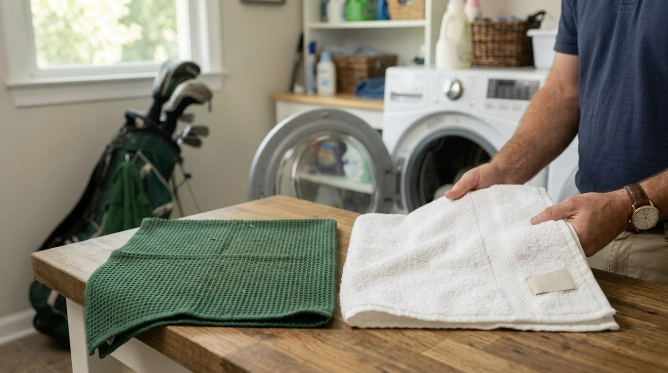
Yes. Microfiber generally deserves more conservative heat treatment, while many ordinary cotton towels can tolerate warm washing when their care labels allow it.
This distinction matters because microfiber relies on extremely fine synthetic fibers. Golf towels often combine those fibers with a waffle texture designed to pick up moisture and debris from clubfaces.
| Towel Type | Starting Temperature | When to Go Warmer | Main Concern |
|---|---|---|---|
| Microfiber | Cold | Only when the label permits | Excessive heat and fiber damage |
| Waffle microfiber | Cold | Heavier soil with approved warm wash | Protecting cleaning texture |
| Cotton | Cold or warm | Mud or heavier soil | Shrinkage and fading |
| Cotton terry | Cold or warm | As care label permits | Loop wear and trapped debris |
| Unknown blend | Cold | After checking manufacturer guidance | Unknown heat tolerance |
Microfiber golf towels
A good real-world example comes from Club Glove. Its current microfiber golf towel instructions specify hand or machine washing in cold water with mild detergent.
General microfiber care guidance varies between manufacturers, which is another reason I avoid pretending one number works for every towel. Whirlpool’s microfiber washing guide suggests cool water for light soil and warm water for heavier messes.
Cotton golf towels
Cotton generally gives you more flexibility, but heat can still affect dimensions and color. Embroidery, printing, edge binding, and attachments can also lower the temperature you should use.
I treat a dark embroidered cotton towel more carefully than a plain white utility towel. The fabric isn’t the only part that has to survive the wash.
When Should You Use Cold, Warm, or Hot Water?
Use cold water for routine cleaning and microfiber. Use warm water for heavier dirt when the label permits it, and avoid hot water unless the specific towel instructions clearly allow it.
Choose cold water when
- The towel is microfiber or a synthetic blend.
- The care label specifically says cold wash.
- The towel has bright or dark colors.
- You’re washing normal grass, dust, sweat, or light soil.
- You don’t know the towel’s exact material.
Cold washing is the setting I use most often. A towel doesn’t need to be cooked to remove yesterday’s fairway dirt.
Choose warm water when
- The towel is noticeably dirtier than normal.
- Cold washing hasn’t removed ordinary grime.
- The care label allows a warm or 40°C wash.
- The towel is cotton or another material approved for warm laundering.
Warm water can help when a towel has been through a wet, muddy round. I still remove thick mud before washing instead of expecting higher temperature to do all the work.
Should you use hot water?
Hot water isn’t my default for a golf towel. Heat can increase the risk of fading, shrinkage, or damage to temperature-sensitive synthetic components.
A 60°C or 140°F care symbol means the item is rated for washing up to that temperature. It does not mean every golf towel should be washed that hot.
If there’s no readable label, I don’t gamble with the hottest cycle. Cold washing followed by proper drying is the safer approach.


How Should You Wash a Dirty Golf Towel?
Temperature works best when you prepare the towel first. Removing sand, dried soil, and grass before washing reduces the amount of abrasive debris circulating through the machine.
- Shake it outside: Remove dried grass, bunker sand, and loose dirt.
- Rinse heavy mud: Use running water to remove thick soil before machine washing.
- Check the label: Confirm the permitted wash temperature and drying method.
- Remove hardware: Detach removable clips or accessories when the manufacturer recommends it.
- Pretreat stains: Apply a small amount of suitable detergent to stubborn dirty areas.
- Select the temperature: Start cold, or use warm water when both the soil level and label justify it.
- Dry completely: Don’t return a damp towel to a closed golf bag.
What about a towel covered in mud?
One of my messiest rounds came after overnight rain left the approaches soft and the rough full of wet grass. By the back nine, my cleaning section looked more brown than its original color.
I rinsed the thick mud away before laundering it. That simple step mattered more than turning the washing machine to its hottest setting.
What about sand in the towel?
Shake sand out while it’s dry whenever possible. Packed grit can remain deep in terry loops and microfiber texture if you send the towel directly into the machine.
I also avoid washing a heavily sandy golf towel with delicate golf shirts. There’s no benefit in mixing course grit with clothing that doesn’t need it.
Do Detergent and Drying Temperature Matter?
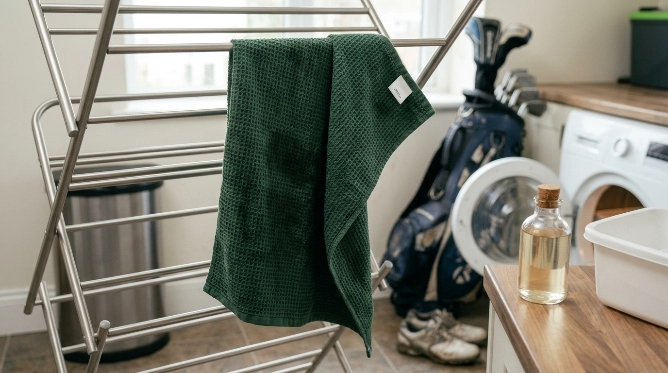
Yes. The correct wash temperature won’t help much if you overload the towel with detergent or expose heat-sensitive microfiber to excessive dryer temperatures.
Use a sensible amount of detergent
Regular mild detergent works for many golf towels. Follow both the detergent instructions and the towel’s care label instead of assuming more soap produces better cleaning.
Too much detergent can be harder to rinse from absorbent material. I want the towel to feel clean, not coated.
Be careful with fabric softener
Some microfiber manufacturers advise against softener because residue can interfere with how the fine fibers perform. Check the specific towel instructions before adding it automatically.
When I don’t have manufacturer guidance, I keep microfiber laundry simple. Mild detergent and a straightforward wash make troubleshooting easier.
Don’t automatically use chlorine bleach
A white golf towel may look like an obvious bleach candidate, but the fabric, stitching, printed graphics, and synthetic components may not tolerate it. Read the bleach symbol and manufacturer instructions first.
Keep dryer heat under control
For microfiber, low heat or air drying is the conservative approach when the care instructions allow it. High dryer heat can be harder on synthetic fibers than the wash itself.
Whatever method you choose, dry the towel completely before storage. A damp towel compressed inside a golf bag can develop an unpleasant musty smell.
Keep the clean section clean on the course
I normally dampen part of my towel for clubfaces and protect another area for grips and hands. That prevents muddy cleaning water from spreading across everything I touch.
The PGA of America’s hot-weather guidance also emphasizes keeping grips clean and dry. That’s a good reason to reserve a clean towel area instead of soaking the whole thing.
Golf Towel Washing Temperature FAQs
Can I wash a golf towel at 40°C?
Yes, if the care label permits a 40°C wash. Warm water can be useful for heavier soil, but I wouldn’t choose it automatically for microfiber that specifically calls for cold washing.
Can I wash a microfiber golf towel in hot water?
Only if that particular towel’s manufacturer allows it. Many golf-specific microfiber towels recommend cold washing, so cold water is the safer default when you’re unsure.
Is 30°C good for golf towels?
Yes. A 30°C wash is a sensible choice for many colored, synthetic, and lightly soiled towels, provided it matches the care label.
Does hot water clean a muddy golf towel better?
Heat isn’t the only factor. Rinsing away thick mud first, using appropriate detergent, and choosing a suitable cycle can be more important than simply selecting the hottest available water.
Should I wash golf towels separately from clothes?
It makes sense when the towel contains heavy soil, grass, sand, or mud. I also prefer keeping microfiber away from lint-producing cotton items when lint transfer is a concern.
How often should I wash my golf towel?
Wash it when dirt, sand, sweat, or odor starts building up rather than following a fixed number of rounds. During wet golf, that might mean laundering it after a single messy day.
What if my golf towel has no care label?
Start with cold water and mild detergent. Use low dryer heat or air drying, and avoid aggressive treatments until you know the towel’s material and heat tolerance.
The simplest rule is cold first, warm when needed, and the care label above everything else. For microfiber golf towels, I normally stay cold; for compatible cotton towels with heavier soil, warm water can be useful.
Before your next round, make sure the towel is fully dry and free from old grit. Your clubs, grips, and golf bag will all be better for it.