
How Do You Wash a Golf Towel?

Quick Answer
Wash a golf towel by shaking or rinsing off loose dirt, pretreating heavy stains, and washing it with detergent according to its care label. For microfiber towels, I prefer cold or warm water, no chlorine bleach, and low heat or air drying; specialty microfiber care guidance also recommends avoiding high temperatures and washing microfiber away from lint-producing fabrics.
Quick washing steps
- Shake off debris: Remove loose grass, sand, and dried soil before the towel enters your washer.
- Rinse heavy mud: Flush muddy sections under running water instead of sending thick soil straight into the machine.
- Check the label: Follow the manufacturer’s washing temperature and drying instructions first.
- Add detergent: Use an appropriate amount of regular or microfiber-safe detergent.
- Choose gentle heat: Cold or warm water is the safer default for most synthetic golf towels.
- Dry completely: Air dry or tumble dry on low heat when the care label permits it.
Most important tip
- Don’t leave a damp, muddy towel stuffed inside your golf bag after the round. Wash or at least hang it to dry as soon as you can.
Golf towels take more abuse than their simple job suggests. Mine can collect wet grass, bunker sand, soil, sweat, and rain during a single round.
Cleaning one isn’t difficult, but the right method depends on whether you have microfiber, cotton, terry cloth, or a specialty towel. Here’s how I keep mine clean without making a useful towel less absorbent.
In This Guide
- How do you wash a golf towel step by step?
- Should you wash microfiber and cotton golf towels differently?
- What detergent and water temperature should you use?
- How do you remove mud, grass stains, and odors?
- Can you put a golf towel in the dryer?
- How often should you wash a golf towel?
- Frequently asked questions
How Do You Wash a Golf Towel Step by Step?
The safest routine is to remove loose debris first, pretreat obvious stains, wash according to the fabric type, and dry the towel completely. Checking the sewn-in care label should always come before a generic washing rule.
Definition: A golf towel is a reusable equipment-care cloth used for cleaning clubheads, managing moisture, drying grips and hands, and cleaning a golf ball when the Rules allow it.
1. Remove loose grass, sand, and soil
Give the towel a good shake outside before washing it. This gets rid of material that doesn’t need to travel through your washer.
If I’ve played a wet course, I also rinse heavily muddy sections under cool running water. A minute of rinsing can remove a surprising amount of soil.
- Shake out loose sand and dried grass.
- Remove detachable clips or carabiners when the design allows it.
- Rinse thick mud from the fabric.
- Check pockets and folds for tees or other debris.
2. Pretreat dirty areas
Apply a small amount of suitable laundry detergent to visible stains. Work it gently into the fabric instead of aggressively scrubbing delicate microfiber.
Let the detergent sit briefly before washing. Always follow the cleaner’s instructions and the towel’s care label.
3. Wash the towel
Machine washing is convenient for most ordinary golf towels when their labels permit it. I normally choose a cold or warm cycle rather than extreme heat.
For a microfiber towel, washing it with other low-lint microfiber items helps prevent cotton lint from collecting in the fine fibers. Specialty microfiber manufacturers often recommend this approach.
4. Dry it fully
Once the cycle ends, don’t leave the wet towel sitting in the washer. Hang it to dry or use an approved low-heat dryer setting.
A completely dry towel is much nicer to put back on the bag. It also avoids trapping dampness in a closed storage pocket.
Section Takeaway: Remove loose course debris before washing, follow the towel’s label, use moderate temperatures, and let it dry completely before storing it.
Should You Wash Microfiber and Cotton Golf Towels Differently?
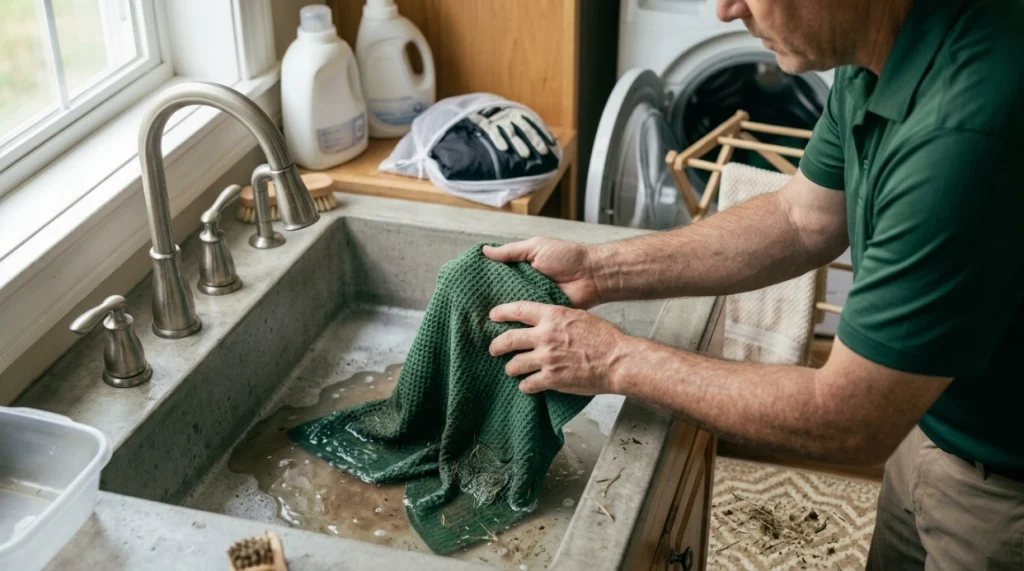
Yes. Microfiber usually needs more cautious heat and laundry-product choices, while cotton often tolerates conventional washing more easily.
The material matters because modern golf towels vary widely. For example, Callaway’s OGIO golf towel uses an 85/15 waffle microfiber fabric rather than traditional cotton terry.
| Towel Type | Washing Approach | Drying Approach | Main Concern |
|---|---|---|---|
| Microfiber | Cold or warm wash; preferably with other low-lint microfiber | Air dry or low heat | High heat, lint, or residue affecting the fine fibers |
| Cotton | Normal laundry cycle within label limits | Air dry or machine dry as permitted | Shrinkage, color fading, and stain buildup |
| Cotton Terry | Similar to other cotton towels | Follow label; moderate heat is safer | Long loops collecting debris |
| Specialty/Weatherproof | Follow manufacturer instructions closely | Follow manufacturer instructions | Damage to coatings, magnets, hardware, or layered construction |
Why microfiber needs extra care
Microfiber gets its name from extremely fine synthetic fibers. Golf versions commonly use polyester-based blends and may add a waffle texture for cleaning clubfaces.
I avoid treating a microfiber golf towel like a heavy cotton bath towel. High temperatures aren’t necessary for the normal mix of grass, dust, and course dirt I bring home.
What about cotton?
Cotton is less complicated, but the care label still wins. Colored towels, embroidered towels, and towels with special attachments may have different limits.
I also separate a heavily soiled golf towel from delicate clothing. Mud from a wet fairway doesn’t need to share a wash with your favorite golf polo.
What Detergent and Water Temperature Should You Use?
A standard liquid laundry detergent is suitable for many washable golf towels. For microfiber, a residue-conscious or dedicated microfiber detergent is another option.
Use the amount recommended for your load. More detergent doesn’t automatically produce a cleaner towel, especially when the fabric isn’t being rinsed thoroughly.
Cold vs. warm water
Cold water is a conservative starting point for colored and synthetic towels. Warm water can help with heavier soil when the manufacturer’s care instructions permit it.
I rarely see a reason to jump straight to the hottest cycle. Golf dirt is usually soil, grass, sand, sweat, and moisture rather than something that demands extreme washing temperatures.
Should you use fabric softener?
This is one area where care advice varies by product. The American Cleaning Institute notes that modern softeners can be compatible with some microfiber products when used correctly.
Specialty microfiber manufacturers, however, often tell users to skip softener because residues can reduce microfiber performance. For a golf towel, I follow the specific manufacturer’s instructions and err on the simple side when no guidance exists.
You can review the broader American Cleaning Institute guidance on fabric softeners if you’re deciding what makes sense for a particular towel.
What about bleach?
Don’t automatically pour chlorine bleach into a load just because a white golf towel looks dirty. Some microfiber-care instructions specifically warn against chlorine bleach.
Check the fabric label first. A safer stain treatment depends on the towel material, its color, and any printed or embroidered decoration.


How Do You Remove Mud, Grass Stains, and Odors?
Treat golf-towel stains before they spend several days drying into the fabric. Rinsing the towel soon after your round makes the later wash much easier.
I notice the biggest difference after muddy rounds. If I hang the towel in the garage untouched, yesterday’s soft mud becomes tomorrow’s stubborn crust.
For mud and soil
- Allow thick clumps to loosen or shake off what you can.
- Rinse the dirty section under running water.
- Apply a small amount of appropriate detergent.
- Wash according to the fabric-care label.
- Check the stain before machine drying.
Dryer heat can make some remaining stains harder to deal with. If the towel still looks dirty, wash it again before using higher heat.
For grass marks
Pretreat green or brown grass marks with a fabric-safe laundry product. Don’t attack microfiber with a stiff brush unless its manufacturer says that method is safe.
Most golf towels don’t need to look showroom-new. My goal is clean fabric that still absorbs water and removes course debris effectively.
For a musty smell
A musty golf towel often points to moisture being trapped too long. Wash it thoroughly, rinse it well, and dry it completely before returning it to the bag.
The better fix is prevention. I take damp towels off my bag when I get home instead of leaving them folded into a dark pocket.
Can You Put a Golf Towel in the Dryer?
Many golf towels can go in a dryer, but the care label should decide the setting. For microfiber, low heat or air drying is the safer general approach.
Specialty microfiber-care instructions commonly warn against excessive dryer temperatures. High heat can damage synthetic fibers and reduce the reason you bought microfiber in the first place.
My preferred drying routine
- Microfiber: Air dry when convenient or tumble dry on low heat.
- Cotton: Follow the label and avoid unnecessary high heat if shrinkage matters.
- Magnetic towels: Check whether the magnet or attachment should be removed first.
- Weatherproof designs: Follow the brand’s instructions because layered materials can differ from ordinary towels.
Don’t iron a microfiber golf towel unless the manufacturer specifically allows it. There’s little practical benefit, and high direct heat can be hard on synthetic material.
Once dry, give the towel a quick check for grit caught in the weave. This matters when the same towel will later touch club finishes, grips, and golf balls.
How Often Should You Wash a Golf Towel?
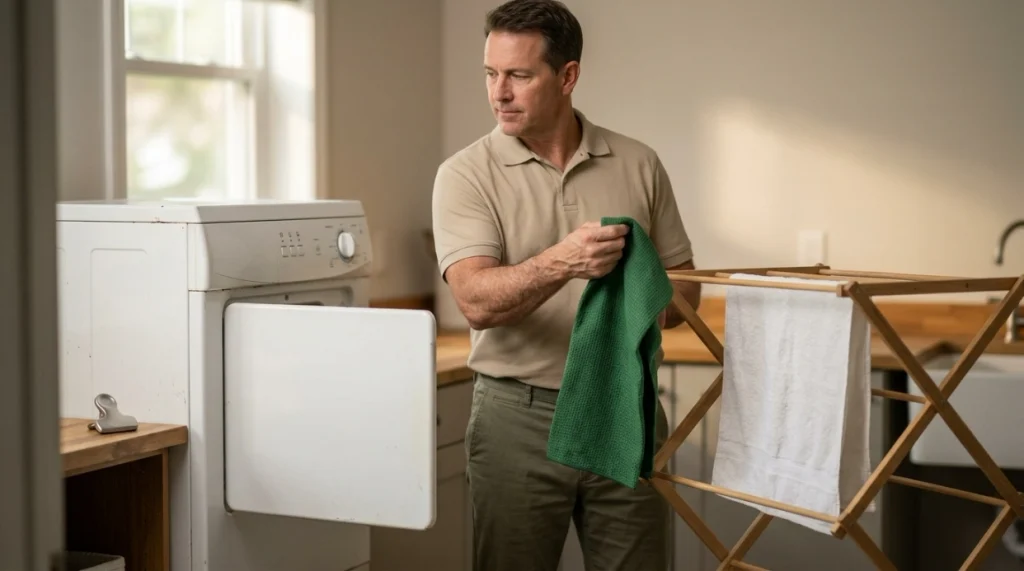
Wash it when it becomes visibly dirty, smells unpleasant, stays damp, or transfers grime instead of removing it. A lightly used dry towel may last several rounds, while a muddy towel may need washing after one.
My schedule changes with course conditions. A dry summer nine-hole round creates far less laundry than 18 holes through dew, bunkers, and soft fairways.
Signs your towel needs washing
- Visible mud or grass buildup
- A sour or musty smell
- Dark, dirty sections across most of the towel
- Reduced absorbency
- Grit remaining in the fabric
- A towel that stayed wet inside the bag
Keep dirty and clean sections separate on the course
I like using one area for clubfaces and another clean area for grips and hands. That keeps bunker sand and fairway mud away from the parts of the club I hold.
The PGA of America recommends keeping a towel nearby for grips, particularly when heat and moisture make them harder to keep clean and dry.
Don’t forget the golf-ball rule
A clean towel is useful for golf balls, but cleaning the ball is still governed by the Rules of Golf. Rule 14 allows cleaning in many situations but includes specific exceptions.
The USGA’s guidance on marking, lifting, and cleaning a ball explains when cleaning is permitted and when restrictions apply.
That matters because having a towel doesn’t automatically mean you can pick up and clean a ball wherever it lies. Equipment care and the Rules remain separate issues.
Frequently Asked Questions About Washing Golf Towels
Can I wash a golf towel in a washing machine?
Yes, many golf towels are machine washable. Check the care label first, remove detachable hardware when appropriate, shake off loose debris, and rinse heavy mud before putting the towel into the machine.
Can I wash a microfiber golf towel with regular clothes?
You can in some cases, but I prefer washing microfiber with other low-lint microfiber items. Cotton clothing and bath towels can shed lint that becomes trapped in the microfiber weave.
Can I use regular laundry detergent on a golf towel?
Regular detergent works for many golf towels when the care label permits it. Use the recommended amount rather than overloading the wash, and consider a dedicated microfiber detergent for synthetic towels if you want a residue-conscious option.
Should I use hot water to clean a dirty golf towel?
Not automatically. Cold or warm water is a safer default for many golf towels, especially microfiber. Use hotter water only when the manufacturer’s care instructions allow it and the fabric genuinely needs that treatment.
How do I make a golf towel absorbent again?
Give it a thorough wash and rinse, then dry it according to its care instructions. If residue has built up, avoid adding more products until you have checked the manufacturer’s recommendations for restoring the towel.
Can I use bleach on a white golf towel?
Only if the care label and material allow it. Chlorine bleach isn’t recommended for some microfiber products, so don’t assume a white towel is automatically bleach-safe.
Should I wash a brand-new golf towel before using it?
It’s reasonable to wash a new towel if its manufacturer recommends doing so. Some microfiber makers specifically advise a first wash to remove loose production fibers, but the product’s own care directions should remain your first reference.
Final takeaway: Washing a golf towel is simple when you treat the material correctly. Remove course debris first, use sensible detergent and temperatures, and make sure the towel dries completely.
I also wouldn’t wait until the towel becomes unpleasant to handle. A quick wash after a muddy or rainy round keeps a small piece of golf gear ready for the next tee time.