
How Do You Use a Wet Golf Towel? A Practical On-Course Guide

Quick Answer
To use a wet golf towel, dampen only part of the towel, use that section to loosen mud and grass from your clubface, then finish with a dry section. Keep the remaining fabric dry for grips and hands, and only clean your golf ball when the Rules of Golf allow the ball to be cleaned.
How to use a wet golf towel
- Wet one section: Add enough water to make roughly one-third to one-half of the towel damp, not dripping.
- Wipe the clubface: Use the damp section immediately after a shot to loosen grass, soil, and sand.
- Check the grooves: Remove stubborn debris before putting the club back into your bag.
- Dry the club: Finish with the clean, dry section when excess water remains.
- Protect your grips: Never leave the grip wet before your next shot.
Simple setup
- Think of the towel as two tools: one damp cleaning zone and one protected dry zone.
A wet golf towel is one of the simplest ways to keep clubs cleaner during a round. Used correctly, it handles fresh mud before it dries and leaves you with clean grooves for the next shot.
I recommend keeping the system simple. You don’t need to soak the entire towel or scrub every club for a minute.
In This Guide
What Is a Wet Golf Towel Used For?
A wet golf towel is a towel with one section deliberately dampened so it can loosen dirt, grass, and sand from golf equipment. The rest of the towel normally stays dry for finishing and moisture control.
The key word is damp. A useful wet golf towel doesn’t need to be completely saturated.
Why golfers dampen their towels
Fresh soil usually wipes away more easily before it dries into the face and grooves. That’s why cleaning a club directly after the shot is more convenient than waiting until the end of the round.
- Clubfaces: The damp fabric softens dirt and grass left after impact.
- Grooves: A textured towel can pull loose debris from the face before it hardens.
- Golf balls: A damp section removes mud when the ball may legally be cleaned.
- Hands: A clean section can remove dirt, although a separate personal towel is better.
- Grips: A lightly damp towel may help remove residue, but the grip should be dried afterward.
Golf Digest has also highlighted the importance of clearing debris from wedge grooves between shots. Clean grooves help the clubface interact with the ball as designed.
For normal play, I prefer to clean the club immediately. It takes only a few seconds when the dirt is still fresh.
How Do You Use a Wet Golf Towel Step by Step?
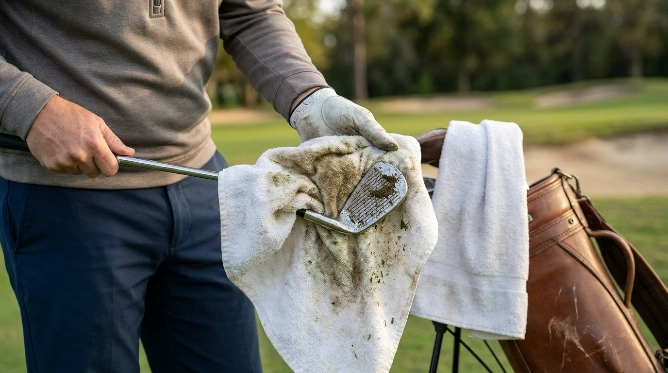
The easiest method is to create a damp cleaning section and preserve a dry finishing section. Use the same routine after each dirty shot.
1. Dampen only part of the towel
Wet roughly one-third to one-half of the towel before your round. Wring it out until it feels damp without dripping water down your bag.
Leave the opposite end completely dry. That dry area becomes important when you need to wipe moisture from a club or grip.
2. Clean the club immediately after the shot
Use the damp area to wipe across the clubface. Pay particular attention to irons and wedges after shots from wet turf, rough, or bunkers.
- Wipe away loose grass first.
- Rub the damp fabric across the face.
- Check the grooves for packed soil.
- Use a suitable groove brush when a towel cannot remove stubborn debris.
- Finish with the dry section if the clubface remains wet.
This routine is faster than letting dirt build up for several holes. A towel clipped where you can reach it also makes the habit easier.
3. Keep the grip dry
Don’t grab the club with a grip that you just soaked. If moisture reaches it, use the clean dry section before your next swing.
PGA guidance for wet-weather golf specifically emphasizes carrying towels to help keep equipment and grips dry during rainy rounds.
4. Re-wet the towel when necessary
On a hot, dry day, the damp section may dry before the back nine. Add a small amount of water rather than soaking the whole towel.
A drinking-water fountain or course wash station can make this easy where available. Avoid dipping the clean portion into dirty club-cleaning water.
Section Takeaway: Keep one area damp for cleaning and another area dry for finishing. Clean the club while the dirt is fresh, then protect the grip from moisture.
How Wet Should a Golf Towel Be?
A golf towel should usually be damp enough to loosen dirt but dry enough that it doesn’t drip. Think wrung-out washcloth rather than towel straight from a bucket.
Too much water creates new problems. It can leave grips slick, add unnecessary bag weight, and make the towel unpleasant to handle.
Signs your towel has the right moisture level
- No dripping: Water shouldn’t run from the towel when it hangs from your bag.
- Cool to the touch: The cleaning zone should clearly feel damp.
- Easy dirt removal: Fresh soil should loosen without repeated soaking.
- Dry zone remains dry: You should still have clean fabric available for moisture removal.
Weather changes the ideal setup. On a dusty summer course, a smaller damp area may be enough.
After heavy rain, the challenge reverses. Your priority becomes protecting dry fabric rather than finding more moisture.
Don’t confuse a damp cleaning towel with a rain towel
A damp cleaning towel is intentionally wet in one area. A rain towel is often designed to protect a dry inner surface while the weather is wet.
During steady rain, I recommend carrying more than one towel when possible. One can handle muddy clubheads while another remains protected for grips and hands.


Can You Use a Wet Golf Towel on Clubs, Balls, and Grips?
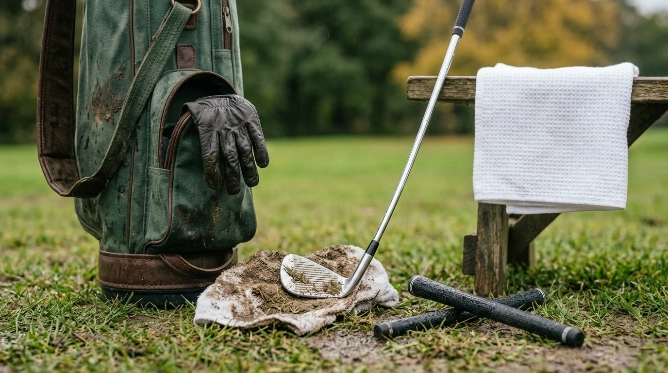
Yes, but each item needs a slightly different approach. Clubheads tolerate routine damp cleaning, while grips need to be dry before the swing.
Using it on clubfaces
Clubfaces are the most obvious use. Wipe irons and wedges after contact with turf, especially when grass or soil remains in the grooves.
A current Golf Digest equipment guide recommends keeping wedge grooves clear between shots rather than allowing dirt to remain packed in the face.
Using it on golf balls
You may clean a ball when the Rules allow it to be lifted and cleaned. A ball lifted from the putting green may always be cleaned under Rule 14.1c.
There are exceptions elsewhere on the course. For example, cleaning can be restricted when a ball is lifted only for identification or to determine whether it is cut or cracked.
The USGA’s ball-cleaning guidance explains these exceptions in more detail. When you’re unsure during competition, check the applicable Rule before wiping the ball.
Using it on grips
A damp towel can remove sweat, sunscreen, and surface grime from a grip. Follow immediately with dry fabric before you use the club.
The PGA of America also advises golfers to keep grips clean and dry during hot conditions.
A wet grip can compromise your hold on the club. I keep the dirtiest part of my towel away from grip-cleaning duty.
Section Takeaway: Wet fabric works well for clubheads and permitted ball cleaning, but grips need a clean, dry finish before you swing.
What Is the Best Wet-and-Dry Towel Setup?
For most golfers, one large towel divided into wet and dry zones is the simplest setup. In rain or muddy conditions, two separate towels give you better moisture control.
| Towel Setup | Towels Carried | Damp Zones | Protected Dry Zones | Best Use |
|---|---|---|---|---|
| Half-wet towel | 1 | 1 | 1 | Normal dry-weather rounds |
| Fully wet towel | 1 | 1 | 0 | Heavy club cleaning when another dry towel is available |
| Two-towel system | 2 | 1 | 1 | Rain, dew, mud, or humid conditions |
Where should you attach the towel?
Hang it where you can reach it without digging through a pocket. A bag loop, carabiner, center slit, or magnetic attachment can all work.
Keep the wet end hanging lower when possible. That makes it easier to remember which section is for dirty clubheads.
Microfiber or cotton?
Both materials can work well. Microfiber is popular because textured versions clean efficiently without requiring a thick, bulky towel.
Cotton absorbs plenty of moisture and feels familiar. The trade-off is that a thick cotton towel can become heavier when saturated.
- Microfiber: Good for compact bags, textured cleaning, and quicker drying.
- Cotton: Good for golfers who prioritize absorbency and a traditional towel feel.
- Waffle weave: Useful when you regularly clean grooves and textured clubfaces.
- Large caddie towel: Offers enough fabric to maintain separate wet and dry areas.
What Mistakes Should You Avoid?
The biggest mistake is soaking the entire towel without keeping a dry alternative. That leaves you with nothing useful when a grip, glove, or club needs drying.
Common wet-towel mistakes
- Making it dripping wet: More water doesn’t automatically mean better cleaning.
- Using the dirty side on grips: Mud and grit from clubheads don’t belong on your gripping surface.
- Ignoring the grooves: A quick wipe isn’t enough when packed soil remains visible.
- Putting wet equipment away: Dry clubs and accessories after a wet round before long-term storage.
- Never washing the towel: Dirt, grass, sweat, and residue accumulate through repeated rounds.
- Cleaning the ball automatically: Check the Rules when the ball has been lifted away from the putting green.
After a rainy round, remove wet items from your golf bag and let them dry properly. Golf Digest’s wet-round checklist also recommends drying clubs, grips, gloves, rain gear, and other damp equipment rather than storing everything wet.
The towel itself needs attention too. Wash it regularly according to its care instructions and let it dry completely before storing it.
As of 2026, the basic approach hasn’t become complicated: keep dirt away from the clubface, preserve a dry gripping surface, and separate cleaning fabric from personal-use fabric.
Frequently Asked Questions
Do you wet a golf towel before playing?
Yes. A practical setup is to wet roughly one-third to one-half of the towel and wring out excess water before the round. Leave the remaining area dry so you can finish clubs and protect grips from unwanted moisture.
Should a golf towel be wet or dry?
Ideally, it should provide both. A damp section is useful for removing dirt and grass, while a dry section handles moisture on clubheads, grips, and hands.
Can I clean my golf club after every shot?
Yes. Wiping dirt and grass from the clubface after a shot is a useful routine, especially with irons and wedges. The importance of clearing wedge grooves has also been highlighted in Golf Digest’s equipment guidance.
Can you use a wet golf towel on your golf ball?
Yes, when the Rules permit the ball to be cleaned. A ball lifted from the putting green may always be cleaned, but Rule 14.1c lists situations elsewhere on the course where cleaning is restricted.
Can you use a wet golf towel on grips?
Yes, a lightly damp section can help remove surface dirt or residue. Dry the grip thoroughly afterward because a wet or slippery grip can make it harder to maintain a secure hold.
How do you keep part of a golf towel dry?
Wet only one end and wring it thoroughly. Keep the opposite end folded, draped higher on the bag, or otherwise protected from wet grass and rain.
Do you need two golf towels when it rains?
You don’t have to carry two, but the setup is useful. One towel can handle muddy clubs while the second stays protected for grips and hands, which matches the wet-weather approach recommended in PGA rain-play guidance.
Final Takeaway: Use the Wet Side to Clean and the Dry Side to Finish
The easiest way to use a wet golf towel is to treat it as two separate tools. Dampen one section for cleaning and protect another section for drying.
- Wet only part of the towel.
- Wring out excess water.
- Clean dirty clubfaces immediately.
- Check grooves before returning the club to your bag.
- Keep grips dry.
- Follow the Rules before cleaning a lifted golf ball.
- Wash and dry the towel regularly.
That simple routine keeps the towel useful from the first tee through the eighteenth green. It also prevents the common problem of turning your only towel into one completely wet, muddy piece of fabric.
Start with a half-wet setup during your next round. After a few holes, you’ll quickly learn how much damp and dry fabric works best for your course conditions.