
How Do You Use a Dry Golf Towel? A Golfer’s Practical Guide

Quick Answer
Use a dry golf towel to remove moisture, loose grass, sand, dust, and light dirt from your clubs, grips, golf ball, hands, and other equipment. Keep the cleanest section reserved for grips and hands, while using another area for clubheads and dirtier jobs; for broader playing guidance, the PGA of America is a useful resource.
How to use it
- Check the surface: Look for moisture, loose grass, sand, or light dirt before wiping.
- Wipe the clubface: Use one section to remove loose debris after each shot.
- Dry the grooves: Press the towel across the face so moisture does not stay inside the grooves.
- Protect the grip: Reserve a cleaner section for drying your grip and hands.
- Rotate the towel: Move to a fresh section once one area becomes damp or dirty.
When a dry towel is not enough
- Use a slightly damp section for dried mud, then finish with the dry towel.
A dry golf towel looks simple, but it can solve several small problems during a round. Used correctly, it keeps moisture off grips, clears loose debris from clubfaces, and gives you a clean surface for handling your ball and equipment.
I treat the towel as several cleaning zones rather than one piece of fabric. That small habit keeps dirt from a wedge face away from the section I use on my hands or grips.
In This Guide
What Is a Dry Golf Towel Used For?
A dry golf towel is mainly a moisture-control and light-cleaning tool. It works best when the surface is wet, dusty, sandy, or covered with loose grass rather than dried-on mud.
Definition: A dry golf towel is a clean, moisture-free section of fabric used during a round to dry golf equipment, remove loose debris, and keep hands or grips free from unwanted moisture.
The biggest advantage is control. A dry towel absorbs moisture instead of spreading more water across the surface you’re trying to clean.
Jobs a dry towel handles well
- Clubfaces: Removes loose grass, light soil, sand, and surface moisture.
- Grooves: Dries water left between the score lines after a wet shot.
- Grips: Removes rain, dew, sweat, and condensation before a swing.
- Hands: Helps restore a dry hold before gripping the club.
- Golf balls: Dries the ball after permitted cleaning.
- Accessories: Can wipe moisture from a rangefinder case, tees, or other suitable gear.
The dry towel becomes especially useful during morning rounds. Dew can leave a clubhead and grip damp even when it has not rained.
It also helps in humid weather when your hands start feeling slick. Keeping a clean section available can be more valuable than using the entire towel for muddy clubheads.
For official rules and equipment information, check the United States Golf Association. Rules can matter when you are cleaning a ball during competitive play.
Section Takeaway: A dry golf towel works best for moisture, loose debris, grips, hands, and final drying. Save at least one clean section instead of using the whole towel on dirty clubheads.
How Do You Use a Dry Golf Towel on the Course?

Use the towel immediately after a shot when dirt and moisture are easiest to remove. Wiping a club before putting it back in the bag also reduces the amount of debris carried from hole to hole.
My preferred method is simple: inspect, wipe, dry, and rotate to a cleaner towel section when needed. It takes only a few seconds.
A simple five-step routine
- Inspect the club: Look at the face, grooves, sole, and grip for moisture or loose debris.
- Start with the dirty zone: Use the section assigned to clubheads rather than your clean grip section.
- Wipe from face to sole: Remove loose grass, sand, and surface water with firm passes.
- Finish with a dry area: Use a cleaner section if moisture remains on the face.
- Return the club clean: Put it back only after the grip and head are reasonably dry.
Why towel zones make a difference
Think of your towel as having separate work areas. One end can handle clubheads, while the other stays cleaner for grips and hands.
This prevents a common mistake: wiping a muddy wedge and then rubbing the same dirty fabric across a grip. That can leave grit or moisture exactly where you do not want it.
- Lower section: Clubface, sole, and dirtier cleaning jobs.
- Middle section: General drying and lighter club cleaning.
- Upper section: Grips, hands, or another clean-use task.
Large caddie-style towels make this separation easy. Smaller tri-fold towels may require more frequent rotating or washing.
If you want general golf instruction beyond equipment care, The R&A’s playing-golf resources provide a useful starting point.
Section Takeaway: Clean immediately after the shot and divide the towel into working zones. Keep the cleanest fabric away from mud and bunker sand.
Can a Dry Golf Towel Clean Clubs and Grooves?
Yes, a dry towel can clean loose material from clubfaces and grooves. It becomes less effective when dirt has dried, compacted, or stuck deep inside the grooves.
Use the dry towel first
After a normal fairway shot, give the face a firm wipe before returning the club. Fresh grass and light soil often come away without adding water.
Waffle-textured microfiber can be useful because the textured surface reaches into small areas of the clubface. Golf Digest has also highlighted textured golf towels for routine club cleaning in its golf accessories coverage.
Know when to switch methods
A dry towel should not become a substitute for proper cleaning when a club is packed with dried mud. Scrubbing harder with dry fabric can simply smear stubborn dirt.
- Loose grass: Dry towel usually works well.
- Morning dew: Dry towel is ideal for final drying.
- Light sand: Brush or shake away excess, then wipe carefully.
- Soft fresh mud: Dry fabric may remove some, but a damp section works better.
- Dried mud: Add a small amount of moisture or clean the club more thoroughly later.
A brush can also help with stubborn material, but use a tool that is suitable for your club’s finish. The goal is to remove debris without damaging the face.
After any damp cleaning, finish with the dry towel. That is where a dry section becomes most useful.
Section Takeaway: Start dry for loose dirt and moisture, then add a damp cleaning step only when needed. Finish by drying the club before it returns to the bag.


How Should You Use It on Grips, Balls, and Hands?
The clean section of a dry towel should be reserved for jobs where grip and feel matter. That usually means your hands and golf grips.
Drying your golf grip
Run the clean towel around the grip before a shot if rain, dew, or sweat has made it slippery. Give extra attention to the area where your fingers normally sit.
Don’t use a muddy section for this job. Dirt transferred onto the grip can make your hands feel less secure rather than more secure.
Drying your hands
Dry palms and fingers before taking your grip. This is useful in humid weather or after handling wet equipment.
Golf gloves also perform better when you avoid soaking them unnecessarily. Keeping your towel accessible can reduce how often wet hands reach the glove.
Using the towel on a golf ball
A clean, dry section is useful for drying a ball after it has been legally lifted and cleaned. Be sure you understand when the Rules of Golf permit lifting and cleaning during formal play.
- Use a clean portion of the towel.
- Rotate the ball as you wipe it.
- Remove visible moisture and loose dirt.
- Avoid transferring grit from your club-cleaning section.
When rules questions matter, the official R&A website is a better reference than relying on course-side guesses.
Is a Dry or Damp Golf Towel Better?
Neither is always better. A dry towel is better for drying and light debris, while a damp towel is better for loosening mud and stubborn dirt.
The strongest setup often uses both. Keep one section damp for cleaning and protect another section so it stays dry.
| Towel Setup | Added Water | Best Use | Main Limitation |
|---|---|---|---|
| Fully dry towel | None | Grips, hands, dew, loose grass, final drying | Weak against dried or packed mud |
| Lightly damp towel | Small amount | Fresh mud, dirty clubfaces, groove cleaning | Cannot properly dry grips afterward |
| Wet/dry split setup | One damp zone, one dry zone | Full-round club cleaning and drying | Requires enough towel area to keep zones separate |
When I would choose dry only
A completely dry towel makes sense on a firm, dry course where clubs mostly collect dust and cut grass. It also works well as a dedicated second towel for hands and grips.
When a damp section helps
Muddy conditions change the job. A lightly dampened corner loosens soil more efficiently than repeatedly rubbing the same spot with dry fabric.
The key is preserving a genuinely dry area afterward. Once the whole towel becomes saturated, it stops being useful for drying grips.
Section Takeaway: Use dry fabric for moisture control and light cleaning, and damp fabric for stubborn dirt. A separated wet/dry setup covers the widest range of course conditions.
What Is the Best Dry-Towel Setup?
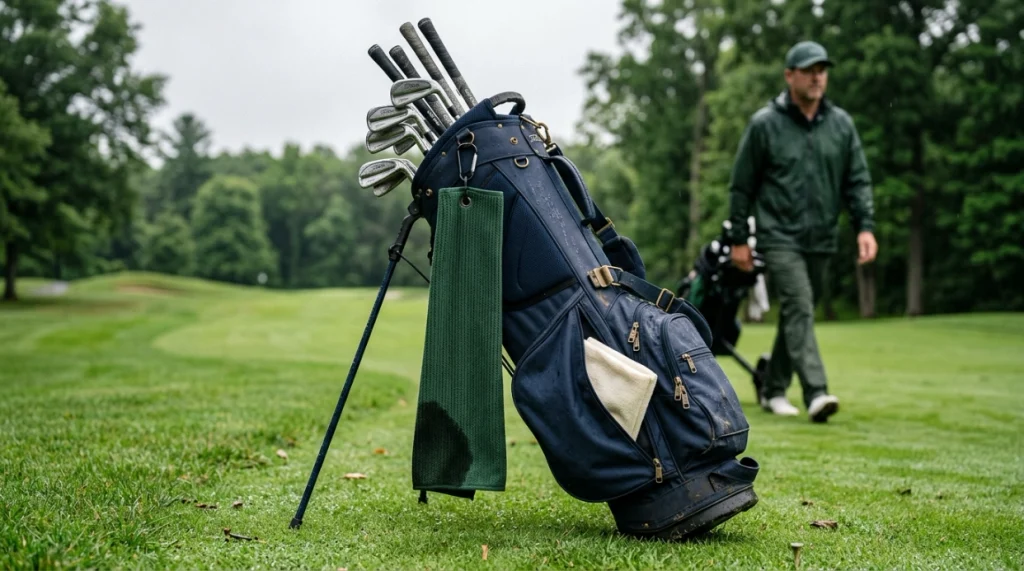
The best setup keeps the towel reachable, separated by purpose, and away from the ground. A towel you cannot reach quickly will not get used consistently.
Attach it where you can reach it
Clip-on towels work well for golfers who walk because they remain attached while the bag moves. Larger caddie towels can be draped through a bag handle or another secure point.
Make sure the towel does not hang low enough to brush wet grass. That defeats the purpose of protecting a dry section.
Carry a backup in wet weather
On a rainy day, one exposed towel can become saturated quickly. Keeping a second dry towel protected inside the bag gives you a backup for grips and hands.
- Main towel: Clubface cleaning and everyday wiping.
- Protected towel: Grips and hands during rain.
- Optional damp corner: Mud removal when conditions require it.
Choose a useful material
Microfiber towels are popular because they are lightweight and can provide a textured cleaning surface. Cotton towels can feel softer and absorb plenty of moisture, although thicker versions may stay damp longer.
Whichever material you use, keep it clean. A towel packed with old dirt cannot provide a clean drying surface.
Wash the towel regularly
Follow the care label supplied with your towel. Avoid leaving a wet or dirty towel sealed inside your golf bag between rounds.
Let it dry before storage, then wash it when dirt builds up. A fresh towel is easier to divide into clean and dirty zones during your next round.
Section Takeaway: Keep the towel accessible, protect a clean dry section, and carry a backup when rain is likely. Regular washing keeps the system working as intended.
Frequently Asked Questions
Should a golf towel be wet or dry?
It can be either, depending on the job. A dry towel is best for grips, hands, moisture, and final drying, while a damp towel works better on mud and stubborn dirt. Many golfers get the most flexibility by keeping separate damp and dry sections.
Can you clean golf clubs with only a dry towel?
Yes, when the club has loose grass, light soil, sand, or surface moisture. A dry towel becomes less effective against dried or packed mud, which may need a small amount of water and a more thorough cleaning.
Should I use the same towel section on my grip and clubhead?
It’s better to separate them. Clubheads collect soil, sand, grass, and moisture, while the grip needs a clean surface. Reserve one section for grips and hands so you do not transfer dirt back onto them.
Can I use a dry golf towel on my golf ball?
Yes, when the Rules allow you to lift and clean the ball. Use a clean section and rotate the ball while wiping away moisture or dirt. Check the applicable Rules of Golf when playing a competition.
Is microfiber better than cotton for a dry golf towel?
Both can work well. Microfiber is typically light and can have useful cleaning texture, while cotton often feels soft and absorbent. Your preferred size, texture, attachment method, and washing routine matter as much as the fabric name.
How many golf towels should I carry?
One towel is enough in dry conditions if you separate clean and dirty zones. In rain or heavy dew, two towels are more practical because you can protect one inside the bag for grips and hands.
Where should I keep a dry golf towel?
Keep it attached high enough on your golf bag that it stays clear of wet grass and mud. During heavy rain, store a backup towel inside a protected bag pocket until you need it.
Using a dry golf towel well is mostly about organization. Keep one area clean, wipe equipment before dirt dries, and switch to a damp section only when dry fabric cannot finish the job.
Set up your towel before your next round rather than waiting for the first muddy shot. A simple dry-and-dirty zone system can make club, grip, and hand care much easier across all 18 holes