
How Do You Use a Dry Golf Towel? A Golfer’s Practical Guide

Quick Answer
Use a dry golf towel to dry your grips, hands, clubheads, and golf ball when cleaning the ball is permitted. Keep the towel away from your muddy cleaning area so it stays useful throughout the round, and check the USGA for current Rules of Golf guidance.
Quick Steps
- Keep it dry: Attach or store the towel where wet grass and dirty clubs cannot soak it.
- Dry your hands: Remove sweat or rain before taking your grip.
- Wipe the grip: Dry the grip before a shot when moisture is present.
- Finish club cleaning: Use the dry towel after loose dirt has already been removed.
- Protect one section: Reserve a clean area only for hands and grips.
A dry golf towel looks simple, but how you use it matters. A towel covered in mud by the fourth hole cannot do much for a slippery grip later.
As of 2026, I prefer a simple system: keep one area clean and dry, then use another area for dirtier jobs. This guide explains exactly where a dry towel helps and when a damp towel works better.
In This Guide
What Does a Dry Golf Towel Do?
A dry golf towel removes moisture from equipment and your hands. Its most important jobs are usually grip drying, hand drying, and finishing club cleaning.
Definition: A dry golf towel is a clean, absorbent towel kept free of added water so it can remove moisture from golf equipment, hands, and permitted-to-clean golf balls.
Drying grips before a shot
A wet grip can feel less secure in your hands. Rain, sweat, morning dew, and wet gloves can all transfer moisture onto it.
Use a clean part of the towel around the grip. Give the entire gripping surface a quick wipe before setting up to the ball.
- Light moisture: One firm pass may be enough.
- Rain: Wipe the grip and your hands separately.
- Heavy moisture: Rotate to another clean section instead of repeatedly using a saturated area.
Drying your hands
Your hands can become damp even when the course is dry. Hot weather and long walks can create enough sweat to affect how the grip feels.
I like to protect one corner of the towel specifically for hands. That section never touches mud, sand, or a dirty clubface.
Drying clubheads
A dry towel is useful after you have removed grass or soil. Wipe the clubhead before returning the club to your bag.
This matters most after wet fairway shots and morning rounds. Moisture can otherwise travel from the clubhead into your bag.
A dry towel is less effective against thick, dried mud. Loosen stubborn dirt first instead of grinding it across the clubface with a dry cloth.
How Do You Use a Dry Golf Towel During a Round?
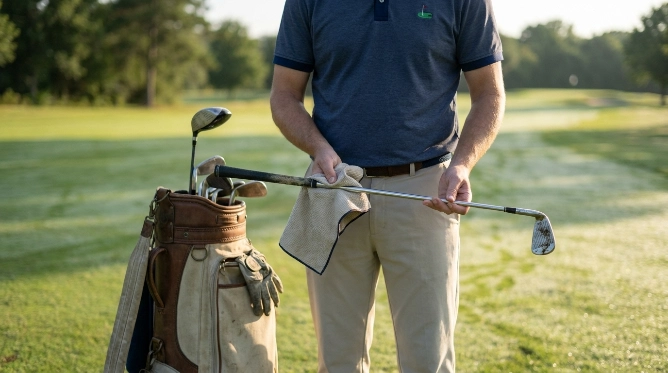
The easiest method is to make towel use part of your normal shot routine. You should not need a separate cleaning session every few holes.
Before the shot
Check your hands and grip whenever moisture is present. The grip is the priority because you are about to swing the club.
- Touch the grip and check for moisture.
- Dry your hands with a clean section.
- Wipe the grip with another clean section.
- Keep the towel nearby until you finish the shot.
Golfers playing in rain may also want to protect their glove between shots. Keeping the towel accessible makes this much easier.
After the shot
Look at the clubface before placing the club back into your bag. Irons and wedges often collect grass, sand, soil, or moisture after turf contact.
If the face is only damp, a dry towel may be enough. If mud is stuck to it, loosen the debris before finishing with your dry section.
- Driver or fairway wood: Wipe moisture, grass, or tee-box debris from the face and sole.
- Iron: Remove soil and grass, then dry the face.
- Wedge: Pay attention to loose sand and dirt around the grooves.
- Putter: Wipe moisture from the face and sole when needed.
When cleaning your golf ball
A dry towel can finish cleaning a golf ball after it has been legally lifted and cleaning is permitted. It is useful for removing remaining moisture before replacing the ball.
Remember that not every situation where you lift a ball gives unrestricted permission to clean it. The R&A provides current Rules of Golf information.
Build a repeatable routine
My preferred rule is simple: dry before the swing and clean after the swing. It keeps the process easy to remember.
You also avoid carrying dirt from one hole to the next. That becomes especially useful on damp courses.
Section Takeaway: Use the dry towel before shots for hands and grips, then after shots for clubheads. Keep the clean section separated from the dirty section.
Should You Use a Dry Towel or a Damp Towel?
A dry towel and a damp towel solve different problems. Dry fabric handles moisture, while damp fabric is usually better at loosening dirt.
You do not always need two separate towels. A large towel can work if you carefully separate its damp and dry areas.
| Towel Setup | Towels Used | Best Use | Best Conditions |
|---|---|---|---|
| Fully dry towel | 1 | Hands, grips, light moisture | Dry or mildly damp rounds |
| Split wet/dry towel | 1 | Dirt removal plus drying | Normal course conditions |
| Separate wet and dry towels | 2 | Dedicated cleaning and drying | Mud, dew, sand, soft turf |
| Rain setup with spare dry towel | 2 or more | Keeping hands and grips dry | Steady rain or soaked conditions |
When a dry towel works best
Choose the dry section when the job involves moisture rather than stuck dirt. Grips and hands should normally get the cleanest part.
A dry towel also works well as the final step after cleaning a club. It removes the moisture left by a damp cleaning section.
When a damp towel works better
Use a damp section when mud has dried onto an iron or wedge. Moisture softens the material and makes it easier to wipe away.
Do not soak the entire towel unless conditions demand it. Once every section becomes wet, you lose your dedicated drying surface.
Why two towels can be easier
Two towels remove the guesswork. One handles dirty clubheads, while the other stays protected for grips and hands.
This setup adds little complexity when you use a cart or larger golf bag. Walkers may prefer one towel divided into clear working areas.
Section Takeaway: Damp fabric is better for loosening dirt, while dry fabric is better for removing moisture. A separated wet-and-dry system gives you both functions.


How Do You Keep a Golf Towel Dry?
Keeping a towel dry requires more than avoiding the water bottle. Morning dew, wet clubs, rain, and grass can slowly saturate it.
Attach it in the right place
Hang the towel high enough that it does not drag across wet grass. It should also remain easy to reach without digging through your bag.
Clips, loops, grommets, and magnetic attachments can all work. The exact attachment matters less than keeping the towel secure and accessible.
Fold the dry area inward
If you use one towel for several jobs, fold the clean section inward. That helps protect it from dirty clubs and accidental contact.
You can also assign specific ends of a long towel. One end handles equipment, while the other stays reserved for your hands.
Carry a protected spare in rain
During wet rounds, keep a second dry towel inside a waterproof compartment or sealed bag. Do not expose it until your first towel stops working.
This simple backup can be more useful than carrying one oversized towel that becomes soaked early.
Wash the towel regularly
Dirt, sunscreen, sweat, grass, and cleaning residue build up over time. Follow the towel manufacturer’s washing instructions before the fabric becomes heavily soiled.
If you use microfiber, avoid assuming it should be washed exactly like every household towel. Follow its care label to protect the fabric.
What Should You Wipe First With a Dry Golf Towel?
Before a shot, prioritize anything that affects your hold on the club. After the shot, prioritize dirt and moisture on the clubhead.
Priority before swinging
- Hands: Remove sweat, rain, or moisture.
- Glove: Keep it as dry as practical.
- Grip: Wipe the full gripping area.
- Clubface: Check for remaining moisture or debris.
This order keeps the cleanest towel section focused on the parts you touch. Do not wipe a muddy wedge and immediately use that same area on your hands.
Priority after striking the ball
Start with the clubface. Grass and soil are easier to remove before they dry onto the surface.
Check the sole next if the shot came from soft turf or a bunker. Finish by drying the club before returning it to your bag.
For broader golf instruction and equipment guidance, the PGA of America is a useful reference.
What Mistakes Make a Dry Golf Towel Less Useful?
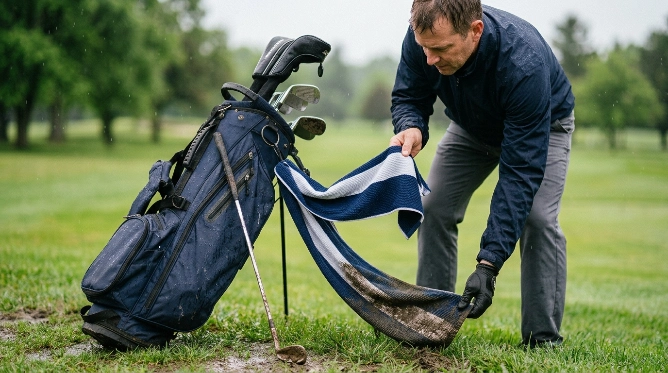
Most towel problems come from mixing jobs together. Once your clean drying area becomes muddy or soaked, its usefulness drops quickly.
Using every section for dirty clubheads
Do not rotate a dirty clubface through the entire towel. Protect at least one section for hands and grips.
A simple fold or mental dividing line works. You do not need special equipment.
Trying to remove hard mud while completely dry
Dry cloth is good for loose material and moisture. It is not always the easiest tool for hardened soil.
Loosen stubborn dirt with a damp area first. Then finish with the dry towel.
Leaving the towel exposed in rain
A dry towel hanging outside your bag will not stay dry during steady rain. Protect at least part of it before conditions get worse.
Keep a spare covered if rain is expected. Bring it out only when needed.
Letting the towel drag
A long towel can touch grass, cart paths, or muddy ground when attached too low. That defeats the purpose of reserving a clean section.
Adjust the attachment point so the lowest edge stays clear of the ground.
Ignoring towel maintenance
A towel is reusable equipment, not a permanent dirt collector. Wash it when it becomes heavily soiled or starts transferring debris back onto your gear.
Let it dry fully before storing it in your golf bag. Trapped moisture can create unpleasant odors.
Dry Golf Towel FAQs
Can you clean golf clubs with a completely dry towel?
Yes. A dry towel works well for loose grass, light dirt, dust, sand, and surface moisture. For caked mud, a damp section usually makes cleaning easier before you finish with a dry section.
Should a golf towel be wet or dry?
Both setups can work. A damp area is useful for loosening dirt, while a dry area is better for hands, grips, and final drying. Many golfers benefit from keeping access to both.
Can you use a dry golf towel on your grips?
Yes. Drying grips is one of the most useful jobs for a clean golf towel. Wipe around the gripping surface before a shot whenever rain, sweat, or dew makes it feel damp.
Can you use a golf towel to clean your golf ball?
Yes, when the Rules of Golf permit the ball to be cleaned. A dry towel can remove moisture and loose debris, but remember that some situations where a ball is lifted restrict cleaning.
Where should you keep the dry part of a golf towel?
Keep it away from muddy clubfaces and wet grass. Fold the clean section inward, use one end only for grips, or carry a separate towel inside a protected bag compartment.
Do you need two golf towels?
No. One large towel can have separate damp and dry sections. Two towels are simply easier to manage when the course is muddy, dewy, or rainy because each towel can have one dedicated job.
What material works well for a dry golf towel?
Microfiber and cotton are both practical options. Microfiber is commonly lightweight and quick to manage, while cotton can provide a soft, absorbent surface. Choose based on texture, size, care needs, and how you carry your bag.
Final Takeaway
A dry golf towel works best when you protect its clean section. Use it before shots for hands and grips, then use it after shots to remove moisture from your equipment.
For dirtier conditions, pair that dry area with a damp cleaning section. Build the routine into every hole, and your towel stays useful instead of becoming a muddy accessory hanging from the bag.
Start with one simple habit on your next round: reserve one clean, dry section only for your hands and grips.