
Should You Wet Your Golf Towel? A Practical Golfer’s Guide

Quick Answer
Yes, you should usually wet part of your golf towel rather than soaking the whole thing. A damp section removes mud, grass, sand, and other debris from clubfaces more easily, while a protected dry section can finish the job and keep grips dry. Remember that cleaning a golf ball during play must follow Rule 14 of the Rules of Golf.
The best towel setup
- Wet one section: Make part of the towel damp enough to loosen dirt without leaving it dripping.
- Keep one section dry: Protect clean fabric for drying clubfaces, grips, and hands.
- Clean after shots: Fresh grass and mud are easier to remove before they dry inside the grooves.
- Protect your grips: Avoid wiping grips with the muddy or saturated part of the towel.
- Dry it afterward: Don’t leave a damp, dirty towel sealed inside your golf bag between rounds.
Simple rule
- Think of one towel as two tools: a damp cleaning zone and a clean dry zone.
If you’ve wondered whether you should wet your golf towel before a round, my answer is usually yes—but only part of it. The damp-and-dry method is simple, works in most course conditions, and keeps one towel useful for several jobs.
In This Guide
Should You Wet Your Golf Towel Before Playing?
For most rounds, I recommend starting with one part of your golf towel damp. Leave the other portion clean and dry for jobs where moisture creates more problems than it solves.
This setup becomes especially useful on soft courses, early-morning rounds, or any day when irons collect mud and wet grass. A totally dry towel can brush away loose debris, but packed soil usually needs moisture.
- Irons: Use the damp area to remove soil and grass from the face.
- Wedges: Pay extra attention to debris sitting inside the grooves.
- Golf balls: Use the towel only when the Rules allow the ball to be cleaned.
- Grips: Use a clean, dry section whenever possible.
- Hands: Keep them away from the muddy cleaning area.
I find the system easiest when I decide which end is the cleaning end before reaching the first tee. Once that section gets dirty, I don’t use it on a grip or my hands.
Definition: A wet golf towel is simply a golf towel with a deliberately damp cleaning area. It doesn’t need to be completely soaked to work effectively.
The main goal isn’t making the towel wet. It’s creating a convenient way to loosen debris while preserving clean fabric for drying.
Section Takeaway: Wet part of your golf towel before most rounds, but preserve a clean, dry section. A soaked towel is usually less useful than a controlled damp-and-dry setup.
Why Does a Damp Golf Towel Work Better?
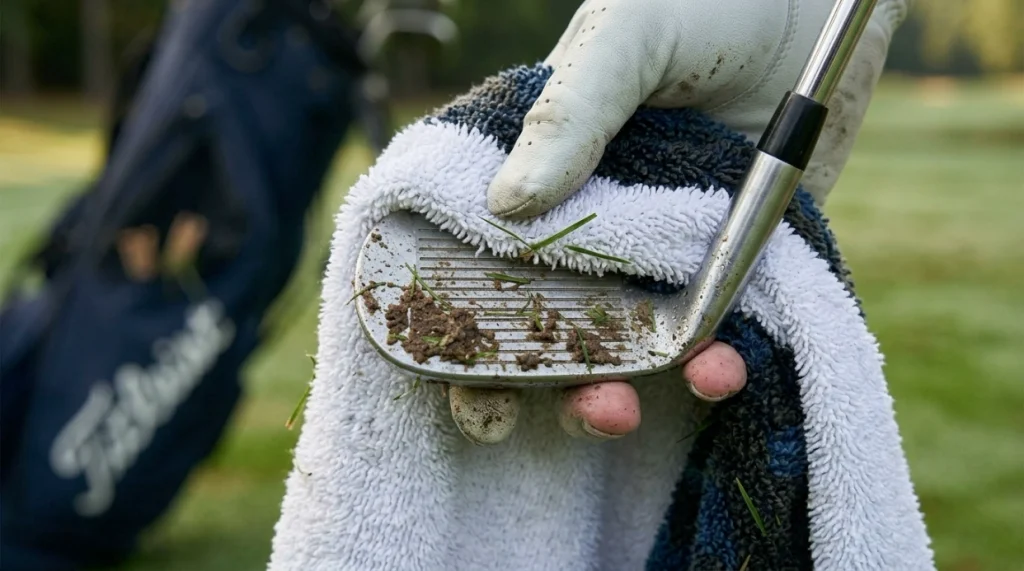
A damp towel works because water helps soften and release soil, grass, and other debris stuck to a clubface. That makes cleaning easier without aggressive scrubbing.
The difference becomes obvious after an iron shot from soft turf. Fresh mud may wipe away in seconds while it’s still moist, but the same dirt becomes stubborn after several holes.
It helps keep the clubface clear
Clubface grooves are designed features of irons and wedges, and the USGA Equipment Rules contain detailed specifications for their dimensions and construction. Letting dirt completely fill those grooves means the face isn’t in the clean condition the club was designed around.
That doesn’t mean you need to polish a wedge after every swing. A quick wipe after a dirty shot usually takes only a few seconds.
- Remove loose grass first.
- Wipe the clubface with the damp area.
- Check for soil packed into individual grooves.
- Use a suitable brush or tee for stubborn debris when necessary.
- Finish with the dry section if moisture remains.
Clean grooves matter most when debris builds up
Golf Digest has also discussed the importance of clearing wedge grooves between shots. Moisture and debris between the ball and clubface can influence the contact conditions at impact.
That’s why I treat the towel as part of my shot routine rather than an end-of-round cleaning tool. If an iron comes back covered in grass, I clean it before returning it to the bag.
Section Takeaway: A damp towel earns its place by dealing with debris while it’s still easy to remove. Clean the club immediately instead of letting mud harden for several holes.
How Wet Should a Golf Towel Be?
Your golf towel should feel damp, not saturated. If water drips when you pick it up, you’ve probably added more than you need.
I normally run water over one end before the round and wring it firmly. The fabric should carry enough moisture to soften dirt without dripping onto the bag.
Damp vs. wet vs. dry golf towels
| Towel setup | Best use | Main advantage | Main drawback |
|---|---|---|---|
| Damp section | Mud, grass, sand, clubfaces | Loosens debris without excessive water | Needs a separate dry area |
| Fully soaked | Heavy mud in limited situations | Plenty of moisture for stubborn dirt | Heavy, messy, and poor for drying |
| Completely dry | Grips, hands, dew, light debris | Excellent for moisture removal | Less effective on dried or packed mud |
A microfiber or waffle-weave towel is particularly convenient for this setup because the textured surface helps grab loose debris. Cotton terry also works and can hold plenty of moisture.
The right choice depends on weather and how you carry your clubs. Walkers may prefer a lighter microfiber towel, while cart golfers can comfortably carry a larger towel or a second dry one.


What Is the Best Wet-and-Dry Towel Setup?
The simplest method is to assign separate jobs to different parts of the towel. Don’t repeatedly move between dirty and clean sections.
Here’s the routine I use when the course is soft.
- Dampen one end before teeing off. Wring it until no water drips freely.
- Attach the towel where it’s easy to reach. Avoid letting the wet end rest against grips or valuables.
- Clean the club immediately. Wipe away mud and grass before putting the club back.
- Inspect the grooves. Remove stubborn packed debris with an appropriate cleaning tool.
- Use the dry end last. Remove leftover moisture before storing the club.
One towel or two?
One towel works well in ordinary conditions if it’s large enough to maintain separate zones. I prefer two towels when rain is expected or the course is exceptionally wet.
- One-towel setup: Best for normal dry or moderately damp rounds.
- Two-towel setup: Better when you need a protected towel for hands and grips.
- Small cleaning towel: Useful for clubheads and balls when cleaning is permitted.
- Large dry towel: Useful for grips, hands, seats, and equipment during rain.
Whatever system you choose, access matters. A towel buried inside a bag pocket won’t become part of your routine.
Section Takeaway: Keep the cleaning process simple and repeatable. Damp first, clean the face, inspect the grooves, then use protected dry fabric when needed.
When Is a Dry Golf Towel Better?
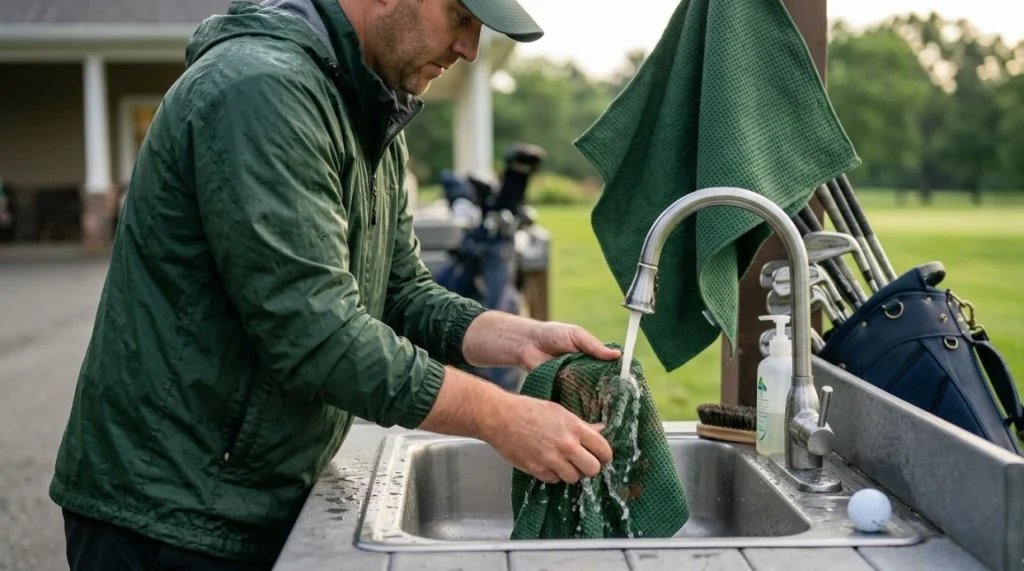
A wet towel isn’t better for every job. Dry fabric is the safer choice whenever your main goal is removing moisture rather than loosening dirt.
Keep grips dry
A wet grip can affect how securely the club feels in your hands. That’s especially noticeable during rain, humid weather, or a round where your hands sweat heavily.
Keep muddy towel sections away from your grips. If a grip gets damp, use the cleanest and driest fabric available before the next shot.
Protect one towel during rain
Rain changes the normal system because everything around the bag can become wet. In that situation, protecting a completely dry towel becomes more important than wetting one yourself.
- Keep a spare towel under the bag’s rain hood.
- Store a small towel inside a waterproof compartment.
- Use the exposed towel for dirty clubheads.
- Reserve the protected towel for grips and hands.
This is one reason I don’t recommend soaking an entire towel before the round. Once every inch is wet, you’ve lost an easy drying tool.
What Rules and Towel-Care Issues Matter?
You can clean your golf clubs during normal play, but golf-ball cleaning has specific restrictions. A ball lifted from the putting green may be cleaned, while certain lifts elsewhere restrict cleaning.
For example, restrictions apply when a ball is lifted only to identify it, determine whether it’s cut or cracked, because it interferes with play, or to check whether it lies in a condition where relief is allowed. Check the official Rules when you’re uncertain rather than assuming every lifted ball can be scrubbed clean.
Don’t forget the towel after the round
A damp golf towel shouldn’t stay balled up inside your bag for days. Dirt, moisture, and poor airflow create the exact conditions you don’t want around equipment.
- Shake off loose grass and soil.
- Rinse heavy mud before it dries.
- Wash according to the towel’s care label.
- Let the towel dry completely before storage.
- Check microfiber care instructions before using fabric softener or high heat.
I also avoid using the same dirty section on my face or hands. Once a towel section has cleaned muddy clubheads, I treat it as an equipment-only surface until it’s washed.
For broader instruction and equipment information, the PGA of America is another useful golf resource.
Section Takeaway: A damp towel is easy to use, but separate dirty and clean zones. Follow the Rules when cleaning a ball and fully dry the towel after your round.
Frequently Asked Questions
Do pro golfers use wet towels?
Golfers and caddies commonly use damp towels to clean clubfaces during a round, particularly when grass, sand, or soil collects on irons and wedges. The practical method is the same for recreational golfers: use moisture for cleaning while preserving dry fabric for other jobs.
Should I soak my entire golf towel?
No. Soaking the entire towel usually makes it heavier and removes the dry surface you need for grips, hands, and final wiping. Wet one section, wring it thoroughly, and keep the opposite area as dry as possible.
Can I use a wet golf towel to clean my golf ball?
Yes, when the Rules permit the ball to be cleaned. A ball lifted from the putting green may be cleaned, but some situations elsewhere on the course restrict cleaning, so check Rule 14.1c if you’re unsure.
Is microfiber or cotton better for a wet golf towel?
Both work. Waffle microfiber is lightweight, textured, and usually convenient for repeated club cleaning, while cotton terry offers a soft feel and strong moisture absorption but may become heavier when wet.
Should I wet my golf towel before every round?
It’s useful for most rounds where clubs may collect grass or soil, but it isn’t mandatory. On a firm, dry course, you might only need a small damp area while keeping most of the towel dry.
How do I keep my golf towel wet for 18 holes?
Start with a thoroughly dampened section and keep it away from direct heat when possible. If it dries during the round, add a small amount of clean water rather than soaking the whole towel.
Do I need two golf towels?
Not in normal conditions. One large towel with defined wet and dry zones works well, but a second protected towel is valuable during rain because you can reserve it exclusively for grips and hands.
My takeaway: Yes, wet your golf towel—but don’t soak the whole thing. A damp cleaning zone paired with a protected dry zone gives you a simple system for cleaner clubs, drier grips, and less mess throughout all 18 holes.
Set it up before your next round and make wiping a dirty club part of your normal post-shot routine. It takes seconds and keeps your equipment ready for the next swing.