
How Do You Use a Golf Towel? A Practical Golfer’s Guide

Quick Answer
Use a golf towel by keeping one section slightly damp for cleaning dirt, grass, and mud from clubheads while leaving another section dry for grips, hands, and final wiping. Attach it somewhere easy to reach, clean clubs after dirty shots, and keep a second towel protected during wet weather. A towel can even double as a simple practice aid, as shown in this PGA golf towel drill.
Simple golf towel routine
- Dampen one section: Use enough water to loosen ordinary dirt without soaking the whole towel.
- Keep one section dry: Reserve it for grips, hands, and drying a clubface.
- Wipe after shots: Remove grass, sand, and soil before they dry on the clubface.
- Protect your grips: Never use a muddy section on the part of the club you hold.
- Carry a spare: Keep a second dry towel protected when rain is expected.
- Dry it afterward: Remove a wet towel from your bag once the round ends.
A golf towel looks like a simple accessory, but I use mine on almost every hole. It keeps clubfaces cleaner, grips drier, and muddy equipment away from the rest of my bag.
The trick is using different parts of the towel for different jobs. This guide explains the routine I use, where to hang the towel, how to handle rain, and which common mistakes to avoid.
In This Guide
- What is a golf towel and what should it do?
- How do you use a golf towel during a round?
- Where should you keep a golf towel on your bag?
- How do you use a golf towel in rain, heat, and dew?
- What golf towel mistakes should you avoid?
- Frequently asked questions about golf towels
- What’s the simplest golf towel routine?
What Is a Golf Towel and What Should It Do?
A golf towel is an absorbent cloth carried with your golf equipment for cleaning clubheads, drying grips and hands, and wiping a golf ball when the Rules permit cleaning. Golf-specific versions usually add a clip, loop, grommet, or center opening for easy attachment.
Definition: A golf towel is a reusable cleaning and moisture-control accessory designed to stay accessible during a round.
The towel doesn’t need to be expensive. Accessibility, absorbency, useful texture, and enough clean surface area matter more than a large logo.
What parts of your equipment can you clean?
I mainly use a towel on irons and wedges because grass and soil collect quickly around their grooves. I also use a clean section on grips, hands, and wet clubheads.
Your ball is different because the Rules determine when you may lift and clean it. Under Rule 14 from The R&A, a ball lifted from the putting green may be cleaned, while several exceptions apply elsewhere.
| Towel Area | Best Use | Keep It | Avoid Using It For |
|---|---|---|---|
| Damp section | Mud, grass, clubfaces | Lightly moist | Grips and hands |
| Dry section | Grips, hands, final drying | Clean and dry | Heavy mud |
| Protected spare | Rain and emergencies | Inside a dry pocket | Routine dirty-club cleaning |
How Do You Use a Golf Towel During a Round?
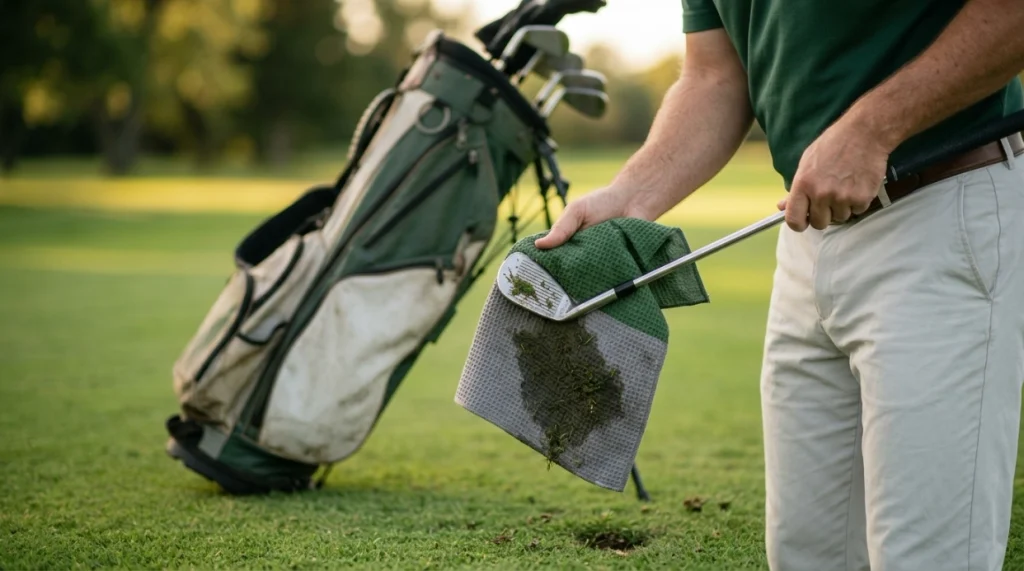
The easiest method is a wet-side and dry-side system. I lightly dampen the lower portion before playing and deliberately keep the upper portion clean.
That simple separation prevents a common problem. Once the entire towel becomes muddy, it can no longer dry a grip effectively.
Step 1: Dampen only part of the towel
Wet one corner or roughly the lower third, then wring it out. You want moisture, not water dripping onto your bag.
Step 2: Clean dirty clubfaces immediately
After a shot from wet turf, sand, or rough, remove loose debris before putting the club away. Fresh soil is usually easier to remove than dirt that has dried into the grooves.
- Shake or brush off loose sand first.
- Wipe the face with the damp section.
- Use the dry section for a final pass.
- Check the grooves before returning the club to your bag.
I pay the most attention to wedges. A face covered with dirt or wet grass isn’t how I want to start the next short-game shot.
Step 3: Reserve a clean section for grips
Never run a muddy towel across the grip. Use a separate clean, dry section instead.
PGA guidance also recommends keeping grips clean and dry in hot conditions because moisture can affect your hold on the club. Their hot-weather golf advice specifically highlights using a towel on grips.
Step 4: Clean your ball only when allowed
A towel is ideal for wiping dirt from a golf ball, but don’t treat every ball as freely cleanable. Check whether the Rules allow you to lift and clean it in that situation.
On the putting green, cleaning is straightforward after properly marking and lifting the ball. Other situations can carry restrictions.
Section Takeaway: Divide the towel into working zones—damp for dirt, dry for grips and finishing—and clean equipment before debris has time to dry.
Where Should You Keep a Golf Towel on Your Bag?
Keep the towel somewhere you can reach without opening a pocket. Convenience matters because a towel you can’t reach quickly tends to go unused.
I prefer the outside of the bag near the clubs. On a stand bag, that usually means a clip, towel ring, loop, or another secure attachment point.
Should the towel hang from the bag?
Yes, during normal dry-weather play. Letting it hang gives you quick access and helps a damp section stay exposed to air.
Make sure it doesn’t drag on the ground when you set down a stand bag. A towel that collects sand from the path can become abrasive.
Should you use a clip or a center-slit towel?
Either design works. Your choice mainly depends on the bag and how often you remove the towel.
- Carabiner or clip: Easy to attach and remove.
- Grommet: Creates a secure attachment point for a clip.
- Center slit: Can drape over a club or alignment stick.
- Large caddie towel: Offers more wet and dry surface area.
A secure attachment also helps while walking. I don’t want to discover on the ninth tee that my towel disappeared several holes earlier.


How Do You Use a Golf Towel in Rain, Heat, and Dew?
Weather changes the towel’s job. On a dry afternoon it’s mostly a cleaning tool, while in rain it becomes part of your grip-management routine.
What should you do in the rain?
Carry at least one protected dry towel when rain is likely. If every towel hangs outside the bag, they can all become soaked at the same time.
PGA wet-weather guidance recommends taking multiple towels and keeping them protected. Their guide to playing golf in the rain emphasizes keeping grips and clubs dry.
- Keep one working towel accessible.
- Store another towel in a protected pocket.
- Dry the grip immediately before the shot.
- Wipe water from the clubface when needed.
- Keep gloves away from the muddy towel section.
What about early-morning dew?
Dewy rounds can quietly soak the lower half of your bag setup. Wet grass transfers moisture to shoes, balls, clubheads, and towel fabric.
I start those rounds with less water on my damp section. The course usually provides plenty of moisture after the first few holes.
How should you use it on hot days?
Sweat can make grips and hands slippery. Keep the cleanest area of the towel reserved for drying them before a shot.
Don’t wipe your face with the same section used on clubs. Soil, fertilizer residue, sand, and grime belong on a separate part of the towel.
Section Takeaway: Dry weather calls for one divided towel, while rain is easier to manage with a working towel plus a protected dry spare.
What Golf Towel Mistakes Should You Avoid?
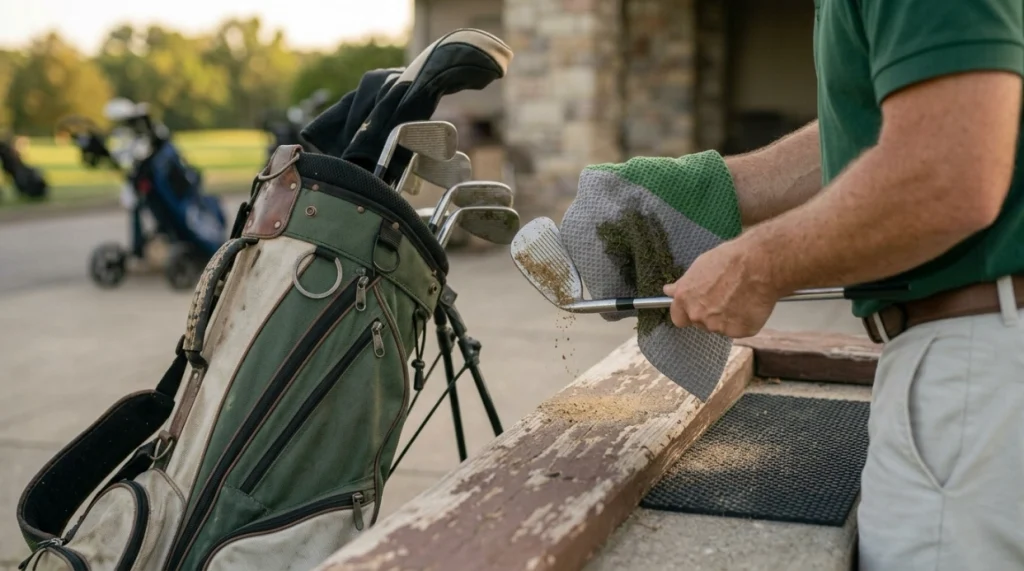
The biggest mistake is treating the whole towel as one dirty surface. Once mud spreads everywhere, you’ve lost your clean drying area.
- Soaking the entire towel: You lose the dry section needed for grips and hands.
- Grinding sand into clubheads: Remove loose grit before wiping aggressively.
- Using one area for everything: Separate club-cleaning areas from grip and hand areas.
- Leaving it wet in the bag: Take it out and let it dry after your round.
- Ignoring the care label: Wash and dry the fabric according to its instructions.
- Cleaning your ball automatically: Confirm that the Rules allow cleaning in the situation.
Can a golf towel be used as a practice aid?
Yes. A towel can provide simple visual or physical feedback during practice, not just clean your equipment.
For example, PGA instructors use towel drills for contact and swing movement. One PGA towel contact drill uses the towel as feedback while working on better strikes.
Pro tip: If you’re changing your swing mechanics rather than practicing a familiar drill, work with a certified PGA professional who can check your movement and setup.
Frequently Asked Questions About Golf Towels
Do you wet a golf towel before playing?
Yes, you can dampen one section before the round. Wring it out so it’s moist rather than dripping, and keep another portion dry for grips, hands, and final drying.
What do golfers use the wet part of a towel for?
The damp portion is mainly used to loosen dirt, mud, grass, and other debris from clubfaces. After cleaning, a dry portion can remove the remaining moisture.
Can you clean golf club grooves with a towel?
A textured towel can remove loose dirt from grooves, especially when the debris is still fresh. Packed soil may need a suitable club brush, followed by a towel wipe.
Can you clean your golf ball with your towel?
Yes, but only when the Rules allow the ball to be cleaned. A ball lifted from the putting green may be cleaned, while Rule 14.1c includes exceptions for certain situations elsewhere on the course.
How many golf towels should you carry?
One towel is enough for many dry rounds if you maintain separate damp and dry zones. I prefer two when rain is expected because a protected spare gives me a genuinely dry surface later.
Where do you put a golf towel?
Attach it to an easy-to-reach point on the outside of your golf bag. A clip, grommet, loop, or center slit works well as long as the towel stays secure and off the ground.
Should you wash a golf towel after every round?
Wash it whenever it becomes muddy, heavily soiled, sweaty, or starts to smell. After every round, at minimum, remove a damp towel from the bag and let it dry completely.
What’s the Simplest Golf Towel Routine?
My 2026 routine is uncomplicated: dampen one corner, keep the rest dry, hang the towel where it’s easy to reach, and wipe dirty clubs before putting them away. In wet conditions, I add a protected second towel.
That setup covers almost everything most golfers need. You don’t need complicated accessories to keep clubs, grips, hands, and permitted-to-clean golf balls in better condition during a round.
If your towel is currently buried in a bag pocket, start by moving it somewhere accessible. Use it consistently for one round, and the wet-side/dry-side routine quickly becomes automatic.