
How Do You Clean a Golf Towel?

Quick Answer
Clean a golf towel by shaking off loose dirt, treating heavy stains, and washing it with mild detergent. Cold or cool water is the safest starting point for many microfiber towels, and Club Glove’s microfiber towel care guidance also specifies cold water and mild detergent for its towel.
Quick Cleaning Steps
- Shake off debris: Remove dried mud, sand, grass, and loose dirt before washing.
- Check the label: Follow the manufacturer’s care instructions when they differ from general advice.
- Treat stains: Work a small amount of mild detergent into muddy or greasy spots.
- Wash gently: Use a mild detergent and a gentle machine cycle or hand wash.
- Skip softener: Fabric softener can leave residue on absorbent towel fibers.
- Dry carefully: Air drying is the safest choice when you’re unsure about heat tolerance.
On-Course Tip
- Keep one area damp for cleaning clubfaces and another area dry for wiping grips and hands.
A golf towel gets dirtier than it looks. Mud, sand, grass, sunscreen, sweat, and moisture can build up through only a few rounds.
I prefer a simple cleaning routine that protects the towel’s absorbency without turning laundry day into another equipment project. Here’s how to clean microfiber, cotton, waffle, and heavily soiled golf towels properly.
In This Guide
- What Is the Best Way to Clean a Golf Towel?
- Should You Machine Wash or Hand Wash a Golf Towel?
- How Do You Clean Different Golf Towel Materials?
- How Do You Remove Mud, Stains, and Odors?
- What Should You Avoid When Washing a Golf Towel?
- How Often Should You Wash a Golf Towel?
- Frequently Asked Questions
What Is the Best Way to Clean a Golf Towel?
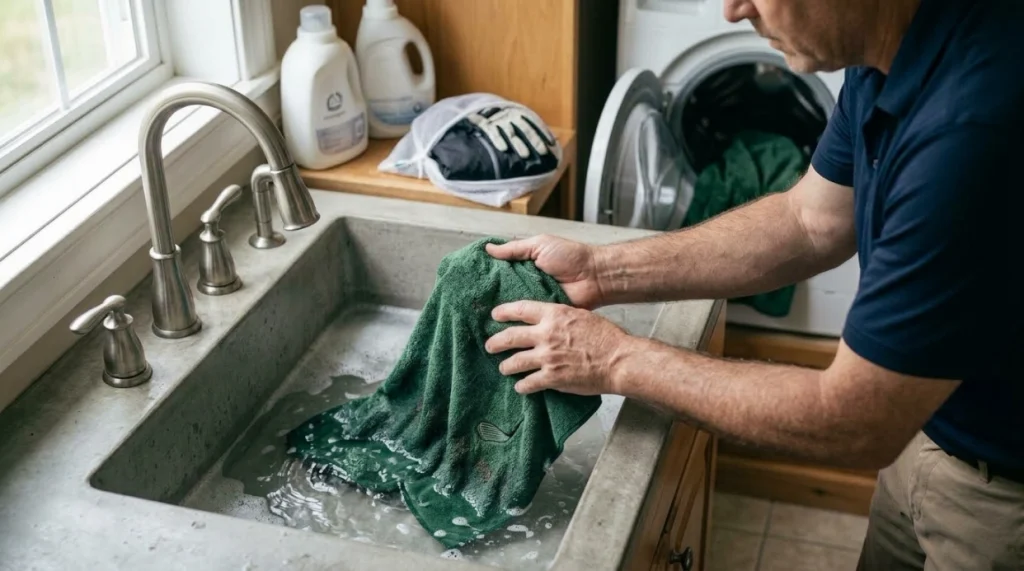
The safest method is to remove loose dirt first, pretreat visible stains, and wash with mild detergent. Always check the towel’s care label before choosing water temperature or dryer settings.
Definition: A golf towel is an absorbent cloth carried on a golf bag or cart for cleaning clubfaces, balls, grips, hands, and other equipment during a round.
Step 1: Let heavy mud dry first
If the towel is coated in wet mud, don’t immediately throw it into your washer. Let thick mud dry, then shake or brush away as much as possible.
This keeps chunks of soil and grass from circulating through the wash. It also makes stain treatment easier.
Step 2: Pretreat the dirty areas
Put a small amount of mild liquid detergent directly on obvious stains. Gently work it into the fibers with your fingers or a soft brush.
- Mud usually needs loosening before washing.
- Grass marks benefit from quick pretreatment.
- Sunscreen and skin oils may need extra detergent.
- Old stains may require another wash rather than aggressive scrubbing.
Step 3: Wash without overloading the machine
A towel needs room for water and detergent to move through its fibers. Avoid stuffing it into an overloaded load of golf clothes.
I also separate heavily muddy towels from lighter clothing. It keeps dirt from spreading onto shirts, socks, and other fabrics.
Step 4: Dry it completely
A towel left damp inside a golf bag can develop unpleasant odors. Let it dry fully before clipping it back onto your bag.
When the care label is unclear, air drying is the cautious option. High dryer heat isn’t necessary for routine golf towel care.
Should You Machine Wash or Hand Wash a Golf Towel?
Both methods work. Machine washing is convenient for routine cleaning, while hand washing gives you more control over delicate towels.
| Cleaning Method | Best For | Detergent | Main Advantage | Main Concern |
|---|---|---|---|---|
| Machine wash | Routine cleaning | Mild liquid detergent | Fast and convenient | Wrong cycle or heat can be harder on some fabrics |
| Hand wash | Delicate, embroidered, or lightly dirty towels | Small amount of mild detergent | Maximum control | Takes more effort |
| Spot clean | One small fresh stain | Diluted mild detergent | Avoids a full wash | Won’t remove overall dirt or odor |
When machine washing makes sense
Machine washing works well after muddy, wet, or humid rounds. A gentle cycle is usually enough unless the manufacturer says otherwise.
Keep zippers, hooks, and rough Velcro items away from towels when possible. Those pieces can snag loops or textured microfiber.
When I would hand wash instead
I prefer hand washing for personalized towels with embroidery or decorative details. It’s also useful when the towel only needs a light refresh.
- Fill a sink or basin with cool water.
- Add a small amount of mild detergent.
- Gently work the towel through the water.
- Focus on stained sections without harsh scrubbing.
- Rinse until detergent residue is gone.
- Allow the towel to dry completely.
How Do You Clean Different Golf Towel Materials?
The towel’s material matters more than its color or brand. Microfiber, cotton, and waffle towels can react differently to detergent, softener, and heat.
Microfiber golf towels
Microfiber towels are popular because they trap moisture and debris effectively. Protecting those fine fibers should be your priority.
- Start with cool or cold water unless the label says otherwise.
- Use mild detergent.
- Avoid fabric softener.
- Keep the towel away from extreme dryer heat when possible.
- Wash separately from lint-heavy cotton items if lint transfer becomes a problem.
Microfiber is often used with clubfaces because textured fibers can pick up moisture and dirt. Club Glove, for example, describes its microfiber golf towels as suitable for club cleaning.
Cotton golf towels
Cotton is familiar and absorbent, but individual towels vary. Check the label before assuming a cotton towel can handle hot water or high dryer heat.
Cotton may also shed lint onto some microfiber products. Separating the two can help when lint becomes noticeable.
Waffle-weave towels
Waffle describes the towel’s textured weave rather than one universal fiber composition. That means the care label still controls your washing method.
Don’t aggressively scrub the raised texture. A normal wash and targeted stain treatment are usually enough.
Embroidered or personalized towels
Use gentler handling around stitched names, club logos, or decorative areas. Turn the towel so embroidery isn’t rubbing against rough hardware during washing.
Hand washing can be a good choice when preserving decorative stitching matters more than speed.


How Do You Remove Mud, Stains, and Odors?
Treat the source of the problem rather than adding more detergent to the entire load. Fresh stains are usually easier to manage than marks left inside a damp golf bag.
For mud and clay
Allow thick mud to dry before brushing away the excess. Then pretreat the remaining mark with mild detergent.
A second normal wash is safer than immediately reaching for harsh chemicals. Check the care label before using any bleaching product.
For grass stains
Grass can leave both soil and plant pigments in the fibers. Rinse away surface dirt and pretreat the affected area before washing.
Avoid grinding the stain deeper with aggressive scrubbing. Gentle repeated treatment is usually kinder to the towel.
For sunscreen and greasy residue
Sunscreen can transfer from your hands onto the towel throughout a summer round. Mild liquid detergent can help loosen oily residue before washing.
- Apply detergent to the affected spot.
- Work it in gently.
- Let the detergent contact the stain briefly.
- Wash according to the care label.
For musty smells
A musty golf towel usually signals that moisture stayed trapped too long. Washing helps, but preventing the next odor matters just as much.
After a wet round, remove the towel from your bag when you get home. Hang it somewhere with good airflow until it’s completely dry.
What Should You Avoid When Washing a Golf Towel?
The biggest mistakes are using too much product, storing the towel wet, and ignoring its care label. Cleaning should restore absorbency rather than coat the fibers.
Don’t automatically use fabric softener
Softener can leave a coating on absorbent fibers. That residue may make a towel feel smooth while reducing how effectively it handles moisture.
Don’t assume hotter water is better
More heat doesn’t automatically mean a cleaner golf towel. Some microfiber manufacturers specifically recommend cold water.
Start with the manufacturer’s instructions. Use hotter settings only when the care label permits them.
Don’t use more detergent than necessary
Extra detergent can be difficult to rinse from an absorbent towel. Residue can leave the material feeling less clean rather than more clean.
Don’t put a wet towel straight into storage
This is the mistake I try hardest to avoid. A damp towel trapped in a golf bag has little chance to dry properly.
Hang it after the round, especially after rain or morning dew. Your bag will smell better too.
Don’t forget the equipment touching the towel
A clean towel often gets dirty because it’s doing exactly what golfers need. It removes soil from clubfaces, moisture from grips, and debris from golf balls.
If your grips need deeper care, Golf Pride’s grip-care guidance recommends regular cleaning with soap, water, and a soft brush.
How Often Should You Wash a Golf Towel?
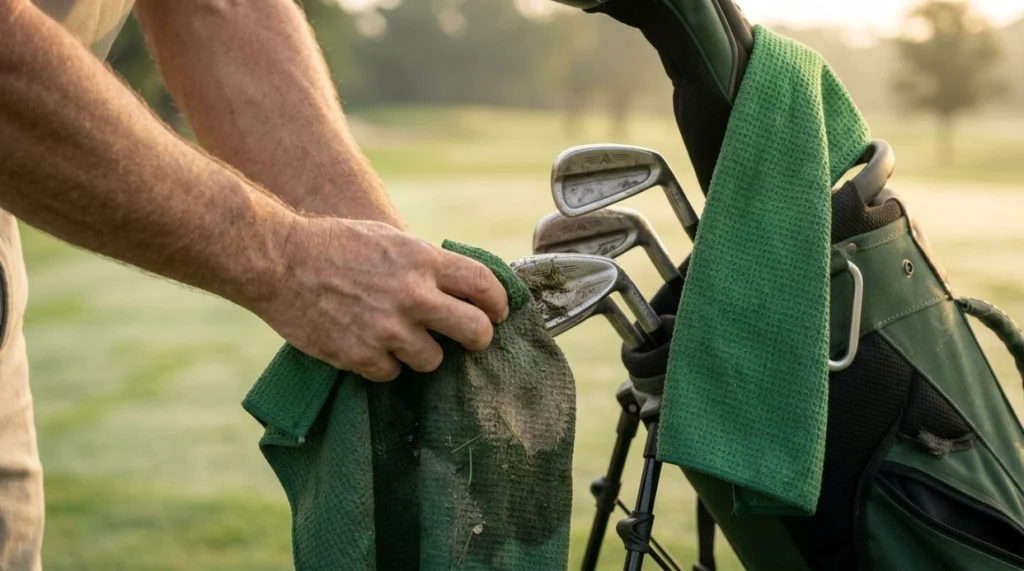
Wash your golf towel when it becomes visibly dirty, smells unpleasant, or stays damp after a round. There’s no single schedule that fits every golfer.
A player on dry courses may go longer between washes. Golfers dealing with rain, clay, morning dew, or muddy fairways will need more frequent cleaning.
Wash it sooner after these conditions
- A rainy round
- Muddy or soft course conditions
- Heavy grass and soil buildup
- Strong sunscreen transfer
- Noticeable sweat or odor
- A towel that stayed wet inside the bag
Use a two-zone towel routine on the course
One habit keeps my towel useful longer during a round. I keep one section damp for clubface cleaning and another section dry.
The dry area is better for grips, hands, or final drying. It also prevents the entire towel from becoming soaked by the turn.
Clean clubs before dirt hardens
Fresh dirt usually wipes away more easily than dried soil. Cleaning your clubface after a shot can also reduce the amount of aggressive scrubbing needed later.
For broader rules and equipment information, golfers can also use The R&A’s golf resources. Towel maintenance itself is simple, but good equipment habits add up.
My practical routine
I shake the towel out after a round before putting the bag away. If it’s wet or muddy, it comes off the bag immediately.
- Lightly used and dry: Hang it and reuse when still clean.
- Muddy: Shake off debris, pretreat, and wash.
- Wet from rain: Dry immediately or wash before storage.
- Musty: Wash it and inspect the bag for trapped moisture.
This routine is simple enough to follow every week. That’s more useful than an elaborate cleaning process you never want to repeat.
Frequently Asked Questions
Can you put a golf towel in the washing machine?
Yes, many golf towels can be machine washed. Use a mild detergent and follow the manufacturer’s care label for cycle and water-temperature instructions.
Can golf towels go in the dryer?
Some can, but dryer instructions vary by material and manufacturer. When you aren’t sure, air drying is the safer approach, especially for microfiber or decorated towels.
Should you use fabric softener on golf towels?
It’s generally better to skip fabric softener on highly absorbent towels. Softener can leave residue on fibers and may reduce the towel’s ability to absorb water effectively.
How do you clean a microfiber golf towel?
Shake off dirt, pretreat obvious stains, and wash with mild detergent according to the care label. Cool or cold water is a common recommendation for microfiber golf towels, while air drying avoids unnecessary heat exposure.
How do you get mud out of a golf towel?
Let thick mud dry first, then shake or brush off the loose material. Pretreat the remaining stain with mild detergent and wash the towel according to its care instructions.
Why does my golf towel smell after washing?
Persistent odor can come from trapped moisture, detergent residue, or storing the towel before it dries fully. Rewash it appropriately, rinse thoroughly, and make sure it becomes completely dry before returning it to your golf bag.
Should a golf towel be wet or dry during a round?
Both can be useful. Many golfers keep part of the towel damp for cleaning clubfaces and leave another section dry for grips, hands, balls, and final drying.
The takeaway: Shake off dirt, use mild detergent, avoid unnecessary softener and heat, and never store the towel wet. A simple routine keeps a golf towel clean, absorbent, and ready for the next round.
If your towel is already stained, start with gentle pretreatment instead of stronger chemicals. Good golf towel care is mostly about cleaning early and letting the fabric dry completely.