
How Do You Deep Clean a Golf Towel?

Quick Answer
To deep clean a golf towel, shake out loose sand and grass, pre-treat visible stains, then wash it with detergent using the temperature allowed by its care label. For microfiber, avoid fabric softener, dryer sheets, chlorine bleach, and high drying heat because they can reduce absorbency or damage the fibers; these precautions are also reflected in microfiber-care guidance.
Deep-clean your towel in six steps
- Shake it out: Remove dry grass, sand, soil, and loose debris outdoors.
- Check the label: Follow the towel manufacturer’s wash and drying limits first.
- Pre-treat stains: Work a small amount of liquid detergent into muddy, greasy, or heavily marked areas.
- Wash thoroughly: Use an appropriate normal or gentle cycle without overloading the washer.
- Rinse completely: Avoid leaving excess detergent trapped in the towel.
- Dry correctly: Air-dry or use low heat for microfiber unless the care label says otherwise.
Golf towels take more abuse than their small size suggests. Mine can collect damp grass, bunker sand, mud, sunscreen, sweat, and dark marks from clubheads during the same round.
A routine wash handles light dirt, but occasionally the towel needs a more complete reset. This guide explains how I deep clean golf towels without sacrificing the absorbency and texture that make them useful on the course.
In This Guide
What Does Deep Cleaning a Golf Towel Mean?
Deep cleaning means removing more than surface dirt. The goal is to release embedded soil, oils, detergent residue, odors, and golf-course grime while keeping the towel absorbent.
Golf towel deep cleaning: A more thorough wash process that includes debris removal, stain treatment, proper laundering, complete rinsing, and fabric-appropriate drying.
I don’t deep clean a towel simply because one corner is dirty. I save the full process for towels that stay grimy, smell stale after drying, feel coated, or no longer absorb moisture as well as expected.
The most common signs are easy to spot:
- Persistent odor: The towel smells musty even after a normal wash.
- Dark club marks: Black or gray residue remains around the working areas.
- Greasy patches: Sunscreen, skin oils, or cart grime leave slick-looking areas.
- Reduced absorbency: Water beads or spreads instead of soaking into the fabric.
- Embedded soil: Mud or grass remains trapped in the weave after laundering.
A towel used on wet fairways normally needs more cleaning than one used during a dry range session. I also clean mine sooner after muddy rounds because dried soil becomes harder to remove later.
How Do You Deep Clean a Golf Towel Step by Step?
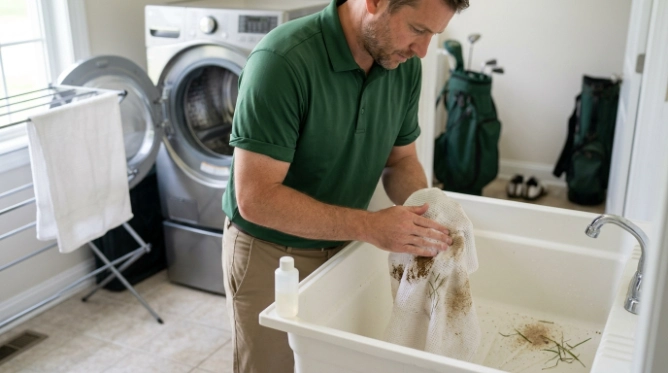
Start with the least aggressive treatment and increase cleaning only when needed. That approach removes course grime without exposing the towel to unnecessary heat or chemicals.
1. Shake out loose dirt outdoors
Let heavy mud dry enough to brush or shake off first. Remove sand, grass, pine needles, and other loose material before putting the towel in your washing machine.
This step matters more than it sounds. A towel from a bunker-heavy round can carry a surprising amount of abrasive grit.
2. Read the care label
The manufacturer’s label takes priority over generic advice. Decorative embroidery, magnets, clips, printed graphics, and blended fabrics can all change how a towel should be washed.
General towel-care guidance from Whirlpool also recommends checking the care label before choosing washing and drying settings.
3. Pre-treat the dirty areas
Apply a small amount of liquid laundry detergent directly to visible stains. Gently work it into the fabric with your fingers or a soft laundry brush, then let it sit briefly before washing.
- Focus on muddy corners and heavily used cleaning zones.
- Treat oily sunscreen marks separately from ordinary soil.
- Avoid aggressive scrubbing that distorts loops or microfiber texture.
4. Wash without overloading the machine
Give the towel enough room to move through the wash water. I prefer washing especially dirty golf towels separately from everyday clothing.
Use a sensible amount of detergent rather than assuming more soap produces a deeper clean. Excess detergent can become another residue that must be rinsed away.
5. Rinse thoroughly
If the towel still feels unusually slick or soapy after washing, an additional rinse may help remove lingering detergent. The finished towel should feel clean rather than coated.
6. Dry it completely
Never stuff a damp towel straight back into your golf bag. Let it dry completely before storage, especially if the bag normally stays in a garage, trunk, or other poorly ventilated space.
For microfiber, air drying or low dryer heat is the safer default unless the manufacturer says otherwise. High temperatures can damage synthetic fibers.
Section Takeaway: Deep cleaning works best as a sequence—remove debris, treat stains, wash correctly, rinse thoroughly, and dry completely. Aggressive heat or chemicals aren’t a substitute for those basic steps.
How Should You Clean Microfiber vs. Cotton Golf Towels?
Microfiber and cotton should not automatically receive identical treatment. Microfiber needs more protection from coatings and excessive heat, while cotton care depends heavily on the manufacturer’s label.
| Cleaning Factor | Microfiber Golf Towel | Cotton Golf Towel |
|---|---|---|
| Wash temperature | Cold or warm is a safe general approach; some microfiber makers specify staying below 140°F | Follow the care label because construction, color, and decoration vary |
| Fabric softener | Avoid | Usually unnecessary; softener can reduce towel absorbency |
| Chlorine bleach | Avoid unless the towel manufacturer specifically permits it | Use only when permitted by the label and suitable for the towel’s color |
| Drying | Air dry or tumble dry on low heat | Follow care-label drying instructions |
| Best precaution | Keep it away from lint-heavy fabrics and softening products | Avoid detergent buildup and unnecessary chemical treatments |
Microfiber deserves special attention because its fine synthetic structure helps trap dirt and moisture. Microfiber manufacturers commonly advise skipping fabric softener and using low drying heat.
As of 2026, I use those precautions for waffle-weave golf towels unless their own labels specify something different. With cotton caddie towels, I rely more heavily on the individual label because cotton towels vary considerably in dye, stitching, embroidery, and attachments.


How Do You Remove Common Golf Towel Stains?
Different stains respond better to different preparation. I wouldn’t treat dry bunker sand, greasy sunscreen, and wet mud as if they were the same problem.
Mud, grass, and soil
Remove as much loose material as possible before adding water. Then pre-treat the remaining discoloration with liquid laundry detergent and wash according to the label.
- Shake out dry sand and soil first.
- Rinse away loose wet mud when appropriate.
- Pre-treat the remaining stained area.
- Avoid putting a badly stained towel through high dryer heat before confirming the stain is gone.
Sunscreen and oily marks
Oil-based residue needs detergent contact before the main wash. Apply a small amount to the affected area and work it gently through the fibers.
I keep towels used for sunscreen, hands, and grips separate from the dirtiest club-cleaning section during a round. That simple habit reduces how much greasy contamination gets spread across the towel.
Black clubhead and equipment marks
Dark marks may come from soil, rubber, grease, or other residues picked up from clubs and the bag. Pre-treatment and normal laundering are safer first choices than immediately reaching for bleach.
Musty odor
Persistent smell often signals that the towel stayed damp for too long or did not rinse and dry thoroughly. Rewash it with the correct detergent amount, rinse well, and dry it completely before returning it to the bag.
A clean towel also matters during play because golfers routinely use towels on their balls. Remember that the USGA’s ball-cleaning rules specify when a lifted ball may and may not be cleaned.
What Should You Avoid When Deep Cleaning a Golf Towel?
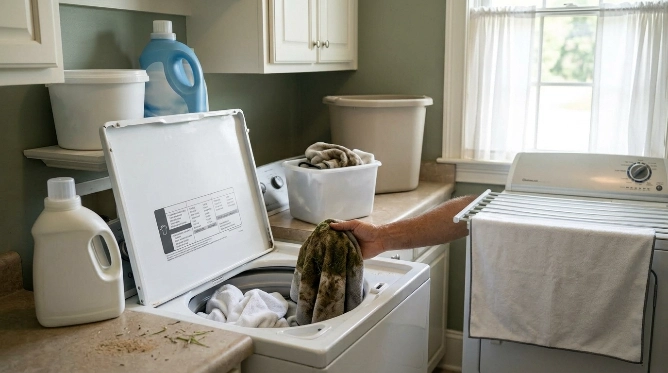
The biggest mistakes usually come from trying to make the cleaning process more aggressive. Golf towels rarely need extreme temperatures or a cocktail of laundry additives.
- Don’t automatically use high heat: It can damage synthetic microfiber.
- Don’t use fabric softener on microfiber: It can coat the fibers and reduce their water- and dirt-gripping performance.
- Don’t use dryer sheets on microfiber: They can leave similar softening residues.
- Don’t assume bleach is safe: Check the towel’s fabric, color, graphics, embroidery, and care label first.
- Don’t overload the washer: Towels need movement and water circulation for thorough cleaning.
- Don’t store the towel damp: Dry it fully before putting it back into a closed bag or car trunk.
Another mistake is washing every dirty item together. I wouldn’t mix a golf towel covered in sand and cart grime with clothing I want to keep clean.
The same separation helps with microfiber. Keeping dirty synthetic cleaning towels away from lint-producing loads can help preserve their useful texture.
Frequently Asked Questions About Deep Cleaning Golf Towels
How often should you deep clean a golf towel?
Deep clean it when normal washing no longer removes odor, visible grime, greasy residue, or loss of absorbency. A golfer playing wet or muddy courses may need deeper cleaning more often than someone playing mostly dry conditions.
Can you put a golf towel in a washing machine?
Many golf towels are machine washable, but check the care label first. Towels with magnets, unusual attachment hardware, embroidery, printed graphics, or specialty constructions may have different washing requirements.
Can you use fabric softener on a microfiber golf towel?
It’s better to avoid it. Microfiber-care instructions commonly warn that softeners coat or clog the fine fibers and reduce the towel’s ability to absorb moisture and grab dirt.
Can you put a microfiber golf towel in the dryer?
Many microfiber towels can be tumble dried on low heat. Follow the manufacturer’s label, avoid high heat, and consider air drying when you’re uncertain.
Can you use bleach on a dirty golf towel?
Don’t use bleach automatically. Chlorine bleach can damage some microfiber, colors, graphics, and decorative features, so use it only when the towel manufacturer’s care instructions specifically permit it.
Can you clean your golf ball with your towel during a round?
Yes, but only when the Rules permit cleaning the ball. A ball lifted from the putting green may always be cleaned, while Rule 14 includes restrictions for several other situations; The R&A’s Rule 14 guidance explains those exceptions.
Why does my golf towel still smell after washing?
It may contain trapped soil, oil, detergent residue, or moisture from incomplete drying. Pre-treat contaminated areas, wash with the correct detergent amount, rinse thoroughly, and let the towel become completely dry before storage.
The simplest routine is also the one I trust most: remove course debris early, wash the towel before grime becomes deeply embedded, and protect microfiber from softeners and excessive heat. A properly cleaned towel stays more useful for wiping clubfaces, managing moisture, and keeping a clean section available throughout the round.
If your towel remains greasy, stiff, heavily stained, or poorly absorbent after repeated correct washing, replacing it may make more sense than using increasingly harsh treatments.