
Should a Golf Towel Be Wet or Dry? The Best Setup for Every Round

Quick Answer
A golf towel should ideally be both wet and dry. Keep one section slightly damp for removing mud, grass, and sand from clubfaces, while protecting another section for drying grips, hands, and equipment. In heavy rain, carrying a separate dry towel is even better, a setup also reflected in PGA wet-weather guidance.
The simplest wet-and-dry setup
- Damp section: Use it on clubfaces, grooves, fresh mud, and grass residue.
- Dry section: Reserve it for grips, hands, gloves, and final drying.
- Don’t soak it: A lightly damp towel cleans well without making the entire towel useless for drying.
- Rainy rounds: Keep a second completely dry towel protected inside your bag.
- After the round: Remove wet towels from the bag and let them dry fully.
I use a golf towel for two different jobs during a round: removing dirt and controlling moisture. Treating the whole towel as either completely wet or completely dry makes one of those jobs harder.
The better approach is simple. Create separate wet and dry zones, then use each section only for the job it handles best.
In This Guide
What Does Wet Versus Dry Mean for a Golf Towel?
A wet golf towel is best understood as a towel with a lightly damp cleaning area, not a towel dripping with water. A dry towel is a clean section kept free of added moisture so it can absorb water from grips, hands, gloves, and clubs.
Definition: A wet-and-dry golf towel setup divides one towel, or two separate towels, into a damp cleaning zone and a protected drying zone.
Why golfers need both functions
Clubheads and grips create opposite problems. Dirt on an iron usually needs moisture, while moisture on a grip needs dry absorbent fabric.
- Fresh mud: A damp area helps loosen soil before it dries.
- Grass: Damp fabric lifts residue from iron and wedge faces.
- Sand: Loose grit should be removed before wiping firmly.
- Wet grips: A clean, dry section absorbs moisture before the next shot.
- Sweaty hands: The cleanest dry area should handle your hands.
On a dewy morning, I find this separation especially useful. The lower part of my towel can handle dirty clubheads while the upper section stays clean for my hands and grips.
Section Takeaway: Don’t choose between wet and dry. Give each section of the towel a dedicated job.
When Should You Use a Wet Golf Towel?
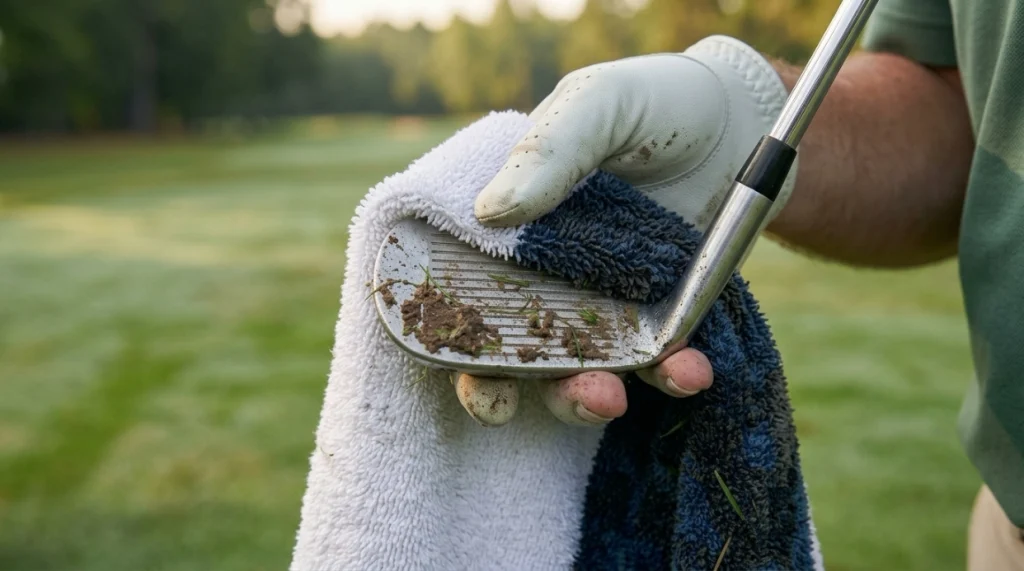
Use the damp part when something is stuck to the club. Fresh grass, soft soil, and mud usually wipe away more easily with moisture than with a completely dry towel.
Use it immediately after dirty iron and wedge shots
I prefer cleaning an iron before putting it back into the bag. A quick wipe while the dirt is still fresh is easier than scrubbing dried material several holes later.
- Check the clubface after the shot.
- Remove loose sand or grit first.
- Press the damp section across the face and grooves.
- Repeat until visible dirt is gone.
- Finish with a dry section if moisture remains.
Wedges deserve extra attention because their faces often collect sand, soil, and grass. The goal is simple cleaning rather than altering or sharpening the grooves.
Should you use a wet towel on a golf ball?
You can use a damp towel when the Rules permit you to clean the ball. However, permission to lift a ball does not always mean you may clean it freely.
Under Rule 14 from The R&A, a ball lifted from the putting green may be cleaned. Restrictions apply in several situations elsewhere on the course.
- When lifting a ball to identify it, cleaning is limited to what is necessary for identification.
- When checking whether a ball is cut or cracked, cleaning is not allowed.
- When a ball is lifted because it interferes with play, cleaning is not allowed.
- When checking whether relief is available, cleaning can also be restricted.
That rules detail matters more than whether the towel itself is wet. When in doubt during competition, check the current Rules or ask the Committee.
Section Takeaway: Use damp fabric for stuck-on dirt and legal ball cleaning. Keep the towel merely damp rather than saturated.
When Should Your Golf Towel Stay Dry?
Keep part of your towel completely dry whenever you need to remove moisture. Grips, hands, gloves, and freshly cleaned clubheads are the main priorities.
Dry the grip before the shot
A wet or sweaty grip can feel less secure. I protect one towel section specifically for my hands and grips, especially on humid afternoons or early-morning rounds.
PGA guidance on hot-weather golf also recommends keeping grips clean and dry. You can review those tips at the PGA of America.
- Before swinging: Check your hands and the grip for moisture.
- After rain: Rotate to a genuinely dry section instead of spreading water around.
- After club cleaning: Dry the clubhead before returning it to the bag.
- For your glove: Avoid using the muddy club-cleaning portion.
Why the dry section should stay clean
Dry doesn’t automatically mean clean. A towel covered with soil and sand is a poor choice for wiping your hands, even if that section no longer feels wet.
I normally assign one corner to hands and grips and avoid using that corner on clubfaces. That simple habit keeps the towel useful much longer.
Section Takeaway: Your clean dry area is primarily a moisture-control tool. Protect it from mud and sand.


Is One Golf Towel Enough, or Should You Carry Two?
One large towel is enough for many normal rounds if you separate its damp and dry areas. Two towels become more useful in rain, heavy dew, muddy conditions, or whenever the first towel may become saturated.
| Towel Setup | Best Job | Best Conditions | Main Limitation |
|---|---|---|---|
| One fully dry towel | Hands, grips, light moisture | Dry course | Weak on sticky mud |
| One split wet/dry towel | Cleaning plus drying | Most everyday rounds | Zones can mix if towel is small |
| Two separate towels | Dedicated cleaning and drying | Mud, dew, soft turf | More gear to carry |
| Working towel plus protected spare | Emergency dry surface | Steady rain | Requires dry storage space |
My normal one-towel setup
For an ordinary round, I dampen roughly the lower third of a larger towel and leave the rest dry. I wring the wet section thoroughly before attaching the towel to the bag.
The damp end handles clubfaces. The upper dry area stays reserved for grips, hands, and the final wipe.
When I would carry a second towel
- Rain is likely during the round.
- The course is muddy after recent weather.
- Heavy morning dew covers the rough and fairways.
- I am using a cart and carrying extra gear is easy.
- The first towel is likely to become dirty before the back nine.
In rain, the second towel needs protection. Keeping it inside a waterproof bag compartment or protected under cover makes more sense than hanging both towels outside.
Section Takeaway: One split towel works for normal conditions. Two towels give you a safer dry backup in wet weather.
How Wet Should a Golf Towel Be?
A golf towel should normally feel damp enough to soften dirt but not wet enough to drip. If you can squeeze water from it easily, I would wring it out again.
A simple pre-round routine
- Choose the section that will become your cleaning zone.
- Wet that portion with clean water.
- Wring it until it stops dripping.
- Fold or position the dry section away from the damp area.
- Attach the towel where it will not drag on grass.
You can add a little more water during the round if the damp section dries out. That is easier than soaking the entire towel before the first tee.
Does towel material change the answer?
Not much. Both microfiber and cotton can work as wet-and-dry golf towels, although they feel and handle moisture differently.
- Microfiber: Commonly used for lightweight golf towels and textured cleaning surfaces.
- Waffle microfiber: Its textured surface can help grab loose debris from clubfaces.
- Cotton: Offers a familiar, soft, absorbent feel and works well for larger caddie-style towels.
- Larger towels: Make separating wet and dry zones easier because you have more usable fabric.
Material matters less than keeping the dirty zone away from the clean one. A premium towel becomes frustrating if every inch is wet by the fourth hole.
What Golf Towel Mistakes Should You Avoid?
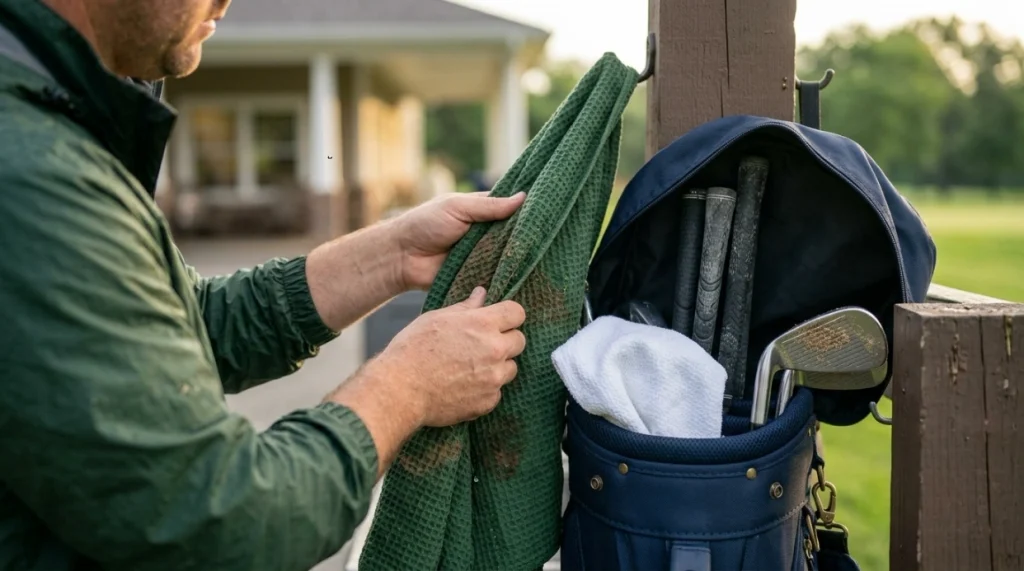
The biggest mistake is soaking the entire towel without a plan for drying anything later. Several other small habits can also make a towel less useful.
Don’t use the same dirty section on your grip
The damp end may contain grass, soil, and sand after a few holes. Move to a clean section before touching your grip or hands.
Don’t grind sand across a clubface
Remove loose grit before wiping firmly. Shake, brush, or lightly clear visible sand instead of trapping it under the towel and rubbing aggressively.
Don’t forget the Rules when cleaning your ball
Golf’s Rules distinguish between cleaning equipment and cleaning a ball that has been lifted. The USGA equipment rules cover permitted equipment use, while Rule 14 governs when a lifted ball may be cleaned.
The R&A also notes that even accidental cleaning can matter when a ball has been lifted in a situation where cleaning is restricted. Competitive golfers should be especially careful.
Don’t leave the towel wet inside your bag
Take damp towels out after the round. Let them dry fully, then wash them according to the care instructions when they become dirty.
A wet towel stuffed inside a closed pocket can develop unpleasant odors and spread moisture to other gear. It only takes a few seconds to hang it up when you get home.
Section Takeaway: Keep dirty and clean areas separate, protect a dry section, follow ball-cleaning rules, and dry the towel after every wet round.
Frequently Asked Questions
Should I wet my golf towel before playing?
Yes, wet only part of it when you expect to clean muddy or grassy clubfaces. Wring that section thoroughly and leave the remaining fabric dry for grips, hands, and final drying.
Is a wet golf towel better than a dry towel?
Neither is better for every job. A damp towel removes stuck-on dirt more easily, while a dry towel is more useful for grips, hands, gloves, and surface moisture.
How much of my golf towel should I wet?
For a large towel, starting with roughly one-third of the towel damp is practical. The exact amount matters less than preserving enough genuinely dry fabric for moisture control.
Should I use a wet towel on golf club grooves?
A slightly damp towel works well for fresh soil and grass in and around the grooves. If debris is tightly packed, loosen it carefully with a suitable club brush or non-damaging tool before finishing with the towel.
Can I use the same towel for my golf ball and clubs?
Yes, as long as you keep a reasonably clean section available and follow the Rules governing when your ball may be cleaned. Avoid using a sandy or muddy part of the towel on the ball.
Do I need two golf towels in the rain?
You don’t strictly need two, but carrying a protected spare is useful. One towel can handle clubs and exposed moisture while the second remains dry inside your bag until needed for hands and grips.
Should golf grips be wiped with a wet or dry towel?
Use a lightly damp clean section when you are intentionally cleaning grip residue, then dry the grip completely. During play, use a dry towel whenever your main goal is removing rain, dew, or sweat.
Final Takeaway: The best answer to “Should a golf towel be wet or dry?” is both. Keep one section lightly damp for dirty clubheads and another section clean and dry for grips, hands, and final wiping.
Try the split-towel method on your next round. Once it becomes part of your normal shot routine, you rarely need to think about it again.