
How Do You Dry a Golf Towel Properly?

Quick Answer
To dry a golf towel properly, shake it out, reshape it, and hang it fully open in a well-ventilated area until completely dry. If the care label allows machine drying, use an air-fluff, no-heat, or low-heat setting and remove the towel promptly. High heat is usually unnecessary, especially with microfiber towels. For broader golf equipment guidance, you can also visit The R&A equipment resources.
Quick drying steps
- Shake it out: Remove loose grass, sand, dirt, and lint before drying.
- Check the label: Follow the manufacturer’s heat and drying instructions.
- Open it fully: Do not leave a wet towel folded or bunched together.
- Air dry first: Hang the towel where air can circulate around both sides.
- Use low heat: If machine drying is allowed, choose the gentlest practical setting.
- Store it dry: Never put a damp towel back into a closed golf bag pocket.
How do you dry a golf towel properly without making it stiff, smelly, or less absorbent? In most cases, the answer is simpler than golfers expect: open it up, give it airflow, avoid excessive heat, and let it dry completely.
I pay more attention to this after wet or humid rounds. A good golf towel spends its day collecting moisture, grass, bunker sand, mud, and whatever ends up on clubfaces, so the drying routine matters more than it seems.
In This Guide
- What Is the Proper Way to Dry a Golf Towel?
- Should You Air Dry or Machine Dry a Golf Towel?
- Does Golf Towel Material Change How You Should Dry It?
- How Do You Keep a Golf Towel From Smelling After Drying?
- How Should You Dry a Golf Towel During and After a Round?
- What Golf Towel Drying Mistakes Should You Avoid?
- Frequently Asked Questions
What Is the Proper Way to Dry a Golf Towel?
The best method is to dry the towel completely while exposing as much surface area as possible to moving air. For most golfers, hanging the towel open is the safest everyday approach.
I start by giving the towel a firm shake outdoors. That clears away loose grass, bunker sand, dried soil, and other debris that I don’t want falling around the laundry area.
Next, I straighten the towel instead of leaving it twisted around a carabiner or magnetic attachment. Wet folds trap moisture where airflow cannot reach it easily.
- Remove loose debris. Shake out sand, soil, grass, and leaves.
- Wash when necessary. A towel covered in mud or sweat should be cleaned before long-term storage.
- Reshape the towel. Unfold corners and separate any doubled-over sections.
- Hang it openly. Use a drying rack, clothesline, hanger, or similar ventilated location.
- Wait until fully dry. Check thicker hems and folded edges before storing it.
Avoid judging dryness only by touching the outer surface. Thick seams and reinforced attachment areas can remain damp after the main fabric feels dry.
That matters when the towel goes into a closed golf bag. A small damp section can keep moisture trapped inside an enclosed pocket for hours.
If you’re drying towels outdoors, choose a secure location with airflow. I prefer shade or moderate sun rather than leaving synthetic towels baking on a hot surface for an entire afternoon.
Section Takeaway: Open the towel completely, maximize airflow, and wait until every part is dry before storing it. Heat is optional; complete drying is not.
Should You Air Dry or Machine Dry a Golf Towel?
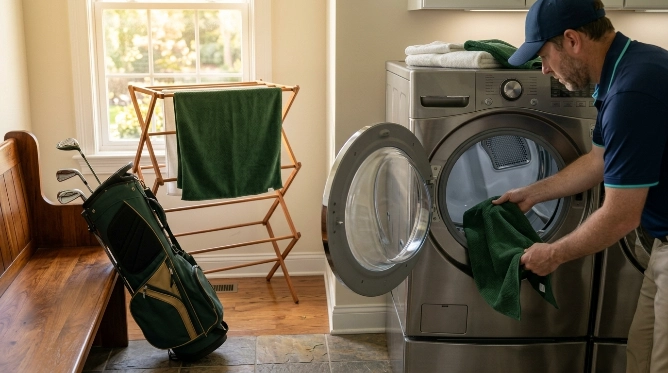
Both methods can work, but air drying gives you the simplest way to avoid unnecessary heat. Machine drying is convenient when the towel’s care label specifically permits it.
| Drying Method | Added Heat | Main Advantage | Main Concern | Best Use |
|---|---|---|---|---|
| Air drying | None | Gentle on fabric | Takes longer in humid air | Routine towel care |
| Air-fluff dryer cycle | None or minimal | Faster airflow | Not every dryer offers it | Microfiber and mixed loads when permitted |
| Low-heat tumble drying | Low | Convenient and quick | Heat-sensitive fabric still needs care | When the care label permits tumble drying |
| Medium or high heat | Moderate to high | Shortest drying time | Unnecessary heat exposure | Only when specifically allowed by the manufacturer |
Why I usually air dry microfiber towels
Microfiber golf towels dry efficiently when they’re spread open. I usually hang mine immediately after washing instead of automatically putting them through a heated dryer cycle.
That habit also removes one easy mistake from the process. I don’t have to remember whether the dryer was left on a hotter setting from the previous laundry load.
When a dryer makes sense
A dryer is useful when you’re cleaning several golf towels and need them ready for another round. Start by checking each towel’s care label because drying instructions vary between products.
- Choose air-fluff, no-heat, or low heat when appropriate.
- Avoid an unnecessarily long drying cycle.
- Remove the towel when it is dry.
- Keep lint-heavy fabrics separate from microfiber when practical.
- Skip dryer sheets when caring for absorbent microfiber.
For wider equipment information beyond towel care, the Golf Digest equipment section covers current golf gear and equipment topics.
Section Takeaway: Air drying is the simplest low-risk option, while a no-heat or low-heat dryer cycle offers convenience when the towel’s care instructions allow it.
Does Golf Towel Material Change How You Should Dry It?
Yes. Microfiber, cotton, waffle-weave fabric, and blended materials do not always have identical care requirements.
The label on your specific towel should override general advice. Materials, printing methods, embroidered areas, magnets, clips, and decorative finishes can all affect recommended care.
Microfiber golf towels
Microfiber is common because it can lift moisture and dirt from golf equipment effectively. My main rule with microfiber is to avoid treating it like a heavy cotton bath towel.
- Open it fully: The fabric dries faster when both sides receive airflow.
- Use gentle heat: Choose no heat or low heat if machine drying is permitted.
- Avoid lint transfer: Drying microfiber with lint-producing fabrics can leave fibers attached.
- Skip ironing: A golf towel doesn’t need pressing, and extra heat serves little purpose.
Cotton golf towels
Cotton usually tolerates conventional laundering better than many synthetic towels, but the product label still matters. Printed logos, embroidery, trims, or attachments may require gentler treatment than the cotton fabric itself.
I also shake cotton towels before hanging them. This helps separate the fabric and keeps the towel from drying in a hard, compact fold.
Waffle-weave towels
Waffle construction creates a textured surface with small pockets in the weave. Those recessed areas can hold moisture when the towel remains folded.
Spread the towel out rather than hanging it doubled over a narrow hook. A wide drying rack works well because more fabric stays exposed.
Magnetic and clipped towels
Some golf towels have magnets, clips, grommets, or removable accessories. Check whether those components should be removed before washing or tumble drying.
The golf industry’s equipment landscape keeps changing, and PGA of America is a useful general resource for golfers looking to learn more about the game and gear.


How Do You Keep a Golf Towel From Smelling After Drying?
The key is preventing the towel from sitting damp for long periods. Drying a dirty towel slowly inside an enclosed golf bag creates ideal conditions for stale odors to linger.
This is the problem I’ve noticed most often after humid rounds. The towel may look almost dry outside, while the folded center stays damp against the bag.
- Unclip it after golf: Take the towel off your bag when you get home.
- Unfold it: Open wet sections before leaving it to dry.
- Wash heavy soil: Don’t repeatedly dry mud, sweat, and grime into the towel.
- Give it airflow: Avoid closed trunks, lockers, and sealed bag pockets.
- Dry before storage: Confirm the seams and corners are no longer damp.
Why a towel can smell even after it looks dry
Surface dryness can fool you. Reinforced edges, thick seams, and folded areas may still contain moisture.
I check those spots before putting a towel away. It takes seconds and has prevented plenty of unpleasant surprises when I open the bag before my next round.
What about stiffness?
Some towels feel firmer after air drying, especially when detergent residue or mineral-rich water remains in the fibers. That doesn’t mean you need to blast them with high dryer heat.
Start with proper washing, adequate rinsing, and gentle drying. Shaking the towel before and after air drying can also loosen the fabric.
Section Takeaway: Most odor problems begin before storage, not during the next round. A clean towel that dries completely in moving air is far less likely to greet you with a stale smell.
How Should You Dry a Golf Towel During and After a Round?
During a round, keep at least part of the towel exposed instead of stuffing the entire wet towel into a pocket. After the round, remove it from the bag and let it dry properly at home.
During the round
I like dividing the towel mentally into a wet section and a cleaner, drier section. The wet portion handles mud and clubface cleaning, while the drier area is available for finishing touches.
- Hang the towel from the outside of the bag when conditions permit.
- Keep it spread rather than tightly wrapped around the attachment point.
- Wring out excessive water if the towel becomes saturated.
- Keep heavily muddied sections away from the cleaner portion.
Rain changes the situation because everything may remain damp through the entire round. In that case, the important step happens when you finish playing.
Immediately after golf
Don’t leave the wet towel in your trunk overnight. A closed vehicle or zipped golf bag provides poor airflow, especially after a warm or rainy day.
- Remove the towel from the bag.
- Shake off grass and loose soil outdoors.
- Wash it if it’s muddy or heavily soiled.
- Hang it fully open.
- Let it dry before returning it to your golf setup.
Good equipment habits fit naturally with good course habits. The USGA Course Care resources provide broader information about how golfers can help look after the courses they play.
What if you’re traveling?
Travel is where towel care gets overlooked. A wet towel packed directly into a travel cover or suitcase can stay damp for much longer than expected.
I hang mine in the hotel bathroom or another ventilated space first. If checkout arrives before it’s completely dry, I keep the damp towel isolated from clean clothing and reopen it as soon as possible.
Section Takeaway: Let the towel breathe during the round, but make post-round drying the priority. Taking it off the bag as soon as you get home solves many common odor and storage problems.
What Golf Towel Drying Mistakes Should You Avoid?
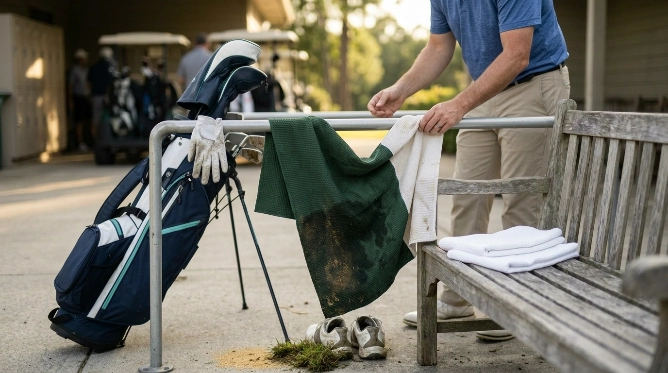
The most common mistakes involve trapped moisture, too much heat, or putting the towel away too soon. None requires complicated equipment to fix.
1. Leaving the towel attached to the bag
A towel hanging freely in an open room may dry fine. A towel folded against a golf bag in a garage corner often dries much more slowly.
2. Storing it while slightly damp
“Almost dry” isn’t the target. Check the hem, attachment area, and any thick embroidered sections before folding it away.
3. Automatically using high dryer heat
Fast isn’t automatically better. Use the gentlest drying method that gets the towel fully dry and follows its care label.
4. Using dryer sheets with microfiber
I keep dryer sheets away from microfiber golf towels. For an absorbent cleaning towel, keeping the washing and drying routine simple makes sense.
5. Drying microfiber with lint-heavy laundry
Microfiber can pick up stray lint during laundering. If your towel comes out covered in fibers, separating it from lint-producing items can help.
6. Leaving wet towels inside a car
This is an easy mistake after a late round. Clubs come out later, while the towel stays forgotten inside the bag.
I now treat removing the towel like emptying pockets and checking my glove. It becomes a simple post-round habit rather than another cleaning project.
7. Ignoring the manufacturer’s care label
General towel advice cannot account for every material or attachment. The manufacturer’s instructions should always take priority when they specify washing temperatures or drying restrictions.
Section Takeaway: The biggest mistake is trapping moisture. Get the towel out of the bag, open it fully, use sensible heat, and don’t store it until it’s dry.
Frequently Asked Questions About Drying Golf Towels
Can you put a golf towel in the dryer?
Yes, many golf towels can go in a dryer, but check the care label first. When permitted, an air-fluff, no-heat, or low-heat cycle is a sensible choice, particularly for microfiber towels.
Can you tumble dry a microfiber golf towel?
You can tumble dry many microfiber towels when their care instructions allow it. Use a gentle temperature setting, avoid unnecessary heat, and remove the towel once it is dry rather than continuing a long heated cycle.
Is it better to air dry a golf towel?
Air drying is my preferred everyday method because it requires no added heat and works well when the towel is fully opened. The downside is that drying takes longer in humid or poorly ventilated conditions.
Can I leave my golf towel hanging on my golf bag to dry?
You can if the towel is fully exposed to circulating air, but removing it usually works better. Towels often fold against the bag, leaving hidden sections damp even when the exposed side feels dry.
How long does a golf towel take to air dry?
There is no single drying time because towel thickness, material, humidity, temperature, and airflow all matter. Instead of relying on a timer, check the center, edges, seams, and attachment area before storage.
Why does my golf towel smell after it dries?
A stale smell often means the towel stayed damp too long, retained soil, or dried poorly in a folded position. Wash it thoroughly, rinse it properly, then hang it completely open until every section is dry.
Should I dry a golf towel in direct sunlight?
Short periods outdoors can work well, but strong heat and prolonged sun exposure aren’t necessary for routine drying. Good airflow in a shaded or moderately sunny area is usually enough to dry a towel effectively.
The simple routine I recommend
Shake the towel out, wash it when needed, spread it fully open, and let airflow do most of the work. Use a dryer only according to the care label, and choose gentle settings when possible.
The final step matters most: don’t put the towel back into your golf bag until it’s completely dry. Make that part of your post-round routine, and your towel will be cleaner, fresher, and ready when you tee it up again.