
How Do You Use a Golf Towel to Clean Club Grooves?

Quick Answer
To use a golf towel to clean club grooves, dampen part of the towel, wipe the clubface immediately after the shot, and press the damp fabric firmly across the grooves. Use the dry section to finish the face before putting the club away. Keeping debris out of the grooves helps the clubface work as intended under the R&A Equipment Standards.
Quick Groove-Cleaning Steps
- Dampen one section: Wet a corner or one half of your golf towel before the round.
- Wipe immediately: Clean the clubface before dirt and grass dry inside the grooves.
- Press across grooves: Rub the damp towel firmly across the face rather than making one light pass.
- Loosen packed debris: Use a nylon brush or a wooden or plastic tee when the towel cannot reach compacted dirt.
- Wipe it dry: Finish with the clean, dry section of your towel.
- Repeat after dirty shots: Pay particular attention to wedges and irons after shots from wet turf, sand, or rough.
My Simple Setup
- Keep one section damp for cleaning and another section dry for the final wipe.
If you’re wondering how do you use a golf towel to clean club grooves, the technique is simple. The important part is cleaning at the right time and using both a damp and dry section.
I prefer a two-zone towel setup because it keeps the routine fast between shots. You can remove fresh soil before it hardens, then dry the clubface before returning the club to the bag.
In This Guide
- How do you clean golf club grooves with a towel?
- Why does cleaning golf club grooves matter?
- Should a golf towel be wet or dry for cleaning grooves?
- What if dirt is stuck inside the grooves?
- Is a golf towel better than a groove brush?
- What mistakes should you avoid when cleaning grooves?
- Frequently asked questions
How Do You Clean Golf Club Grooves With a Towel?
The most effective method is to wipe the clubface while the dirt is still fresh. Damp fabric can lift loose soil, grass, and sand before those materials become packed into the grooves.
You don’t need to soak the entire towel. A small wet section usually gives you enough cleaning power while leaving plenty of dry fabric available.
Step 1: Wet Part of the Towel
Dampen roughly one corner or one side of your towel before teeing off. It should feel wet enough to loosen dirt without dripping water into your golf bag.
On a hot day, I keep the damp section folded inward. That slows evaporation and helps keep the rest of the towel dry.
Step 2: Wipe the Entire Clubface
After the shot, hold the clubhead securely and wipe across the entire hitting surface. Don’t concentrate only on the visible clump of dirt.
Grass, fine sand, and soil can spread across several grooves. A full-face wipe takes only a few seconds.
- Fairway shot: One or two firm passes may be enough.
- Wet turf: Use the damp section and apply a little more pressure.
- Rough: Check for grass packed along the lower grooves.
- Bunker: Remove sand before returning the wedge to your bag.
Step 3: Rub Across the Grooves
Fold the damp towel around two or three fingers. Press the fabric against the face and rub across the groove pattern several times.
The folded fabric provides more pressure than a loose towel. It also gives you better control around the sole and leading edge.
Step 4: Check the Grooves
Look closely at the lower and middle portion of the clubface. These areas often collect the most turf and soil during iron and wedge shots.
If you still see packed material, don’t keep polishing the surface endlessly. Loosen the debris first, then use the towel again.
Step 5: Dry the Clubface
Finish with the dry portion of your towel. This removes leftover moisture and keeps a wet clubhead from going straight into your bag.
I use the same routine after most messy iron shots. Wipe, check, dry, and put the club away.
Section Takeaway: A damp-first, dry-second routine is the easiest way to keep grooves clear during a round. Cleaning immediately is easier than removing dried dirt several holes later.
Why Does Cleaning Golf Club Grooves Matter?
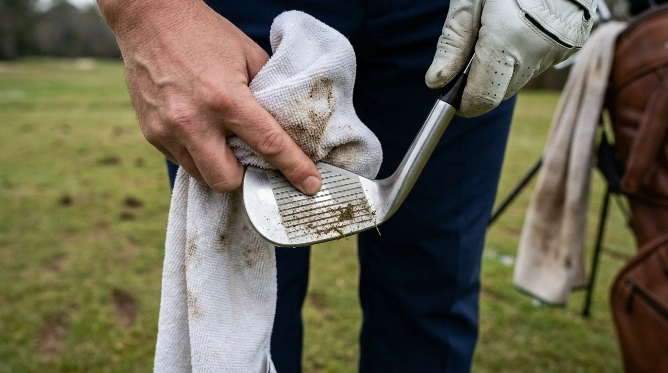
Clean grooves help maintain consistent contact between the golf ball and the clubface. Dirt, wet grass, and sand can interfere with that contact.
This matters most with wedges and short irons. Those clubs are frequently used when trajectory, carry distance, and stopping behavior matter around the green.
Definition: Golf club grooves are the parallel channels cut or formed across the impact area of many clubfaces. They help manage material such as moisture and debris between the ball and face during impact.
The USGA Equipment Rules for clubfaces set specific limits for groove dimensions. That shows how carefully groove geometry is regulated.
| Groove Feature | USGA Specification | Cleaning Relevance |
|---|---|---|
| Groove width | Maximum 0.035 in (0.9 mm) | Narrow channels can hold compacted soil and grass. |
| Groove separation | At least three times groove width and at least 0.075 in (1.905 mm) | Wiping the entire face cleans both grooves and the spaces between them. |
| Groove depth | Maximum 0.020 in (0.508 mm) | A towel removes surface debris, while compacted material may need a soft brush. |
Your goal isn’t to reshape or sharpen anything. You’re simply removing material that doesn’t belong on the clubface.
As of 2026, that basic maintenance habit remains one of the simplest equipment-care steps a golfer can perform during a round.
Should a Golf Towel Be Wet or Dry for Cleaning Grooves?
A slightly damp towel usually works better for dirty grooves. A dry towel is better for the final wipe and for removing light moisture.
That’s why I prefer splitting one towel into two working zones. It gives you both cleaning functions without carrying two separate towels.
| Towel Setup | Best Use | Limitation |
|---|---|---|
| Dry towel | Dust, light grass, moisture, and drying the face | Less effective on dried or sticky mud |
| Damp towel | Fresh mud, wet soil, grass residue, and sand | Leaves moisture behind if you skip the dry wipe |
| Split wet/dry towel | Complete on-course cleaning routine | Requires keeping the two sections separate |
How Wet Should the Towel Be?
A golf towel doesn’t need to be dripping. Wet the cleaning section and squeeze out excess water before attaching it to your bag.
After several holes, add a little water if the section has dried. That is usually easier than soaking the whole towel at the start.
Should You Wet a Microfiber Golf Towel?
Yes. Microfiber can be used damp for clubface cleaning and dry for finishing.
Cotton towels work well too. The more important factor is keeping a reasonably clean surface available instead of rubbing old sand back across the clubface.


What If Dirt Is Stuck Inside the Grooves?
If the towel cannot remove packed dirt, loosen it with a soft cleaning tool first. Then wipe the face again with the damp section.
A towel is excellent for routine maintenance. It isn’t always enough after a deep divot in wet soil.
Use a Nylon Groove Brush
A small nylon brush is my preferred backup for stubborn debris. Brush along the grooves until the material loosens, then wipe everything away.
The PGA’s equipment-care guidance also discusses keeping club grooves brushed out as part of routine club maintenance.
Use a Tee for One Blocked Groove
A wooden or plastic golf tee works well when one groove contains a small piece of packed turf. Run the point gently along the channel and wipe afterward.
Avoid aggressive scraping with sharp metal objects. The aim is to remove debris, not alter the groove edges or clubface finish.
- Loose soil: Start with the damp towel.
- Packed mud: Loosen it with a nylon brush.
- Single clogged groove: Use a wooden or plastic tee gently.
- Heavy buildup after the round: Clean the clubhead more thoroughly at home.
Pro tip: If you’re unsure whether a cleaning tool is appropriate for a plated, coated, or specialty clubface, follow the club manufacturer’s care instructions or ask a qualified club fitter.
Is a Golf Towel Better Than a Groove Brush?
Neither tool replaces the other completely. A towel is better for fast routine cleaning, while a brush handles debris packed deeper into the grooves.
For most rounds, the best setup is a damp towel plus a small nylon brush. You can handle almost every normal turf condition with those two tools.
| Cleaning Tool | Best For | Speed During a Round | Finishing Step |
|---|---|---|---|
| Damp golf towel | Fresh dirt, grass, sand, and moisture | Fast | Dry towel section |
| Nylon groove brush | Packed soil and stubborn residue | Moderate | Damp then dry towel |
| Wooden or plastic tee | One or two clogged grooves | Moderate | Towel wipe |
Can Dirty Grooves Affect Spin?
Yes, particularly when moisture and debris interfere with clean contact. The exact effect varies with the club, shot, lie, ball, and conditions.
A 2026 Golf Digest groove-cleaning test illustrates how large the difference can be under one test setup. A clean 60-degree wedge produced just over 10,500 rpm on 100-yard shots, compared with 5,759 rpm when the face was left dirty.
That doesn’t mean every golfer will lose the same amount of spin. It does show why keeping a wedge face clean is a sensible habit when predictable short-game performance matters.
What Mistakes Should You Avoid When Cleaning Grooves?
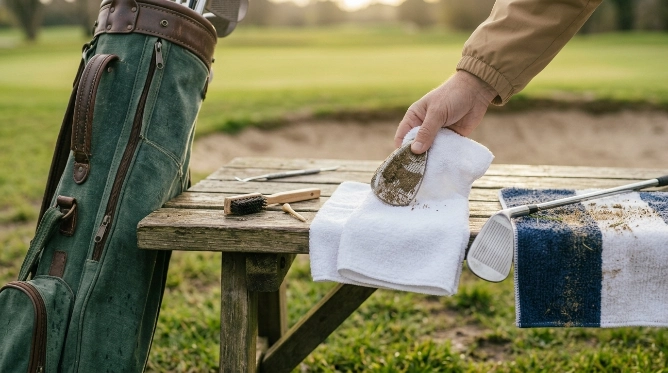
The biggest mistake is waiting until the end of the round. Fresh turf takes seconds to wipe away, while dried mud often needs extra brushing later.
A few other habits can make club cleaning less effective or unnecessarily rough on your equipment.
- Using only a dry towel on mud: Dampen part of the towel first so the soil releases more easily.
- Cleaning only the visible dirt: Wipe the entire impact area because fine debris can cover several grooves.
- Putting a wet club away: Use a dry towel section before returning the club to your bag.
- Using a dirty towel surface: Move to a cleaner section when the fabric becomes loaded with sand or grit.
- Scraping aggressively: Don’t attack the grooves with sharp metal objects or try to sharpen their edges.
- Forgetting wedges: Check wedges often because they regularly encounter rough, sand, divots, and damp turf.
- Ignoring the towel itself: Wash it regularly so old dirt and grit don’t build up in the fabric.
How Often Should You Clean the Grooves During a Round?
You don’t need an elaborate cleaning routine after every swing. Check the face after any shot that leaves visible grass, sand, soil, or moisture behind.
With wedges, I make the check automatic. It takes seconds and prevents buildup from following the club through several holes.
Section Takeaway: Clean debris while it’s fresh, use the least aggressive tool that works, and finish with a dry face. That simple routine keeps golf club maintenance quick and predictable.
Frequently Asked Questions About Cleaning Club Grooves With a Golf Towel
Can you clean golf club grooves with only a towel?
Yes, a damp golf towel is enough for most fresh grass, soil, sand, and moisture. If material becomes tightly packed inside individual grooves, loosen it with a nylon brush or wooden or plastic tee before wiping the face again.
Should you clean golf club grooves after every shot?
Check the clubface after shots from turf, rough, sand, or wet conditions. You don’t need heavy cleaning every time, but removing visible debris immediately prevents buildup and makes later cleaning easier.
Can I use a microfiber towel on golf club grooves?
Yes. Microfiber towels work well for routine club cleaning because they can be used both damp and dry. Keep one section damp for lifting debris and another section clean and dry for the final wipe.
Do I need a special golf towel to clean grooves?
No. A clean, absorbent towel that can handle repeated wiping is usually enough. Golf-specific towels mainly add convenient features such as clips, grommets, large sizes, or different textures for keeping them accessible on the course.
Can I use a golf tee to clean club grooves?
Yes. A wooden or plastic tee can gently remove dirt from one clogged groove when a towel cannot reach it. Avoid aggressive scraping, and finish by wiping the entire clubface with your towel.
Should I clean grooves before or after hitting a golf shot?
Ideally, do both when needed. Clean the face after a dirty shot so debris doesn’t dry inside the grooves, then quickly check the clubface again before your next shot if conditions are wet or muddy.
How do I keep my golf towel wet during a round?
Dampen only one section before you start and fold it inward between uses. In hot weather, add a small amount of water during the round while keeping another portion dry for grips and clubfaces.
The easiest routine is simple: dampen part of your golf towel, wipe dirt away immediately, check the grooves, loosen stubborn debris only when necessary, and finish with the dry section. Make that a normal part of your post-shot routine, especially with wedges and short irons.