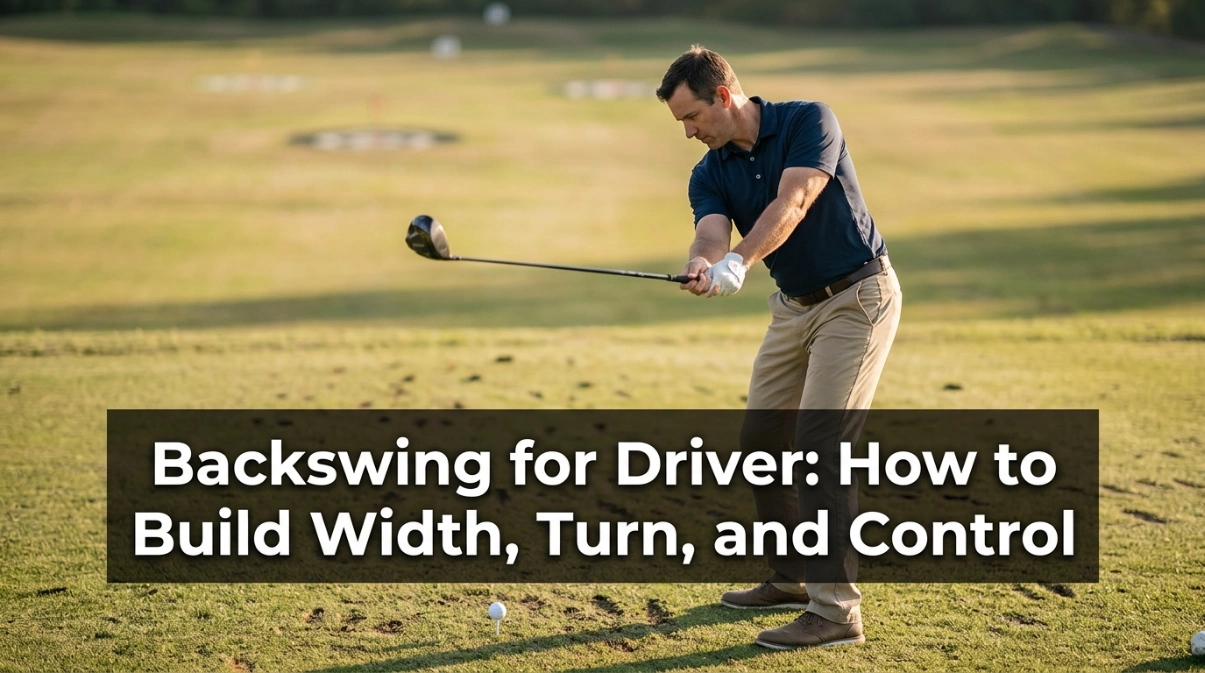
Backswing for Driver: How to Build Width, Turn, and Control
Quick Answer
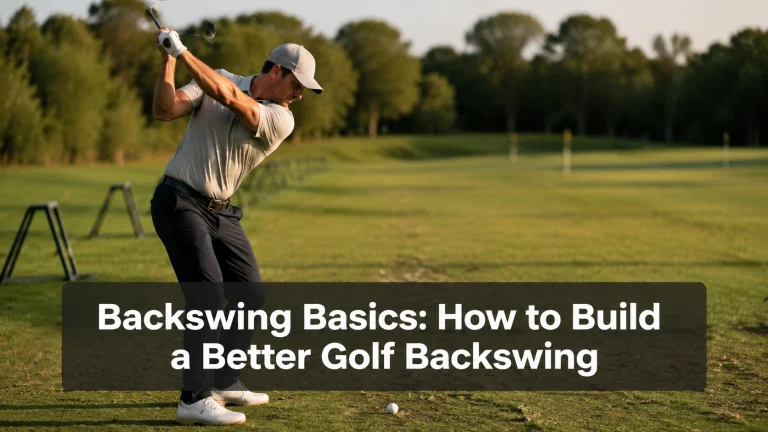
A good backswing for driver combines a connected takeaway, a wide swing arc, a full body turn, and balanced pressure into the trail side. Your hands should stay in front of your body rather than disappearing behind you, a concept also emphasized in this PGA backswing drill.
Driver Backswing Steps
- Set up tall: Use an athletic posture with the ball forward and your trail shoulder slightly lower.
- Start together: Let your chest, arms, and club begin moving away as one connected unit.
- Create width: Allow the clubhead and hands to travel away from your chest without locking your arms.
- Turn your body: Rotate your shoulders and allow your hips to turn instead of trying to keep them fixed.
- Stay centered: Move pressure into your trail foot without sliding your entire body away from the target.
- Finish naturally: Stop the backswing when your turn and arm structure reach their comfortable limit.
Simple Check
- Film from behind and face-on. Check for width, balance, body rotation, and hands that remain connected to your turn.
A reliable backswing for driver doesn’t come from forcing the club farther behind your head. It comes from creating enough width and rotation to give the downswing room to work.
In 2026, I still see golfers chase positions instead of movement. I prefer a simpler approach: build a sound setup, turn with balance, and let the length of the backswing match your mobility.
In This Guide
What Should a Good Driver Backswing Look Like?
A good driver backswing should look wide, balanced, and connected. Your body turns while your arms stay organized in front of your chest.
The goal isn’t to copy one tour player’s exact position. Jon Rahm, Rory McIlroy, and other elite players show how different successful backswings can look.
What Does “Width” Mean in a Driver Backswing?
Backswing width describes the space between your hands and your body’s swing center. A wider arc gives the longer driver room to travel without the arms collapsing against your chest.
Width doesn’t mean pushing your arms rigidly straight. Think of your hands traveling away while your chest continues turning.
- Too narrow: The trail elbow folds excessively and the hands move close to your head.
- Too wide: The arms become tense and disconnect from your body rotation.
- Better balance: The arms maintain space while the torso supplies most of the turn.
I like to judge width by filming the swing rather than guessing from feel. What feels enormous during practice can look surprisingly normal on video.
How Much Should Your Shoulders and Hips Turn?
There is no single perfect number for every golfer. Mobility, build, stance, and swing style all affect how much rotation you can use.
A common teaching reference is roughly a 90-degree shoulder turn and 45-degree hip turn, but those figures aren’t mandatory targets. PGA instruction also stresses that the lower body should rotate rather than remain artificially restricted.
You can read more about width, rotation, and power in the PGA of America’s guide to powering the golf swing.
| Checkpoint | Functional Driver Backswing | Common Problem |
|---|---|---|
| Takeaway | Chest, arms, and club move together | Hands snatch the club inside |
| Halfway Back | Hands retain space from the torso | Arms collapse behind the body |
| Body Turn | Shoulders and hips rotate around posture | Body slides laterally |
| Top | Balanced, structured, comfortable | Extra arm lift after rotation stops |
Section Takeaway: Build width through rotation, not tension. A balanced backswing that matches your mobility beats a forced “perfect” position.
How Should You Set Up Before Starting the Backswing?

Your backswing begins before the club moves. A poor driver setup can make a good takeaway much harder to produce.
The driver is longer than an iron and the ball sits on a tee. That changes your posture, ball position, and the shape of the swing.
Driver Setup Checklist
- Ball position: Play it forward, commonly around the lead heel or lead big toe.
- Stance: Use enough width to support speed while keeping your knees athletic.
- Shoulder tilt: Let your trail shoulder sit slightly lower than your lead shoulder.
- Posture: Bend from the hips without rounding your upper back.
- Grip pressure: Hold the club securely without squeezing tension into your forearms.
- Alignment: Aim your feet, hips, and shoulders consistently before judging the swing.
A slightly taller driver posture can also create more room for the longer club. I avoid crouching as if I’m hitting a short iron.
Driver Backswing vs. Iron Backswing
The fundamental motion is similar, but the setup creates important differences. With driver, I want more freedom and width rather than a steep, cramped motion.
| Feature | Driver | Mid-Iron |
|---|---|---|
| Ball Position | Forward, near lead heel | Closer to center than driver |
| Stance | Generally wider | Generally narrower |
| Arc | Longer and wider | Naturally shorter |
| Backswing Feel | Free rotation and width | More compact |
*Pro tip: If setup changes cause pain or unusual physical strain, work with a certified PGA professional and a qualified medical professional when appropriate.*
How Do You Start the Driver Backswing?
Start the driver backswing by moving your chest, arms, and club away together. Avoid using only your hands during the first few inches.
A connected takeaway gives you time to create width. It also makes the rest of the turn easier to organize.
Use Your Chest to Start the Motion
I like the feeling that my lead shoulder begins moving back and slightly down as my chest rotates. The hands respond rather than taking control immediately.
PGA instruction examining Harris English’s swing makes a similar point: his takeaway begins with body rotation rather than an independent hand-and-wrist action.
- Move together: Let the grip, arms, shoulders, and chest start in sync.
- Stay relaxed: Don’t freeze your wrists or forearms.
- Avoid snatching inside: Give the clubhead space to travel away from the ball.
- Keep turning: Don’t stop your chest while the arms continue alone.
Should the Driver Go Straight Back?
Not literally. Your body is rotating, so the club naturally begins moving on an arc around you.
The useful feeling is that the clubhead stays wide instead of whipping immediately behind your trail hip. Butch Harmon has also described shoulder turn and width as important driver concepts in Golf Digest’s backswing instruction.
When Should the Wrists Hinge?
You don’t need to force an early wrist set. Let the wrists respond gradually as the club travels upward and your turn develops.
For many golfers, obsessing over the exact hinge point creates tension. I focus first on width and connection, then check the club’s position on video.
Section Takeaway: Let your body start the driver backswing and allow the wrists to respond naturally. Early hand manipulation often makes the swing harder to repeat.


Where Should the Driver Be at the Top?
At the top, you should feel turned, supported, and ready to change direction. You shouldn’t feel as if you’re stretching for another six inches of club travel.
The correct top position depends on your mobility and swing pattern. A shorter backswing can work perfectly well when the structure underneath it is sound.
How Long Should Your Driver Backswing Be?
Stop when your body turn has reached a useful limit and your arms still maintain structure. Continuing after your rotation stops often causes the arms to collapse or lift independently.
- Shorter can work: You don’t need the shaft parallel to the ground.
- Longer can work: Extra length is fine when it comes from mobility and rotation.
- Over-swinging hurts timing: Added arm travel can make the transition harder to sequence.
- Balance matters: You should still feel stable enough to reverse direction smoothly.
Where Should Your Hands Be?
A helpful reference is to keep the hands in front of your body and working toward the trail-shoulder area. Don’t deliberately bury them deep behind your torso.
The exact height varies by golfer. Body dimensions, posture, arm length, and swing plane all change the picture.
Should Your Lead Arm Stay Perfectly Straight?
No. The lead arm should usually feel extended, but forcing it completely rigid can add unwanted tension.
A small amount of softness is different from a collapsing arm structure. Your goal is useful width, not a locked elbow.
*Pro tip: A PGA professional can compare your top position with your mobility and ball flight. That’s more useful than copying one tour player’s photograph.*
What Driver Backswing Mistakes Cause Poor Shots?
The biggest backswing errors usually involve losing width, balance, or connection. Those problems can force compensations before the club even reaches impact.
Don’t diagnose your swing from one bad drive. Look for a pattern across several shots and video angles.
1. Taking the Club Too Far Inside
An inside takeaway often happens when the hands roll or pull the club behind the body. The chest may barely turn while the arms become trapped.
Try feeling the clubhead stay outside your hands slightly longer while your torso rotates. Don’t exaggerate until the club travels straight away forever.
2. Swaying Instead of Turning
A sway moves your body laterally toward the trail side without enough rotation. Your head, pelvis, and pressure can all drift too far from the original setup.
- Turn: Trail hip rotates behind you.
- Pressure shift: More pressure moves into the trail foot.
- Sway: The entire body slides away from the target.
3. Restricting the Hips Too Much
Older instruction sometimes encouraged golfers to keep the hips extremely quiet. For many recreational players, that makes a complete turn harder.
Allowing the trail hip to rotate can give your torso more room. It can also reduce the urge to lift the arms after your body stops.
4. Over-Swinging
More backswing doesn’t automatically mean more distance. The useful backswing ends when you’ve created enough turn and width to transition efficiently.
If the club keeps traveling because your elbows collapse, you’re adding motion rather than usable power. Shorten it until you can keep your structure.
5. Rushing the Takeaway
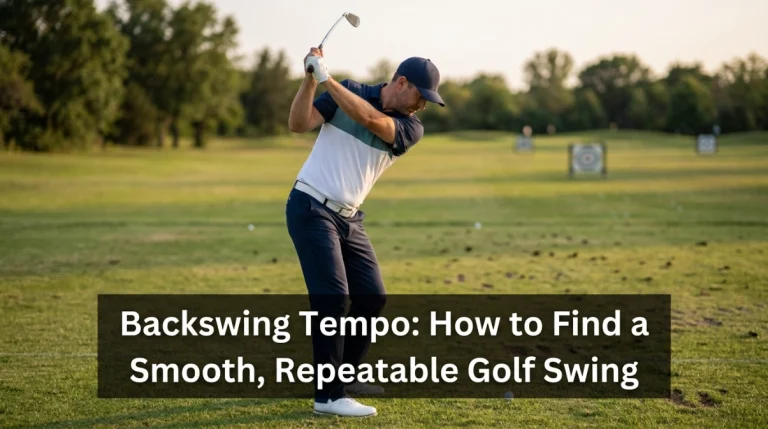
A fast backswing isn’t automatically wrong. The problem is changing speed suddenly and losing control of your sequence.
Find a tempo you can repeat under pressure. Your comfortable tempo may be quicker or slower than another golfer’s.
Section Takeaway: Diagnose the movement causing the bad position, not just the position itself. Fixing your turn or takeaway often solves several faults at once.
What Are the Best Driver Backswing Drills?

The best drills give you clear feedback. I prefer drills that exaggerate one simple feeling rather than making me think about five positions.
Start slowly without a ball. Add speed only after you can repeat the motion comfortably.
Drill 1: Club-Across-the-Shoulders Turn
- Take your normal driver posture without hitting a ball.
- Place a club across your shoulders and cross your arms.
- Rotate your lead shoulder back while your trail hip turns behind you.
- Stay in your original posture instead of standing upright.
- Repeat slowly before making normal driver swings.
This drill isolates the body turn. It helps you feel rotation without worrying about the clubhead.
Drill 2: Headcover Width Drill
- Place a headcover on the ground several feet behind the ball.
- Set up normally with your driver.
- Begin the takeaway while feeling the clubhead travel wide and around the headcover.
- Keep your chest turning as the hands move upward.
- Hit shots at reduced speed before returning to normal speed.
This is useful when the club disappears behind your hands too early. PGA instruction has also used a headcover concept to encourage driver backswing width.
Drill 3: Toe-Line Hand-Path Drill
- Place an alignment stick along your toe line.
- Make a slow takeaway while filming from behind.
- Notice where your hands travel at the halfway-back position.
- Feel them remain more in front of your body rather than moving deep behind you.
- Continue the turn until the hands approach the trail-shoulder area.
This drill matches a concept highlighted by PGA professional Brendon Elliott when discussing backswing shape and hand path.
Drill 4: Pause-at-the-Top Drill
- Make a backswing at about half speed.
- Pause briefly at the top.
- Check your balance and trail-foot pressure.
- Notice whether your arms still feel wide and organized.
- Swing through without trying to hit the ball hard.
A pause exposes an unstable backswing quickly. If you can’t stop comfortably, reduce the swing length and rebuild the turn.
Drill 5: Alternate Slow and Normal Swings
Make two slow rehearsal swings, then hit one normal driver. This helps you transfer a controlled movement into a real shot.
Don’t turn every range session into mechanical work. The PGA of America’s 2026 practice-drill guide also emphasizes simple drills that develop repeatable movement.
*Pro tip: If a drill changes your ball flight dramatically or creates discomfort, stop and ask a certified instructor to check the movement.*
Section Takeaway: Practice one backswing priority at a time. Slow rehearsals, video, and simple feedback usually work better than chasing several positions together.
Driver Backswing FAQ
How far back should I take the driver?
Take the driver back only as far as you can maintain balance, width, and useful body rotation. You don’t need the shaft to reach parallel at the top, and forcing extra length can make your transition harder to control.
Should my driver backswing be slower?
Not necessarily. Your backswing needs a repeatable rhythm rather than an artificially slow speed. Some golfers naturally swing back faster, while others perform better with a smoother tempo.
Should I keep my left arm straight in the driver backswing?
Your lead arm should generally remain extended enough to maintain width, but it doesn’t need to be rigid. A little softness is normal if your arms remain connected to the body’s turn.
Should my hips turn during the driver backswing?
Yes, most golfers benefit from allowing the hips to rotate. Trying to freeze the lower body can restrict the shoulder turn and encourage excessive arm movement, especially for golfers with limited mobility.
Why do I lose balance during my driver backswing?
Common causes include an overly wide stance, excessive lateral sway, too much backswing length, or swinging beyond your comfortable range of motion. Film your swing face-on and check whether your body is turning or simply sliding away from the target.
Can a short backswing still produce good driver distance?
Yes. Backswing length alone doesn’t determine speed or distance. A compact swing with good rotation, sequencing, centered contact, and an efficient transition can work better than a longer swing that loses structure.
What is the easiest driver backswing thought?
Try thinking, “turn and stay wide.” Let your chest start the motion while your hands retain space from your body. One clear cue is usually easier to repeat than several technical thoughts.
The driver backswing doesn’t need to look textbook. It needs to put you in a balanced position where you can change direction without making emergency compensations.
Work first on setup, then takeaway, width, and rotation. Film a few swings, choose one priority, and give that change enough practice before judging the result.