
Backswing FAQ: Answers to the Most Common Golf Backswing Questions

Quick Answer
A good golf backswing puts the club, arms, wrists, and body in a balanced position for the downswing. You don’t need to copy one perfect-looking swing, but you do need a controlled takeaway, enough body turn, useful wrist hinge, and a top position you can repeat. A simple backswing path drill from the PGA can help you check whether your hands are getting trapped too far behind you.
Backswing checkpoints I focus on
- Start together: Let your chest, arms, hands, and club begin moving without a sudden hand snatch.
- Turn naturally: Rotate your upper body while allowing your hips to respond instead of locking them in place.
- Hinge, don’t roll: Let the wrists set as the club rises without twisting the clubface dramatically open.
- Stay balanced: Pressure can move into the trail foot, but your body shouldn’t sway far away from the target.
- Own the top: Stop the backswing where you can change direction without losing posture or structure.
Best way to confirm it
- Record slow swings from face-on and down-the-line instead of judging your backswing only by feel.
This Backswing FAQ covers the questions I hear most often about the golf backswing, from the first move away to the transition. I also explain the checkpoints I use when a swing feels long, rushed, flat, steep, or disconnected.
There are many successful backswing styles, so I don’t chase a perfect freeze-frame. I look for movements that make solid contact and a repeatable downswing easier.
In This Guide
- What Is a Golf Backswing and What Should It Accomplish?
- How Should the Golf Takeaway Start?
- How Much Should Your Shoulders and Hips Turn?
- When Should Your Wrists Hinge and Where Should the Club Be at the Top?
- How Long and Fast Should Your Backswing Be?
- Which Backswing Faults Cause the Most Problems?
- Backswing FAQ
What Is a Golf Backswing and What Should It Accomplish?
The backswing is the part of the golf swing that moves the club from address to the top before the downswing begins. Its main job is to organize your body and club so you can return toward the ball with balance, speed, and control.
Definition: The golf backswing is the coordinated movement of the club, hands, arms, shoulders, torso, hips, and pressure away from the target before the change of direction.
I don’t judge a backswing by how attractive it looks at the top. I judge it by what the golfer has to do next.
- Balanced: You should still feel athletic rather than pulled onto the outside of your trail foot.
- Connected: Your arm swing and body rotation should work together rather than racing in opposite directions.
- Organized: The clubface, wrist conditions, and hand path shouldn’t require a desperate correction on the way down.
- Repeatable: You should be able to reach a similar position without consciously placing the club there.
One mistake I made when working on my own swing was chasing the longest possible turn. The club looked impressive on phone video, but my strike pattern became less predictable because I couldn’t control the change of direction.
A shorter backswing with good structure often works better than a longer backswing you can’t manage. Your mobility, club choice, grip, posture, and natural tempo all affect how the motion should look.
As of 2026, I still prefer video checkpoints over trying to copy a tour player’s exact top position. Two golfers can hit excellent shots with noticeably different arm heights, wrist conditions, and backswing lengths.
- Use a face-on video to check sway, pressure movement, and backswing length.
- Use a down-the-line video to check hand path, club direction, posture, and depth.
- Compare your good strikes with your poor strikes before changing anything.
The goal isn’t a textbook pose. The goal is a backswing that simplifies what happens next.
Pro tip: If a backswing change feels forced or causes discomfort, have a certified PGA professional evaluate your movement instead of pushing through it.
How Should the Golf Takeaway Start?
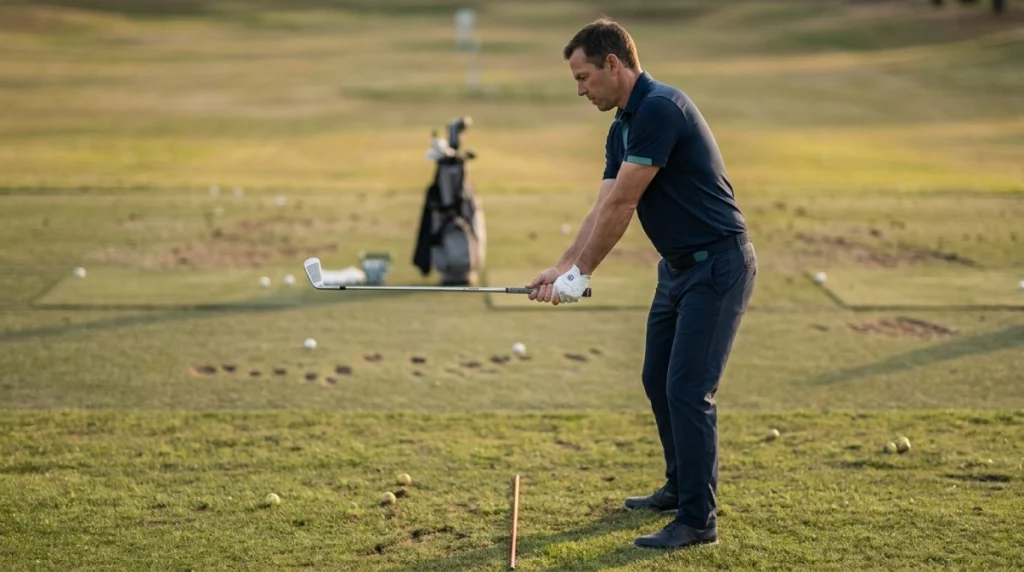
The takeaway should begin smoothly, with the club moving away while your chest and arms start working together. Avoid immediately snatching the club inside with your hands or lifting it sharply outside.
I think of the takeaway as the opening few feet of the backswing. It doesn’t need to be mechanically frozen into one piece, but the movements should complement each other.
Should the hands start the backswing?
Your hands participate, but I don’t like a hand-only start. An abrupt wrist roll can send the club too far inside and open the clubface early.
PGA instruction on building the backswing from the takeaway also emphasizes beginning with body rotation rather than letting small hand movements dominate the start.
- Too much hand roll: The club can disappear behind you early.
- Too much arm lift: The club can become steep before your body has turned.
- Too much body drag: The club may stay low for too long and leave the wrists late to organize.
Where should the club be when the shaft reaches parallel?
When the shaft is roughly parallel to the ground on the way back, I want a position that still looks organized. I don’t obsess over an inch-perfect line.
- The hands haven’t raced deep behind the trail hip.
- The clubhead hasn’t been whipped dramatically inside.
- The clubface hasn’t rolled wide open.
- Your chest has started turning away from the target.
- Your head remains relatively stable without a forced freeze.
A slow rehearsal is useful here. Stop when the shaft reaches roughly parallel, look at the position, then restart without hitting a ball.
When I test takeaway changes, I usually make several half-speed rehearsals before hitting full shots. That removes the urge to judge the move only by ball flight.
Pro tip: A qualified instructor can tell whether an unusual-looking takeaway is a real problem or simply part of your natural swing pattern.
How Much Should Your Shoulders and Hips Turn?
Your shoulders should turn enough to create room and depth without forcing your body beyond its comfortable range. Your hips should also rotate rather than staying locked in place.
There isn’t one mandatory shoulder-turn number for every golfer. Body proportions, flexibility, stance width, club length, and backswing style all change the picture.
Should I keep my lower body still?
I wouldn’t try to freeze it. Restricting the hips too aggressively can make the backswing feel tight and can encourage the arms to keep traveling after the body has stopped.
- Let the trail hip move behind you as you turn.
- Keep pressure supported through the trail foot instead of rolling outside it.
- Allow the lead knee to respond naturally rather than locking both knees.
- Maintain enough posture to turn around your original inclination.
Is a big shoulder turn always better?
No. A useful turn is better than the biggest turn you can manufacture.
I’ve had practice sessions where trying to turn farther made my arms overrun my chest. Shortening the motion slightly made the transition feel far less rushed.
- Good turn: You can change direction while maintaining balance.
- Overturn: Your posture breaks or your pressure spills outside the trail foot.
- Underturn: Your arms lift without enough torso rotation to support them.
Mobility matters too. Golfers with limited thoracic rotation shouldn’t force their shoulders to reach a tour-like appearance.
The best checkpoint is whether your turn gives the arms enough space while preserving control. That is more useful than chasing a specific screenshot.
Practice feel: Place a club across your chest and make a comfortable turn while staying in your golf posture. Notice where your natural range ends before you add the arm swing.


When Should Your Wrists Hinge and Where Should the Club Be at the Top?
Your wrists should hinge progressively during the backswing rather than staying rigid or rolling wildly. At the top, the club should be organized enough that you can start down without a major rerouting move.
The exact timing varies. Some excellent players set the wrists early, while others maintain width and complete more of the hinge later.
What does wrist hinge mean?
Wrist hinge is the angular movement that helps the club rise as the backswing develops. It is different from simply twisting the forearms and opening the clubface.
Golf Digest has also described the backswing as a blend of body turn and progressive wrist set, rather than an all-hands or all-body move.
Does the shaft need to reach parallel at the top?
No. Reaching parallel to the ground at the top isn’t a requirement for a good golf swing.
Some players stop short of parallel, while others move beyond it. Your transition quality matters more than matching a single shaft position.
| Checkpoint | Useful Pattern | Common Fault | Likely Compensation |
|---|---|---|---|
| Early takeaway | Club and body begin in coordination | Hands whip club inside | Rerouting during transition |
| Shaft about parallel | Clubface and hand path remain organized | Clubface rolls open | Extra face rotation later |
| Lead arm rising | Arm swing matches torso turn | Arms lift without turn | Steep transition |
| Top of backswing | Balanced, controllable change of direction | Arms continue after body stops | Timing-dependent downswing |
What should start the change of direction?
I don’t want the hands to panic from the top. The change of direction works better when pressure and lower-body motion begin blending with the arms and club.
A PGA coaching example on starting the downswing uses lead-side movement as a trigger instead of throwing the arms first.
Don’t force a dramatic hip slide to copy that feeling. The goal is a coordinated transition, not another position to exaggerate.
How Long and Fast Should Your Backswing Be?
Your backswing should be long enough to create a complete motion but short enough to remain controlled. Its speed should match a tempo that lets you change direction without rushing.
A slow backswing isn’t automatically good, and a quick one isn’t automatically bad. Rhythm matters more than an arbitrary speed.
How do I know if my backswing is too long?
A backswing is too long when the extra movement makes your transition and strike less predictable. The club’s position alone doesn’t tell the whole story.
- Your lead arm collapses mainly to keep the club traveling.
- Your trail elbow loses its structure.
- Your torso stops but your arms continue significantly farther.
- Your head or upper body drifts noticeably toward the target before transition.
- You struggle to finish the backswing before starting down.
Should my driver backswing be longer than my iron backswing?
It often feels longer because the driver is longer and the swing arc is wider. You still shouldn’t force extra travel simply because you’re holding a driver.
With a short iron, I usually feel more compact and centered. With a driver, I allow more width while keeping the same basic sense of balance.
Can a backswing be too slow?
Yes. Moving so slowly that the swing loses athletic flow can make transition harder.
I use slow motion for drills, but I don’t want my normal swing to feel like a staged sequence. Rehearsal speed and playing speed serve different purposes.
- Drill speed: Slow enough to recognize positions and movement.
- Range speed: Athletic enough to produce your normal sequence.
- Course speed: Focused on rhythm and target rather than technical checkpoints.
If your backswing feels rushed, don’t simply tell yourself to swing slowly. Try a clear trigger, a relaxed waggle, and one smooth rehearsal before you address the ball.
Which Backswing Faults Cause the Most Problems?
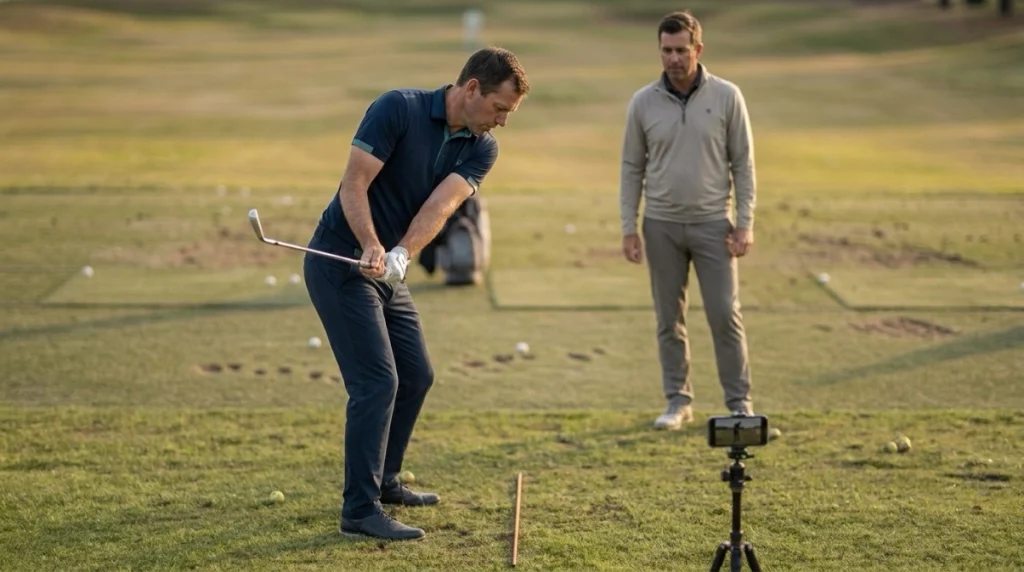
The most troublesome backswing faults are usually the ones that force a major compensation during the downswing. Common examples include rolling the club inside, swaying, overswinging, losing posture, and lifting the arms without enough turn.
I troubleshoot the ball flight and strike first. Then I check whether the backswing is contributing to that pattern.
Club goes too far inside
An excessively inside takeaway can place the hands and club behind the body’s rotation too early. From there, some golfers reroute steeply while others drop the club too far underneath.
- Make waist-high rehearsals.
- Keep the hands from immediately disappearing behind the trail hip.
- Use an alignment stick as a visual reference.
Upper body sways away from the target
Some pressure should move into the trail side, but that isn’t the same as sliding your whole torso sideways. A large sway can make recentering harder.
Film face-on and watch your trail hip. I prefer seeing it turn behind you rather than simply drifting laterally.
Arms lift without enough turn
This pattern can make the backswing steep and disconnected. It often appears when a golfer tries to place the club at the top instead of allowing the torso and arms to work together.
- Make chest-turn rehearsals without a ball.
- Add the arms while preserving the same body motion.
- Hit half shots before returning to full swings.
Clubface rolls open early
Rolling the forearms aggressively can make face control harder. Golf Digest also discusses this common open-clubface takeaway pattern.
Don’t respond by holding the clubface unnaturally shut. Check your grip first, then rehearse a quieter takeaway at reduced speed.
Overswinging
Overswinging becomes a problem when your structure breaks down simply to gain more length. A compact motion you can repeat is often the better trade.
My favorite troubleshooting rule: Change one variable at a time. If you adjust grip, takeaway, turn, and wrist hinge together, you won’t know which change affected the strike.
I also like simple drills because they provide immediate feedback. The PGA’s collection of golf practice drills is a useful reminder that effective practice doesn’t need complicated equipment.
Pro tip: If you keep changing your backswing without understanding the ball-flight cause, use the PGA’s coach finder to get qualified, hands-on feedback.
Backswing FAQ
Should my left arm stay straight during the backswing?
For a right-handed golfer, the lead arm should usually maintain useful structure, but it doesn’t need to feel rigid. A small amount of softness is normal, while excessive collapse can shorten your swing radius and make timing harder.
Should my head stay completely still during the backswing?
No. Trying to freeze your head can restrict a natural body turn. Keep your balance and visual relationship with the ball, but allow small head movement that comes from a functional rotation.
Where should my weight be at the top of the backswing?
Think in terms of pressure rather than throwing all your body weight onto the trail foot. You should feel supported on the trail side while remaining balanced enough to begin moving toward the target.
Why does my backswing feel different from what it looks like on video?
Golf swing feel and real movement often differ. That’s why I pair slow-motion video with a simple drill instead of trusting feel alone. A motion that feels exaggerated may look modest when recorded.
Should the trail elbow stay tucked during the backswing?
Don’t pin it tightly against your ribs. The trail elbow can fold and move as your arm swing develops. The better question is whether its position supports your turn and allows a comfortable transition.
Can a short backswing still create enough power?
Yes. Backswing length alone doesn’t determine clubhead speed. A golfer who turns efficiently, stays organized, and sequences the downswing well can create plenty of speed without reaching parallel at the top.
What is the best backswing drill for beginners?
Start with waist-high rehearsals in front of a mirror or phone camera. Check your takeaway, then gradually add turn and wrist hinge. Keep the motion slow until you can repeat it before adding speed or hitting full shots.
Final Takeaway
A better backswing isn’t about copying one perfect shape. Build a takeaway you can repeat, turn within your physical range, let the wrists hinge naturally, and stop the swing where you still own your balance.
When something goes wrong, use ball flight and video to diagnose it before rebuilding your entire motion. Small, targeted changes are easier to test and far easier to trust on the course.
Take one backswing checkpoint to your next practice session and work on it at half speed first. Once the movement becomes predictable, add speed and judge the change by contact, start direction, and consistency.