
Provisional Ball in Golf: Rules, Penalties, and Examples

Quick Answer
A provisional ball is a backup ball played when your original ball might be out of bounds or lost outside a penalty area. Under Rule 18.3 of the Rules of Golf, you must announce the provisional before hitting it.
How to play a provisional ball correctly
- Confirm the possibility: Your original ball might be out of bounds or lost somewhere outside a penalty area.
- Announce your intention: Say “I’m playing a provisional ball” before making another stroke.
- Play from the same place: Use the spot where you made the previous stroke.
- Search for three minutes: The search clock begins when you or your caddie starts looking.
- Choose the correct ball: Continue with the original if it is found in bounds within three minutes.
- Count stroke and distance: If the provisional becomes the ball in play, add one penalty stroke.
Easy announcement
- Say clearly: “That ball may be lost or out of bounds. I’m playing a provisional.”
I’ve watched many golfers turn a simple provisional into a rules problem by saying, “I’ll hit another.” That casual phrase may not protect the first ball.
This guide explains when a provisional is allowed, how to announce it, and which ball counts. It also covers scoring, penalty areas, search time, and common on-course mistakes.
In This Guide
What Is a Provisional Ball in Golf?
A provisional ball is a temporary backup played in case your previous ball is out of bounds or lost outside a penalty area. Its main purpose is to save time.
The provisional does not immediately replace your original. Its status depends on where the original is found and what you do next.
The USGA Rules and Clarifications place this procedure under Rule 18.3. The rule works alongside stroke-and-distance relief.
What does stroke and distance mean?
Stroke and distance means adding one penalty stroke and playing again from where you made the previous stroke. You lose both a stroke and the distance gained by the lost or out-of-bounds shot.
Suppose your tee shot crosses a white boundary fence. Your next counted shot from the tee would be your third stroke.
- First stroke: The original tee shot.
- Penalty stroke: Added for stroke-and-distance relief.
- Third stroke: The next ball played from the tee.
Why golfers use provisional balls
Walking 250 yards forward and then returning to the tee causes a major delay. A provisional lets the group continue if the original cannot be used.
I use one whenever a drive disappears near thick native grass and there is no marked penalty area. Even when the shot looks findable, the backup can prevent a long walk back.
Mark the provisional differently from the original. For example, use a different number or add a second identification mark.
Section Takeaway: A provisional is a time-saving backup, not an automatic replacement. Stroke and distance applies only if it becomes the ball in play.
When Can You Play a Provisional Ball?
You may play a provisional when your ball might be out of bounds or lost outside a penalty area. Reasonable uncertainty is enough.
You do not need proof that the original is lost. You make the decision using the information available before playing the provisional.
Situations where a provisional is allowed
- Your drive may have crossed white stakes or another course boundary.
- Your ball entered trees, bushes, long rough, or another unmarked area.
- The ball might be in a penalty area, but it might also be lost outside it.
- The ball may be either out of bounds or inside a nearby penalty area.
- Your first provisional might also be lost outside a penalty area or out of bounds.
That last situation surprises many golfers. You can play another provisional for the first provisional, but you must announce the new ball properly.
When is a provisional ball not allowed?
A provisional is not allowed when the original ball’s only possible location is a penalty area. You must instead use the choices available under Rule 17.
Penalty areas usually have red or yellow stakes and lines. They follow different relief procedures from a lost ball.
| Situation | Provisional allowed? | Correct action |
|---|---|---|
| Ball might be out of bounds | Yes | Announce and play from the previous spot |
| Ball might be lost in unmarked woods | Yes | Play a provisional to save time |
| Ball can only be in a penalty area | No | Proceed under the penalty-area rule |
| Ball might be in a penalty area or lost elsewhere | Yes | Announce and play a provisional |
| Original is known to be in bounds and findable | No | Continue with the original ball |
A Committee can introduce a special Local Rule for an unusual penalty area. Check the scorecard or competition notice before relying on that exception.
Section Takeaway: Use a provisional for possible out-of-bounds shots or balls potentially lost outside penalty areas. Do not use one when a penalty area is the only possible location.
How Do You Play a Provisional Ball Correctly?
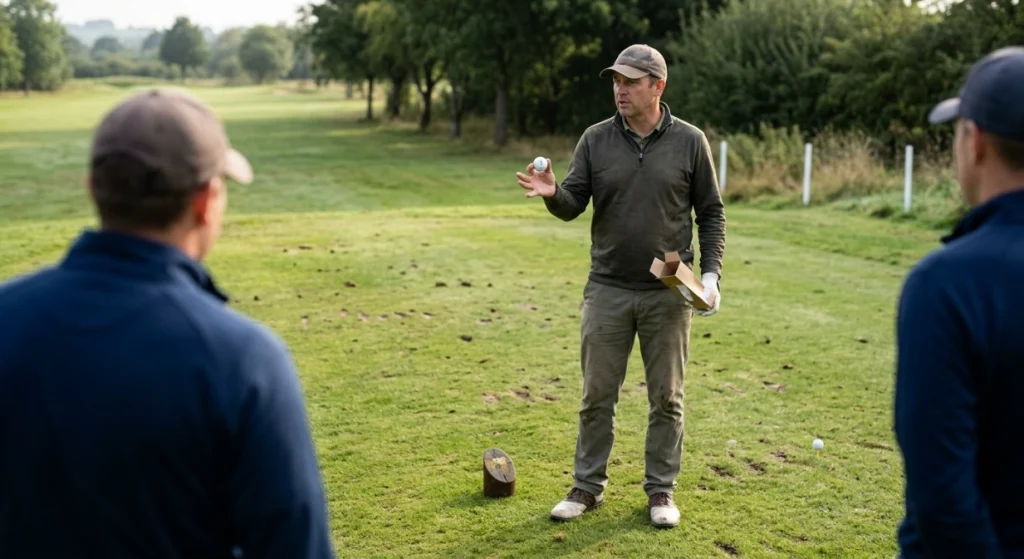
Announce your intention before making the stroke, then play from the previous spot. Using the word “provisional” is the safest approach.
- Pause before moving forward. Decide whether the original might be lost outside a penalty area or out of bounds.
- Identify the backup. Tell your marker or playing partners its brand, number, or identifying mark.
- Make a clear announcement. Say, “I’m playing a provisional ball.”
- Play from the proper place. Follow the procedure for replaying the previous stroke.
- Track both balls. Note where the provisional finishes before beginning the search.
What should you say before hitting?
“I’m playing a provisional” is clear and safe. “I’m playing another just in case” may also communicate the correct intention, but direct wording avoids disputes.
Do not rely on phrases such as “I’m reloading” or “I’ll hit another.” Those words do not clearly establish that the new ball is provisional.
If nobody is nearby, you may play the provisional. Tell someone what you did as soon as possible.
Can you play the provisional more than once?
Yes. You may keep playing it while you remain the same distance or farther from the hole than the estimated position of the original.
Imagine the original drive may be 180 yards from the hole. Your provisional stops 220 yards away, so you may play it again without changing its status.
However, be careful when the provisional moves ahead. A stroke made from nearer the hole than the original’s estimated position can make the provisional your ball in play.
Pro tip: Ask a certified golf instructor or rules official to walk through this distance test on the course if the positions feel confusing.
Section Takeaway: Make an unmistakable announcement before the stroke. You may continue playing the provisional while it is not played from nearer the hole than the original’s estimated location.

When Does a Provisional Become the Ball in Play?
The provisional becomes your ball in play when the original is lost outside a penalty area, is out of bounds, or the provisional is played from too far forward. Stroke and distance then applies.
The original is not found within three minutes
You have three minutes to find and identify the original ball. The clock starts when you, your partner, or your caddie begins searching.
Once that time expires, the original is lost. Finding it after the deadline does not restore it as the ball in play.
The original is out of bounds
A ball is out of bounds only when all of it lies beyond the course boundary. Any part inside the boundary means the ball remains in bounds.
White stakes commonly identify the boundary, but the Committee may use walls, fences, or painted lines. Check the course’s Local Rules.
You play the provisional from nearer the hole
The provisional becomes the ball in play when you stroke it from a point nearer the hole than the original’s estimated location. The location comparison matters more than the number of strokes made.
The R&A provides a helpful provisional-ball position diagram showing this threshold.
When must you abandon the provisional?
You must abandon it when the original is found in bounds within three minutes. This remains true even if the provisional lies in a perfect position.
You must also abandon it when the original is known or virtually certain to be in a penalty area. Continue with the original or take permitted penalty-area relief.
- Do not choose the provisional because it has a better lie.
- Do not continue searching after the original has already been found and identified.
- Do not play an abandoned provisional; it has become a wrong ball.
Section Takeaway: The rules decide which ball counts. Once the original is found in bounds on time, you cannot choose the provisional instead.
How Do You Score a Provisional Ball?
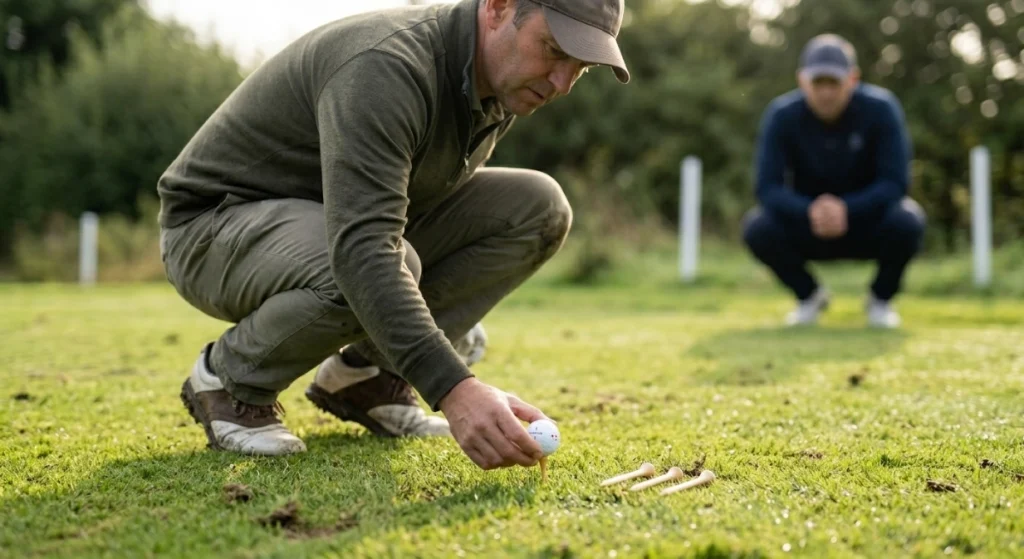
If the provisional becomes the ball in play, count the original stroke, one penalty stroke, and every stroke made at the provisional. Its first stroke is therefore two strokes higher than the original shot’s number.
Example 1: Provisional from the tee
- You hit your first shot toward out-of-bounds stakes.
- You announce and hit a provisional from the tee.
- The original is out of bounds.
- The provisional’s tee shot counts as stroke three.
- Your next stroke at that ball will be stroke four.
Example 2: Original ball is found
- You hit the original into deep rough.
- You announce and play a provisional.
- You find the original in bounds within three minutes.
- You abandon the provisional.
- No penalty applies merely for playing it provisionally.
Example 3: Second provisional is needed
Your original tee shot may be out of bounds. The announced provisional also flies toward the boundary.
You may announce another provisional for that ball. If both earlier balls are out of bounds, the third ball played from the tee represents stroke five.
| Ball struck from tee | Stroke count if prior ball is out |
|---|---|
| Original ball | Stroke 1 |
| First provisional | Stroke 3 |
| Second provisional | Stroke 5 |
For casual play, some courses use the alternative stroke-and-distance Local Rule. It may permit relief near where the ball was lost or crossed the boundary for two penalty strokes.
That option is not automatically available. Confirm its use with the Committee, scorecard, or starter before the round.
Section Takeaway: A provisional played from the tee usually lies three if the original is lost or out of bounds. Each further replacement under stroke and distance adds two to the count.
What Provisional Ball Mistakes Should You Avoid?
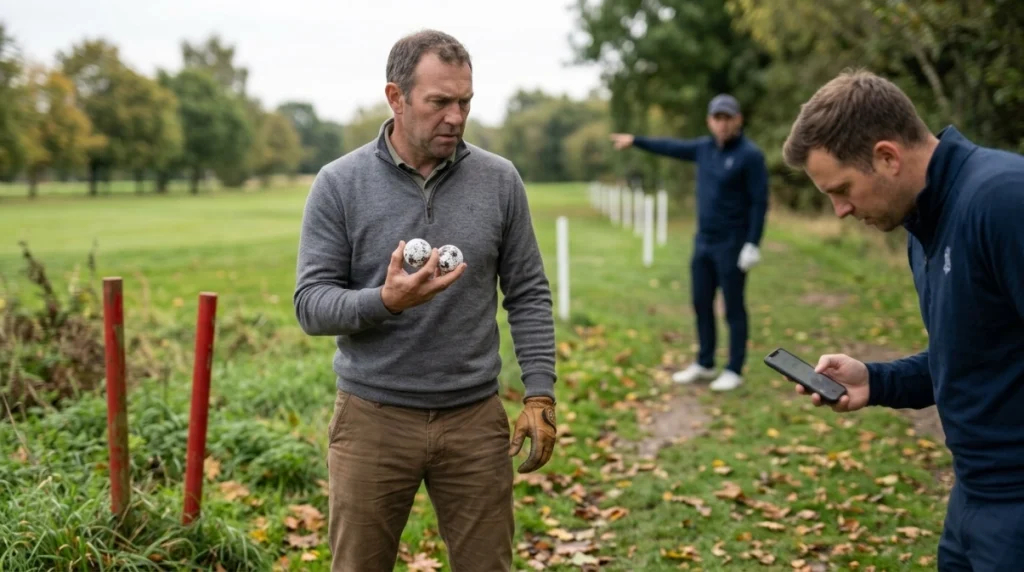
The most common error is failing to announce the ball clearly. The second ball then becomes the ball in play under stroke and distance, even when the original is later found.
Using vague language
Always use “provisional” in your announcement. This one word can prevent a rules disagreement and an unwanted penalty.
Playing one for a penalty area
Do not treat red or yellow stakes like out-of-bounds markers. The official Rules of Golf provide separate relief choices for penalty areas.
Searching longer than three minutes
Start tracking time when the search begins. A phone timer helps, but it should not delay play.
Playing the provisional too far forward
Estimate where the original probably lies. Playing the provisional from beyond that point can change its status permanently.
Choosing the better ball
A provisional is not a second chance that lets you select the better result. If the original is found in bounds on time, you must use it.
Failing to identify both balls
Two identical balls can create an identification problem. Tell your group, “Original is Titleist 2; provisional is Titleist 4,” or use distinct markings.
As of 2026, the core Rule 18.3 procedure still centers on permission, announcement, and ball status. For a competition ruling, consult the Committee or a qualified rules official.
Section Takeaway: Clear words and clear ball markings prevent most provisional-ball errors. Never assume you can choose between the original and backup.
Provisional Ball FAQ
Do you receive a penalty for hitting a provisional ball?
No penalty applies merely because you played a valid provisional. If the original is found in bounds within three minutes, you abandon the provisional and continue with the original.
Can you hit a provisional ball after starting the search?
Yes, provided the original has not been found and is not yet lost. You must return to the previous spot, announce the provisional, and play it before the three-minute search period expires.
Can you play a provisional ball for a water hazard?
Usually no. If the ball’s only possible location is a penalty area, use Rule 17 relief instead. A provisional may be allowed when the ball could also be lost outside that area or out of bounds.
Can you declare your original golf ball lost?
No. A ball becomes lost when it is not found and identified within three minutes. You can stop searching, but another person may still find it before time expires.
Can your playing partner search while you play the provisional?
Yes. However, the three-minute clock continues once you, your partner, or your caddie has started searching. If the original is found and identified in time, you usually must return to it.
What happens if you find both balls?
If the original is found in bounds within three minutes and the provisional has not become the ball in play, abandon the provisional. Continue with the original regardless of which ball has the better position.
Can you use a different brand or model as the provisional?
Yes, unless a competition’s one-ball condition requires the same brand and model. Using a different number or visible marking is helpful because it makes identification easier.
Final Takeaway
A provisional ball keeps play moving when a shot may be lost outside a penalty area or out of bounds. Announce it clearly, play from the correct place, and remember the three-minute search limit.
The safest phrase is simple: “I’m playing a provisional ball.” Use it every time, identify both balls, and let Rule 18.3 determine which one remains in play.
Before a tournament round, review the PGA of America rules resources and the course’s Local Rules. When a situation remains unclear, ask the Committee before signing your scorecard.