
Who Can Play Golf? A Practical Guide for Every Age and Ability
Golf can look difficult from the outside. You may wonder whether you are too young, too old, not athletic enough, physically limited, or simply too inexperienced to begin.
So, who can play golf? The game is open to people of almost every age, skill level, and physical ability. You do not need a powerful swing, expensive equipment, or previous sports experience. You only need a safe place to learn, suitable equipment, and a willingness to practice.
This guide explains who can play, how golf can be adapted, which playing format may suit you, and how to start without spending more than necessary.
Quick Answer
Almost anyone can play golf, including children, adults, seniors, complete beginners, experienced athletes, and many people with disabilities. Players can adjust the course length, equipment, rules, and pace to match their abilities. You do not need to be especially strong, flexible, wealthy, or competitive to enjoy the game.
Is Golf Really a Game for Everyone?
Golf is one of the most adaptable sports. Players do not all need to hit the ball the same distance, use the same tees, or complete a full 18-hole course.
A beginner can practice short shots at a driving range. A senior golfer can use forward tees or ride in a cart. A child can play shortened holes with lightweight junior clubs. A competitive player can test their skills from longer tees under tournament conditions.
Golf may be suitable for:
- Complete beginners with no sports experience
- Children learning coordination and basic movement
- Adults looking for an outdoor hobby
- Seniors who want a lower-impact activity
- People returning to exercise after a long break
- Golfers with physical, visual, intellectual, or coordination-related disabilities
- Social players who do not care about competition
- Competitive players who want measurable improvement
Being able to play golf does not mean you must immediately play 18 holes. The best format is the one that matches your current ability, comfort, and available time.
Can Children Play Golf?
Children can begin learning golf when they are able to follow basic instructions and swing a lightweight club safely. There is no single perfect starting age.
Some children become interested at four or five years old, while others begin during their teenage years. At younger ages, the focus should be on movement, balance, coordination, and enjoyment rather than technical perfection.
A suitable junior introduction may include:
- Plastic or lightweight junior clubs
- Short practice sessions
- Large targets instead of small holes
- Putting and chipping games
- Shortened holes
- Close adult supervision
Adult clubs should not simply be cut down for a small child. The shaft weight, grip size, clubhead weight, and overall balance may still be unsuitable.
Young golfers also need clear safety rules. They should never swing while another person is standing nearby or walk in front of someone preparing to hit.

Can Adults Learn Golf Later in Life?
You do not need to start golf as a child. Many people take their first lesson in their 30s, 40s, 50s, or later.
Adult beginners often learn effectively because they can understand instructions, manage practice time, and make deliberate equipment decisions. However, adults sometimes create unnecessary pressure by expecting immediate results.
A new golfer may miss the ball, hit behind it, slice drives, or struggle with distance control. These are normal parts of learning.
Adults starting later in life should focus on:
- Developing a balanced setup
- Learning a controlled half-swing
- Making consistent contact
- Practicing putting and chipping
- Learning basic course etiquette
- Gradually increasing swing speed
Distance should not be the first goal. Reliable contact and directional control usually make the game more enjoyable much sooner.
Can Seniors Play Golf?
Golf can remain accessible well into later life because the course, equipment, and swing can all be adjusted.
Senior golfers may benefit from:
- Forward or shorter tees
- Lightweight graphite shafts
- Higher-lofted clubs
- Hybrids instead of difficult long irons
- Larger, softer grips
- Push carts or riding carts
- Nine-hole rounds
- A shorter backswing with a balanced finish
Players with reduced mobility do not need to copy the long, powerful swings seen on professional tours. A compact swing that produces solid contact can be effective.
The main limitation is not age itself. It is whether the player can move safely, maintain balance, and complete the chosen activity without excessive pain or fatigue.
Can People With Disabilities Play Golf?
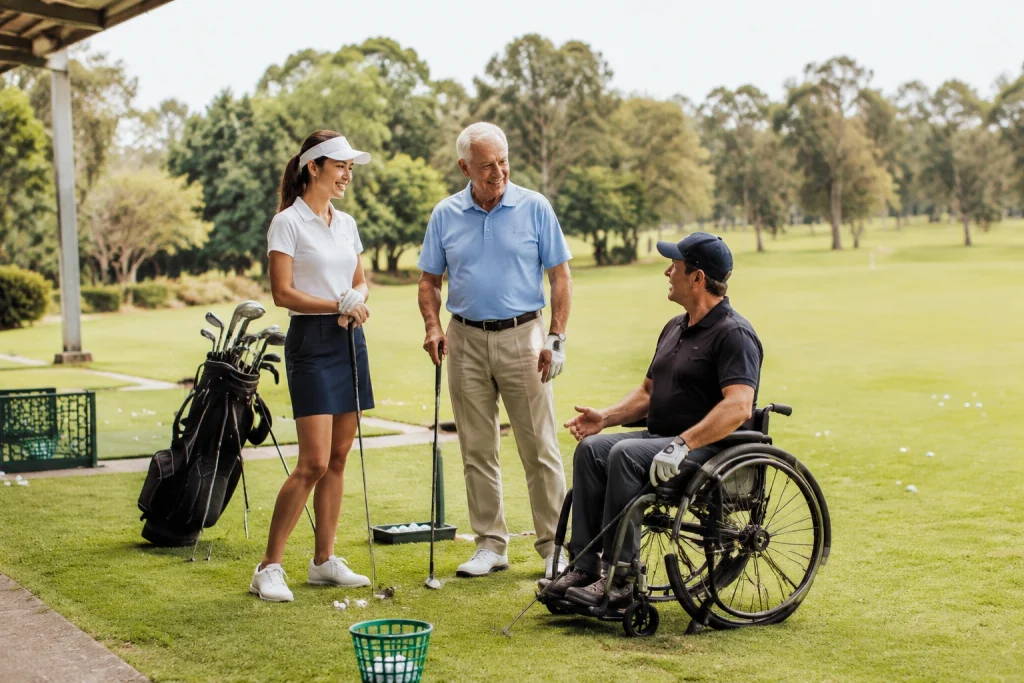
Many people with disabilities can participate through adapted instruction, equipment, course access, and modified rules.
The official R&A Rule 25 modifications for players with disabilities cover situations involving visual impairments, intellectual impairments, mobility devices, amputations, and other specific needs. These modifications help players compete fairly alongside golfers with or without disabilities. (Randa)
Depending on the golfer’s needs, adaptations may include:
- A seated or single-rider golf cart
- One-handed or modified swing techniques
- Clubs with adapted grips
- Assistance with alignment
- Permission to use certain mobility devices
- A guide or aide
- Modified stance and ball-position rules
- Shortened holes or target-based practice
The most important step is finding a facility and instructor familiar with adaptive golf. Course accessibility varies, so contact the facility before visiting to ask about paths, tee access, restrooms, carts, and practice areas.
Do You Need to Be Athletic to Play Golf?
You do not need exceptional strength, speed, or endurance to begin. Golf relies heavily on coordination, balance, rhythm, decision-making, and repeatable technique.
Physical strength can help generate clubhead speed, but strength alone does not create an effective golf swing. A smaller player with good timing may hit the ball more consistently than a stronger player who swings without control.
Different physical qualities support different parts of the game:
| Physical quality | How it helps | Beginner priority |
|---|---|---|
| Balance | Keeps the swing stable | High |
| Coordination | Helps the club meet the ball | High |
| Flexibility | Supports comfortable rotation | Moderate |
| Strength | Can improve speed and stability | Moderate |
| Endurance | Helps during longer rounds | Low at first |
| Fine motor control | Improves putting and short shots | High |
Players can improve these qualities gradually. Simple walking, balance exercises, mobility work, and controlled practice swings are often enough to support a beginner’s early development.
What Fitness Level Is Needed?
Your required fitness level depends on how you choose to play.
Hitting balls at a range requires less endurance than walking an 18-hole course. Playing nine holes with a cart may also be more manageable than carrying a full bag.
Beginners can reduce physical demands by:
- Starting with 30-minute practice sessions
- Using a push cart instead of carrying clubs
- Riding in a cart when necessary
- Playing nine holes
- Choosing a short par-3 course
- Taking rest and hydration breaks
- Avoiding repeated full-power swings
Stop playing if you experience sharp pain, dizziness, chest discomfort, or unusual shortness of breath. Do not try to swing through an injury.
Warm up with gentle rotations, hip movements, arm circles, and several slow practice swings before hitting full shots.
Do You Need to Be Competitive?
Golf can be competitive, social, recreational, or personal.
Some golfers play tournaments and maintain official handicaps. Others play to spend time outdoors, socialize with friends, improve their health, or challenge themselves.
You can enjoy golf without keeping a strict score. A beginner may pick up the ball after several attempts, move it away from a difficult bunker, or play only the shots that feel manageable.
Once you understand basic safety and etiquette, you can choose how seriously you want to approach the game.
Which Type of Golf Is Best for You?
Traditional 18-hole golf is only one option. Starting with a shorter format can reduce pressure, cost, and playing time.
| Golf format | Best for | Main advantage | Possible limitation |
|---|---|---|---|
| Driving range | Complete beginners | Practice without course pressure | Does not teach full course strategy |
| Putting course | Families and casual players | Easy and inexpensive introduction | Does not develop full-swing skills |
| Par-3 course | New and younger golfers | Short holes and fewer clubs needed | Limited driver practice |
| Nine-hole course | Busy adults and seniors | Shorter playing time | Not available at every facility |
| Executive course | Developing golfers | Mix of par-3 and shorter par-4 holes | Less long-game challenge |
| Full 18-hole course | Prepared beginners and regular players | Complete golf experience | Requires more time and endurance |
| Indoor simulator | Year-round practice | Controlled environment and shot data | Simulator results may differ outdoors |
A complete beginner will usually learn faster by combining range practice with short-course experience.
Choosing the Correct Tees
The teeing area determines the total length of the course. Longer tees are not automatically better or more respectable.
Playing from tees that are too long can lead to:
- Repeated long shots into greens
- More lost balls
- Slow play
- Higher scores
- Physical fatigue
- Less enjoyment
The USGA’s guidance for choosing the best tees uses 7-iron distance as one practical way to match a golfer with an appropriate course length. Tee selection should be based on playing ability and distance, not age or gender labels. (USGA)
Move forward when most holes require your longest clubs just to reach the green in regulation. Move back only when your current tees no longer provide a balanced challenge.
Does a Beginner Need a Handicap?
You do not need a handicap to take lessons, practice, or play casual golf.
A Handicap Index becomes useful when you want to:
- Track improvement
- Play in organized competitions
- Compare performance across courses
- Compete fairly against golfers of different abilities
The USGA Handicapping 101 guide explains that a golfer can establish a Handicap Index after posting scores covering 54 holes in an accepted combination of nine-hole and 18-hole rounds. (USGA)
A higher handicap does not mean you do not belong on the course. It simply reflects your current demonstrated playing ability.
What Equipment Does a New Golfer Need?
You do not need 14 clubs or a premium fitted set to start.
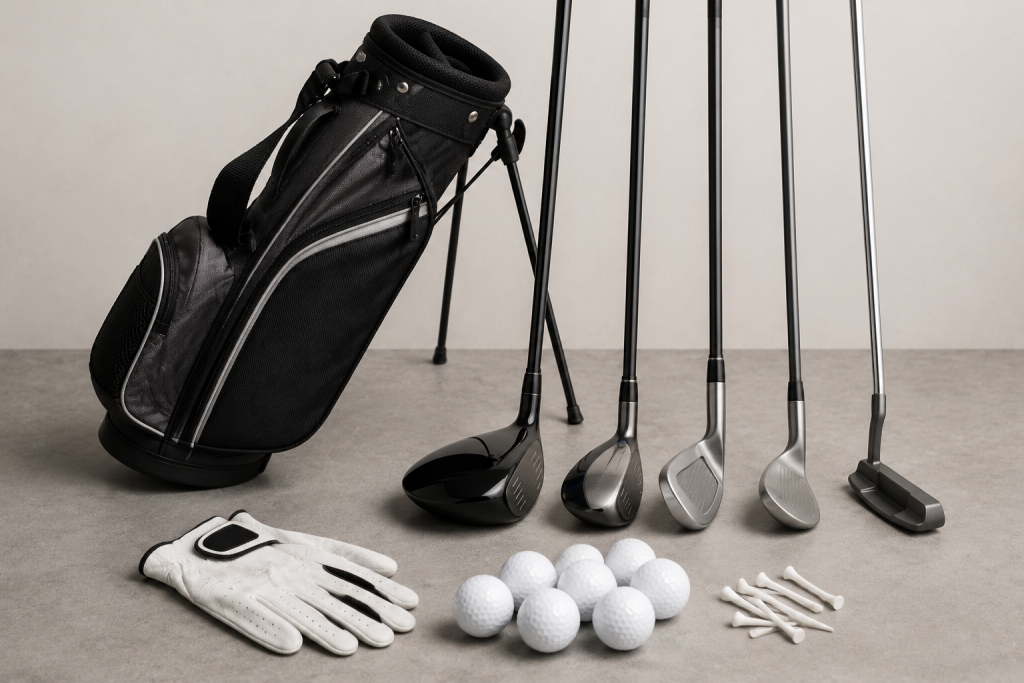
A practical beginner setup may include:
- Driver or fairway wood
- Hybrid
- Mid-iron
- Wedge
- Putter
- Golf bag
- Golf balls
- Tees
- Comfortable shoes
Many beginners can learn with five to eight clubs. A half-set is lighter, easier to understand, and often less expensive.
Cost, Quality, and Durability Considerations
Borrowed or rented clubs offer the lowest financial commitment. They are suitable for a first lesson or range visit, but the size and shaft may not fit you well.
Used clubs often provide the best value. Check the shafts for cracks, the clubheads for serious damage, and the grips for excessive wear.
Entry-level boxed sets are convenient because they include most essential clubs and a bag. Their components may be less refined, but they are usually sufficient for learning.
Premium equipment may offer better materials, fitting options, and construction quality. However, it will not correct poor setup, contact, or course strategy.
Avoid buying clubs based only on professional-tour advertising. Equipment designed for highly skilled players can be less forgiving for beginners.
Expert Tip:
Start with a lesson before buying a full set. A golf professional can identify suitable club length, shaft weight, grip size, and club type before you make an expensive mistake.
How to Start Playing Golf
Follow a gradual process instead of immediately booking a busy 18-hole round.
1. Visit a Practice Facility
Start at a driving range, putting green, or beginner practice area. Observe the facility rules and ask where new golfers should practice.
2. Rent or Borrow Clubs
Test the game before purchasing equipment. Make sure the clubs are generally appropriate for your height and preferred playing side.
3. Learn Safety and Etiquette
Know when it is safe to swing, where to stand, when to remain quiet, and how to avoid delaying other players.
4. Take an Introductory Lesson
A qualified instructor can help you build a safe grip, posture, alignment, and basic swing. The PGA of America coach directory allows golfers to search for coaches and programs specializing in beginners, juniors, improvement, and group instruction. (PGA of America)
5. Practice Short Shots First
Begin with putting, chipping, and controlled iron shots. These movements are easier to manage than full-speed drives and develop essential contact skills.
6. Play a Short Course
Try a par-3 course or nine-hole round during a quieter period. Use forward tees and pick up your ball when a hole becomes frustrating or delays the group behind you.
When to Get Help From a Golf Pro or Fitter
Professional guidance is useful when you are unsure whether a problem comes from technique, equipment, or physical limitations.
Consider working with a golf professional when:
- You repeatedly miss the ball
- Your shots cause pain
- You cannot control the direction of your shots
- You feel unsafe swinging independently
- You are preparing for your first course round
- You need adaptive instruction
- Online tips create conflicting swing thoughts
A professional fitting becomes more useful after you have developed a repeatable swing. However, an early basic assessment can prevent you from buying clubs that are clearly too long, short, heavy, stiff, or difficult to launch.
A full premium fitting is not necessary for every beginner. Start with a basic club evaluation and upgrade only when your swing and playing commitment justify the cost.
Common Mistakes Golfers Should Avoid
- Starting on a difficult course: Learn at a range, short course, or forward tee first.
- Swinging as hard as possible: Excessive effort often reduces balance and contact.
- Buying advanced clubs too soon: Low-forgiveness irons and extra-stiff shafts can make learning harder.
- Ignoring the short game: Putting and chipping influence scores more than many beginners expect.
- Playing from tees that are too long: Choose tees based on distance and ability, not pride.
- Practicing through pain: Pain can indicate poor movement, excessive repetition, or an unsuitable club.
- Standing too close to another golfer: Maintain a safe distance whenever someone is preparing to swing.
- Taking too many practice swings: Repeated full swings create fatigue and slow the group.
- Comparing yourself with experienced golfers: Measure progress through better contact, confidence, and decision-making.
- Waiting until you are “good enough” for a lesson: Early instruction can prevent difficult habits from becoming permanent.
FAQs
Is there an age limit for playing golf?
There is no general maximum age for recreational golf. Children, adults, and seniors can play using suitable clubs, tees, course lengths, and supervision.
Can an unfit person start playing golf?
Yes. Start with putting, short range sessions, a cart, or a nine-hole course. Increase walking and practice time gradually as your comfort improves.
Can someone play golf without joining a club?
Yes. Many public courses, driving ranges, par-3 courses, and indoor simulators allow visitors to pay for individual sessions or rounds.
Can people with back, knee, or shoulder problems play golf?
Some can play with adjusted technique, shorter swings, suitable equipment, and reduced walking. Persistent pain should be assessed before continuing full swings.
Do beginners need their own golf clubs?
No. Renting or borrowing clubs is sensible for the first few sessions. Buy clubs after confirming that you enjoy the game and understand what specifications may suit you.
Can women and men use the same golf clubs?
They can, provided the clubs fit the individual golfer. Club length, total weight, shaft flexibility, grip size, and swing characteristics matter more than marketing labels.
Can beginners play with experienced golfers?
Yes. Different abilities can play together by using suitable tees, maintaining pace, following safety rules, and applying handicaps when a fair competition is desired.
Conclusion
So, who can play golf? Almost anyone who can participate safely and use an appropriate playing format can enjoy the game.
Your age, strength, experience, or hitting distance does not determine whether you belong in golf. Children can learn through games, adults can begin at any stage of life, seniors can adjust course length and equipment, and golfers with disabilities can use adapted instruction and modified rules.
Start with a practice facility, a few suitable clubs, and a basic lesson. Choose tees that match your distance, focus on controlled contact, and increase the challenge gradually.
The smartest next step is not buying the most expensive equipment or attempting a full-length course. Book a beginner session, learn the essential safety rules, and discover which version of golf works best for you.