
When Should You Use a Wet Towel on the Golf Course?

Quick Answer
Use a wet golf towel when mud, grass, sand, or dried dirt will not come off a clubface with a dry wipe. A slightly damp section is also useful for cleaning a golf ball when the Rules allow it, while the USGA ball-cleaning rules explain when cleaning a lifted ball is permitted.
Use a wet towel when:
- Grooves are muddy: Moisture helps loosen soil and grass packed into the clubface.
- Morning dew is heavy: A damp cleaning section helps deal with wet grass stuck to irons and wedges.
- Sand sticks: Damp fabric can lift stubborn bunker residue before you dry the clubhead.
- Your ball is dirty: Use the towel only when the Rules permit you to lift and clean the ball.
- Dirt has dried: A little water softens debris that a dry towel tends to smear around.
The simple setup
- Keep one corner damp for clubheads and another section completely dry for grips, hands, and final drying.
A wet towel is most useful when a dry towel stops being enough. Muddy irons, grass-covered wedges, damp clubfaces, and dirty golf balls are the situations where a little moisture earns its place in your bag.
I prefer to think of the towel as two tools instead of one. One section handles dirty equipment, while a protected dry section handles anything that needs reliable grip or a final wipe.
In This Guide
When Should You Use a Wet Towel on the Golf Course?
You should use a wet towel when moisture will help remove debris more effectively than dry fabric. The most common examples are muddy clubfaces, grass-filled grooves, bunker residue, and dirt that has started drying onto an iron or wedge.
A wet golf towel does not need to be dripping. In most situations, what golfers call a wet towel works better when it is only damp.
Definition: A wet golf towel is a towel with one section deliberately dampened so a golfer can loosen and remove dirt, grass, sand, and other residue from equipment during a round.
Use it after muddy iron and wedge shots
Soft ground can leave a thin layer of soil across a clubface. A towel with a damp corner usually removes that film faster than repeatedly rubbing it with dry fabric.
- First: Wipe away loose grass and soil.
- Next: Rub the damp section across the face and grooves.
- Then: Use the dry section to remove remaining moisture.
- Finally: Put the club away only after the grip and shaft are dry.
This matters most with wedges and short irons, where clean contact is worth protecting. Golf Digest has also examined why keeping wedge grooves free of debris matters for consistent face-to-ball interaction.
Use it when grass collects in the grooves
Fresh grass often wipes away easily when it is still moist. Once it dries between grooves, you may need more pressure or a brush.
A quick damp wipe immediately after the shot is simpler. It also prevents you from returning a dirty club to the bag.
- Check the face before replacing the club.
- Wipe across the grooves with the damp section.
- Use a tee or suitable groove brush for stubborn debris.
- Finish with the dry portion of the towel.
Use it after bunker shots when residue sticks
Dry sand often brushes off without water. Damp sand can stick to the sole, leading edge, and grooves.
In that situation, a damp towel can be useful. Avoid soaking the entire club or putting a wet grip back into your bag.
Section Takeaway: Use moisture when dirt sticks rather than simply sitting on the surface. Keep the cleaning section damp and the grip section dry.
How Wet Should a Golf Towel Be?
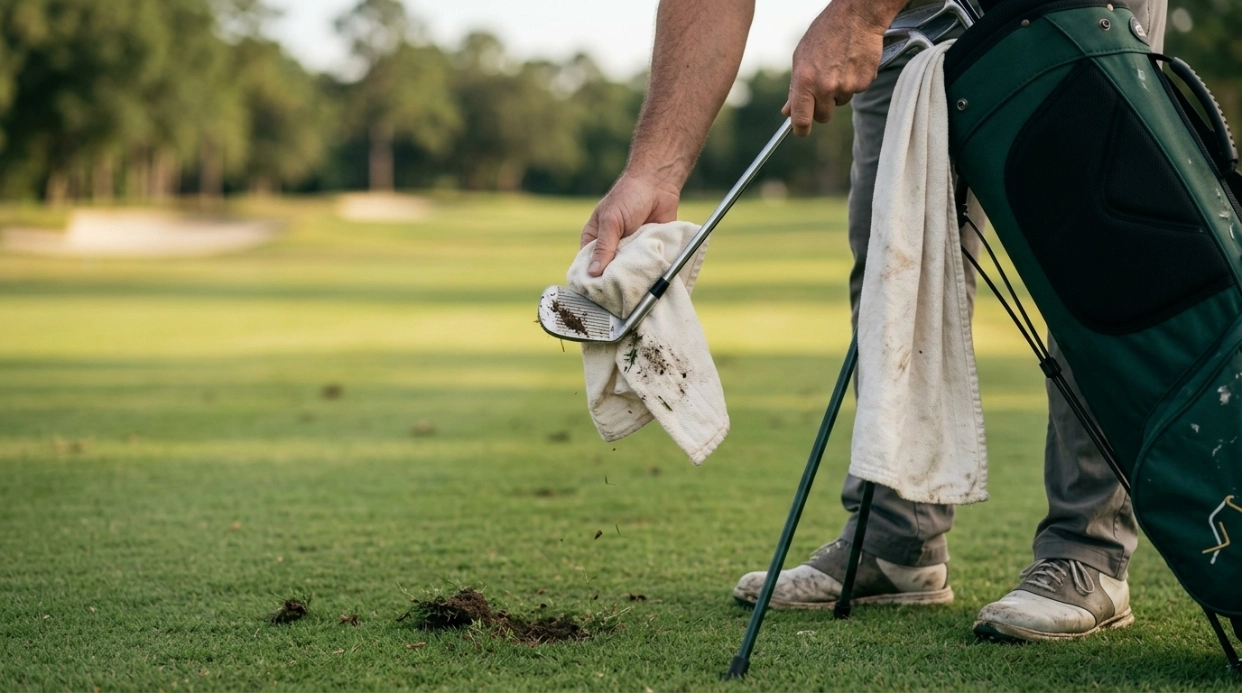
A golf towel should usually be damp enough to loosen dirt but not wet enough to drip. If water runs from the fabric when you squeeze it lightly, you probably used more than you need.
My preferred starting point is simple. Wet one corner before the round, wring it thoroughly, and leave most of the towel dry.
| Towel Condition | Best Use | Main Drawback |
|---|---|---|
| Dry | Grips, hands, light dust, final drying | Less effective on dried mud |
| Slightly damp | Routine clubface and groove cleaning | Needs a separate dry zone |
| Very wet | Heavy dried mud before thorough drying | Can spread moisture to grips and bag contents |
The slightly damp option works for most rounds. It gives you enough water to clean without turning the towel into another piece of wet equipment.
Why soaking the entire towel is usually a mistake
A soaked towel becomes heavier and leaves you without a reliable dry section. That creates problems when your hands, grips, or clubhead need drying later.
- Avoid pouring water across the whole towel.
- Wet only the bottom corner or one end.
- Wring the section firmly before attaching it to your bag.
- Keep the dry section folded away from the damp area.
On a hot day, that damp corner may dry during the round. Adding a small amount of water at a drinking station is usually enough to restore it.
What Should You Clean With a Wet Golf Towel?
The wet section is best reserved for surfaces that collect soil and debris. Clubheads are the obvious target, while golf balls can be cleaned only when the Rules permit.
Clubfaces and grooves
This is the main job. Use the damp section on irons and wedges whenever visible grass, soil, or sand remains after a shot.
Golf Digest has reported testing showing meaningful differences between clean and contaminated clubface conditions. That makes routine cleaning a sensible habit rather than something to save for the end of the round.
Golf balls
You can use a wet towel to clean your ball when you are allowed to clean it under the Rules. A ball lifted from the putting green may be cleaned, but Rule 14.1c includes several situations where cleaning elsewhere is restricted.
The R&A Rule 14 guidance gives the full wording. If you are unsure why the ball has been lifted, check the applicable Rule before automatically wiping it.
- On the putting green: A lifted ball may be cleaned.
- For identification: Cleaning is limited to what is needed to identify it.
- Checking for damage: Do not automatically clean it.
- Interference situations: Cleaning restrictions can apply.
- Checking a possible relief condition: Restrictions can also apply unless relief is then taken.
What should stay dry?
Your grips and hands belong on the dry side whenever possible. Moisture where your hands meet the club can make the next shot less comfortable and predictable.
PGA of America advice for hot-weather golf also recommends keeping grips clean and dry. Their summer golf guidance suggests keeping a towel nearby for that purpose.
- Keep grips away from the muddy towel section.
- Use a clean section for your hands.
- Use a separate face towel if possible.
- Dry shafts and clubheads before returning them to the bag.
Section Takeaway: Wet fabric is for dirty equipment. Dry, clean fabric should remain available for grips, hands, and final drying.


Wet Golf Towel vs. Dry Golf Towel: Which Should You Use?
You usually need both. A damp towel cleans stubborn debris, while a dry towel removes moisture and protects the parts of your equipment that you need to keep dry.
The mistake is treating the choice as either wet or dry. A two-zone system gives you both functions without carrying unnecessary gear.
| Situation | Wet/Damp Section | Dry Section |
|---|---|---|
| Mud on irons | Best first step | Final wipe |
| Wet grip | Avoid | Use |
| Grass in grooves | Useful for loosening debris | Finish and dry |
| Sweaty hands | Avoid | Use a clean area |
| Dirty ball when cleaning is allowed | Clean first | Dry before replacing |
If you carry two towels, the system becomes even easier. Make one the dirty cleaning towel and protect the second for rain, grips, hands, and other dry-only jobs.
Should You Wet Your Towel in Different Weather?
The best towel setup changes with course conditions. A dry summer fairway creates different cleaning problems from a muddy winter round.
Dry and dusty conditions
Start with a small damp corner rather than soaking the towel. Fine dust and dry soil often need only a little moisture.
- Keep most of the towel dry.
- Re-wet the cleaning corner only when needed.
- Shake loose sand off before rubbing the clubface.
Morning dew
Dew can leave grass clippings stuck across the face after almost every approach shot. A damp section works well, but the bigger priority is preserving enough dry material for grips.
This is one situation where I would consider carrying a second towel. The first towel can become wet quickly even without adding much water yourself.
Rainy rounds
During steady rain, deliberately wetting a large towel may be unnecessary. Your challenge changes from adding moisture to protecting something that remains dry.
- Keep a dry towel under the rain hood or inside the bag.
- Use an exposed towel for muddy clubheads.
- Protect grips before every shot.
- Rotate gloves if you carry spares.
Hot and humid weather
Humidity increases the value of a dedicated dry section for hands and grips. Don’t use the muddy club-cleaning portion on your hands simply because it is nearby.
A separate personal towel is cleaner and easier to manage. It also keeps sunscreen, sweat, and dirt away from the towel you use on equipment.
Section Takeaway: In dry weather, create moisture. In rain, protect dryness. Your towel strategy should respond to the condition you are missing.
What Is the Best Wet-and-Dry Towel Setup?
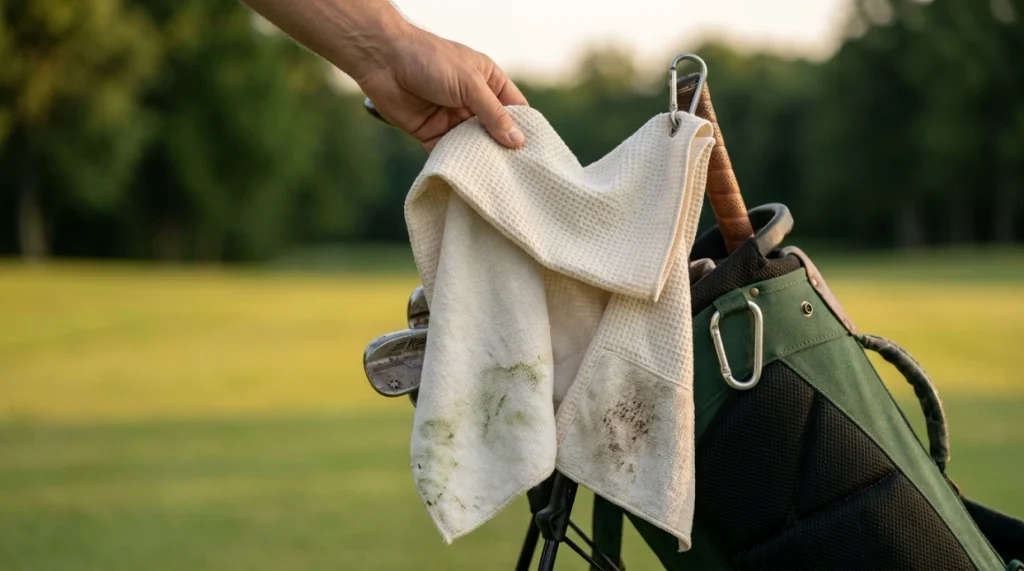
For most golfers in 2026, the easiest system is one large towel divided into damp, dirty, dry, and clean zones. A two-towel setup is even better when rain or heavy mud is likely.
Simple one-towel setup
- Wet one lower corner: Use only enough water to make it damp.
- Wring it firmly: The towel should not drip while hanging.
- Reserve that corner: Use it only on clubheads and permitted ball cleaning.
- Keep the opposite end dry: Use it for final drying and grips.
- Keep one clean area: Avoid dragging the entire towel through dirt or grass.
Better two-towel setup
Carry one towel for dirty club work and one protected towel for drying. This setup makes sense during rain, early-morning rounds, or soft-course conditions.
- Towel one: Damp club-cleaning towel.
- Towel two: Protected dry towel for grips and hands.
- Optional brush: Use for stubborn material trapped in grooves.
Don’t forget towel care after the round
A wet towel should not stay crumpled inside your golf bag. Remove it after the round and let it dry before storage.
Wash dirty towels regularly according to their care instructions. A fresh towel cleans better and keeps yesterday’s mud away from your equipment.
Section Takeaway: The ideal system separates cleaning from drying. Whether you use one towel or two, protect a clean, dry area throughout the round.
Frequently Asked Questions
Should I wet my golf towel before every round?
No. Wet one section when course conditions make dirt, grass, or mud likely to stick to your clubs. On a dry day, you can start with a dry towel and add water later if needed.
Should a golf towel be soaking wet?
Usually not. A slightly damp towel is easier to manage and still provides enough moisture for routine cleaning. A soaking towel becomes heavy and makes it harder to preserve a dry section for grips and hands.
Can I use a wet towel on my golf grips?
You can use moisture when deliberately cleaning grips away from play, but during a round your grip should be dry before the shot. Use a clean, dry towel to remove moisture from the grip and your hands.
Can I clean my golf ball with a wet towel?
Yes, when the Rules allow the ball to be cleaned. A ball lifted from the putting green may be cleaned, while Rule 14.1c includes specific situations elsewhere on the course where cleaning is limited or prohibited.
Is a wet towel better than a golf brush?
They solve slightly different problems. A damp towel handles surface dirt and fresh grass well, while a suitable brush can help remove stubborn debris lodged inside grooves.
Should I carry two golf towels?
Two towels are useful in rain, heavy dew, muddy conditions, or hot weather. Use one for dirty clubheads and protect the second for grips, hands, and drying duties.
Where should I keep the wet towel on my golf bag?
Attach or drape it somewhere easy to reach without letting it drag on the ground. Keep the damp section away from glove pockets and other items you want to stay dry.
The easiest rule to remember is simple: damp for cleaning, dry for gripping. Use a wet towel when debris needs moisture to come loose, then finish the job with a clean, dry section before your next shot.