
When Should You Clean Your Clubs With a Towel?

Quick Answer
Clean your golf clubs with a towel whenever grass, soil, sand, or moisture remains on the clubface after a shot. Irons and wedges usually need the most frequent attention, especially after turf or bunker contact, because debris can settle across the face and inside the grooves. A quick wipe after the shot is easier than dealing with dried dirt later, and clean wedge grooves matter for clean face-to-ball contact.
Clean the club now if:
- You took a divot: Wipe away soil and grass before they dry across the face.
- You played from sand: Remove loose bunker sand before returning the club to your bag.
- The turf is wet: Clear grass and moisture from irons and wedges after contact.
- The grooves look packed: Use a damp section to loosen debris, then dry the face.
- The grip feels damp: Switch to a separate clean, dry section of towel before swinging.
Simple check
- Look at the face before putting the club away. If you can see dirt, grass, sand, or standing moisture, wipe it now.
A golf towel does its best work when you use it during the round instead of waiting until you get home. I treat the towel as part of my normal shot routine, particularly with wedges and short irons.
You don’t need to polish every club after every swing. The goal is simpler: keep the hitting surface reasonably clean, keep moisture under control, and stop debris from building up over 18 holes.
In This Guide
- Why should you clean your clubs after certain shots?
- Exactly when should you wipe your clubs during a round?
- Which golf clubs need cleaning most often?
- Should you use a wet or dry towel on golf clubs?
- Can a dirty clubface affect your shots?
- How often should you deep-clean your clubs?
- Frequently asked questions
Why Should You Clean Your Clubs After Certain Shots?
You should wipe a club after a shot whenever visible debris or moisture remains on the hitting surface. Cleaning it immediately prevents grass, soil, and sand from drying onto the face while the club sits in your bag.
Definition: Cleaning a golf club with a towel means removing loose dirt, grass, sand, and moisture from the clubhead during play without performing a full soap-and-water cleaning.
Clean after a divot
Iron and wedge shots often bring the clubhead into direct contact with the ground. A normal divot can leave damp soil and grass spread across several grooves.
I prefer to deal with that mess before the club goes back into the bag. One wipe with a slightly damp section usually removes fresh debris far more easily than waiting until it dries.
- Light grass: A dry towel is normally enough.
- Damp soil: Use the moist section first and finish with the dry section.
- Packed grooves: Wipe firmly and inspect the grooves before putting the club away.
Clean after bunker shots
Bunker sand can spread across the sole, face, and grooves of a wedge. I wipe the club before it goes near the other clubs because loose sand can travel surprisingly far inside a bag.
A towel removes most loose sand quickly. If material remains packed inside the grooves, save the more detailed cleaning for a suitable moment rather than holding up play.
Clean after wet-weather shots
Rain and morning dew create a different problem. The club may look clean while still carrying a thin layer of water across the face.
Use a dry part of your towel after wet shots and before storing the club. Keeping grips dry deserves even more attention because moisture where your hands meet the club can interfere with your hold.
Section Takeaway: Clean a club after any shot that leaves visible dirt, sand, grass, or moisture instead of following an arbitrary every-shot rule.
Exactly When Should You Wipe Your Clubs During a Round?
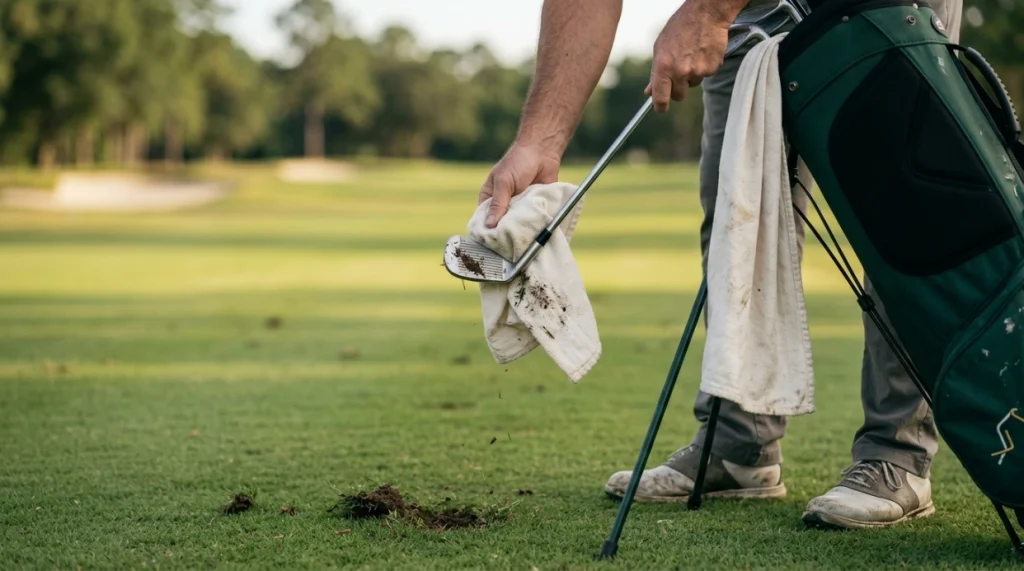
The best time is usually immediately after the shot, once you’re safely out of another player’s way. The debris is fresh, the club is already in your hand, and the job takes little effort.
Before a shot, inspect the face again if the club has been exposed to rain, wet grass, sand, or dirt. A quick check is especially useful with wedges and short irons.
| Situation | Clean Now? | Best Towel Method |
|---|---|---|
| Iron shot from a dry fairway with a clean face | Only if debris is visible | Quick dry wipe |
| Wedge shot that removes a divot | Yes | Damp wipe, then dry |
| Bunker shot | Yes | Remove loose sand, then inspect grooves |
| Shot from wet rough or morning dew | Yes | Clean dirty face and finish dry |
| Driver used from a clean tee | Usually not necessary | Wipe only for moisture, grass, or marks |
| Grip exposed to rain or sweat | Before the next swing | Use a separate clean, dry section |
A simple routine works better than constantly thinking about club maintenance. Look at the clubface after the shot, wipe when necessary, then return the club to the bag.
In 2026, I still see no reason to turn basic towel use into a complicated ritual. The visible condition of the club tells you when it needs attention.
Section Takeaway: The ideal cleaning moment is right after a dirty or wet shot, with a second quick inspection before your next swing when conditions demand it.
Which Golf Clubs Need Cleaning Most Often?
Wedges and irons usually need towel cleaning more often than drivers, fairway woods, hybrids, or putters. They contact turf and sand more frequently, so their faces collect more debris.
Wedges
I pay closest attention to wedges because they regularly deal with turf, rough, sand, and wet lies. Their faces can collect debris after a single short-game shot.
Check the grooves whenever you see soil or grass across them. The USGA Equipment Rules also show how specifically clubface grooves and impact-area markings are defined within equipment standards.
Irons
Mid- and short-irons deserve a quick inspection after most turf-contact shots. Longer irons may stay cleaner when you make shallow contact from firm conditions.
The club doesn’t need to look new between swings. You just want the face free from obvious material that came from the previous shot.
Woods, hybrids, and putters
Drivers normally need fewer wipes because they’re commonly hit from a tee. Fairway woods and hybrids need more attention when used directly from wet turf or rough.
- Driver: Check for moisture, tee marks, and grass rather than cleaning automatically.
- Fairway wood: Wipe after dirty or wet turf contact.
- Hybrid: Treat it much like an iron when playing from rough or soft ground.
- Putter: Keep the face clean and dry, especially on wet or freshly cut greens.


Should You Use a Wet or Dry Towel on Golf Clubs?
A slightly damp towel is best for loosening dirt, while a dry towel is better for removing moisture and finishing the clubface. The most useful setup gives you access to both during the round.
I like to dampen only one section before teeing off. That keeps the rest available for drying clubheads, hands, and grips.
Use the damp section for dirt
Fresh mud usually wipes away with little effort when the fabric is lightly moist. You don’t need a dripping towel, and excess water only makes it harder to preserve a clean dry area.
- Press the damp fabric against the dirty area.
- Wipe across the face and grooves.
- Inspect for remaining grass, soil, or sand.
- Finish with a separate dry section.
Protect the dry section
Don’t use the same muddy corner of the towel on your grips. Reserve a clean section for anything your hands touch.
During rainy rounds, I prefer keeping an additional dry towel protected inside the bag. Once an exposed towel becomes saturated, it loses much of its usefulness for drying grips.
The R&A Rules of Golf resources are also worth keeping available when questions arise about equipment or what you may do during play.
Section Takeaway: A damp-and-dry system covers both jobs: loosen dirty material first, then leave the clubface and grip dry.
Can a Dirty Clubface Affect Your Shots?
A dirty clubface can change the conditions where the ball contacts the club. Grass, mud, sand, and water can sit between the ball and the face instead of leaving that contact area clear.
This is one reason I care most about cleaning wedges and irons after messy shots. A towel cannot fix your swing, but it can remove a variable that doesn’t need to be there.
Grooves deserve attention
Grooves are not decorative lines. Golf’s equipment standards regulate their dimensions and characteristics, which tells you how deliberate clubface design is.
You don’t need to measure grooves during a casual round. You do need to notice when several of them are visibly packed with dirt or grass.
- Loose grass: Wipe it away before it becomes compressed.
- Wet soil: Remove it while it is still soft.
- Sand: Clear the face before returning the club to the bag.
- Standing water: Finish with a dry section of towel.
Cleaning helps your routine stay consistent
There is another practical benefit: you begin each shot knowing what condition the face is in. That’s easier than wondering whether the previous bunker, rough, or muddy lie left something behind.
I also find the routine easy to remember because it happens in the same order. Make the shot, check the face, wipe if needed, and put the club away.
You don’t need aggressive scrubbing during play. Save soap, soaking, and detailed groove work for a proper cleaning session after the round.
Section Takeaway: Towel cleaning won’t create a better swing, but keeping the hitting surface clear removes avoidable dirt and moisture from the next shot.
How Often Should You Deep-Clean Your Clubs?
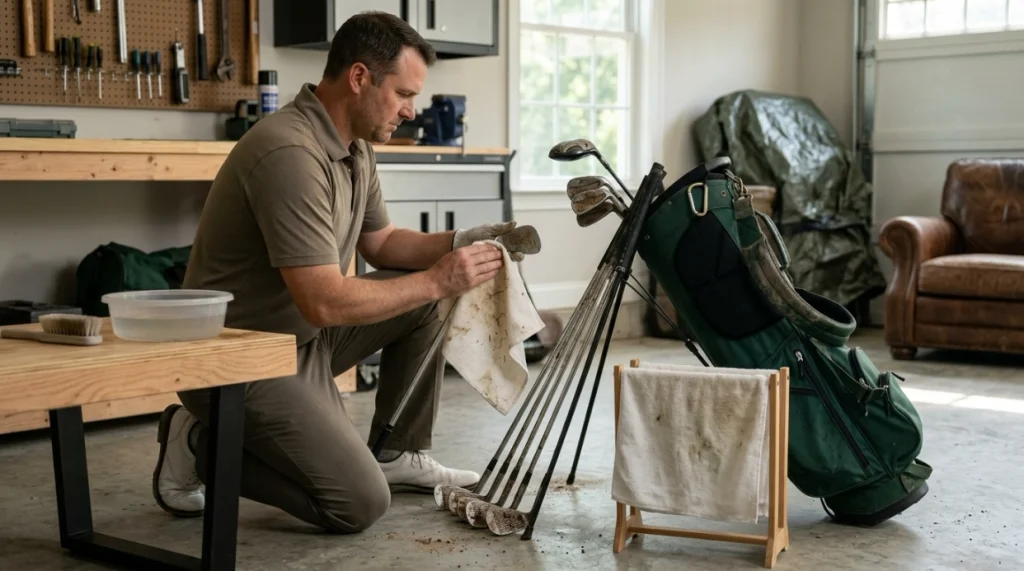
A towel is for maintenance during the round, while deeper cleaning deals with dirt that quick wiping misses. How often you need that deeper clean depends on course conditions and how frequently you play.
I inspect the clubs after the round rather than following a rigid calendar. Muddy, sandy, or rainy rounds justify cleaning sooner than a dry round on firm turf.
A practical cleaning schedule
- During the round: Wipe visible grass, soil, sand, and moisture as they appear.
- After a dirty round: Check the full set and clean any material the towel did not remove.
- After rain: Dry clubheads, shafts, grips, and other wet equipment before storage.
- Periodically: Inspect grooves, ferrules, grips, and clubheads while cleaning the set.
Don’t store clubs with wet towels wrapped around them or trapped inside a closed bag. Remove the towel afterward so both the towel and equipment can dry properly.
Cleaning is also a convenient time to notice loose parts, damaged grips, unusual marks, or other maintenance concerns. For official rules and equipment information, use established sources rather than relying on guesses from the course.
The simplest system is still the one I recommend: maintain the clubs as you play, then handle the detailed cleaning at home. That approach keeps the on-course routine quick.
Frequently Asked Questions
Should I wipe my golf club after every shot?
You don’t have to wipe every club automatically after every shot. Wipe it whenever you see grass, soil, sand, or moisture, with wedges and irons generally needing attention more often than drivers or putters.
Should I clean my grooves after every wedge shot?
Inspect the wedge after each shot that contacts turf, rough, or sand. If debris is sitting across or inside the grooves, remove it before the wedge goes back into your bag.
Is a dry towel enough to clean golf clubs?
A dry towel works well for loose grass, dust, sand, and moisture. For sticky soil or dried mud, a slightly damp section usually makes cleaning easier before you finish with a dry section.
Can I use the same towel on my grips and clubheads?
Yes, but keep separate sections for each job. Use the dirtier area on clubheads and reserve a clean, dry section for grips and hands so you don’t transfer mud or moisture onto them.
When should I clean my clubs during a rainy round?
Wipe the clubhead after wet shots and dry the grip before you swing whenever necessary. Keep a protected dry towel available because your exposed towel may eventually become too wet to dry grips effectively.
Do woods and drivers need towel cleaning too?
Yes, but usually less often than irons and wedges. Clean a driver, fairway wood, or hybrid whenever the face collects moisture, grass, soil, or other visible debris.
Should I fully wash my clubs during a round?
Usually no. A towel is enough for routine on-course maintenance, while detailed cleaning can wait until after the round unless heavy debris needs immediate attention.
The practical takeaway is simple: clean your club with a towel whenever the previous shot leaves something on the face that you don’t want there for the next one.
Keep one towel section slightly damp, protect another section for drying, and give wedges and irons a quick look after turf or sand contact. Make that habit automatic, and club cleaning stays fast instead of becoming another chore at the end of 18 holes.