
Should You Clean Your Club After Every Shot?

Quick Answer
Yes, I recommend cleaning your clubface after almost every shot, especially with irons and wedges. A quick wipe removes grass, soil, sand, and moisture before they build up in the grooves, and clean grooves can matter for wedge spin and contact. Woods and putters usually need cleaning only when the face becomes dirty or wet.
Simple On-Course Routine
- Check the face: Look for grass, mud, sand, or visible moisture after the shot.
- Wipe immediately: Use the damp section of your golf towel before returning the club to your bag.
- Clear the grooves: Use a brush or tee when packed debris remains after wiping.
- Finish dry: Remove excess moisture before storing the club.
- Protect the grip: Keep a separate clean, dry towel section for grips and hands.
Easy Rule to Remember
- Wipe irons and wedges routinely. Inspect woods and putters, then clean them whenever you see dirt or moisture.
I make club cleaning part of the shot rather than a chore for later. It takes only a few moments, and it keeps yesterday’s dirt from becoming today’s problem.
This guide explains when you should clean a club after every shot, when you can skip it, and how I manage my golf towel during a round.
In This Guide
Should You Clean Your Club After Every Shot?
For irons and wedges, cleaning after each shot is a smart routine. You don’t need a full scrub, but you should remove visible debris before putting the club away.
The key word is routine. Cleaning becomes easier when you do it before dirt dries inside the grooves.
- Fairway shot: A quick dry or slightly damp wipe is often enough.
- Wet rough: Remove grass and moisture immediately.
- Muddy lie: Use a damp towel, then check each groove.
- Bunker shot: Remove sand before the club goes back into your bag.
- Practice range: Check the face every few shots or whenever buildup appears.
I pay the most attention after wedge shots from damp turf. Those shots can leave a surprising layer of soil and grass across the face.
Leaving that material there means the next ball may contact a surface that isn’t as clean as it could be. That’s an avoidable variable.
Club-cleaning definition: On-course club cleaning means removing dirt, grass, sand, and moisture from the clubface and grooves before the club’s next use.
You don’t need to obsess over a spotless crown, sole, or shaft after every swing. The impact area is the priority.
Section Takeaway: Make a quick clubface check part of every iron and wedge shot. Clean visible debris before it dries or gets packed deeper into the grooves.
Why Does a Clean Clubface Matter?
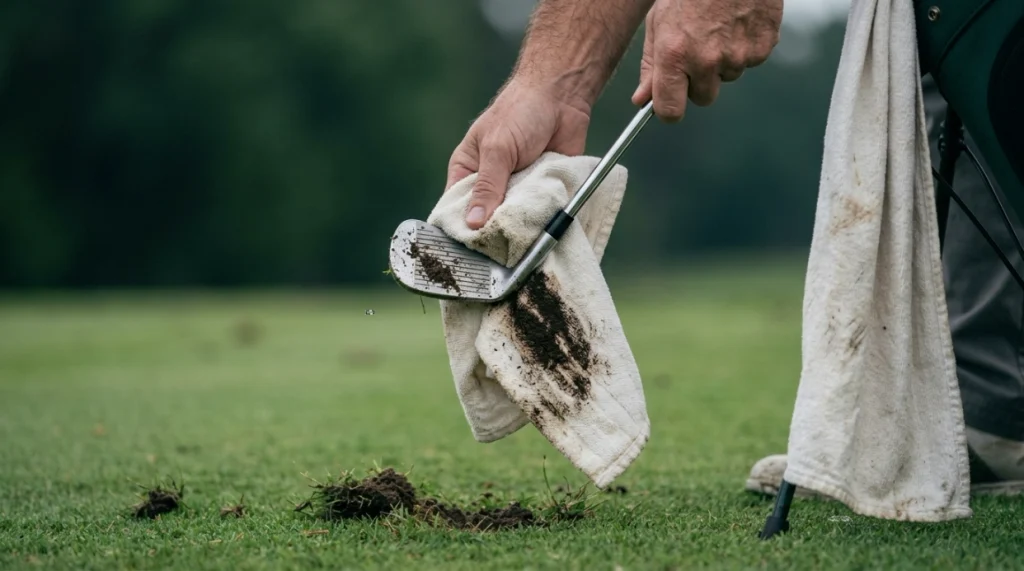
A clean clubface gives the ball and clubface a more consistent contact surface. Dirt, moisture, and grass can interfere with that contact.
Grooves are especially important on lofted clubs. They help manage moisture and debris around the impact area.
The USGA Equipment Rules for clubfaces specify requirements for groove width, spacing, depth, and shape.
- Maximum groove width: 0.035 inches, or 0.9 mm.
- Minimum edge-to-edge spacing: 0.075 inches, or 1.905 mm, subject to the additional width-based requirement.
- Maximum groove depth: 0.020 inches, or 0.508 mm.
Those numbers aren’t a cleaning specification. They show how small and precisely regulated these clubface features are.
Packed grass or soil can easily sit across several grooves. That’s why I inspect wedges instead of assuming one towel swipe solved everything.
Does a dirty clubface really reduce spin?
It can, particularly with lofted clubs and moisture involved. The exact effect depends on the club, lie, strike, ball, and amount of contamination.
A Golf Digest test published in 2024 found almost twice as much spin from clean grooves versus dirty grooves with a lob wedge in its specific full-shot test. Golf Digest revisited the issue in 2026 and again emphasized cleaning wedge grooves between shots.
I wouldn’t turn one test into a guaranteed number for every golfer. I would take the practical lesson seriously: starting with a clean face removes one unnecessary source of inconsistency.
- Cleaner contact: Less material sits between the ball and clubface.
- More predictable grooves: Debris is less likely to block the face markings.
- Easier maintenance: Fresh dirt wipes away more easily than dried mud.
- Better inspection: A clean face makes damage and wear easier to notice.
Section Takeaway: Cleaning won’t fix a poor strike, but it helps your equipment start each shot in a consistent condition.
Which Clubs Need Cleaning Most Often?
Wedges and short irons deserve the closest attention because they often contact turf, sand, and moisture. Long irons also need routine wiping after ground contact.
Drivers, fairway woods, hybrids, and putters usually collect less packed soil. I still inspect them whenever conditions are wet.
| Club Type | Typical On-Course Contamination | My Cleaning Routine | Useful Tool |
|---|---|---|---|
| Wedges | Soil, grass, sand, moisture | Inspect and wipe after every shot | Damp towel plus brush when needed |
| Short and Mid Irons | Turf, dirt, moisture | Wipe after most shots | Golf towel |
| Long Irons and Hybrids | Grass, soil, moisture | Inspect after turf contact | Golf towel |
| Fairway Woods | Grass, light soil, moisture | Wipe when visibly dirty or wet | Soft towel |
| Driver | Tee marks, moisture, light debris | Inspect regularly | Soft towel |
| Putter | Moisture, grass, sand, soil | Keep face clean and dry | Clean dry towel section |
A bunker shot changes my routine immediately. Sand gets removed before the wedge disappears into the bag.
On a dry tee box, my driver may need nothing more than a quick look. There’s no benefit in scrubbing a clean face simply to follow a rule.
The R&A Equipment Rules also document the standards governing clubface markings and other equipment features.


What Is the Best Way to Clean a Club Between Shots?
The best on-course method is simple: loosen the debris, wipe the face, inspect the grooves, and dry the club if necessary.
You don’t need soap or a bucket between shots. A correctly prepared golf towel handles most routine cleaning.
- Inspect the clubface. Look for mud, grass, sand, and moisture.
- Use a damp towel section. Wipe across the face before debris dries.
- Check the grooves. Look closely at wedges and irons after wet or sandy shots.
- Clear stubborn material. Use a suitable club brush or a tee gently when needed.
- Finish with a dry section. Remove leftover water before returning the club to your bag.
I usually dampen only part of my towel before the round. The rest stays protected for drying clubs, grips, and hands.
That split matters on humid mornings. A fully soaked towel gives you nowhere dry to go later.
Pro tip: If you’re unsure whether equipment condition or technique is affecting your shots, ask a certified PGA professional or qualified club fitter to inspect both.
At home, you can do a deeper cleaning with water, a suitable brush, and careful drying. Avoid leaving wet clubheads sealed inside headcovers.
Regular small cleanups reduce the amount of heavy cleaning needed later. That is one reason I prefer the after-shot habit.
Section Takeaway: Clean fresh debris immediately, reserve a dry towel zone, and save aggressive scrubbing for situations that genuinely need it.
Golf Towel vs. Brush vs. Tee: Which Should You Use?
A towel should be your first tool for routine cleaning. A brush handles stubborn material, while a tee can clear an individual groove in a pinch.
I carry a towel on every round and treat the brush as backup. That setup covers most normal course conditions.
| Cleaning Tool | Best Use | Main Advantage | Limitation |
|---|---|---|---|
| Damp Golf Towel | Routine dirt, grass, and moisture | Fast and gentle | May not remove packed debris |
| Golf Brush | Packed dirt in grooves | More targeted cleaning | Needs careful use around finishes |
| Golf Tee | One or two clogged grooves | Already in most golf bags | Slow for a whole clubface |
| Dry Towel | Moisture and final drying | Keeps grips and faces dry | Poor on dried mud by itself |
For most golfers, the towel does the majority of the work. Golf Digest also recommends keeping a towel accessible and wiping the clubface regularly.
You can see examples of common towel styles in its golf accessories and towels coverage.
Avoid using sharp objects to scrape grooves. The goal is removing debris, not altering the clubface.
How Should You Set Up Your Golf Towel?
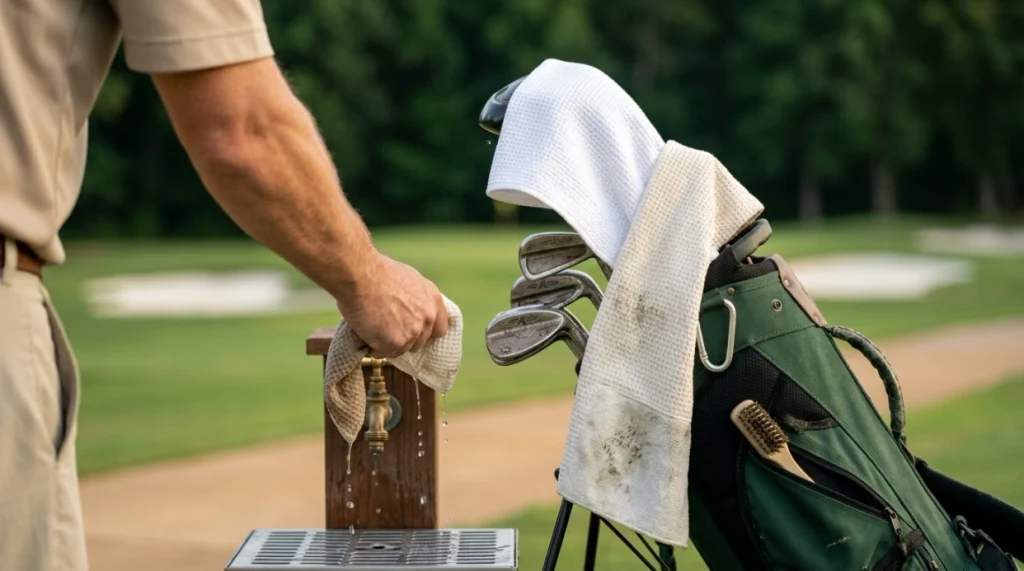
A good towel setup gives you both a dirty cleaning area and a protected dry area. I find this more useful than treating the entire towel the same way.
As of 2026, microfiber, waffle-weave, cotton, caddie, tri-fold, magnetic, and wet/dry towels are all common options. The best style depends on how you carry your bag and the conditions you play.
- Damp zone: Use it for mud, grass, and dirty clubheads.
- Groove zone: Reserve a textured area for stubborn debris.
- Dry zone: Use it for final drying after cleaning.
- Clean zone: Protect this area for grips and hands.
On dry summer rounds, a compact towel may be enough. Wet autumn mornings make me appreciate a larger towel with more protected dry surface.
Attachment matters too. A towel that falls off or sits at the bottom of the bag won’t become part of your shot routine.
How often should you wash a golf towel?
Wash it whenever dirt, odor, sunscreen, or grass buildup makes it unpleasant or ineffective. Heavy use in muddy conditions may justify washing after the round.
Follow the manufacturer’s care label because microfiber and cotton products can have different instructions. Avoid assuming every towel handles heat or fabric treatments the same way.
- After muddy rounds: Wash sooner rather than letting soil dry into the fabric.
- After rain: Let the towel dry fully before storing it.
- During regular play: Rotate clean towels if you play several times each week.
- Before storage: Make sure both the towel and bag are dry.
Section Takeaway: Divide the towel into working zones and keep at least one section clean and dry throughout the round.
Frequently Asked Questions
Do professional golfers clean their clubs after every shot?
You’ll commonly see tour players and caddies wipe clubfaces frequently, particularly after iron and wedge shots. The exact routine varies, but keeping grooves and impact areas free from visible debris is a normal part of tournament equipment care.
Should I clean my irons after every shot?
Yes, I recommend checking and wiping irons after each shot that contacts turf. It takes little time and prevents grass, dirt, and moisture from staying on the face until the next swing.
Should I clean my wedge grooves after every shot?
Wedges deserve the most frequent groove checks, especially after shots from rough, wet turf, bunkers, or muddy lies. A towel may be enough, but use a suitable brush when debris remains packed in the grooves.
Do I need to clean my driver after every drive?
Not necessarily. Check the face for moisture, dirt, or other residue and wipe it when needed. A driver hit from a clean tee usually requires less cleaning than a wedge striking wet turf.
Can I clean golf clubs with only a dry towel?
Yes, when you’re removing light grass, dust, or moisture. Dried mud and packed soil are easier to remove with a damp towel section, followed by a dry wipe.
Can dirty grooves damage my golf clubs?
Routine dirt isn’t the same as structural club damage, but leaving clubs dirty and wet makes maintenance harder. Cleaning also lets you inspect the face, grooves, finish, and other areas more easily for wear or damage.
Should I use the same towel for clubs, grips, and hands?
You can use one large towel if you keep separate zones. I reserve the dirty or damp section for clubheads and protect a clean, dry section for grips and hands.
Bottom line: You don’t need to polish every club after every swing, but checking the face should become automatic. I wipe irons and wedges after most shots, clear packed grooves when needed, and keep a dry towel section ready for grips.
Try that routine during your next round. By the back nine, cleaning the club before it returns to the bag should feel as normal as replacing a divot or checking your yardage.