
What Golf Towel Material Is Best for Wet Clubs?

Quick Answer
Waffle-weave microfiber is the best golf towel material for wet clubs in most conditions. It handles mud and grass well, dries faster than thick cotton, and stays manageable when repeatedly dampened during a round. For broader golf equipment guidance, the PGA of America is also a useful resource.
Best Choices for Wet Clubs
- Best overall: Waffle microfiber combines cleaning texture, low bulk, and relatively quick drying.
- Best for heavy rain: A larger microfiber towel gives you enough fabric for separate damp and dry zones.
- Best for absorption: Cotton terry holds plenty of moisture but becomes heavier once saturated.
- Best for mud: A textured waffle surface helps loosen grass and soft soil from clubfaces.
- Best two-towel setup: Use microfiber for clubheads and keep a second clean towel dry for grips and hands.
Simple Wet-Weather Setup
- Dampen one part of the towel for cleaning, while protecting another section for final drying.
Wet clubs make towel choice matter more than dry clubs do. Mud, morning dew, wet grass, and bunker residue can quickly turn the wrong towel into a soggy rag.
I prefer waffle microfiber when the course is soft or rain is expected. This guide explains why it works, where cotton still wins, and how to keep a towel useful for all 18 holes.
In This Guide
- What Golf Towel Material Is Best for Wet Clubs?
- Why Do Wet Clubs Change Which Towel Material Works Best?
- Is Microfiber or Cotton Better for Wet Golf Clubs?
- Does Waffle Weave Matter for Mud and Club Grooves?
- How Should You Use a Golf Towel in Wet Conditions?
- How Should You Wash a Wet-Weather Golf Towel?
- Golf Towel Material FAQs
What Golf Towel Material Is Best for Wet Clubs?
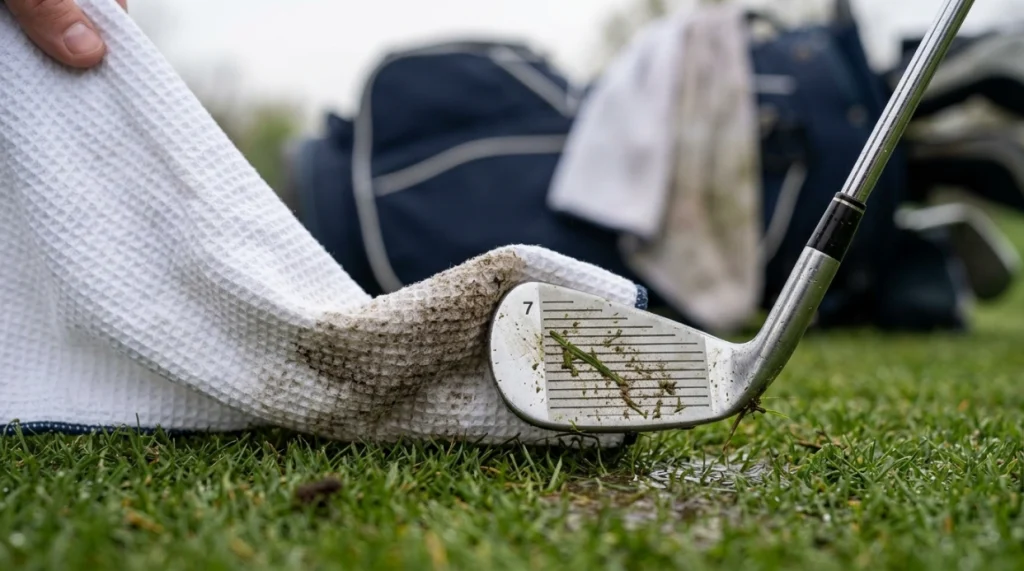
Waffle-weave microfiber is my first choice for wet golf clubs. It combines useful cleaning texture with lower bulk and faster drying than thick cotton terry.
The advantage becomes clear after a few shots from wet turf. Your iron may carry grass, damp soil, and water across the face at the same time.
Definition: A microfiber golf towel uses extremely fine synthetic fibers, commonly polyester-based or polyester-polyamide blends. A waffle weave describes the textured grid construction, not the fiber itself.
Why microfiber works when clubs stay damp
Microfiber gives me enough texture to wipe loose mud without carrying a thick towel. It also remains easier to manage after repeated contact with water.
- Lower bulk: It provides a useful cleaning surface without the volume of heavy terry.
- Quick drying: Lightweight microfiber usually releases moisture faster than thick cotton.
- Useful texture: Waffle constructions help lift grass and soft dirt from the clubface.
- Easy wet-zone setup: One area can stay damp while another remains available for drying.
- Walking-friendly: It adds less wet bulk to a carry or stand bag.
On damp morning rounds, I wet one corner before reaching the first tee. That section cleans irons while the opposite end stays protected for drying.
That simple setup usually matters more than fancy towel hardware. A towel is useful only while you still have a clean working area.
Section Takeaway: Waffle microfiber gives wet-weather golfers the strongest balance of scrubbing texture, manageable weight, and drying speed.
Why Do Wet Clubs Change Which Towel Material Works Best?
Wet clubs create both a cleaning problem and a moisture-control problem. Your towel must remove debris without becoming completely saturated halfway through the round.
Dry dust often needs only a quick wipe. Wet soil can stick across grooves, soles, and the leading edge.
Moisture makes dirt cling to the clubface
Soft turf can leave a thin layer of soil after an iron shot. Grass clippings then stick to that damp surface instead of falling away.
- Wet grass: Often clings around grooves and the sole.
- Soft mud: Needs a damp cleaning area before a final dry wipe.
- Sand: Should be removed rather than repeatedly rubbed across the finish.
- Morning dew: Creates moisture even when no rain is falling.
A saturated towel loses versatility
A towel can absorb plenty of water and still be inconvenient. Once every section becomes wet, you lose a reliable area for final drying.
That matters most around grips and hands. I never use the muddy club-cleaning section for those jobs.
As of 2026, microfiber, cotton, and synthetic blends remain common golf-towel options. Construction matters as much as the fiber label.
Section Takeaway: Wet-weather performance depends on how well a towel balances cleaning, moisture control, drying, and separate working zones.
Is Microfiber or Cotton Better for Wet Golf Clubs?
Microfiber is usually better for repeatedly cleaning wet clubs, while cotton excels at soft, high-volume moisture absorption. Neither material is automatically best for every golfer.
| Material | Typical Construction | Wet-Club Cleaning | Drying Tendency | Best Fit | Main Tradeoff |
|---|---|---|---|---|---|
| Waffle microfiber | Fine synthetic fibers with grid texture | Excellent for grass and soft mud | Generally fast | Rain, dew, walking golf | Fine debris may cling until washed |
| Cotton terry | Natural cotton with raised loops | Good when dampened | Slower when thick | Cart bags and heavy moisture | Can become heavy when saturated |
| Smooth microfiber | Fine synthetic fibers with flatter face | Good for moisture and light dirt | Generally fast | General wiping | Less scrubbing texture |
| Synthetic blend | Mixed synthetic fiber construction | Varies by weave | Varies by thickness | General-purpose use | Material label reveals little about texture |
When cotton makes more sense
Cotton terry feels soft and substantial. Its raised loops also provide plenty of fabric for handling water.
I like cotton more on a riding cart than a carry bag. The extra wet weight matters less when I am not carrying everything.
Why material labels can mislead you
Two microfiber towels can perform differently because their thickness and weave differ. The same applies to two cotton towels.
Look beyond the fiber name. Texture, size, edge construction, attachment method, and washing instructions all affect usefulness.
Section Takeaway: Choose waffle microfiber for repeated wet-club cleaning and cotton when softness and moisture capacity matter more than drying speed.


Does Waffle Weave Matter for Mud and Club Grooves?
Yes, waffle weave is particularly useful when clubs collect wet grass and mud. Its raised and recessed grid adds mechanical cleaning texture without requiring thick terry loops.
The weave should not be confused with the material. A towel can use microfiber fibers and a waffle construction at the same time.
How the texture helps
- Raised edges: They create extra contact with grass and soft debris.
- Recessed areas: They give loosened dirt somewhere to move during wiping.
- Low pile: Waffle microfiber avoids some of the bulk found in plush terry.
- Compact storage: The towel can offer texture while still folding relatively flat.
A towel still cannot remove every packed particle from a groove. Stubborn debris may need water and an appropriate club brush.
Avoid grinding trapped sand repeatedly across a clubhead. Shake or rinse heavily contaminated fabric before continuing.
What about terry texture?
Terry uses raised loops instead of a waffle grid. Those loops create a plush surface that works well for water and general wiping.
However, grass and grit can lodge inside deeper loops. That is another reason I keep heavily soiled fabric away from grips.
How Should You Use a Golf Towel in Wet Conditions?
The best wet-weather method is to create separate damp, dirty, and dry zones. A good towel can fail if every part gets used for the same job.
- Dampen one section: Use clean water so this area can loosen mud and dried grass.
- Wipe the clubface: Remove loose debris before rubbing harder.
- Check the grooves: Look for trapped grass, soil, or sand.
- Finish with a dry zone: Use clean fabric for the final wipe.
- Protect your grip towel: Keep muddy sections away from grips and hands.
Should you carry two towels in rain?
I recommend two towels when persistent rain is likely. One can handle dirty clubheads while the second remains protected for grips and hands.
Keep the clean towel under a rain hood or another protected area. A dry grip towel is far more useful than two exposed wet towels.
Remember the Rules when cleaning your ball
A towel can clean golf balls, but cleaning is not permitted in every situation during play. Check the current USGA guidance when you are unsure.
Golfers outside the United States can also consult The R&A for the Rules of Golf and equipment guidance.
Section Takeaway: Protect a genuinely dry section or second towel. Wet-weather organization matters almost as much as the towel material itself.
How Should You Wash a Wet-Weather Golf Towel?
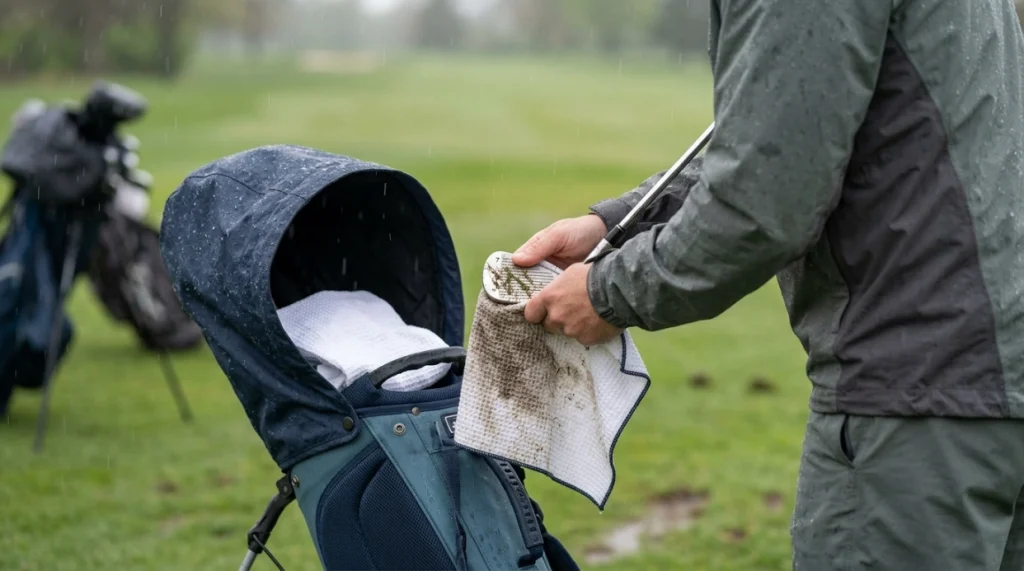
Wash a golf towel often enough to remove trapped dirt, grass, oils, and detergent buildup. Always follow the manufacturer’s care label first.
A wet towel should not stay crushed inside a closed bag after the round. Spread it out so moisture can escape.
Simple microfiber care
- Shake out debris: Remove loose grass and sand before washing.
- Check the label: Use the temperature and cycle recommended by the manufacturer.
- Use sensible detergent: Avoid unnecessary product buildup in the fibers.
- Dry completely: Do not return a damp towel to a closed golf bag.
- Inspect attachments: Check clips, magnets, and grommets before machine washing.
Why clean towels work better
A dirty towel eventually moves grime instead of removing it. Trapped sand also makes the fabric a poor choice for repeated rubbing.
I rotate towels when courses stay wet for several days. Starting with a clean towel is easier than rescuing one already packed with dried mud.
Golf Towel Material FAQs
Is microfiber better than cotton for rainy golf?
Microfiber is usually more practical in rain because lightweight versions dry faster and create less wet bulk. Cotton remains useful when you want a soft towel with plenty of fabric for absorbing moisture.
What towel texture is best for muddy golf clubs?
Waffle-textured microfiber is my preferred option for muddy irons and wedges. The raised grid gives the towel useful cleaning texture while remaining less bulky than many thick terry towels.
Should I wet my golf towel before a round?
Yes, dampening one section can make mud and grass easier to remove from clubfaces. Keep the rest dry, because a completely soaked towel cannot provide a useful finishing area.
Can I use a normal cotton towel for wet clubs?
Yes. A clean cotton hand towel can handle routine club cleaning, although golf-specific towels usually offer more convenient sizing, texture, and attachment options for use throughout a round.
Do I need a separate towel for my golf grips?
A separate towel is helpful during rain or on muddy courses. Keeping one clean and protected prevents sand, soil, and clubface debris from reaching the grips or your hands.
Does a thicker golf towel work better in wet weather?
Not automatically. A thicker towel provides more fabric and moisture capacity, but it can become heavy and slow to dry when saturated. Texture and wet-dry organization often matter more.
What is the best overall golf towel material for wet clubs?
For most golfers, I would choose waffle-weave microfiber. It gives you cleaning texture for wet grass and mud, manageable weight, useful moisture handling, and relatively quick drying between uses.
Final Takeaway: Waffle-weave microfiber is the most balanced golf towel material for wet clubs in 2026. It cleans effectively without the wet bulk associated with thick cotton.
Cotton still deserves a place in the conversation, especially for cart golfers who value softness and moisture capacity. Match the towel to your conditions rather than choosing by branding alone.
For consistently wet courses, my favorite setup is simple: one textured microfiber towel for clubheads and one protected dry towel for grips. That combination stays useful when the course gets messy.