
What Golf Towel Material Is Best for Golf Balls?

Quick Answer
Waffle-weave microfiber is the best golf towel material for cleaning golf balls because it combines useful texture, low lint, good moisture control, and fast drying. A soft microfiber surface lifts mud and grass without needing aggressive scrubbing, while a damp section can handle stubborn dirt before you dry the ball. Remember that the USGA rules on cleaning a golf ball still determine when cleaning is allowed during play.
Best choices for golf balls
- Best overall: Soft waffle-weave microfiber gives you useful cleaning texture without excessive bulk.
- Best for mud: Textured microfiber helps loosen soil sitting inside a ball’s dimples.
- Best for drying: Smooth or low-pile microfiber works well for the final wipe before putting.
- Best traditional option: Cotton terry absorbs water well but stays wetter and can produce more lint.
- Best setup: Keep one section damp for cleaning and another section clean and dry.
Choosing the best golf towel material for golf balls is less about buying the thickest towel and more about matching texture to the job.
I prefer microfiber for ball cleaning because it handles damp soil, grass, and light sand while staying manageable on the bag throughout an 18-hole round.
In This Guide
- Which Golf Towel Material Is Best for Golf Balls?
- Is Microfiber Better Than Cotton for Cleaning Golf Balls?
- Does Golf Towel Texture Matter for a Golf Ball?
- How Should You Clean a Golf Ball With a Towel?
- How Do You Keep a Golf Ball Towel Clean?
- Golf Towel Material FAQs
- Which Material Should You Choose?
Which Golf Towel Material Is Best for Golf Balls?
For most golfers, waffle-weave microfiber is the best material for cleaning golf balls. It gives you enough texture to remove debris while remaining lightweight and relatively quick to dry.
Definition: Microfiber is a fabric made from extremely fine synthetic fibers, commonly polyester-based fibers or polyester-polyamide blends. Waffle weave describes the textured grid pattern of the fabric, not the fiber itself.
Why microfiber works so well on a golf ball
Golf balls present a different cleaning problem from smooth equipment surfaces. Soil, grass, and moisture can settle inside hundreds of shallow dimples instead of sitting only on top.
- Textured surface: A waffle pattern creates small raised edges that help move debris from the dimpled surface.
- Low bulk: Microfiber provides plenty of usable cleaning area without requiring a thick towel.
- Fast drying: Lightweight microfiber generally dries sooner than a saturated heavy cotton terry towel.
- Low lint: Quality microfiber usually leaves fewer loose fibers on the ball than fluffy cotton.
- Wet-and-dry use: You can dampen one corner while keeping another portion available for drying.
That last point matters most to me on dew-covered morning rounds. A slightly damp section removes the dirt, while a clean dry section leaves the ball ready for the next shot.
Why golf ball cover material matters
Modern golf balls commonly use urethane or ionomer-based covers. Premium balls such as several Titleist Pro V1 models use urethane, while many distance-oriented models use tougher ionomer constructions.
Titleist explains these differences in its golf ball cover material guide.
Whatever ball you play, you do not need a harsh cleaning surface. Embedded sand or grit is more concerning than whether your towel feels slightly plush or slightly textured.
Section Takeaway: Waffle microfiber offers the strongest balance of texture, drying speed, low bulk, and everyday convenience for cleaning golf balls.
Is Microfiber Better Than Cotton for Cleaning Golf Balls?
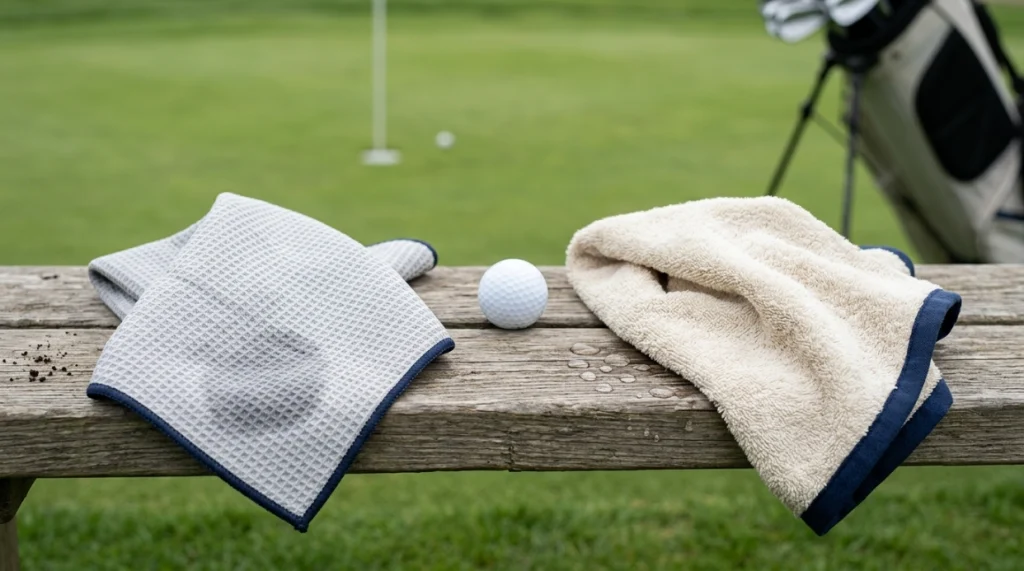
Yes, microfiber is usually the better all-around choice for golf balls. Cotton remains useful when maximum moisture absorption and a soft traditional feel matter more than drying speed.
| Material | Ball Cleaning | Moisture | Drying | Best Use |
|---|---|---|---|---|
| Waffle microfiber | Excellent for mud and grass | Good | Relatively fast | Best overall |
| Smooth microfiber | Good for lighter dirt | Good | Relatively fast | Drying and polishing |
| Cotton terry | Good general cleaning | High capacity | Slower when saturated | Rain and heavy moisture |
| Polyester blend | Varies by texture | Moderate | Usually quicker than heavy cotton | Budget or multipurpose towels |
When cotton still makes sense
Cotton terry has soft loops that hold a substantial amount of moisture. That can be useful during a rainy round when balls, hands, grips, and clubheads are all getting wet.
The drawback appears after the towel becomes saturated. Thick cotton gains noticeable weight and may stay damp long after the round ends.
What about blended towels?
A blended towel can work perfectly well if its surface stays soft and has enough texture to lift dirt. The actual weave often matters more for ball cleaning than the fiber label by itself.
For a single-purpose golf-ball towel, though, I would still start with microfiber. It requires fewer compromises.
Does Golf Towel Texture Matter for a Golf Ball?
Yes. Texture determines how easily the towel can reach moisture and debris sitting around the golf ball’s dimples.
Waffle weave for muddy balls
A waffle weave has raised and recessed areas rather than one flat surface. Those small edges give the fabric more opportunity to catch loose soil and grass.
I find it especially useful after a ball lands on soft turf and picks up a thin layer of damp soil. One or two passes with a damp waffle section usually makes more sense than hard rubbing.
Smooth microfiber for the final wipe
A smoother microfiber surface is less aggressive and works well when the ball only carries moisture or light dust. It is also useful after the textured section has already removed the main debris.
- Heavy mud: Use a damp waffle section first.
- Light dirt: Use clean microfiber with moderate texture.
- Water only: Use a dry section with good absorbency.
- Visible sand: Remove loose grit before rubbing the surface.
Avoid turning the towel into sandpaper
Even a soft towel stops being gentle when its fibers are loaded with sand and dried soil. That is why I separate my muddy cleaning area from the section I use on a ball before putting.
Shake or rinse heavy debris away when practical. Do not keep polishing a premium ball with the dirtiest corner of your towel.


How Should You Clean a Golf Ball With a Towel?
Use a slightly damp microfiber section to loosen dirt, then finish with a clean dry section. The process should be gentle and quick rather than aggressive.
- Check the Rules first. Make sure you are allowed to lift and clean the ball in that situation.
- Remove loose grit. Brush away obvious sand or coarse debris before rubbing.
- Use a damp section. Rotate the ball gently inside clean microfiber to loosen soil from the dimples.
- Inspect the surface. Repeat with fresh fabric if dirt remains.
- Finish dry. Use a separate dry portion to remove leftover moisture.
When are you allowed to clean the ball?
A ball lifted from the putting green may be cleaned. Elsewhere, Rule 14.1c contains specific situations where cleaning a lifted ball is restricted.
The R&A’s Rule 14 guidance provides the corresponding official explanation.
- Putting green: A properly lifted ball may be cleaned.
- Identification: Cleaning is limited to what is necessary to identify the ball.
- Interference: A ball lifted because it interferes with play generally must not be cleaned.
- Checking damage: Cleaning is restricted when the ball is lifted to determine whether it is cut or cracked.
- Checking a relief condition: Cleaning can also be restricted depending on what happens next under the applicable Rule.
The towel material never overrides the Rules. Know why you are lifting the ball before you automatically give it a wipe.
Section Takeaway: Use a damp-and-dry microfiber routine when cleaning is permitted, but always let Rule 14.1c determine whether the ball may be cleaned.
How Do You Keep a Golf Ball Towel Clean?
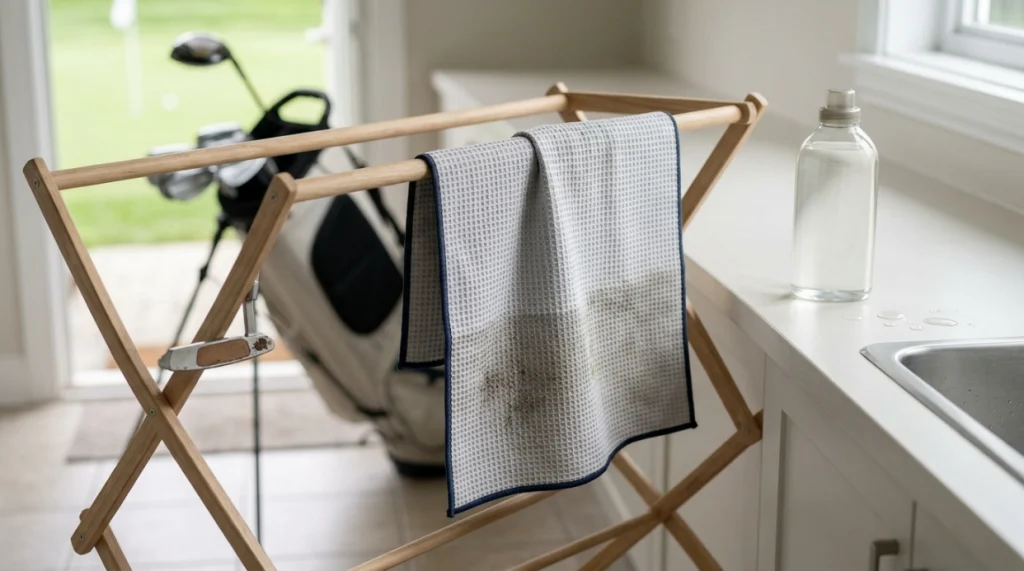
A good towel only works well while its fibers remain clean. Mud, oils, grass, sunscreen, and detergent residue can all reduce how useful the cleaning surface feels.
Separate the dirty and clean zones
I divide a larger towel into two working areas during a round. The lower section handles clubfaces and heavy mud, while the cleaner upper section stays available for the ball, grips, or hands.
That simple habit keeps gritty clubface debris away from the ball-cleaning surface. It also reduces how often you need to search for a clean corner.
Wash microfiber carefully
- Wash after dirty rounds: Do not let mud stay packed into the fibers for days.
- Use mild detergent: Heavy residue can reduce the towel’s useful surface characteristics.
- Skip fabric softener: Softener can coat microfiber and reduce its ability to grab moisture and dirt.
- Avoid excessive heat: Low-heat drying or air drying is safer for synthetic microfiber.
- Store it dry: Do not zip a damp towel into a closed golf bag pocket after the round.
How often should you replace it?
There is no fixed replacement schedule. Replace the towel when washing no longer removes embedded debris, the fabric stops handling moisture well, or the surface becomes rough or damaged.
For more general equipment and playing guidance, the PGA of America remains a useful golf resource.
Golf Towel Material FAQs
What is the best towel for cleaning a golf ball?
A soft waffle-weave microfiber towel is the best all-around option. Its texture helps lift mud from dimples, while the material stays lighter and usually dries faster than thick cotton.
Can microfiber scratch a golf ball?
Clean, soft microfiber is suitable for normal golf-ball cleaning. The greater concern is dirt or sand trapped inside the towel, so remove coarse grit and use a clean section rather than rubbing aggressively.
Is a cotton towel bad for golf balls?
No. Clean cotton terry can clean golf balls effectively and absorbs plenty of water, but a thick cotton towel generally becomes heavier when wet and takes longer to dry than lightweight microfiber.
Should a golf towel be wet or dry?
Both. Keep one section slightly damp for loosening mud and another section clean and dry for removing remaining moisture from the golf ball, grips, or hands.
Is waffle weave better than smooth microfiber?
Waffle weave is usually better for stubborn soil because the textured grid gives the towel more cleaning edges. Smooth microfiber works well for light dirt, drying, and a final wipe.
Can I clean my golf ball anywhere on the course?
No. The Rules of Golf determine when a ball may be lifted and cleaned, and Rule 14.1c includes several restrictions outside the putting green. Check the applicable Rule before automatically wiping a lifted ball.
Do I need a separate towel just for golf balls?
Not necessarily. A large towel works well if you deliberately keep one section cleaner than the part used on muddy clubfaces, although some golfers prefer a small dedicated ball towel.
Which Material Should You Choose?
Choose waffle-weave microfiber if you want one towel material that handles golf balls, clubfaces, moisture, and everyday course dirt without adding unnecessary bulk to your bag.
Choose cotton when you value softness and high moisture capacity more than fast drying. A quality blend can also work, but texture and cleanliness matter more than marketing labels.
As of 2026, my simplest setup remains the same: one soft microfiber towel, one damp section, and one clean dry section. Keep sand out of it, wash it regularly, and it will handle almost every golf-ball cleaning job you encounter during a round.