
How Do You Wash a Waffle Weave Golf Towel? How Do You Wash a Microfiber Golf Towel?

Quick Answer
Wash a microfiber or microfiber waffle-weave golf towel separately from lint-producing laundry, using cold or warm water and a mild liquid detergent. Skip fabric softener, dryer sheets, chlorine bleach, and high dryer heat because residue and excess heat can reduce microfiber absorbency; these basic precautions also match published microfiber care guidance.
Quick Washing Steps
- Check the label: Confirm whether your waffle towel is microfiber, cotton, or another fabric.
- Shake off debris: Remove loose grass, sand, soil, and dried dirt before washing.
- Wash separately: Keep microfiber away from cotton and other lint-producing laundry.
- Use mild detergent: Choose a liquid detergent without fabric-softening additives when possible.
- Skip softener: Do not add liquid fabric softener or dryer sheets.
- Dry gently: Air-dry or tumble-dry microfiber on low or no heat.
One Important Exception
- If your waffle-weave golf towel is cotton rather than microfiber, follow its sewn-in care label because cotton care can differ.
If you use a golf towel on muddy wedges, wet grips, and sandy clubfaces, it eventually needs more than a quick rinse. I have found that the washing method matters most with microfiber because the towel can look clean while becoming noticeably less absorbent.
As of 2026, my routine is simple: identify the fabric, remove loose course debris, wash without softener, and avoid excessive heat. Below, I will cover both waffle-weave and conventional microfiber golf towels in detail.
In This Guide
Is a Waffle-Weave Golf Towel the Same as Microfiber?
A waffle weave describes the towel’s surface construction, while microfiber describes the type of fine synthetic fiber commonly used to make the towel. Many modern waffle-weave golf towels are therefore microfiber towels with a textured waffle pattern.
Definition: A waffle-weave towel uses a pattern of recessed squares or pockets that increases textured surface area. A microfiber towel uses extremely fine synthetic fibers, commonly polyester and polyamide, to absorb moisture and collect dirt.
For example, The Rag Company lists a waffle-weave microfiber towel specifically designed around this textured construction. That is why the terms often appear together.
However, not every waffle towel is microfiber. Cotton waffle towels also exist, so checking the material tag is the safest first step.
| Towel Type | Typical Care Starting Point | Main Risk | Best Practice |
|---|---|---|---|
| Waffle-weave microfiber | Cold or warm wash | Softener residue and high heat | Wash with microfiber, dry low |
| Plush or terry microfiber | Cold or warm wash | Lint contamination and residue | Separate from cotton |
| Cotton waffle weave | Care-label dependent | Shrinkage and snagging | Follow manufacturer label |
The distinction matters on a golf towel because microfiber is often chosen for quick drying and dirt pickup. Its performance depends on keeping the fine fibers free from coating and lint.
Section Takeaway: Waffle weave is a texture, not a fiber type. Check the label first; if the towel is microfiber, use microfiber-safe washing and drying practices.
How Do You Wash a Microfiber Golf Towel?
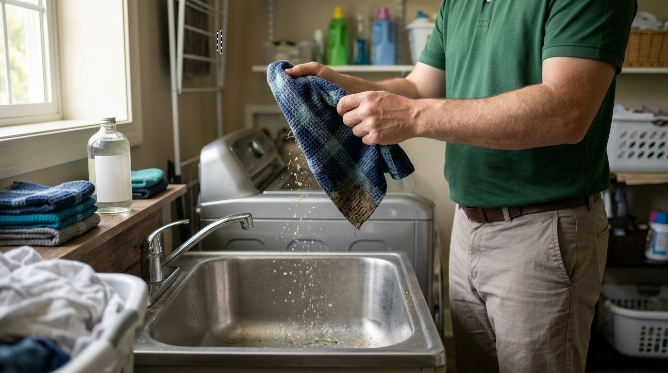
Wash a microfiber golf towel separately, with cold or warm water and a mild liquid detergent. The goal is to remove grass, soil, skin oils, sunscreen, and grime without coating or overheating the fibers.
1. Shake out grass, sand, and dried soil
Take the towel outside before it enters the washer. Shake it firmly so loose grass, bunker sand, and dry soil do not circulate through the wash.
This step matters after a muddy round. Sand and grit are easier to remove while dry than after they become mixed through wet fabric.
2. Separate microfiber from cotton
I avoid washing my golf microfiber with cotton bath towels or cotton clothing. Fine lint can collect in microfiber and make the towel feel less clean.
- Best load: Other microfiber towels with similar colors.
- Avoid: Cotton towels, fleece, and lint-heavy garments.
- Also separate: Towels contaminated with grease, oil, wax, or harsh chemicals.
3. Pre-treat obvious dirty areas
If one corner is black from club grooves or covered in turf stains, apply a small amount of suitable liquid detergent to that area. Gently work it into the fabric instead of aggressively scrubbing the towel against itself.
Give the detergent a short period to loosen the soil before starting the wash. For ordinary golf-course dirt, I rarely find that harsh stain chemicals are necessary.
4. Machine wash on a normal or gentle cycle
Cold or warm water works well for routine microfiber cleaning. Published microfiber washing guidance from Chemical Guys also stresses separating towels, avoiding fabric softener, and using low heat when drying.
Do not overload the machine. The towels need enough water and movement for dirt and detergent to rinse away.
5. Run an extra rinse when needed
If the towel feels slick or unusually stiff after washing, detergent residue may still be present. An extra rinse is a simple way to remove more of it.
I especially like an extra rinse after a towel has spent several holes cleaning wet soil from irons and wedges.
Section Takeaway: Keep microfiber loads simple. Remove grit first, separate the towels from lint-producing fabrics, use modest detergent, and rinse thoroughly.
How Do You Wash a Waffle-Weave Golf Towel?
If your waffle-weave golf towel is microfiber, wash it almost exactly like any other microfiber towel. What changes is the attention I give to dirt trapped inside the textured pockets.
Clear the waffle texture before washing
The recessed pattern that makes waffle weave useful for drying can also hold dried grass and dirt. Stretch the towel open and shake both sides before placing it in the machine.
For a heavily soiled towel, rinse muddy areas under cool or lukewarm water first. Avoid grinding sand deeper into the weave.
Keep hook-and-loop fasteners away from it
A waffle texture can snag more easily than a flat cloth. I do not wash mine beside garments or accessories with exposed hook-and-loop fasteners, sharp zippers, or rough hardware.
- Close zippers if mixed washing cannot be avoided.
- Secure removable clips and carabiners.
- Check grommets for sharp edges.
- Do not pull a snagged thread aggressively.
If the towel is cotton waffle weave, the sewn-in label becomes more important. Cotton and synthetic microfiber can respond differently to heat and shrinkage.
For a typical microfiber waffle golf towel, however, cold or warm water plus low-heat drying remains my default approach.

What Detergent and Water Temperature Should You Use?
A mild liquid detergent is the safest general choice for a microfiber golf towel. Use only enough to clean the load because excess detergent can become another form of residue.
Why fabric softener is a bad match
Fabric softener is designed to leave a coating on fabric. That coating works against the open, absorbent surface you want from a golf towel.
The same principle applies to dryer sheets. They may leave conditioning material on the fibers, so I skip them entirely with golf microfiber.
What about bleach?
I avoid chlorine bleach unless the towel manufacturer specifically permits it. The Rag Company’s published microfiber care instructions advise against chlorine bleach and fabric softener.
Cold vs. warm vs. hot water
For routine golf dirt, cold or warm water is enough in most cases. Some microfiber manufacturers publish different maximum temperatures, which is why the product label should override a generic washing rule.
- Cold water: Gentle choice for lightly dirty towels and frequent washing.
- Warm water: My normal choice for soil, sweat, and everyday grime.
- Hot water: Use only when the manufacturer specifically allows it.
- Softener: Skip it.
- Dryer sheets: Skip them too.
Keeping a golf towel clean also makes your normal equipment routine more pleasant. For broader instruction and equipment resources, the PGA of America is a useful reference beyond towel maintenance.
How Should You Dry a Golf Towel?
Air-drying or tumble-drying on low heat is the safest approach for microfiber golf towels. High heat is unnecessary and can shorten the useful life of synthetic fibers.
Air-drying
Hang the towel fully open rather than leaving it folded in a damp pile. Good airflow helps it dry faster and reduces the chance of developing a stale smell.
I prefer air-drying when I have enough time between rounds. It also removes the temptation to accidentally choose a high dryer setting.
Machine drying
If you use a dryer, choose a no-heat, air-fluff, or low-heat setting supported by the towel label. Remove the towel once dry instead of running a long, hot cycle.
- Do not use dryer sheets.
- Keep lint-heavy laundry out of the same load.
- Avoid ironing microfiber.
- Let the towel dry completely before storage.
Never stuff a damp golf towel back into a closed bag pocket after washing. I leave mine open until there is no cool or damp feeling anywhere in the fabric.
How Do You Remove Stains, Odors, and Lost Absorbency?
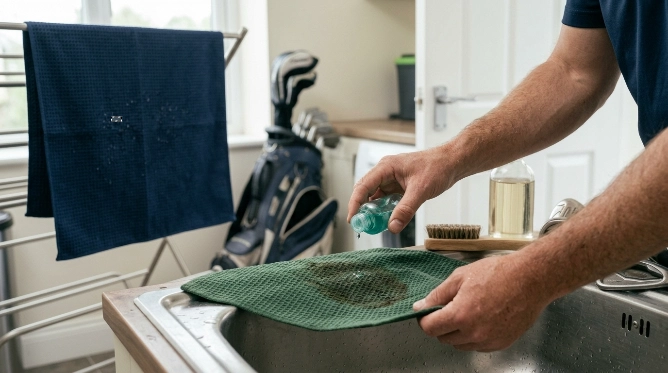
Start by rewashing the towel without softener and giving it a thorough rinse. Many performance problems come from residue rather than permanent damage.
If the towel smells after washing
A lingering odor often means the towel stayed damp too long or did not rinse completely. Rewash it promptly, then dry it fully in moving air or on an approved low-heat setting.
Do not leave a wet towel balled up in the trunk after a rainy round. I have found that drying it as soon as I get home makes a bigger difference than trying to rescue the smell days later.
If the towel stops absorbing water
First suspect fabric softener, dryer-sheet residue, excessive detergent, or oily contamination. Rewashing with an appropriate microfiber detergent and using an extra rinse may improve the towel.
Once fibers have been permanently damaged by excessive heat, washing cannot reverse that physical change. At that point, I retire the towel to less demanding cleaning jobs.
What about stubborn mud and grass stains?
- Shake first: Remove dry particles before adding water.
- Rinse next: Flush loose mud from the back of the stained area.
- Pre-treat: Add a small amount of compatible liquid detergent.
- Wash promptly: Do not let dirty, wet golf towels sit for days.
- Inspect before drying: Repeat treatment if a stain still matters to you.
I do not worry about keeping a working golf towel perfectly white. A towel used on irons and wedges will eventually show some cosmetic wear even when it is hygienically clean.
The more important tests are smell, absorbency, softness, and whether loose debris remains in the fabric. General golf-equipment resources from the USGA can also help when questions move from equipment care into the Rules of Golf.
Section Takeaway: Treat residue and moisture as the main enemies. Wash dirty towels promptly, rinse them well, and make sure they become completely dry before returning them to the bag.
Golf Towel Washing FAQ
Can you put a microfiber golf towel in the washing machine?
Yes. Most microfiber golf towels can be machine washed, but always check the care label first. Wash with other microfiber, use cold or warm water, avoid fabric softener, and choose a suitable liquid detergent.
Can you wash waffle-weave golf towels with regular towels?
If the waffle-weave towel is microfiber, I would not wash it with cotton bath towels because cotton can release lint. Washing microfiber with similar microfiber fabrics helps keep the fine fibers cleaner.
Can I use fabric softener on a golf towel?
Avoid fabric softener on microfiber golf towels. It can coat the fine fibers and reduce the absorbency that makes microfiber useful for wet clubheads, grips, and general course cleanup.
Can microfiber golf towels go in the dryer?
Usually yes, provided the care label permits machine drying. Use low heat, no heat, or air fluff, and leave out dryer sheets.
How often should I wash my golf towel?
Wash it when it becomes muddy, develops an odor, feels loaded with dirt, or no longer has enough clean surface for the next round. During wet or muddy seasons, that may mean washing it after every round.
Should I wash a new microfiber golf towel before using it?
Prewashing is a sensible step when the manufacturer recommends it. It can remove loose manufacturing fibers or residue before the towel touches your clubs, hands, or other golf equipment.
Why is my microfiber golf towel no longer absorbent?
Common causes include fabric-softener residue, dryer-sheet residue, excess detergent, oily contamination, or heat damage. Try rewashing it without softener and adding an extra rinse before deciding the towel needs replacement.
Washing a golf towel is not complicated, but the small details determine how well microfiber keeps working. My rule is to treat it more like performance cleaning cloth than ordinary household laundry.
Check the material label, wash microfiber separately, avoid softener, use sensible temperatures, and dry gently. Do that consistently and your waffle-weave or microfiber towel should stay cleaner, softer, and far more useful from the first tee through the final green.