
Setup Drills: 7 Golf Practice Drills for a More Consistent Setup

Quick Answer
Setup drills help you repeat the same grip, posture, ball position, stance, and alignment before every shot. I like using simple alignment-stick drills because they give immediate visual feedback without asking you to change your whole swing at once. For broader practice ideas, PGA practice guidance also emphasizes setup, alignment, and repeatable routines.
What good setup drills should train
- Target alignment: Your clubface and body should have clear reference points toward the target.
- Ball position: Practice placing the ball consistently for different clubs.
- Posture: Build a balanced athletic position without excessive bending or tension.
- Grip pressure: Develop a repeatable grip instead of changing pressure from shot to shot.
- Pre-shot routine: Turn setup into a repeatable process rather than a last-second guess.
Quick practice tip
- Start slowly and rehearse the setup before hitting full shots. If the setup becomes inconsistent, stop and reset rather than adding more swings.
I’ve found that many swing problems start before the club ever moves. A slightly different ball position or alignment can change the way a perfectly reasonable swing produces a shot.
That’s why I prefer setup drills that make the fundamentals visible. In this guide, I’ll walk through seven practical drills you can use on the range, at home, or before a round.
In This Guide
- What is a good golf setup?
- How does the alignment-stick setup drill work?
- How can you practice consistent ball position?
- Which drill helps improve golf posture?
- How can you make your grip more consistent?
- How do you build a repeatable pre-shot routine?
- What is the best way to practice setup drills?
- Setup Drill FAQ
What Is a Good Golf Setup?
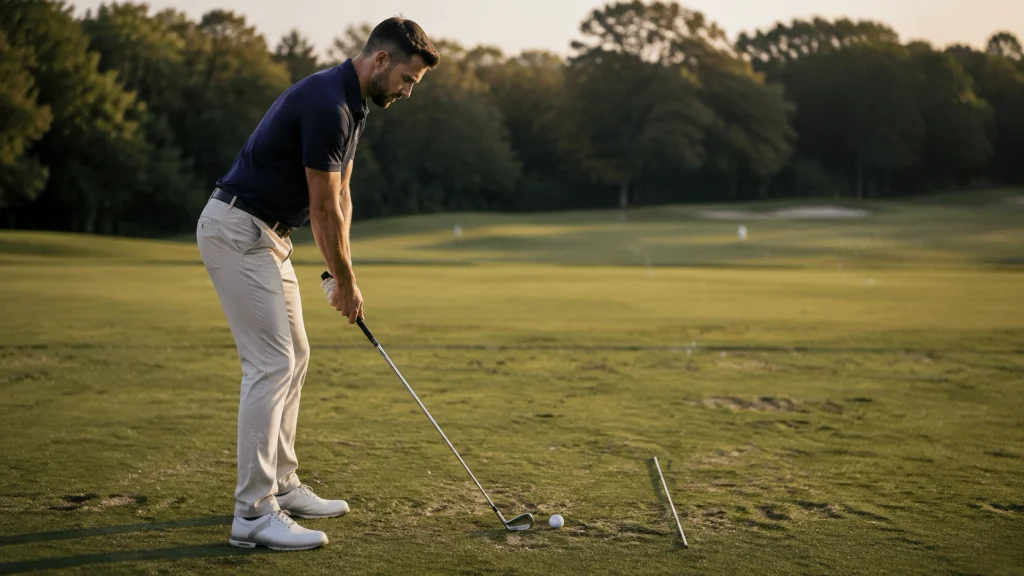
A good golf setup gives you a balanced starting position that you can reproduce without excessive thought. It includes your grip, stance, posture, ball position, clubface alignment, and body alignment.
I think of setup as the launch point for the swing. If that launch point changes every time, judging the result becomes much harder.
What should you check at address?
- Grip: Hold the club securely without creating unnecessary tension.
- Stance: Set your feet at a width that gives you balance and freedom to rotate.
- Posture: Bend from the hips while keeping a comfortable athletic position.
- Ball position: Place the ball according to the club and shot you are playing.
- Clubface: Establish the intended face direction before matching your body alignment.
- Alignment: Match your feet, hips, and shoulders to the intended shot line.
One useful distinction is that your clubface points toward the target while your body usually works parallel to the target line. Mixing those two references can create alignment problems.
For that reason, setup drills should give you an external reference. An alignment stick, club, mirror, or camera can show you something your eyes may miss from address.
Section Takeaway: A repeatable setup doesn’t need to look complicated. It needs to be balanced, comfortable, and consistent.
How Does the Alignment-Stick Setup Drill Work?
The alignment-stick drill is one of my favorite setup drills because it makes alignment visible. PGA coaches also commonly use alignment drills to help golfers improve target alignment and create a repeatable pre-shot process. :contentReference[oaicite:0]{index=0}
How to set it up
- Place one alignment stick on the ground along your intended target line.
- Put your ball beside the stick at the point where you want to practice.
- Place a second stick across the first one near your feet.
- Build your stance using the second stick as a reference.
- Set the clubface first, then place your feet and shoulders.
- Remove the sticks and hit the shot while keeping the same visual picture.
The crossed-stick arrangement creates a simple practice station. One reference controls the target line, while the other gives you a consistent relationship between the ball and your stance.
I like starting with half-swings. Once the setup becomes automatic, move to normal swings without changing the routine.
Why this drill helps
Golfers often believe they are aimed correctly because their body feels square. Feel can be misleading, especially when you have practiced a poor alignment pattern for a long time.
The sticks remove some of that guesswork. You can see whether your setup matches the reference before worrying about the quality of the swing.
Section Takeaway: Use alignment sticks to train your eyes as much as your body. The goal is to make correct alignment look and feel familiar.
How Can You Practice Consistent Ball Position?
Ball position is one of the easiest setup variables to change without noticing. A few inches of movement can alter where the club meets the ball and change the starting conditions of the shot.
The ball-position ladder
Use an alignment stick or club on the ground as a baseline. Place several balls along an imaginary line and rehearse the positions you normally use for different clubs.
- Short irons: Practice a position around the center area of your stance.
- Mid irons: Move the ball slightly toward your lead side.
- Longer clubs: Continue the progression toward the lead side.
- Driver: Use your normal driver position and confirm it with your own setup routine.
These are practice reference points, not universal measurements. Your exact ball position depends on your swing, equipment, and shot pattern.
The step-in version
Another useful variation starts with your feet together and the ball in front of you. Take your normal stance by stepping each foot into position instead of shuffling around the ball.
Repeat the process several times without hitting a shot. Then make a swing and check whether the club returns to the same general area.
This drill connects ball position with your routine. You’re not just learning where the ball belongs; you’re learning how to arrive there consistently.
Section Takeaway: Don’t chase a perfect ball-position measurement. Build a repeatable reference that works with your clubs and swing.


Which Drill Helps Improve Golf Posture?
Good golf posture gives you enough balance and freedom to rotate without forcing your body into an uncomfortable position. A simple wall drill can help you understand the relationship between your hips, spine, and upper body.
The wall setup drill
- Stand with your back a short distance from a wall.
- Take your normal golf posture without a ball.
- Keep your hips and upper body organized rather than collapsing forward.
- Make slow practice turns while maintaining your basic posture.
- Return to your address position and check your balance.
The point isn’t to keep your body rigid. Golf posture should allow movement.
For a second version, place a club across your shoulders and rehearse a gentle hip-and-shoulder turn. The goal is to notice whether you can rotate without immediately standing up or losing balance.
PGA instruction resources also emphasize maintaining a stable relationship to your original spine angle during the swing. :contentReference[oaicite:1]{index=1}
Pro tip: If posture problems cause pain, balance issues, or repeated swing faults, work with a certified PGA professional or qualified golf instructor rather than forcing a position.
Section Takeaway: Good posture should feel athletic, not stiff. Practice balance and rotation instead of trying to freeze your body.
How Can You Make Your Grip More Consistent?
A consistent grip starts before the swing. If you place your hands differently every time, you change one of the first mechanical connections between your body and the club.
The grip-and-reset drill
Take the club away from the ball and build your grip from scratch. Hold it for a few seconds, check the position, then release both hands completely.
Repeat the process 10 times without hitting a ball. You’re training the routine of creating your grip, not simply holding the club.
- Start from the same side: Use the same hand first every time.
- Check pressure: Avoid squeezing harder as you prepare to swing.
- Check placement: Make sure the hands return to a familiar position on the handle.
- Reset completely: If the grip feels wrong, release it and start again.
Consistent pressure matters, too. PGA guidance for driver consistency specifically highlights a grip that is neither excessively tight nor excessively loose. :contentReference[oaicite:2]{index=2}
I prefer this drill before hitting balls because it separates grip practice from ball-flight anxiety. You’re simply building the same starting connection again and again.
Section Takeaway: A good grip drill is repetitive by design. Ten careful resets can be more useful than dozens of rushed swings.
How Do You Build a Repeatable Pre-Shot Routine?
A setup becomes much more useful when you can reproduce it under pressure. That’s where a pre-shot routine connects your practice work to the course.
The three-stage routine
- Behind the ball: Pick the target and visualize the intended shot.
- Step in: Approach the ball, set the clubface, and build your stance.
- Trigger: Take one final look and start the swing without unnecessary delay.
PGA alignment instruction recommends using a pre-shot routine as part of improving alignment. :contentReference[oaicite:3]{index=3}
The key is keeping the routine short. You don’t need a long sequence of waggles, looks, and practice swings.
The 10-ball routine drill
Hit 10 range balls while following exactly the same routine. Don’t hit the next ball until you’ve completed the routine from the beginning.
After each shot, note only the result and whether your setup felt consistent. Don’t rebuild your swing after every poor shot.
This matters because a range session can become chaotic when every miss triggers a new swing thought. Setup practice works better when the setup stays constant.
Section Takeaway: Your pre-shot routine should make good setup easier to repeat. Keep it simple enough to use on every hole.
What Is the Best Way to Practice Setup Drills?
I wouldn’t spend an entire range session hitting full shots without structure. Setup work is more effective when you alternate rehearsals, controlled shots, and normal play.
A 30-minute setup practice plan
| Time | Drill | Main Focus |
|---|---|---|
| 5 min | Grip reset | Hand placement and pressure |
| 5 min | Alignment station | Clubface and body alignment |
| 5 min | Ball-position ladder | Repeatable ball location |
| 5 min | Posture rehearsals | Balance and athletic posture |
| 10 min | Pre-shot routine | Transfer setup to full shots |
During the final 10 minutes, I would stop thinking about individual setup pieces. Pick a target, complete the routine, and hit the shot.
That’s where the practice becomes useful. You want the setup skills to survive when you’re no longer staring at an alignment stick.
Use feedback instead of guessing
A mirror can help with posture and grip. Alignment sticks can help with aim and ball position. A phone camera can show what your setup looks like from face-on or down-the-line.
Use one feedback method at a time. Too much information can turn a simple setup drill into another source of confusion.
PGA practice guidance also recommends structured sessions that separate putting, chipping, full-swing work, and warm-up rather than simply hitting balls without a plan. :contentReference[oaicite:4]{index=4}
Section Takeaway: The best setup practice moves from controlled rehearsals to normal shots. Your final test is whether the routine survives without training aids.
Setup Drill FAQ
How often should I practice golf setup drills?
Short, frequent sessions usually make more sense than occasional marathon practice. Spend five to 15 minutes on setup before range sessions, especially when alignment or ball position has become inconsistent.
Can beginners use setup drills?
Yes. Setup drills are especially useful for beginners because they create repeatable habits before complicated swing changes enter the picture. Start with grip, stance, ball position, posture, and alignment.
Do alignment sticks really help?
Alignment sticks provide an external reference that your eyes can compare against. They are useful for checking target line, stance direction, ball position, and practice-station organization.
Should I practice setup with every club?
You don’t need a separate drill for every club. Practice a few representative clubs, then apply the same routine across your set while adjusting ball position and stance appropriately.
Can setup drills fix a slice?
Setup drills can reveal alignment, ball-position, grip, or posture patterns that contribute to inconsistent shots. However, a slice can have several causes, so setup work alone isn’t guaranteed to fix it.
Should I use alignment aids during a round?
Training aids that help alignment, ball position, posture, or swing mechanics can be restricted during a round under the Rules of Golf. The USGA and R&A provide the governing equipment guidance, so check the current rules before using a training aid in competition. :contentReference[oaicite:5]{index=5}
What is the simplest setup drill to start with?
Start with the alignment-stick drill. It gives you a clear target line and lets you practice clubface alignment, stance, posture, and ball position together without changing your actual swing.
Final Takeaway: Make Your Setup Boringly Consistent
The best setup drills aren’t complicated. They teach you to arrive at the ball with the same basic conditions before you swing.
Start with alignment, ball position, posture, and grip. Then connect those pieces with a short pre-shot routine.
As of 2026, the practice principle remains simple: use clear feedback, rehearse deliberately, and transfer the skill to normal shots. When your setup becomes predictable, you have a much better starting point for improving the rest of your golf swing.
Pick two drills from this guide for your next range session. Practice them slowly, then finish by hitting shots with your normal routine.
The goal isn’t a perfect setup. It’s a repeatable one.