
How Wet Should a Golf Towel Be?

Quick Answer
A golf towel should be damp enough to loosen grass, soil, and mud, but not so wet that water drips when you squeeze it. I prefer wetting roughly one-third to one-half of the towel, wringing out the excess, and protecting the remaining section for drying clubs, grips, and hands. If you use it on your ball, remember that the Rules of Golf control when a lifted ball may be cleaned.
The ideal towel setup
- Damp, not dripping: The fabric should feel clearly moist without releasing water onto your bag.
- Wet one section: Use about one-third to one-half of the towel for dirty clubheads.
- Protect a dry zone: Save clean, dry fabric for grips, hands, and final drying.
- Wring it first: Excess water adds weight without improving normal club cleaning.
- Re-wet as needed: Add a little water during hot rounds instead of soaking the whole towel.
If you’ve wondered how wet should a golf towel be, the answer is simpler than it sounds. You want enough moisture to soften dirt while keeping part of the towel useful for drying.
That balance matters on wet fairways, dusty summer courses, and early mornings covered in dew. This guide explains exactly how I set up a towel for a round and how I adjust it as conditions change.
In This Guide
How Wet Should a Golf Towel Actually Be?
A golf towel should feel noticeably damp but not saturated. If you squeeze the wet section firmly and water runs from it, I would wring it out again.
Think of the ideal moisture level as similar to a household cleaning cloth after it has been thoroughly wrung. The fibers stay wet enough to soften dirt without carrying unnecessary free water.
Definition: A damp golf towel is an absorbent towel containing enough moisture to loosen dirt and grass while remaining wrung-out enough that it does not drip during normal use.
Try the simple squeeze test
I use a quick test before attaching the towel to the bag. Grab the damp section and squeeze it firmly in one hand.
- No moisture feeling: It is probably too dry for sticky mud.
- Cool and clearly damp: This is the useful range for routine club cleaning.
- A few drops appear: Wring it once more.
- Water streams out: The towel is much wetter than you need.
You don’t need a measuring cup or an exact amount of water. Towel size, fabric weight, humidity, and temperature change how much water each towel holds.
How much of the towel should you wet?
For a normal round, I like roughly one-third to one-half of the towel damp. That leaves a meaningful dry area instead of turning the entire towel into one cleaning surface.
A compact towel may need closer to half its area damp. A long caddie towel often gives you enough space to keep a smaller section wet.
- Damp zone: Clubfaces, soles, mud, grass, and routine dirt.
- Dry zone: Grips, hands, shafts, and final drying.
- Clean reserve: A protected section for situations where you need genuinely clean fabric.
Section Takeaway: The right towel is moist enough to loosen debris but dry enough to stay manageable. If it drips while hanging from your bag, wring out more water.
Why Is a Damp Golf Towel Better Than a Soaking-Wet One?
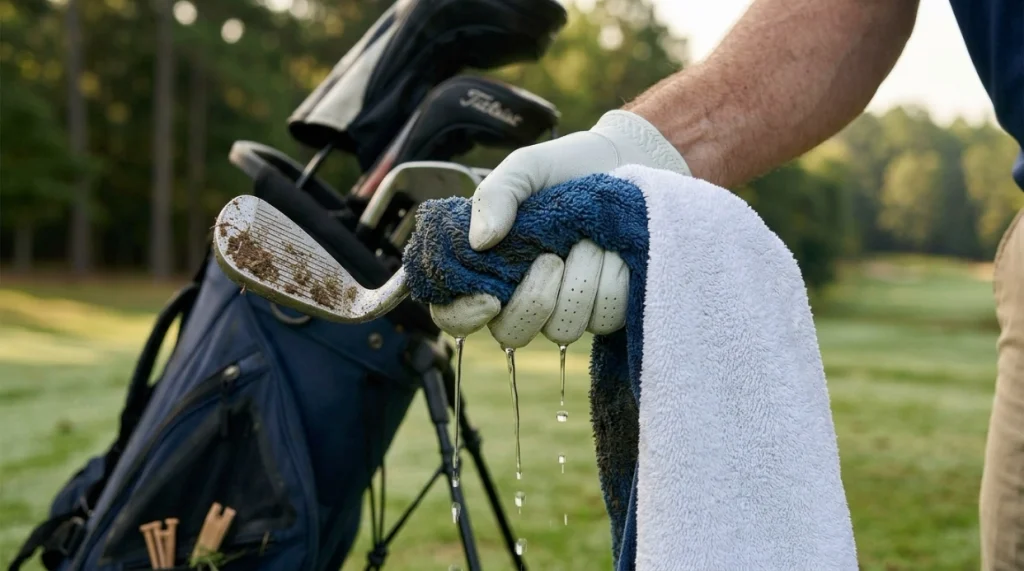
A damp towel gives you most of the cleaning benefit without sacrificing the rest of the towel. A soaking-wet towel quickly becomes heavy and poor at drying anything.
Fresh soil normally releases more easily when moisture softens it. That’s useful after an iron or wedge enters damp turf.
The problem starts when the entire towel becomes saturated. You lose the dry surface you need when a grip, glove, clubhead, or hand gets wet.
More water does not always mean better cleaning
For routine on-course dirt, you need moisture against the debris rather than water running over the club. The damp fibers do most of the practical work.
A dry towel can smear sticky mud. An overloaded towel creates the opposite problem by leaving the clubhead wetter than necessary.
- Light grass: A damp pass is usually enough.
- Fresh soil: Press the damp fabric against it before wiping.
- Loose sand: Remove loose grit before rubbing.
- Packed grooves: Use a suitable brush if the towel cannot reach the debris.
The USGA equipment guidance explains that clubface grooves have regulated dimensions. I treat those grooves as functional equipment, not something to attack with sharp improvised tools.
A towel is ideal for normal maintenance. A nylon golf brush is the better backup when dirt becomes tightly packed.
How Should You Set Up Wet and Dry Towel Zones?
The easiest system is to treat one towel as two separate tools. One area cleans, while another area dries.
- Wet one end. Run water over roughly one-third to one-half of the towel.
- Wring it firmly. Remove enough water that the towel stops dripping.
- Fold the damp area inward. This helps slow evaporation on warm days.
- Protect the opposite end. Don’t wipe mud or sand onto your dry section.
- Attach it within reach. You should be able to clean a club before putting it away.
Once the routine becomes automatic, club cleaning takes only a few seconds. I prefer doing it immediately rather than letting turf dry into the grooves for several holes.
Wetness levels compared
| Towel Condition | What It Feels Like | Best Use | Main Problem |
|---|---|---|---|
| Dry | No noticeable moisture | Grips, hands, dew, final drying | Weak on sticky mud |
| Lightly damp | Cool and moist, no dripping | Everyday clubface cleaning | May dry quickly in heat |
| Wet but wrung out | Heavily moist, little or no dripping | Mud and wet turf | Needs a dry finishing area |
| Soaking wet | Water releases easily when squeezed | Rarely necessary during play | Heavy, messy, poor for drying |
Section Takeaway: A split wet-and-dry setup gives one towel two useful jobs. Damp fabric removes dirt, while protected dry fabric keeps moisture away from your grip and hands.


How Wet Should a Towel Be for Different Golf Jobs?
The ideal wetness changes slightly depending on what you’re cleaning. Clubheads tolerate a wetter working section than the grip you need to hold during your next swing.
For iron and wedge faces
Use a clearly damp, wrung-out section. Wedges and irons often collect turf, grass, sand, and moisture around their faces and soles.
Check the face right after the shot. Fresh debris usually takes less effort to remove than dried buildup.
- Remove loose sand before rubbing.
- Wipe the whole face with the damp section.
- Work across the grooves rather than polishing one spot.
- Finish with dry fabric if visible moisture remains.
For golf grips and hands
Keep your grip-drying section as dry as possible during play. The damp, muddy club-cleaning section is the wrong area for the part of the club you hold.
If a grip needs light cleaning, use a separate clean area that is only slightly damp. Follow immediately with completely dry fabric before swinging.
Pro tip: If slipping grips or grip pressure repeatedly affect your shots, a qualified PGA professional or club fitter can help determine whether technique, worn grips, or equipment fit is contributing.
For a golf ball
A damp, clean section removes dirt well, but permission to clean the ball depends on the Rules. The towel itself does not change when cleaning is allowed.
Under Rule 14.1c, a ball lifted from the putting green may be cleaned. There are specific exceptions when a ball lifted elsewhere may not be fully cleaned.
Does towel material change how wet it should be?
Yes, because different fabrics hold and release water differently. The same practical test still works: damp enough to clean, but not dripping.
- Microfiber: Start with less water and add more if needed.
- Cotton: Wring thoroughly because thicker cotton can hold considerable moisture.
- Waffle microfiber: Keep it damp for dirt removal while saving another panel dry.
- Large caddie towel: Wet only one end instead of saturating the full length.
What about hot, humid, or rainy rounds?
Hot weather can dry the damp section before the back nine. I would start lightly damp and add water rather than begin with a dripping towel.
Rain requires the opposite strategy. Protecting a genuinely dry towel becomes more important because the outside towel may eventually become wet without your help.
- Hot and dry: Fold the damp section inward between uses.
- Humid: Use less starting water because evaporation is slower.
- Steady rain: Keep a second dry towel protected inside the bag.
- Morning dew: Reserve plenty of dry fabric for clubheads and grips.
The PGA of America also describes golf towels as a normal bag accessory used for keeping clubs clean. Keeping one accessible makes the cleaning habit much easier to maintain.
Section Takeaway: Clubfaces benefit from a damp cleaning area, while grips and hands need protected dry fabric. Weather and material affect how quickly you need to add or remove moisture.
What Wet Golf Towel Mistakes Should You Avoid?
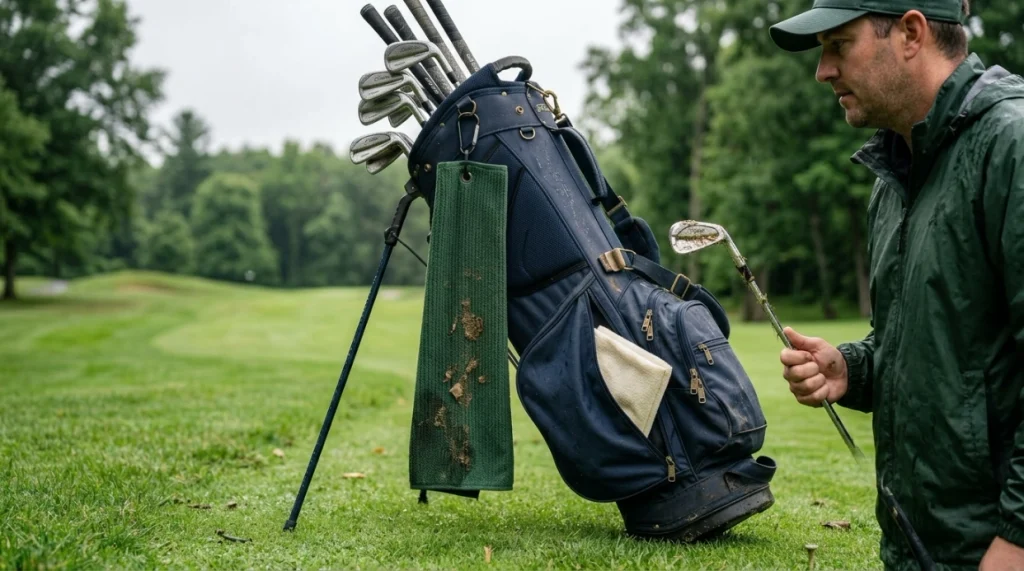
The biggest mistake is soaking the entire towel before the first tee. That leaves you with nothing useful when you need to dry your grip later.
A few other habits can turn a simple accessory into an inconvenience.
- Leaving it dripping: Wring the towel until free water stops running out.
- Using one dirty area everywhere: Keep clubface dirt away from grips and hands.
- Rubbing loose sand: Shake or brush grit away before applying pressure.
- Ignoring the dry zone: Reserve clean fabric from the start of the round.
- Letting dirt dry: Clean muddy wedges and irons before returning them to the bag.
- Never re-wetting: Add a little water when the cleaning section dries in hot conditions.
- Putting it away wet: Remove the towel after the round and let it dry fully.
Should you carry two towels?
One properly managed towel works for many normal rounds. Two towels become useful in rain, heavy dew, muddy conditions, or when you want a guaranteed dry backup.
I would keep the second towel inside a protected bag pocket until needed. There’s little value in hanging both outside during steady rain.
How often should you wash a golf towel?
Wash it when soil, sand, sweat, or odor begins building up rather than waiting for an arbitrary number of rounds. A visibly dirty towel can transfer old grime back onto equipment.
Check the towel manufacturer’s care label before choosing detergent, wash temperature, or machine-drying settings. Microfiber and cotton products may have different care recommendations.
Frequently Asked Questions
Should a golf towel be wet or dry?
Ideally, it should be both. Keep one section damp for clubface cleaning and another section clean and dry for grips, hands, and removing leftover moisture.
How much water should I put on a golf towel?
There is no universal measured amount because towel sizes and materials differ. Wet roughly one-third to one-half, then wring it until it feels damp without dripping when squeezed.
Should I soak my golf towel before playing?
No, soaking the whole towel is usually unnecessary. Saturating it adds weight and removes the dry area you may need for grips, hands, or final club drying.
Can a golf towel be too wet?
Yes. If water drips from the towel while it hangs or streams out with a light squeeze, it is wetter than necessary for normal on-course cleaning.
Should I wet a microfiber golf towel?
Yes, microfiber works well when lightly damp for cleaning dirt and grass. Keep another portion dry because microfiber is also useful for absorbing moisture from clubheads, grips, and hands.
How do I keep a golf towel damp for 18 holes?
Wet one section and fold that area inward between uses. On hot or windy days, add a small amount of water during the round rather than soaking the towel before teeing off.
Should I use a wet golf towel on my grips?
For routine on-course drying, use a dry section. If the grip needs cleaning, use only a clean, lightly damp area and then dry the grip fully before making another swing.
The simplest rule is this: wet enough to clean, dry enough not to drip.
Before your next round, dampen one section, wring it firmly, and protect the rest. That small setup gives you a better tool for dirty clubs without sacrificing the dry towel you may need later.