
How Do You Wash a Microfiber Golf Towel?

Quick Answer
Wash a microfiber golf towel by shaking out grass, sand, and dried mud first, then machine washing or hand washing it with a small amount of mild detergent. Cold water is a safe starting point when the care label allows it; for example, Club Glove’s microfiber towel care instructions specify cold water and mild detergent.
Quick washing steps
- Shake it out: Remove loose sand, grass, soil, and other course debris.
- Check the label: Follow the towel manufacturer’s temperature and drying limits.
- Pretreat stains: Work a little detergent into muddy or greasy areas.
- Wash gently: Use cold water and mild detergent unless the label directs otherwise.
- Skip softener: Avoid products that can leave residue on absorbent fibers.
- Dry completely: Air dry or use a low-heat setting when permitted.
My simplest rule
- Never leave a wet, muddy microfiber towel compressed inside your golf bag after the round.
If you’re wondering how do you wash a microfiber golf towel without ruining its texture, the process is straightforward. A good microfiber golf towel mainly needs loose dirt removed, sensible detergent, moderate temperatures, and complete drying.
I’ve found that the biggest mistakes happen after wet rounds, when a towel covered in bunker sand and fairway mud gets thrown straight into the hamper. A few extra minutes of care can keep the towel useful for cleaning clubfaces, balls, grips, and hands.
In This Guide
- How Do You Wash a Microfiber Golf Towel Step by Step?
- What Detergent and Water Temperature Should You Use?
- Should You Use Fabric Softener, Bleach, or Dryer Sheets?
- Can You Put a Microfiber Golf Towel in the Dryer?
- How Do You Remove Mud, Grass, Sunscreen, and Odors?
- How Often Should You Wash a Microfiber Golf Towel?
- Microfiber Golf Towel Washing FAQs
How Do You Wash a Microfiber Golf Towel Step by Step?
The safest routine is to remove loose course debris, pretreat obvious stains, wash with mild detergent, and dry the towel fully. Always let the manufacturer’s care label override general advice.
Definition: A microfiber golf towel is a reusable synthetic cleaning cloth made from extremely fine fibers, commonly polyester or polyester-based blends. Golf versions often use waffle textures that help collect moisture, soil, grass, and debris from clubfaces.
1. Shake off sand, grass, and dried dirt
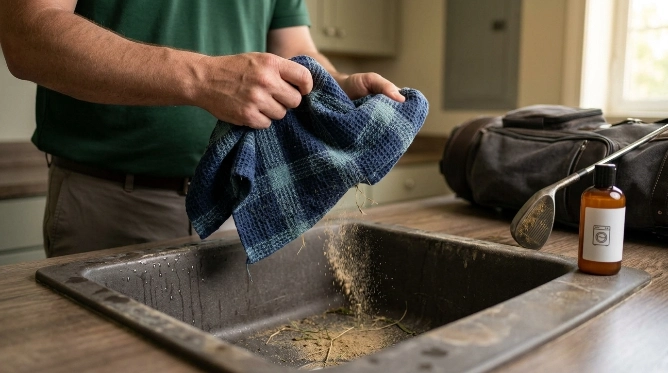
Start outside if the towel is dirty from a wet or sandy course. Give it several firm shakes so loose grit doesn’t go directly into your washing machine.
- Shake out bunker sand.
- Brush away dried grass.
- Remove loose soil and leaves.
- Detach removable carabiners or accessories when appropriate.
- Check folds for tees, ball markers, or other small objects.
If the towel is heavily coated with mud, rinse the worst areas under cool running water first. I find this especially useful after playing from soft fairways where soil gets pressed deep into a waffle weave.
2. Pretreat visible stains
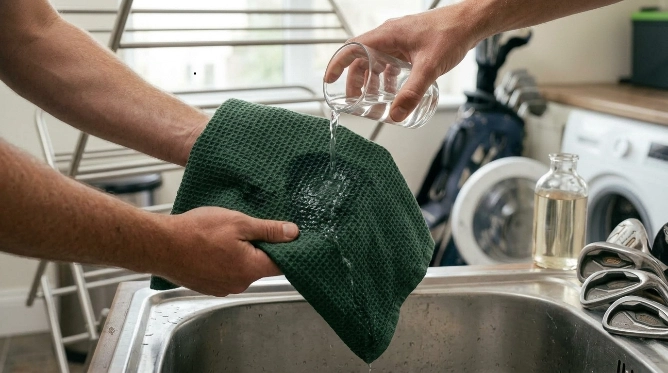
Put a small amount of mild liquid detergent directly onto stubborn dirty areas. Gently work it into the fabric with your fingers rather than aggressively scrubbing the towel.
Let the detergent sit briefly according to its instructions. Avoid experimenting with strong stain removers until you’ve checked the towel’s care label.
3. Wash the towel
Machine washing is convenient when the manufacturer’s label permits it. A cold cycle is a sensible default for many golf microfiber products, although your towel’s specific instructions come first.
- Place the towel in the washer after removing loose debris.
- Wash it with other suitable low-lint items when practical.
- Add the recommended amount of mild detergent.
- Choose the temperature specified on the care label.
- Run the appropriate normal or gentle cycle.
- Remove the towel promptly when the cycle finishes.
I avoid mixing my muddiest golf towel with delicate golf shirts. Dirt, grass, sand, and sunscreen residue don’t need to circulate through clothing that only needs a light wash.
4. Dry it completely
Air drying is the cautious option when you’re unsure how much heat the towel can tolerate. If its label permits tumble drying, choose the recommended setting and avoid unnecessary heat.
Section Takeaway: Remove abrasive course debris before washing, use the towel’s care label as your final authority, and never put it back into the golf bag while damp.
What Detergent and Water Temperature Should You Use?
For routine dirt, a small amount of mild laundry detergent is enough for many microfiber golf towels. Cold water is also specifically recommended by some golf towel manufacturers.
More detergent isn’t automatically better. Excess product can be harder to rinse away, especially when you’re washing only one or two towels.
Why the care label matters
Microfiber describes a class of fine synthetic fibers, not one universal fabric recipe. Golf towels can differ in fiber blend, weight, printing, stitching, attachments, and weave.
Manufacturer specifications illustrate those differences:
| Example | Size | Material / Texture | Published Care Information |
|---|---|---|---|
| Club Glove Microfiber Cart Towel | 16 × 24 in. | Waffle-textured microfiber | Hand or machine wash, cold water, mild detergent |
| Club Glove Microfiber Caddie Towel | 17 × 40 in. | Waffle-textured microfiber | Hand or machine wash, cold water, mild detergent |
| OGIO Golf Towel | 37 × 19 in. | 380 gsm, 85/15 waffle microfiber | Check the product’s sewn-in care label before laundering |
Should you wash microfiber separately?
You don’t always need a dedicated load. However, separating microfiber from fluffy cotton towels can help reduce lint collecting on the fine fibers.
- Good companions: Similar microfiber cleaning cloths and low-lint synthetic items.
- Less ideal: Plush cotton bath towels and heavily linting fabrics.
- Keep separate: Delicates you don’t want exposed to course mud or sand.
When I have only one dirty golf towel, I’ll often rinse the heavy dirt first and wash it with a small group of similar cleaning cloths. That gives the towel plenty of room to rinse clean.
Section Takeaway: Use mild detergent, avoid overdosing the wash, and treat cold water as a conservative starting point only when it agrees with the manufacturer’s instructions.
Should You Use Fabric Softener, Bleach, or Dryer Sheets?
I avoid fabric softener and dryer sheets on microfiber golf towels unless the manufacturer specifically allows them. Products that leave a coating behind can work against the clean, absorbent surface you want from a golf towel.
Fabric softener
Microfiber is most useful when its fine surface can contact moisture and debris directly. A residue-producing laundry product can interfere with that surface.
- Skip liquid fabric softener unless the care label permits it.
- Avoid dryer sheets for the same practical reason.
- Don’t add extra products just to make the towel smell stronger.
Chlorine bleach
Don’t assume bleach is safe because the towel is white. Synthetic fibers, printed logos, embroidery, stitching, and attached hardware can have different care limits.
If the care label prohibits bleach, follow it. When the label is unclear, mild detergent is the safer routine choice.
What about vinegar?
Home laundry guides often suggest vinegar for odor or residue problems, but microfiber towel manufacturers don’t all give the same instructions. I wouldn’t make it part of every wash unless the product’s care information supports it.
For normal golf-course dirt, proper rinsing and sensible detergent use usually matter more than adding another cleaning ingredient.

Can You Put a Microfiber Golf Towel in the Dryer?
Sometimes, but the towel’s care label should decide. Air drying is the lowest-risk option when you don’t know the towel’s approved dryer temperature.
Synthetic microfiber doesn’t need aggressive heat simply because the towel came home muddy. Excessive heat can also be unnecessary when a lightweight towel dries quickly on a rack.
My post-round drying routine
- Remove the towel from the washer promptly.
- Shake it open instead of leaving it folded.
- Hang it where air can circulate around the fabric.
- If using a dryer, follow the manufacturer’s heat setting.
- Make sure the towel is completely dry before storage.
The last step matters. A towel that’s slightly damp can become unpleasant when it’s zipped into a dark golf-bag pocket for several days.
I normally hang mine after washing and put it back on the bag only when both the center and folded areas feel dry. It’s an easy habit and requires no special equipment.
Don’t confuse heat with cleanliness
A hotter dryer setting doesn’t automatically make a microfiber golf towel cleaner. Washing removes the dirt; drying is mainly about removing remaining moisture safely.
Follow the label instead of selecting high heat by habit. This is especially important for towels with printed graphics, embroidery, magnets, clips, or layered construction.
How Do You Remove Mud, Grass, Sunscreen, and Odors?
Different golf-course messes benefit from slightly different preparation. The goal is still to use the gentlest method that gets the towel clean.
Heavy mud and soil
Let thick mud dry enough to shake or brush off when practical, then rinse the remaining soil under cool water. Sending clumps of course dirt straight into the washer makes the machine do unnecessary work.
Grass marks
Rinse away loose vegetation first. Apply a small amount of suitable detergent to the stained area and let it work briefly before washing.
Sunscreen or oily residue
Sunscreen can transfer from your hands to the towel throughout a round. Pretreat greasy spots with a little liquid detergent rather than repeatedly washing the entire towel with excessive detergent.
Persistent odor
Odor often becomes worse when a dirty towel stays damp for hours. Wash it promptly, rinse it thoroughly, and dry it completely before storing it.
- Before washing: Remove grit and organic debris.
- During washing: Use the correct detergent amount.
- After washing: Don’t leave the towel sitting wet in the machine.
- Between rounds: Give the towel airflow instead of sealing it in the bag.
Keep golf-ball cleaning rules in mind on the course
A towel is useful for cleaning your ball, but the Rules of Golf control when that cleaning is allowed. The USGA’s guidance on cleaning a golf ball explains that a lifted ball may generally be cleaned, with specific exceptions under Rule 14.1c.
That doesn’t change how you launder the towel at home. It simply matters when you’re using the clean towel during a competitive round.
Section Takeaway: Pretreat the specific mess instead of attacking the whole towel with harsher chemicals, then wash and dry it promptly.
How Often Should You Wash a Microfiber Golf Towel?
Wash it when dirt, moisture, odor, or reduced cleaning effectiveness tells you it needs attention. There isn’t one schedule that fits every golfer.
A golfer playing dry summer rounds may need fewer washes than someone playing muddy winter golf. Your on-course cleaning habits matter too.
Wash it sooner when:
- The towel is visibly covered with mud or grass.
- Bunker sand remains trapped in the weave.
- The fabric smells after drying.
- Sunscreen or oily residue is noticeable.
- The towel smears dirt instead of lifting it.
- You’ve used the same damp section through several rounds.
A simple routine for regular golfers
After every round, I shake the towel out and inspect how dirty it became. On a dry day it may only need to air out, while a muddy round usually earns an immediate wash.
During wet weather, I also try to keep separate damp and dry areas. The damp section handles clubface dirt, while the cleaner dry section stays useful for grips and hands.
When should you replace the towel?
Age alone doesn’t tell you much. Replacement makes sense when washing no longer restores useful texture, the fabric remains stained or unpleasant, or seams and attachments start failing.
- Persistent embedded dirt
- Damaged stitching
- Torn attachment points
- Texture that no longer cleans effectively
- Odor that remains after proper washing and drying
As of 2026, microfiber remains common across compact clip-on towels and larger caddie-style designs. Regardless of size, regular basic care is more useful than waiting until the towel becomes heavily loaded with dirt.
Section Takeaway: Let the towel’s condition and your playing environment set the wash schedule rather than following an arbitrary number of rounds.
Microfiber Golf Towel Washing FAQs
Can I wash a microfiber golf towel in a washing machine?
Yes, if the manufacturer’s care label permits machine washing. Remove loose grass, sand, and mud first, use an appropriate amount of mild detergent, and choose the specified water temperature. Club Glove, for example, allows hand or machine washing of its microfiber golf towels in cold water.
Can I wash my microfiber golf towel with regular clothes?
You can when the fabrics and care settings are compatible, but heavily soiled golf towels are better kept away from delicate clothing. Washing microfiber separately from fluffy cotton items can also reduce lint transfer onto the towel’s fine fibers.
What temperature should I wash a microfiber golf towel at?
Check the care label first. Some golf microfiber manufacturers specifically recommend cold water, making it a sensible conservative starting point when your towel’s instructions agree. Don’t automatically increase the temperature just because the towel has mud or grass stains.
Should I use fabric softener on a microfiber golf towel?
I generally skip fabric softener unless the manufacturer explicitly permits it. A golf towel needs an effective, residue-free surface for collecting moisture and dirt, so adding a coating-producing laundry product offers little practical benefit.
Can I clean my golf ball with a microfiber towel during a round?
Yes when the Rules allow the ball to be cleaned. Under Rule 14.1c, a ball lifted from the putting green may always be cleaned, while certain other lifting situations restrict cleaning. The R&A’s Rule 14 guidance explains the exceptions.
Why does my microfiber golf towel still smell after washing?
Persistent odor can come from embedded dirt, insufficient rinsing, excessive detergent, or storing the towel before it has dried completely. Rinse away heavy soil before washing, use the correct detergent amount, and give the towel enough airflow to dry fully.
Final takeaway: Washing a microfiber golf towel doesn’t require a complicated routine. Shake away abrasive debris, follow the care label, use mild detergent, avoid unnecessary laundry additives, and let the towel dry completely.
That simple routine keeps your towel ready for muddy wedges, damp clubfaces, dirty golf balls, and wet grips without turning one of the easiest pieces of golf equipment to maintain into a project.