
How to Choose Your First Golf Course: A Beginner’s Guide to Finding the Right Place to Play
Starting golf is exciting, but choosing your first golf course can feel confusing. Many new golfers wonder: Should I choose a famous championship course, a local public course, or a beginner-friendly facility? The wrong choice can make learning harder, more expensive, and less enjoyable.
Learning how to choose your first golf course is about finding a place that matches your current skill level, budget, goals, and comfort. A good first course should help you build confidence, practice your swing, understand golf etiquette, and enjoy the game.
In this guide, we will explain what beginners should look for when selecting a golf course, including course difficulty, cost, facilities, location, practice areas, and when professional guidance can help.
Quick Answer
To choose your first golf course, look for a beginner-friendly course with reasonable fees, convenient location, practice facilities, and a welcoming atmosphere. Avoid choosing only based on reputation or difficulty. A shorter, forgiving course can help new golfers develop skills and confidence faster.
Why Choosing the Right First Golf Course Matters
Your first golf course experience can influence how quickly you improve and how much you enjoy the game.
A difficult championship course with narrow fairways, long distances, and challenging hazards may look impressive, but it can overwhelm a beginner. You may spend more time searching for lost balls than learning proper technique.
A beginner-friendly golf course provides:
- More opportunities to practice shots
- Less pressure during your first rounds
- Better confidence development
- A more enjoyable learning experience
- A comfortable environment to understand golf etiquette
Your first course does not need to be the most famous course. It needs to be the right course for your current ability.
Factors to Consider When Choosing Your First Golf Course
1. Choose a Course That Matches Your Skill Level
Golf courses vary greatly in difficulty. Some are designed for experienced players, while others are more welcoming to beginners.
When starting, look for:
- Shorter total yardage
- Wider fairways
- Fewer forced carries over water
- Less extreme rough
- Beginner-friendly tee options
- A relaxed pace of play
Many courses offer multiple tee boxes, allowing golfers of different abilities to play the same course at an appropriate difficulty level.
For example, a beginner may enjoy playing from forward tees while an experienced golfer chooses championship tees.
The USGA Course Rating and Slope Rating system helps golfers understand how difficult a course is compared with others. Checking these ratings can help beginners avoid choosing a course that is too challenging.
2. Consider the Type of Golf Course
Not every golf facility serves the same purpose. Understanding the different types can help you make a better decision.
Public Golf Courses
Public courses are open to everyone and are often the best starting point for new golfers.
Advantages:
- Affordable pricing
- Flexible tee times
- Less intimidating atmosphere
- Good for casual practice
Limitations:
- Course conditions may vary
- Busy times can create slower play
Municipal Golf Courses
These are usually operated by local governments and focus on accessibility.
Benefits include:
- Lower costs
- Beginner-friendly environments
- Community-focused programs
Private Golf Clubs
Private clubs often provide excellent course conditions and additional services.
However:
- Membership fees can be expensive
- Rules and expectations may be stricter
- Beginners may feel less comfortable
For most new golfers, a public or municipal course is the best first choice.


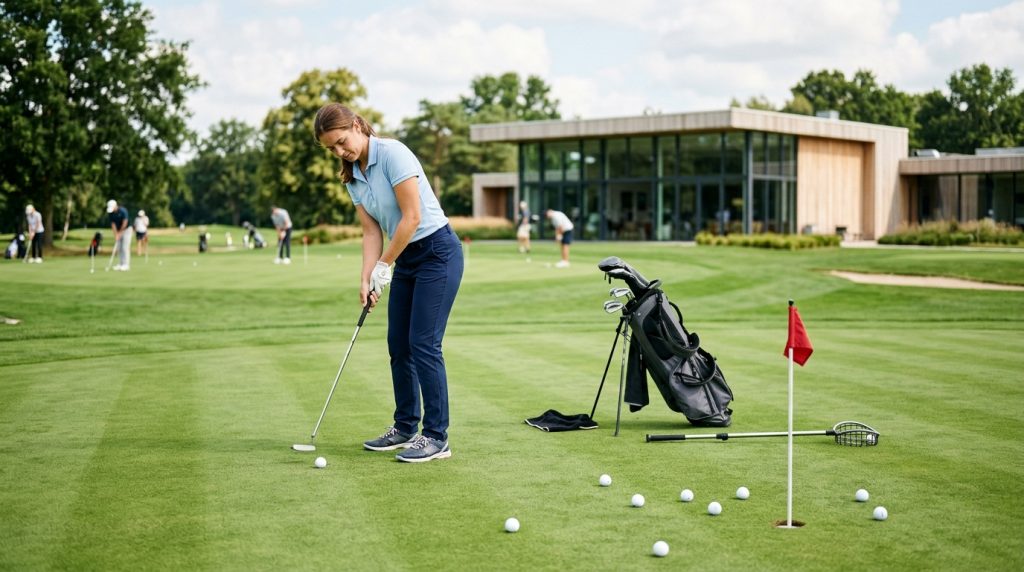
3. Check the Practice Facilities
A good first golf course should offer more than just a place to play.
Practice facilities can dramatically improve your learning experience.
Look for:
- Driving range
- Putting green
- Chipping area
- Practice bunker
- Golf lessons
A beginner who spends time practicing short shots often improves faster than someone who only plays full rounds.
Short game areas are especially valuable because putting, chipping, and pitching make up a large part of most golf scores.
4. Evaluate Course Location and Convenience
A great golf course is not useful if you rarely visit it.
Choose a course that fits your lifestyle.
Consider:
- Driving distance from your home
- Traffic conditions
- Available parking
- Opening hours
- Weekend availability
A course that is 15 minutes away may help you improve faster than a famous course that requires a two-hour drive.
Consistency matters more than prestige when learning golf.
Playing regularly at a comfortable course will help you understand your swing, course management, and confidence.
5. Compare Golf Course Costs
Golf can become expensive if you do not plan your spending carefully.
Common costs include:
| Cost Factor | Beginner Consideration |
|---|---|
| Green fees | Choose affordable courses that allow frequent practice |
| Cart fees | Walking may reduce costs if the course allows it |
| Equipment rental | Useful before buying a complete golf set |
| Practice balls | Important if you use the driving range often |
| Lessons | Can save money by preventing bad habits |
Before committing to a course, check:
- Weekday vs weekend prices
- Membership options
- Beginner discounts
- Practice package deals
A lower-cost course that allows regular play is often better than an expensive course you rarely visit.
6. Look for a Welcoming Golf Environment
Many beginners worry about feeling judged on the course.
A good beginner course should have:
- Friendly staff
- Clear rules
- Helpful instructors
- Comfortable clubhouse environment
- Reasonable pace expectations
Golf has traditions and etiquette, but beginners are expected to learn.
Organizations like the PGA of America provide player development resources that explain basic golf etiquette and help new players feel more comfortable.
Simple etiquette includes:
7. Consider Course Conditions and Maintenance
Course quality affects your learning experience.
Pay attention to:
- Grass quality
- Green conditions
- Fairway maintenance
- Bunker condition
- Overall cleanliness
A beginner does not need a perfect tournament-level course, but extremely poor conditions can make learning frustrating.
A well-maintained course helps you understand how the ball reacts and improves your ability to judge shots.
Beginner-Friendly Golf Course Checklist
Before booking your first round, ask:
| Question | Why It Matters |
|---|---|
| Is the course suitable for beginners? | Prevents unnecessary frustration |
| Are shorter tees available? | Helps new golfers enjoy the game |
| Does it have practice areas? | Supports skill development |
| Are lessons available? | Helps build correct fundamentals |
| Is pricing reasonable? | Allows more frequent playing |
| Is the location convenient? | Encourages regular practice |
Expert Tip
Expert Tip: Choose a course where you feel comfortable playing regularly, not just one that looks impressive. The best first golf course is the one that encourages you to come back and improve.
Should Beginners Start With a Full-Length Golf Course?
Many beginners wonder whether they should immediately play an 18-hole course.
The answer depends on confidence and experience.
9-Hole Courses
A 9-hole course is often ideal for beginners because:
- It takes less time
- It reduces pressure
- It costs less
- It allows more practice
Par-3 Courses
Par-3 courses are excellent learning environments.
They help beginners practice:
- Short irons
- Wedges
- Putting
- Course strategy
Full 18-Hole Courses
A full course is suitable when you:
- Understand basic rules
- Can hit the ball consistently
- Know basic etiquette
- Can maintain reasonable pace
Starting smaller is not a disadvantage. Many skilled golfers developed their fundamentals on shorter courses.
When to Get Help From a Golf Pro or Fitter
Choosing the right course is easier with professional guidance, especially if you are completely new to golf.
Consider working with a golf professional when:
- You have never played before
- You are unsure about golf basics
- You struggle with consistent contact
- You want to avoid developing poor habits
A golf instructor can help you:
- Learn proper grip and posture
- Understand swing fundamentals
- Choose suitable practice methods
- Build confidence faster
Equipment fitting can also help later when you are ready to purchase clubs. The right club length, shaft flex, and grip size can improve comfort and consistency.
Common Mistakes Golfers Should Avoid
Choosing a Course Based Only on Reputation
A famous course is not always the best place for a beginner.
Better approach: Choose a course that matches your ability.
Starting With the Hardest Course Available
Difficult courses can create unnecessary frustration.
Avoid courses with:
- Extremely narrow fairways
- Long forced carries
- Very difficult greens
Ignoring Practice Facilities
A course without practice areas may limit your improvement.
Practice between rounds helps you build skills faster.
Buying Expensive Equipment Before Playing
Many beginners spend too much money before understanding their needs.
Try:
- Rental clubs
- Used equipment
- Beginner sets
before making major purchases.
Forgetting About Pace of Play
Slow play affects everyone on the course.
Learn basic pace habits:
- Prepare your shot while others play
- Limit searching time for lost balls
- Keep moving between shots
FAQs
What is the best type of golf course for beginners?
Public, municipal, and par-3 courses are usually the best choices because they are affordable, relaxed, and easier to learn on.
Should my first golf course be difficult?
No. Beginners should choose a course that matches their current ability. A forgiving course helps build confidence and improve faster.
How much does it cost to play golf for the first time?
Costs vary by location, but beginners should consider green fees, equipment rental, practice balls, and possible lesson costs.
Should beginners take golf lessons before playing?
Lessons are helpful because they teach proper fundamentals and prevent bad habits. Even one or two lessons can improve your starting experience.
Is a 9-hole course better for beginners?
Yes. A 9-hole course is often less stressful and allows beginners to practice without spending as much time or money.
What should I look for in a beginner golf course?
Look for affordable pricing, beginner-friendly difficulty, practice facilities, good location, and a welcoming environment.
When should I move to a harder golf course?
Move to a more challenging course when you feel comfortable controlling your shots, following etiquette, and maintaining a reasonable pace.
Conclusion
Choosing your first golf course is an important step in building a positive relationship with the game. The right course should match your skill level, budget, schedule, and learning goals.
When deciding how to choose your first golf course, focus on convenience, beginner-friendly design, practice opportunities, and a welcoming atmosphere rather than choosing only by reputation.
A comfortable course where you can play regularly will help you improve faster and enjoy golf more. Start with the right environment, practice consistently, and your confidence will grow with every round.
Find a beginner-friendly course near you, book your first tee time, and start building your golf journey today.