
How Do You Use a Golf Towel to Clean a Driver?

Quick Answer
Use a clean golf towel with one lightly damp section and one dry section. Remove loose sand first, wipe the driver face and sole with the damp area, clean the crown gently with a grit-free section, then dry the entire head before replacing the headcover. Golf towels are commonly used to keep clubs clean, as the PGA of America also notes.
Quick Steps
- Check for grit: Shake away loose sand and hard debris before wiping.
- Dampen one area: Wet part of the towel and wring it until it is damp, not dripping.
- Clean the face: Use light passes to remove grass, soil, and ball marks.
- Wipe the sole: Remove dirt from the bottom of the clubhead.
- Protect the crown: Switch to a clean, grit-free towel section before touching painted surfaces.
- Finish dry: Dry the clubhead, shaft, and grip before returning the driver to the bag.
If you’re wondering how do you use a golf towel to clean a driver, the safest method is simpler than a full wash. A damp-and-dry towel setup handles most dirt you’ll encounter during a normal round.
I treat a driver differently from a mud-covered wedge. Its face needs cleaning, but its painted crown deserves the cleanest section of the towel.
Definition: A golf towel is an absorbent cloth carried with your golf bag for cleaning clubs, managing moisture, and keeping equipment dry during play.
In This Guide
How Do You Clean a Driver With a Golf Towel Step by Step?
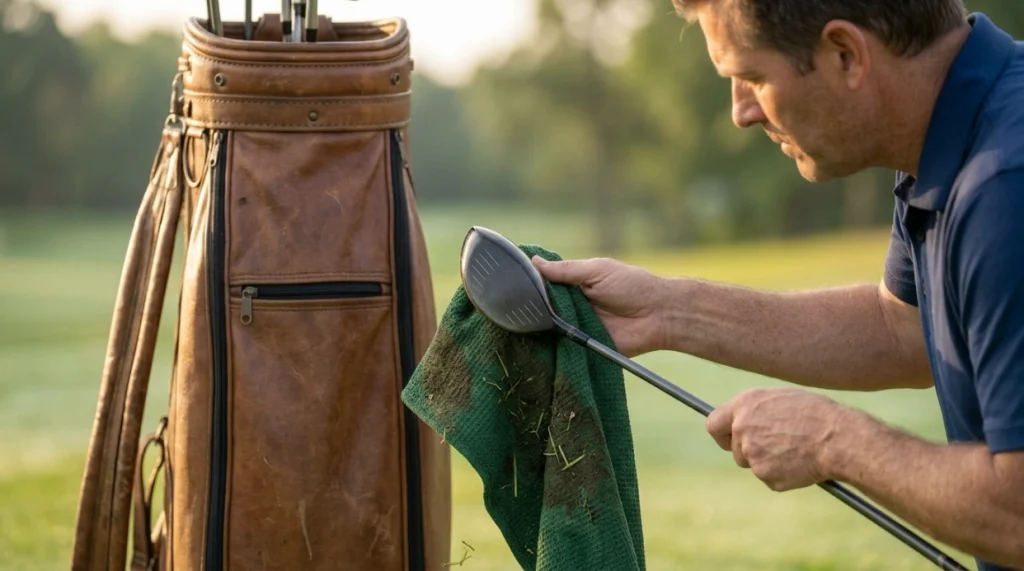
Start by removing loose debris, then use moisture to loosen whatever remains. The goal is to lift dirt away rather than grind it across the clubhead.
My rule is simple: if I can see sand or grit, I don’t immediately start rubbing. I clear those particles first.
1. Inspect the driver before wiping it
Look at the face, sole, crown, hosel, and the lower section of the shaft. Grass and soft soil are easy to handle, while sand deserves more care.
- Loose grass: Brush it away with your fingers or shake it free.
- Sand: Remove loose grains before applying towel pressure.
- Soft mud: Use a damp towel rather than scrubbing it dry.
- Dried dirt: Hold the damp towel against it briefly before wiping.
2. Create a wet zone and a dry zone
Dampen one section of the towel with clean water. Wring it well so water does not drip into the hosel, shaft connection, or bag.
Keep another section clean and dry. That area will handle the final wipe and moisture removal.
3. Clean the driver face first
Use several light passes across the face. Pay attention to the face texture or scorelines where grass and soil can remain after impact.
- Wipe from one side of the face toward the other.
- Use moisture instead of harder pressure on stubborn marks.
- Check the edges of the face for remaining soil.
A clean face also makes it easier to inspect the driver for unusual damage. Cleaning will not change loft, shaft flex, spin rate, or forgiveness, but it helps you see the equipment clearly.
4. Wipe the sole and hosel area
The sole often collects grass and soil when the driver touches the ground. Use the damp section here before moving to more cosmetic surfaces.
Wipe around the hosel carefully rather than soaking it. If your driver uses an adjustable sleeve, there’s no reason to loosen it for normal towel cleaning.
5. Switch sections before cleaning the crown
The crown is the top surface of the driver head that you see at address. Painted, glossy, matte, or composite finishes can show cosmetic marks more easily than the sole.
Never take the sandiest corner of your towel directly from the sole to the crown. Use a clean damp section and light pressure instead.
6. Dry everything before replacing the headcover
Use your dry towel area on the face, crown, sole, hosel, and shaft. You don’t want to trap unnecessary moisture under a headcover.
- Clubhead: Leave no visible water behind.
- Shaft: Wipe away rain, dew, and mud splashes.
- Grip: Keep it clean and dry before your next swing.
- Headcover: Replace it once the head is reasonably dry.
Section Takeaway: Remove grit first, use a damp section for cleaning, protect the crown with clean fabric, and finish with a dry section. More pressure is rarely the answer.
Should You Use a Damp or Dry Towel on a Driver?
Use both. A damp towel is better for loosening dirt, while a dry towel is better for finishing the job and controlling moisture.
A dry towel alone works well when you’re dealing with fingerprints, light moisture, or a few pieces of loose grass. Dried soil usually needs a little water first.
When to use the damp section
- Mud or soil on the sole
- Grass stuck to the clubface
- Ball residue or visible marks
- Dirt around the lower hosel area
When to use the dry section
- After cleaning with the damp area
- After playing in rain or heavy dew
- Before putting the headcover back on
- For drying the shaft and grip
The same wet-and-dry separation becomes even more useful in humid weather. The PGA of America recommends keeping grips clean and dry, especially when moisture builds during hot conditions.
If your towel becomes saturated, dirty, or sandy, switch towels rather than pretending a contaminated section is still suitable for delicate surfaces.
Which Parts of a Driver Can You Safely Wipe?
You can wipe the face, sole, crown, hosel, shaft, and grip with a suitable clean towel. The amount of moisture and pressure should change depending on the surface.
Driver face
The face handles repeated ball contact, so normal damp-towel cleaning is appropriate. Wipe away soil and grass without using an abrasive metal tool.
Crown
The crown deserves extra care because cosmetic marks are easy to notice. Use the cleanest towel section you have and apply light pressure.
Sole
The sole can tolerate normal wiping and usually carries the most dirt. Clean it before switching to a fresh section for the crown.
Hosel and adjustable components
Wipe around the hosel instead of flooding it with water. Routine cleaning doesn’t require changing an adjustable driver’s loft sleeve or movable settings.
The USGA Equipment Standards cover golf-club construction and equipment rules. Cleaning should remain maintenance, not an unnecessary alteration of the club.
Shaft
A clean towel works well for removing water, grass, and dirt from the shaft. Check the towel for grit before wiping glossy or polished surfaces.
Grip
Use a clean section on the grip rather than the muddy area that just cleaned the sole. During a round, the priority is keeping the grip free of dirt and excess moisture.
Whether you use a Titleist, Callaway, TaylorMade, Ping, Cobra, Mizuno, or Srixon driver, finish materials can differ by model. Follow the manufacturer’s care guidance if your club uses an unusual finish or construction.


What Should You Avoid When Cleaning a Driver?
Avoid trapped grit, aggressive scrubbing, harsh chemicals, excessive water, and hard cleaning tools. Most driver cleaning should be gentle.
- Don’t scrub sand into the crown: Sand can act as an abrasive when trapped between fabric and the club.
- Don’t use the dirtiest towel section everywhere: Separate the sole-cleaning area from the crown-cleaning area.
- Don’t soak the clubhead: A damp towel provides enough moisture for routine cleaning.
- Don’t use harsh solvents: Strong cleaners may not be suitable for every paint, coating, adhesive, or composite finish.
- Don’t use a wire brush on the crown: Keep abrasive or hard tools away from cosmetic surfaces.
- Don’t cover a wet driver immediately: Dry the head before putting it back under the headcover.
I also wouldn’t adjust weights or the hosel simply because I’m cleaning the club. Loft, lie-related settings, shaft characteristics, and movable-weight positions belong to fitting and setup decisions.
For current equipment-rule information, the R&A Equipment Rules are another authoritative reference alongside the USGA.
As of 2026, the practical cleaning principle remains straightforward: use clean materials and avoid unnecessary abrasion or alteration.
Is a Golf Towel Better Than a Brush or Full Wash?
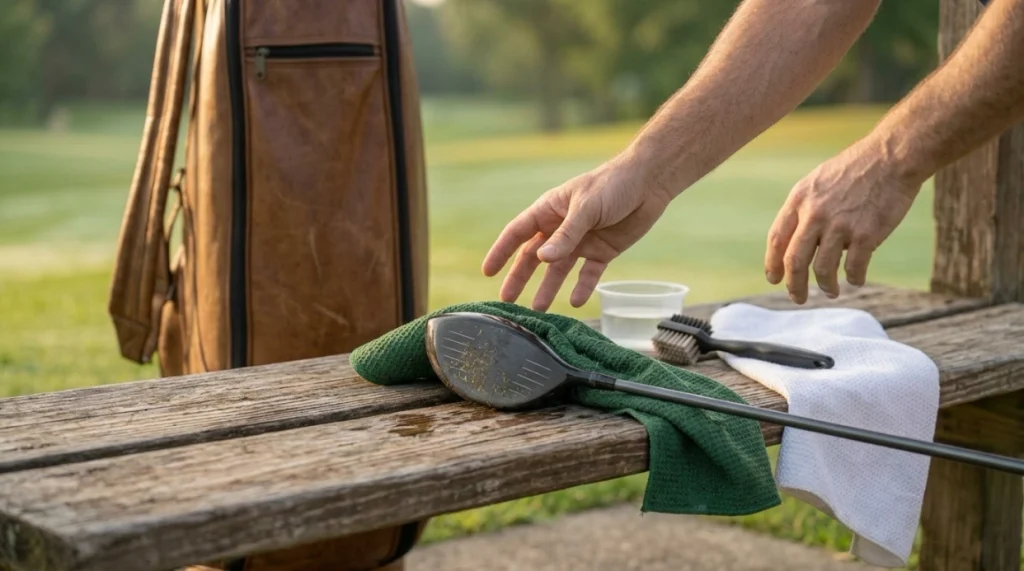
A golf towel is the best first choice for routine driver cleaning during a round. A soft brush or more thorough wash only becomes useful when a towel cannot remove the remaining contamination.
| Cleaning Method | Best Use | Moisture | Driver Crown | Main Caution |
|---|---|---|---|---|
| Damp golf towel | Grass, soil, light mud, ball marks | Damp and wrung out | Yes, with clean fabric | Check for trapped grit |
| Dry golf towel | Water, fingerprints, final drying | Dry | Yes | Poor choice for dried mud |
| Soft nylon brush | Stubborn debris on suitable face or sole areas | Usually little or none | Avoid unless manufacturer allows it | Too much pressure can mark finishes |
| Full careful cleaning | Post-round dirt that a towel cannot remove | Controlled water use | Use soft cloth only | Avoid soaking adjustable areas |
Cotton terry and microfiber can both work well when clean. The bigger concern is hard material trapped in the towel, not simply whether the label says cotton or microfiber.
For an on-course routine, I prefer keeping one section damp and another protected for drying. A second towel becomes useful on rainy days or after repeated bunker and muddy lies.
Frequently Asked Questions
Can you clean a driver with a wet golf towel?
Yes, but the towel should be damp rather than dripping wet. Use enough moisture to loosen dirt, then dry the clubhead before replacing the headcover.
Can a golf towel scratch a driver?
A clean, soft towel is suitable for routine wiping, but sand or hard grit trapped in the fabric can potentially mark a painted or glossy surface. Inspect or shake the towel before cleaning the crown.
Should you clean your driver after every shot?
You don’t need a full cleaning after every drive. A quick wipe makes sense when grass, mud, sand, rain, or visible residue remains on the face or sole.
Can you use microfiber on a driver?
Yes. Clean microfiber works well for wiping moisture and loose dirt from a driver, particularly when you reserve a clean section for the painted crown.
Can you use a cotton towel on a driver?
Yes. Soft, clean cotton is suitable for ordinary club cleaning, but check it for trapped sand or dried soil before rubbing cosmetic surfaces.
Should you use soap when cleaning a driver?
Soap usually isn’t necessary for quick on-course cleaning. For a deeper post-round clean, follow your driver’s manufacturer guidance and avoid harsh solvents or abrasive household cleaners.
Should you put the headcover on immediately after cleaning?
Dry the driver first whenever possible. A clean, dry towel removes the remaining moisture before you replace the headcover and return the club to your bag.
The easiest driver-cleaning routine is also the safest: remove loose grit, use a lightly damp towel, wipe with gentle pressure, and finish with a clean dry section.
Build that habit into your round and cleaning takes only a few moments. Your driver stays cleaner without turning routine maintenance into an aggressive scrubbing job.