
Can You Put Golf Towels in the Dryer?

Quick Answer
Yes, many golf towels can go in the dryer, but the correct setting depends on the towel material and its care label. For microfiber golf towels, low heat or an air-dry setting is the safer choice because excessive heat can damage the fine synthetic fibers; microfiber care guidance also recommends low heat or air drying.
Safe Dryer Rules
- Check the label: The manufacturer’s care instructions should override general advice.
- Microfiber: Choose low heat, no heat, or air drying rather than a hot dryer cycle.
- Cotton: Many cotton towels tolerate machine drying, but high heat can increase shrinkage and wear.
- Skip dryer sheets: They can leave residue that may reduce microfiber’s cleaning and moisture-handling performance.
- Special attachments: Check instructions before machine drying towels with magnets, clips, decorative patches, or other hardware.
When You’re Unsure
- Air dry the towel until you can confirm its recommended drying instructions.
A golf towel spends its rounds collecting mud, wet grass, sand, sweat, and moisture. Eventually, the question isn’t whether to wash it, but whether you can safely toss it into the dryer afterward.
As of 2026, my rule is simple: let the care label make the final decision, then use the gentlest effective drying method. This guide covers microfiber, cotton, waffle-weave towels, dryer settings, air drying, and the mistakes most likely to shorten a towel’s useful life.
In This Guide
- Can Golf Towels Go in the Dryer Safely?
- What Dryer Setting Should You Use for a Golf Towel?
- Does Golf Towel Material Change How You Should Dry It?
- How Should You Dry a Microfiber Golf Towel?
- Is a Dryer or Air Drying Better for Golf Towels?
- What Dryer Mistakes Can Damage a Golf Towel?
- Frequently Asked Questions
Can Golf Towels Go in the Dryer Safely?
Most ordinary golf towels can be machine dried when their care labels permit it. The important part is matching the dryer temperature to the fabric rather than treating every golf towel like a heavy cotton bath towel.
Definition: A golf towel is an absorbent cloth carried on a golf bag or cart for cleaning clubheads, drying equipment, controlling moisture, and keeping grips or hands dry during a round.
The problem isn’t the dryer itself. The bigger concern is exposing a heat-sensitive towel to more temperature than its fibers or attached components are designed to handle.
Microfiber deserves the most caution. These towels use fine synthetic fibers that give them their useful dirt-grabbing and moisture-handling properties.
- Safe label: Follow the listed tumble-dry temperature.
- No label: Low heat or air drying is the cautious default.
- Microfiber: Avoid unnecessary high-temperature drying.
- Cotton: Machine drying is often practical, but overheating may increase wear or shrinkage.
- Hardware: Check instructions for magnetic pieces, clips, and decorative attachments.
Golf towels also have a practical job after drying. PGA guidance discusses using towels to keep grips clean and dry, so maintaining an absorbent towel matters beyond appearance.
You can read the PGA’s grip and towel guidance for more context on why a clean, dry towel remains useful during a round.
Section Takeaway: A dryer is fine for many golf towels. The care label and towel material should determine the heat setting.
What Dryer Setting Should You Use for a Golf Towel?
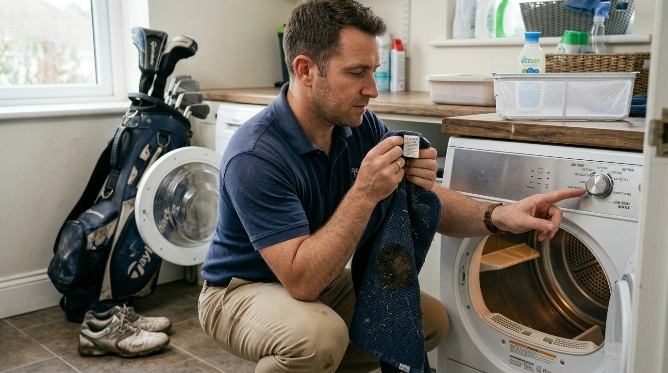
Low heat is the safest general dryer setting when you’re dealing with microfiber or when you’re uncertain about the towel’s heat tolerance. Air-fluff or no-heat settings offer an even more conservative option.
Whirlpool’s microfiber washing and drying guidance recommends avoiding high heat and using low heat or an air-dry setting for microfiber cloths.
A Simple Dryer Routine
- Read the label. Look for tumble-dry temperature and special restrictions.
- Shake out the towel. Remove loose grass, sand, and dirt before washing and drying.
- Clean the lint trap. This is especially useful before drying microfiber.
- Select low heat. Use air dry when the material is uncertain.
- Skip dryer sheets for microfiber. Avoid adding unnecessary residues to the fibers.
- Remove it when dry. Extra time in a hot drum provides little benefit.
Don’t assume a hotter setting will make a golf towel cleaner. Cleaning happens during washing; the dryer’s job is simply to remove the remaining moisture.
I prefer starting cooler and giving the towel more drying time if necessary. That’s an easier trade than damaging a useful microfiber towel with excessive heat.
Section Takeaway: Use the lowest effective temperature. Low heat or air drying is a strong default for microfiber golf towels.
Does Golf Towel Material Change How You Should Dry It?
Yes. Microfiber, cotton terry, waffle microfiber, and specialty golf towels don’t necessarily need the same drying treatment.
The table below gives practical starting points. Your towel’s sewn-in care label still takes priority.
| Golf Towel Type | Safer Starting Method | Main Concern |
|---|---|---|
| Microfiber | Low heat, no heat, or air dry | Excessive heat can damage fine synthetic fibers |
| Waffle microfiber | Low heat or air dry | Preserving texture and absorbency |
| Cotton terry | Low to medium heat if label permits | Shrinkage and unnecessary fiber wear |
| Embroidered towel | Follow label; lower heat when uncertain | Protecting thread, decoration, and towel shape |
| Magnetic or hardware-equipped towel | Follow product instructions or air dry | Attachment materials may have separate care requirements |
Microfiber Golf Towels
Microfiber needs conservative heat. The Rag Company specifies temperatures below 140°F for its microfiber products and recommends low heat, no heat, or hanging them to dry.
That 140°F figure is a manufacturer-specific instruction, not a universal temperature limit for every golf towel. Your towel’s own label remains the better authority.
Cotton Golf Towels
Cotton is usually less sensitive to moderate dryer heat than microfiber. However, repeated high-temperature drying can still encourage shrinkage and faster fabric wear.
Section Takeaway: Don’t choose a dryer setting because the item is called a golf towel. Choose it based on the towel’s actual fabric and care label.


How Should You Dry a Microfiber Golf Towel?
Dry microfiber on low heat, an air-only dryer setting, or a drying rack. Avoid high heat unless the specific manufacturer clearly allows it.
Maytag’s microfiber care instructions favor air drying and recommend low heat or an air-dry setting when a machine dryer is used.
Keep Microfiber Away From Lint-Heavy Loads
Microfiber’s structure can pick up lint from natural fabrics such as cotton. Drying golf microfiber separately from fluffy bath towels helps reduce that transfer.
- Dry microfiber with similar low-lint items.
- Clean the dryer’s lint filter first.
- Avoid dryer sheets unless the towel manufacturer specifically permits them.
- Stop the cycle when the towel is dry.
- Store it fully dry before your next round.
Why Absorbency Matters on the Course
A microfiber golf towel is useful because its fibers handle moisture and debris efficiently. Protecting those fibers keeps the towel useful for wiping wet clubheads, damp grips, and muddy grooves.
That matters on dewy mornings and wet-course rounds. A towel that no longer absorbs properly becomes little more than extra weight hanging from the bag.
Section Takeaway: Microfiber is easy to machine dry when you keep the temperature low. Heat management and lint control matter more than drying speed.
Is a Dryer or Air Drying Better for Golf Towels?
Neither method is automatically best for every towel. A dryer is faster and convenient, while air drying minimizes heat exposure.
I usually choose based on material and how soon I need the towel again. A routine microfiber towel rarely needs aggressive dryer heat.
| Factor | Low-Heat Dryer | Air Drying |
|---|---|---|
| Speed | Usually faster | Usually slower |
| Heat exposure | Low but present | None from a dryer |
| Microfiber suitability | Good when label permits low heat | Excellent cautious option |
| Convenience | High | Requires drying space |
| Best when label is missing | Use no heat or low heat cautiously | Safer default |
Air drying makes sense when the towel has unknown materials, decoration, or attachments. Give it good airflow and don’t put it back into the golf bag while any section remains damp.
Machine drying is more convenient when the label allows it. A low setting can get the towel ready for your next round without subjecting it to unnecessary heat.
Section Takeaway: Use air drying for maximum caution and low-heat machine drying for convenience. Either method works when it suits the fabric.
What Dryer Mistakes Can Damage a Golf Towel?
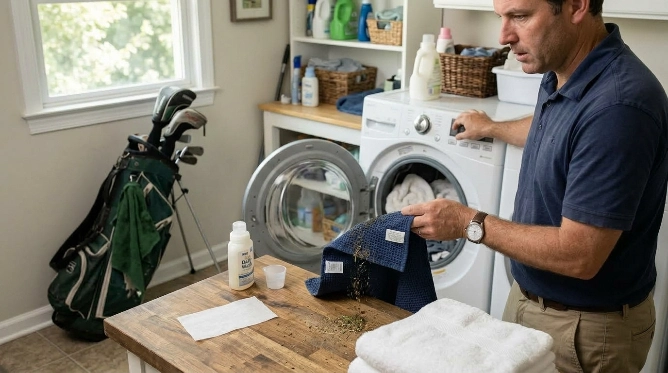
The biggest mistake is treating every golf towel the same. Material, attachments, and manufacturer instructions can change the safest drying method.
Using High Heat on Microfiber
High temperatures can damage synthetic microfiber and reduce the characteristics that make the towel effective. More heat doesn’t automatically mean a better result.
Using Dryer Sheets With Microfiber
Several microfiber-care guides recommend avoiding dryer sheets. Residue can interfere with the fine fibers responsible for picking up moisture and debris.
Drying Microfiber With Cotton Towels
Cotton tends to shed more lint than microfiber. That lint can collect on or within a microfiber towel during washing and drying.
- Better choice: Wash and dry microfiber with similar low-lint fabrics.
- Before drying: Clean the lint filter.
- After drying: Check that the towel is fully dry before storage.
Leaving the Towel Damp in Your Golf Bag
A towel that still feels damp shouldn’t go into a closed golf-bag pocket. Finish drying it first so trapped moisture doesn’t create a musty-smelling towel before your next tee time.
Ignoring the Care Label
Generic advice can’t account for every fiber blend, embroidery style, magnet, or attachment system. If your towel manufacturer gives a specific washing or drying instruction, use it.
Section Takeaway: Most golf-towel dryer problems come from excess heat, unsuitable laundry additives, lint transfer, or ignoring product-specific instructions.
Frequently Asked Questions
Can you put a microfiber golf towel in the dryer?
Yes, if its care label permits machine drying. Use low heat, no heat, or an air-dry setting and avoid excessive temperatures that may damage microfiber.
Can you dry a cotton golf towel in the dryer?
Many cotton golf towels can be machine dried. Follow the care label and avoid unnecessary high heat when you’re concerned about shrinkage, decoration, or long-term fiber wear.
What temperature should I use for microfiber?
Use the temperature stated on your towel’s care label. As a conservative default, choose low heat or air drying; one microfiber manufacturer, The Rag Company, specifies keeping its products below 140°F.
Should you use dryer sheets on golf towels?
For microfiber golf towels, it’s safer to skip dryer sheets unless the manufacturer specifically permits them. Microfiber-care instructions commonly warn that added residues can interfere with cleaning performance.
Should you wash microfiber golf towels separately?
Yes, separating microfiber from lint-producing cotton items is useful. This reduces the amount of loose cotton lint that can transfer to the fine microfiber structure.
Can I air dry a golf towel instead?
Yes. Air drying is a good option for microfiber, heat-sensitive towels, or any towel with unclear drying instructions, provided you give it enough airflow to dry completely.
What if my golf towel has a magnet or clip?
Check the manufacturer’s instructions before machine drying it. Remove detachable hardware when the product is designed for removal, and air dry the towel if you cannot confirm whether the attachment is dryer-safe.
Final Takeaway: Yes, you can put many golf towels in the dryer. Check the label first, use low heat for microfiber, avoid unnecessary high temperatures, and let the towel dry completely before clipping it back onto your golf bag.