
How Do You Use a Golf Towel on Golf Clubs?

Quick Answer
Use a golf towel by keeping one section slightly damp for wiping dirt, grass, sand, and mud from clubfaces and grooves. Use another section dry for removing moisture from the clubhead, shaft, hands, and especially the grip before your next shot. Normal towel use is permitted during a round under the USGA equipment rules.
How to use your towel on a club
- Check the clubface: Look for grass, soil, sand, or moisture after the shot.
- Use the damp area: Wipe the face and grooves until visible debris is gone.
- Use the dry area: Remove leftover moisture before putting the club away.
- Keep grips dry: Use only the dry section on the grip whenever possible.
- Repeat regularly: Cleaning immediately prevents dirt from drying inside the grooves.
Simple setup
- Damp lower corner: Use it for clubheads.
- Dry upper section: Reserve it for grips, hands, and final drying.
A golf towel looks like a simple bag accessory, but using it well makes club care much easier during a round. The trick is not simply wiping everything with the same wet piece of fabric.
I recommend dividing the towel into clear wet and dry working areas. That simple habit keeps dirty clubheads separate from the surfaces you use for grips and hands.
In This Guide
How Do You Use a Golf Towel on Your Clubs?
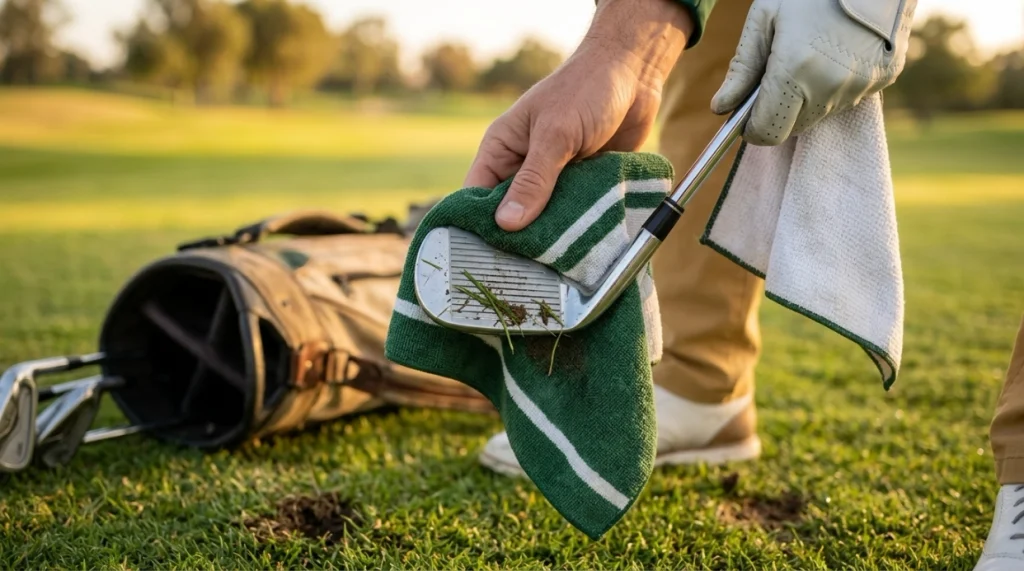
The best routine is simple: clean the clubhead with a damp section, inspect the grooves, then finish with a dry section. Do this before returning the club to your bag.
The main purpose is to stop grass, soil, sand, and moisture from staying on the hitting surface. You don’t need to polish the club after every shot.
Golf towel definition: A golf towel is a reusable cloth carried during play to clean clubs, manage moisture, dry hands or grips, and clean a golf ball when the Rules allow it.
Step 1: Inspect the clubhead after the shot
Look at the face before sliding the club back into the bag. Wedges and short irons often collect the most visible debris because they interact heavily with turf and sand.
If the face looks clean and dry, a full wipe may not be necessary. A quick check only takes a moment.
Step 2: Wipe the face with the damp section
Use a slightly damp area of the towel to loosen dirt. Rub across the face and grooves instead of simply wiping once in one direction.
For dried mud, hold the damp fabric against the area briefly before wiping. That is usually easier than grinding dry dirt across the finish.
- Light grass: A single damp wipe may be enough.
- Wet soil: Fold the towel over the clubface and wipe firmly.
- Sand: Remove loose grains before rubbing the surface aggressively.
- Packed debris: Use a suitable groove brush if the towel cannot reach it.
Step 3: Dry the clubhead
Finish with a clean, dry section. This is especially useful after morning dew, rain, wet rough, or a damp bunker.
Once the head is clean and reasonably dry, return it to the bag. The whole routine can become part of your normal post-shot habit.
Section Takeaway: Use moisture to loosen debris, then use dry fabric to finish. The two-stage method is more useful than using one soaked towel for every task.
Should a Golf Towel Be Wet or Dry?
A golf towel works best when it has both a damp section and a dry section. The damp area handles cleaning, while the dry area handles moisture control.
You don’t need to soak half the towel. Slightly damp fabric is normally enough for routine dirt and grass.
Why keep part of the towel damp?
Damp fabric helps soften dirt that sticks to a clubface. It is especially useful on irons and wedges after contact with wet turf.
- Wet one corner or one end before starting the round.
- Wring out excess water.
- Keep that area designated for dirty clubheads.
- Leave the remaining fabric as dry as possible.
Why keep another part dry?
A wet grip can make the club harder to hold securely. That is why I treat the dry portion as protected space.
Use that area for the grip, hands, shaft, or final clubhead wipe. In rainy weather, carrying a second dry towel inside the bag can also help.
| Towel area | Best use | Keep away from |
|---|---|---|
| Damp section | Clubfaces, grooves, dried grass, mud | Grips before a shot |
| Dry section | Grips, hands, shafts, final drying | Heavy mud and sand when possible |
| Protected spare towel | Rainy rounds and emergency grip drying | Routine dirty-club cleaning |
Section Takeaway: Think of your towel as two tools in one. Damp fabric cleans the clubhead, while dry fabric protects your grip and hands from unwanted moisture.
Which Parts of a Golf Club Should You Clean With a Towel?
Focus first on the clubface and grooves because they directly contact the ball. You can also wipe the sole, shaft, and grip when conditions require it.
Different areas need different treatment. Using the same dirty, wet corner everywhere defeats the purpose.
Clubface and grooves
The grooves are the channels cut across the face of many clubs. Dirt, sand, and grass can become trapped inside them.
Start with the towel. If debris remains packed inside a groove, use a proper golf-club brush rather than digging aggressively with a sharp household object.
Sole of the club
The sole is the bottom surface that interacts with the ground. Mud commonly sticks there after soft-course shots.
A damp wipe normally removes fresh soil quickly. Cleaning it immediately is easier than dealing with dried dirt after the round.
Shaft
Shafts usually need less attention during play. A dry wipe is useful when rain, dew, dirt, or fingerprints leave the surface wet or messy.
Avoid letting a gritty towel scrape repeatedly along a finished shaft. Shake or rinse sand from the towel when necessary.
Grip
The grip should normally be wiped with the cleanest, driest section you have. Your goal during the round is moisture removal, not soaking it.
The USGA’s Rule 4 equipment guidance also lists wrapping a towel or handkerchief around a grip as an allowed use of equipment.
Pro tip: If grip pressure, slipping, or hand position affects your swing repeatedly, a PGA professional or qualified club fitter can help identify whether technique or equipment is contributing.


When Should You Use Your Golf Towel During a Round?
The easiest approach is to use the towel immediately after any shot that leaves visible dirt or moisture on the club. That keeps cleaning from becoming a large job later.
You do not need a complicated schedule. Build the towel into the same routine you use for replacing a club in your bag.
After shots from wet grass
Morning dew can leave a clubhead wet even when it looks clean. A quick dry wipe takes only a few seconds.
Soft turf can also leave soil around the sole and lower grooves. Clean it before it dries.
After bunker shots
Remove loose sand before rubbing the club aggressively. Sand particles can act as abrasive grit between the towel and the club finish.
Shake the dirty section of your towel away from other players when practical. Then use a cleaner section for the final wipe.
Before a shot in rain or heavy humidity
Prioritize the grip and your hands before swinging. A protected dry towel becomes much more important once your main towel is wet.
Under the current Rules, ordinary towel use is allowed. The USGA specifically addresses common permitted equipment uses in Rule 4.3.
When using your towel on the golf ball
Club cleaning and ball cleaning follow different considerations. You cannot assume that carrying a towel means you may clean a ball anywhere at any time.
Under USGA Rule 14.1c, a ball lifted from the putting green may always be cleaned. Elsewhere, several specific exceptions restrict cleaning.
- A ball lifted to determine whether it is cut or cracked cannot be cleaned.
- A ball lifted for identification may be cleaned only as much as needed to identify it.
- A ball lifted because it interferes with play cannot be cleaned.
- A ball lifted to determine whether it lies in a condition allowing relief cannot normally be cleaned unless relief is then taken.
The R&A Rule 14 guidance states the same cleaning framework. Check the applicable Rules whenever you’re playing a competition.
Section Takeaway: Clean clubs whenever they become dirty, but remember that golf-ball cleaning has specific Rules. Treat those as two separate situations.
What Type of Golf Towel Works Best for Cleaning Clubs?
Microfiber and cotton can both work well. More important factors are absorbency, cleaning texture, usable size, washability, and convenient attachment.
I would choose the towel around how you play rather than the logo. Walkers, cart players, and golfers in wet climates often need different setups.
Microfiber towels
Microfiber towels are lightweight and commonly available with textured or waffle-style surfaces. The texture gives you plenty of fabric contact when wiping a clubface.
They also make practical bag towels because many designs dry without requiring a thick layer of fabric.
Cotton towels
Cotton feels familiar and absorbs moisture well. A larger cotton towel can provide plenty of working space for separate damp and dry sections.
The tradeoff is that a saturated cotton towel can become heavier. Keep that in mind if you carry your bag for 18 holes.
Small towel or large caddie towel?
A compact towel is easier to clip to a walking bag. A larger caddie-style towel gives you more room to separate dirty, damp, and dry areas.
- Compact towel: Good for light cleaning and minimalist bags.
- Tri-fold towel: Convenient attachment and manageable size.
- Large caddie towel: More usable surface for frequent cleaning.
- Wet/dry towel: Useful when you want more deliberate moisture separation.
- Second dry towel: Valuable in rain or heavy morning dew.
Where should the towel hang?
Attach it where you can reach it easily but where it will not drag on the ground. A bag ring, loop, carabiner, or suitable attachment point can all work.
Check the towel with your stand bag’s legs extended. A towel that touches wet grass will become dirty before you need it.
Section Takeaway: Material matters, but access and moisture separation matter just as much. Choose a towel you can reach easily and keep part of it clean and dry.
What Golf Towel Mistakes Should You Avoid?
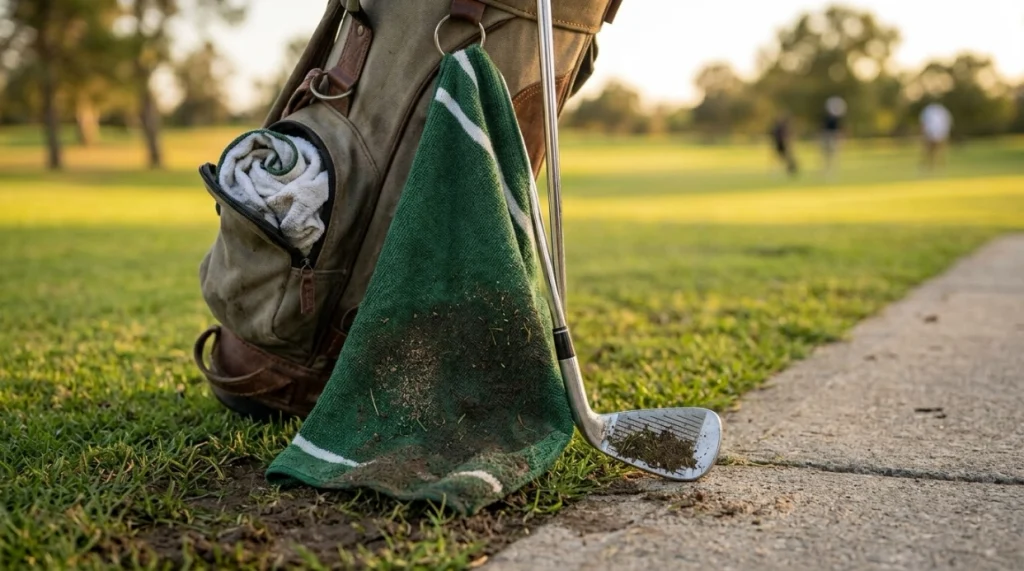
The biggest mistake is allowing the entire towel to become wet and dirty early in the round. Once that happens, you lose a dependable surface for your grip and hands.
A few small habits prevent most towel problems.
- Don’t soak the whole towel: Keep only a designated section damp for cleaning.
- Don’t wipe grips with mud: Reserve clean, dry fabric for the areas your hands touch.
- Don’t grind sand into finishes: Remove loose grit before firmly rubbing a clubhead or shaft.
- Don’t let the towel drag: Adjust the attachment point so it stays clear of the ground.
- Don’t ignore packed grooves: Use an appropriate brush when fabric alone cannot remove debris.
- Don’t store it wet: Remove the towel from your bag after the round and let it dry or wash it.
- Don’t clean a ball automatically: Check Rule 14 when playing under the Rules of Golf.
Should you wash a golf towel after every round?
Wash it whenever it is dirty, smells unpleasant, or carries visible mud and sand. A lightly used towel from a dry round may not need immediate washing.
Follow the towel manufacturer’s care instructions. Avoid leaving a wet towel sealed inside a golf-bag pocket between rounds.
Do you still need a club brush?
A towel handles most surface cleaning, while a club brush can help with stubborn debris in grooves. The two tools serve complementary jobs.
Start with the towel because it is gentler and faster. Use the brush only where the towel leaves material behind.
Section Takeaway: Keep the towel organized, keep grit away from delicate surfaces, and keep one section dry. Those three habits solve most on-course towel problems.
Frequently Asked Questions About Using a Golf Towel
Do you wet a golf towel before playing?
Yes, wetting one small section before the round is useful for cleaning clubfaces. Wring it out so it is damp rather than dripping, and keep the remaining fabric dry for grips, hands, and final drying.
Do you wipe golf clubs after every shot?
You do not need a heavy cleaning after every swing. Check the clubface after each shot and wipe it whenever you see grass, soil, sand, or moisture before returning the club to your bag.
Can you use a golf towel on club grips?
Yes. Use a clean, dry section during play to remove rain, sweat, or moisture from the grip, and avoid transferring mud or sand from the part of the towel used on clubheads.
Can you clean golf-club grooves with a towel?
Yes. A damp towel removes ordinary grass and soil from grooves, but tightly packed debris may require a suitable club brush. Avoid sharp improvised tools that could damage the clubface.
Where should you put a golf towel on your bag?
Place it on a ring, loop, clip, or other secure point that stays within easy reach. Make sure the hanging towel remains clear of the ground when the bag stands upright or its legs are extended.
Can you use the same towel for your golf ball and clubs?
You can use the same towel, but keep a clean section available for the ball. More importantly, follow Rule 14.1c because the Rules restrict when a lifted ball may be cleaned in certain situations away from the putting green.
Is microfiber better than cotton for golf clubs?
Neither material is automatically best for every golfer. Microfiber can be light and easy to manage, while cotton is absorbent and familiar; choose based on texture, size, attachment, washability, and your usual weather.
The simplest golf-towel routine is also the one I recommend most: keep one end damp, keep another section dry, and clean the club before dirt has time to dry. Once that becomes automatic, it adds almost no effort to your round.
On your next round, set up the towel before the first tee instead of waiting until a club gets muddy. A few seconds of regular care keeps your equipment cleaner and leaves a dependable dry section ready when the weather changes.