
Do Waffle Weave Towels Clean Golf Clubs Better?

Quick Answer
Yes, waffle weave towels generally clean golf clubs better than smooth towels when you’re dealing with grass, damp soil, sand, and debris around iron and wedge grooves. The raised grid gives you more texture to work dirt loose, although a towel cannot replace a brush when debris is packed deeply into grooves. You can review the USGA Equipment Standards for official information about clubfaces, grooves, and golf equipment.
Why waffle weave works well
- More texture: Raised sections create extra contact points against dirt and grass.
- Useful pockets: Recessed areas help collect loosened debris instead of simply pushing it around.
- Groove cleaning: The textured surface works well across iron and wedge faces.
- Low bulk: Microfiber waffle towels can provide useful texture without thick terry loops.
- Easy setup: You can keep one corner damp for clubheads and another section dry for grips.
Best result
- Dampen part of the towel before your round and clean each iron or wedge before the dirt dries.
I used to think almost any towel hanging from a golf bag did the same job. A few muddy rounds changed my mind quickly.
A textured towel makes club cleaning easier when turf and sand stick to the face. This guide explains where waffle weave helps, where it does not, and how I use one during a round.
In This Guide
- Why Does Waffle Weave Clean Golf Clubs Well?
- Are Waffle Weave Towels Better Than Regular Golf Towels?
- Waffle Weave vs Terry vs Smooth Microfiber
- How Should You Clean Golf Clubs With a Waffle Towel?
- When Is a Waffle Weave Towel Not the Best Choice?
- What Should You Look for in a Waffle Golf Towel?
- Frequently Asked Questions
Why Does Waffle Weave Clean Golf Clubs Well?
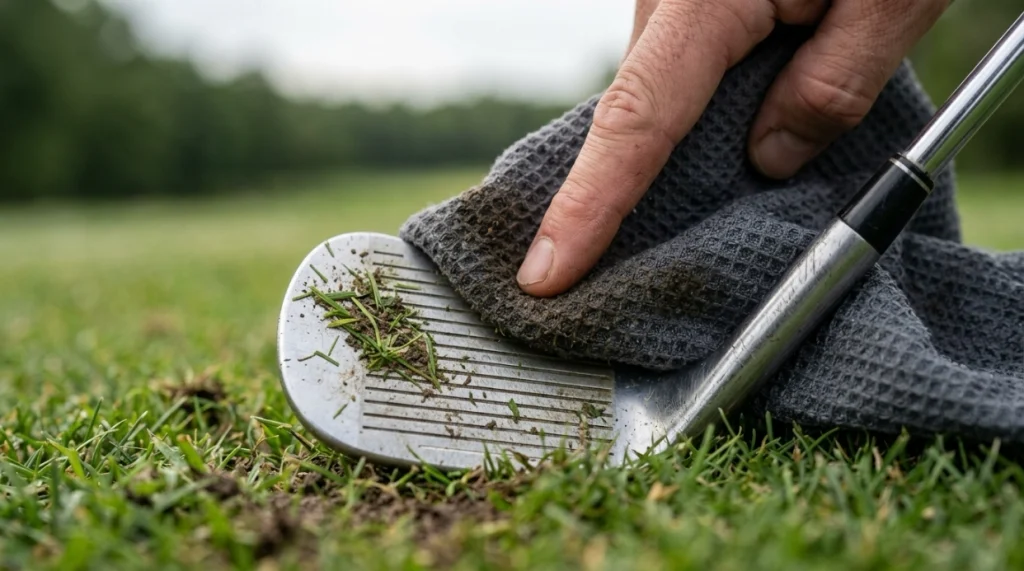
Waffle weave works because its surface is not flat. The repeating raised and recessed pattern gives the towel more texture to press against dirt on a clubface.
Definition: Waffle weave is a fabric construction featuring a grid of raised sections and recessed pockets. It describes the towel’s structure, while microfiber or cotton describes the material used to make it.
That difference is important. A towel can be both microfiber and waffle weave at the same time.
What does the waffle texture do?
Imagine wiping dried grass with a completely smooth cloth. The cloth can remove loose material, but it has little texture to work against stubborn debris.
A waffle surface gives you many small edges instead. Those edges can catch loose grass and soil as you wipe across the clubface.
- Raised squares make contact with the clubface.
- Recessed pockets give displaced dirt somewhere to collect.
- Flexible fabric conforms to the face and around groove edges.
- Damp microfiber helps soften soil before you wipe it away.
I notice the difference most after hitting a wedge from damp rough. A quick pass with a textured damp section usually removes fresh grass before it dries onto the face.
The benefit is convenience, not magic. A waffle towel does not alter the club or create extra spin by itself.
Why are clean grooves worth maintaining?
Grooves are physical markings built into the impact area of irons and wedges. The R&A and USGA regulate clubface and groove specifications as part of golf’s equipment rules.
Keeping the face clear means you are not deliberately leaving mud, grass, or sand between the clubface and ball. I make cleaning part of my routine rather than waiting until the end of the round.
Are Waffle Weave Towels Better Than Regular Golf Towels?
For routine clubface cleaning, I usually prefer waffle weave over a smooth towel. The difference becomes most noticeable with wet grass, muddy irons, and sandy wedges.
That does not mean every waffle towel beats every other towel. Material, cleanliness, moisture, thickness, and technique still matter.
Where waffle weave has the advantage
- Muddy irons: Texture helps work fresh soil away from the face.
- Grass-covered wedges: Raised sections catch loose clippings effectively.
- Light groove debris: The textured fabric reaches around groove edges better than many flat cloths.
- Walking rounds: Thin microfiber waffle towels provide cleaning texture without excessive bulk.
- Frequent cleaning: A damp section can be reused throughout the round.
My preferred routine is simple. I wipe the face immediately after the shot, especially with wedges and short irons.
Fresh dirt comes away more easily than dried mud. That small habit also keeps loose soil from collecting inside the bag.
What matters more than the weave?
A filthy waffle towel can become worse than a clean basic towel. Sand and grit trapped in any cloth deserve attention, especially around polished or painted finishes.
I avoid aggressively rubbing a dirty section across a driver crown. I reserve the dirtier damp area for iron soles and faces.
- Keep one towel section damp.
- Keep another section reasonably clean and dry.
- Shake loose sand from the towel when needed.
- Wash heavily soiled towels between rounds.
Section Takeaway: Waffle weave usually gives you a practical cleaning advantage, but a clean towel and good technique matter just as much.
Waffle Weave vs Terry vs Smooth Microfiber
No towel construction is best for every golf task. I choose based on whether I am cleaning clubheads, drying grips, wiping hands, or carrying the towel while walking.
| Towel Type | Surface | Best Golf Use | Main Limitation |
|---|---|---|---|
| Waffle microfiber | Raised grid with recessed pockets | Clubfaces, irons, wedges, golf balls | Cannot fully replace a brush for packed groove debris |
| Cotton terry | Soft looped pile | Hands, grips, general drying, clubheads | Usually bulkier when wet |
| Smooth microfiber | Flat or low-texture surface | Light wiping and smoother surfaces | Less mechanical texture for stubborn turf debris |
Which one would I carry?
If I only wanted one towel for normal club cleaning, I would choose a microfiber waffle towel. Its combination of texture and manageable bulk works well on a golf bag.
For wet conditions, I like having a second dry towel too. That gives me a clean surface for grips and hands.
The humble golf towel is also more versatile than club cleaning alone. The PGA of America has even demonstrated golf-towel practice drills, which shows why this simple accessory ends up serving several purposes around the game.


How Should You Clean Golf Clubs With a Waffle Towel?
The best approach is to clean the club before debris dries. I use a damp-and-dry system during almost every round.
- Dampen one corner. Use enough water to loosen dirt without soaking the whole towel.
- Wipe the clubface. Pass the damp waffle section across the face immediately after the shot.
- Check the grooves. Look for soil or grass that remains packed inside them.
- Use a brush if needed. Stubborn packed debris may require soft bristles rather than more rubbing.
- Wipe the sole. Remove mud before returning the club to the bag.
- Dry if necessary. Use the dry section when you do not want moisture left on the club.
Should the towel be wet or dry?
For muddy clubs, slightly damp usually works better for me. Moisture helps soften dirt before the waffle texture lifts it away.
A dry section still has an important job. I use it for grips, hands, and final drying when conditions are wet.
Do you still need a golf brush?
Sometimes. A towel works well for surface debris, while a brush is more useful when dirt becomes tightly packed into grooves.
I would not grind the towel harder against stubborn material. A few light brush passes are easier and more controlled.
Section Takeaway: Use the waffle towel for frequent cleaning and bring in a brush only when debris remains lodged in the grooves.
When Is a Waffle Weave Towel Not the Best Choice?
Waffle weave is useful, but it is not automatically ideal for every surface. Sometimes softness, dryness, or greater absorbent bulk matters more than scrubbing texture.
Drying soaked grips
A larger dry cotton or terry towel can be convenient during steady rain. The extra fabric gives you more dry surface as conditions worsen.
Cleaning delicate glossy areas
I avoid using a grit-filled club-cleaning section on glossy crowns or other cosmetic surfaces. The problem is not necessarily microfiber or waffle weave itself.
The concern is whatever the towel has collected. Sand or hard debris trapped in fabric can become abrasive when rubbed against a finish.
Removing deeply packed dirt
A towel has physical limits. If soil is firmly compressed inside narrow grooves, a suitable club brush is the better tool.
That is why I think of waffle weave as my first-line cleaner rather than the only cleaning tool I need.
- Use the towel for fresh grass and soil.
- Use a brush for stubborn groove debris.
- Use a clean dry section for grips.
- Use a separate clean surface for sensitive finishes.
For broader equipment guidance, I also prefer checking established golf sources instead of relying on accessory marketing. Golf Digest is one useful general reference for golf equipment and playing advice.
What Should You Look for in a Waffle Golf Towel?
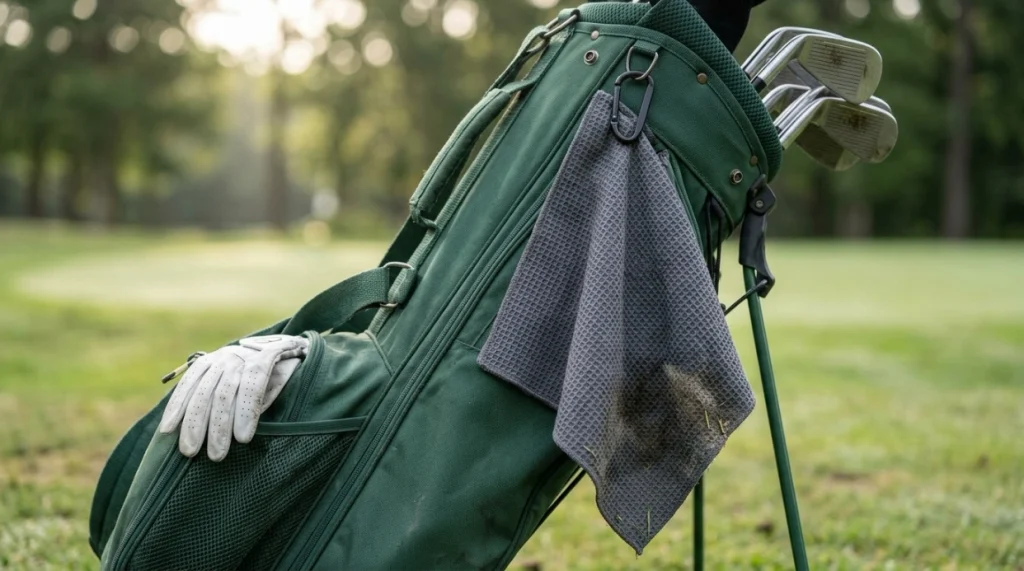
As of 2026, there are countless golf towels sold with similar claims. I focus on practical features that affect how the towel behaves during an actual round.
Material
Microfiber is common because it can be made thin while still providing a useful cleaning surface. Cotton waffle towels also exist, so do not assume “waffle” automatically means microfiber.
Texture
Look for a clearly defined grid instead of an almost flat fabric. A noticeable raised pattern is the feature you are buying for club cleaning.
Size
The towel should give you enough area to separate dirty and cleaner sections. At the same time, a huge towel can become annoying on a carry bag.
Attachment style
- Carabiner or clip: Simple for attaching to a bag ring.
- Center slit: Can slide over a club or alignment stick.
- Magnetic attachment: Convenient around a cart or green when designed for that use.
- Open caddie style: Offers lots of surface area but usually hangs without a permanent clip.
How should you wash it?
Follow the towel manufacturer’s care label first. In general, I wash mine whenever dirt builds up enough that I cannot maintain a clean section during play.
I also check the fabric before using it on clubs again. A clean towel is more important to me than squeezing several extra rounds out of a dirty one.
The main question is simple: does the towel stay convenient enough that you will actually use it after shots? The best design is the one that makes club cleaning an easy habit.
Section Takeaway: Choose waffle texture for cleaning ability, but also consider size, attachment method, and how easily you can keep clean and dirty sections separate.
Frequently Asked Questions
Do waffle weave towels clean golf club grooves better?
They can clean around grooves better than many smooth towels because the raised texture creates more contact with dirt. However, tightly packed soil may still require a golf brush, so I use the towel for routine cleaning and the brush for stubborn debris.
Is waffle weave better than microfiber?
They are not competing terms. Waffle weave describes the fabric structure, while microfiber describes the fiber type, so many golf towels are both microfiber and waffle weave.
Should I wet a waffle weave golf towel?
I recommend dampening part of it when cleaning muddy irons and wedges. Keep another section dry for grips, hands, and final drying so you do not need a completely wet towel for the entire round.
Can a waffle towel replace a golf club brush?
Not completely. Waffle towels handle fresh dirt, grass, moisture, and loose sand well, while a brush is more effective when material becomes packed deeply inside grooves.
Can waffle weave towels scratch golf clubs?
A clean soft towel used normally should not require aggressive rubbing. The greater concern is sand, grit, or hard debris trapped in the cloth, so shake out or wash a dirty towel and avoid rubbing contaminated sections across glossy finishes.
Are cotton or microfiber waffle towels better for golf?
I usually prefer microfiber waffle towels for carrying during a round because they can offer useful texture without much bulk. Cotton can still work well, especially if you value a more traditional towel feel and general drying ability.
How often should I clean my clubs during a round?
I clean an iron or wedge whenever visible grass, mud, or sand remains after the shot. Cleaning immediately is easier than allowing debris to dry, and it only adds a few seconds to the routine.
My takeaway: waffle weave towels do clean golf clubs better for many everyday situations, especially when you’re dealing with fresh turf, mud, and sand on irons or wedges.
The texture is the advantage. Keep part of the towel damp, keep another area clean, and add a brush when the grooves need more attention.
If your current smooth towel mostly pushes dirt around, a waffle weave towel is a simple upgrade worth trying on your next round.