
Why Are Waffle Weave Towels Used for Golf?

Quick Answer
Waffle weave towels are used for golf because their textured grid helps lift dirt, sand, grass, and moisture from clubfaces more effectively than a flat cloth. The pockets in the fabric also make them useful for cleaning grooves while staying lightweight and quick to handle during a round, which is why Golf Digest includes waffled microfiber towels among useful golf accessories.
Why golfers like waffle weave towels
- Textured cleaning: The raised grid gives dirt somewhere to move instead of simply smearing across the clubface.
- Groove access: The textured surface works well around iron and wedge grooves where soil and grass collect.
- Moisture control: Microfiber versions can hold useful moisture for cleaning while leaving another section dry.
- Low bulk: Waffle towels usually pack flatter than thick household terry towels.
- Fast course use: A golfer can wipe a club immediately after a shot instead of allowing debris to dry onto the face.
Simple setup
- Keep one corner slightly damp for clubheads and reserve the opposite side for grips, hands, and final drying.
If you have ever watched a golfer clean an iron before putting it back in the bag, you have seen why the towel matters. Dirt left on a clubface is easier to remove immediately than after it dries into the grooves.
Waffle weave golf towels are popular because their texture suits that job well. This guide explains how the weave works, where it helps most, and when another towel style may be the better choice.
In This Guide
Why Does Waffle Weave Work So Well for Golf?
Waffle weave works well because the fabric is built with a repeating raised-and-recessed texture. Those small pockets create more useful contact points when you wipe a dirty clubface.
Definition: A waffle weave towel is a cloth woven or knitted with a small grid-like pattern of raised sections and recessed pockets. Golf versions are commonly made with microfiber because the combination gives the towel both texture and practical moisture management.
A smooth cloth can move across dried mud without grabbing much of it. The waffle pattern gives loose debris places to collect as the towel passes across the face.
- Raised sections make direct contact with dirt and moisture.
- Recessed pockets help collect loosened grass and soil.
- Microfiber strands provide a fine cleaning surface without needing a heavy towel.
- Thin construction makes folding and hanging the towel easier around a golf bag.
This is especially useful on wedges and short irons. Their faces spend plenty of time interacting with sand, damp turf, rough, and divot material.
The benefit is practical rather than magical. A waffle weave does not change the performance characteristics of a club; it simply makes routine cleaning convenient.
That distinction matters because the USGA equipment framework, alongside The R&A, focuses on equipment conformity and how equipment is used. A towel is mainly a maintenance accessory in the golfer’s bag.
What Does a Waffle Towel Remove From Golf Clubs?
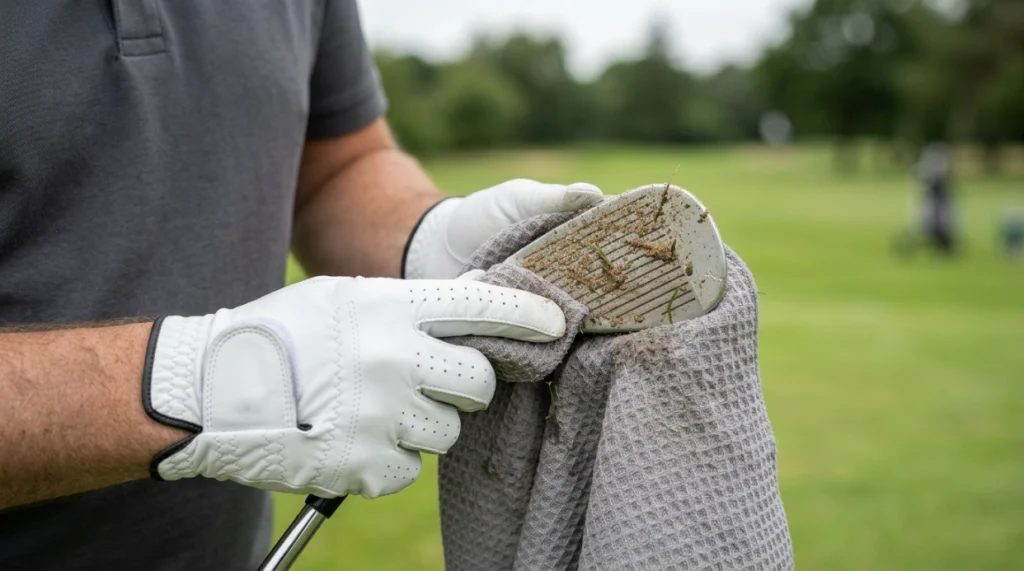
A waffle towel is most useful for removing the material a club collects during normal play. That usually means grass, sand, loose soil, mud, dew, and water.
Cleaning iron and wedge grooves
Grooves are the narrow channels cut into a clubface. They can quickly fill with debris after shots from damp fairways, bunkers, or thick rough.
A textured towel can loosen surface material before it dries. For stubborn packed dirt, a groove brush may still be needed.
- After a fairway shot: Wipe away soil and small grass fragments.
- After a bunker shot: Remove sand before placing the wedge back into the bag.
- After wet rough: Clear grass and moisture from the face.
- Before a delicate wedge shot: Check that obvious debris is not sitting across the grooves.
Cleaning golf balls
A damp waffle section can also remove loose mud or grass from a golf ball when the Rules allow the ball to be lifted and cleaned. Always follow the applicable Rules of Golf during competitive play.
The waffle texture is useful because you can rotate the ball against several small contact points. You do not need to scrub aggressively.
Keeping different parts of the towel separate
I prefer the simple wet-side, dry-side approach when thinking about towel setup. It prevents the part used on muddy clubheads from becoming the same section used on grips or hands.
- Dampen one corner before the round.
- Use that section for clubfaces and dirty balls.
- Keep the opposite section as dry as possible.
- Avoid wiping grips with the muddy section.
This method works whether your bag contains Titleist, Callaway, TaylorMade, Ping, Mizuno, Srixon, or another brand. The towel’s job remains the same: keep routine course debris from building up.
Why Are Golf Towels Important in Wet Conditions?
Wet weather changes a golf towel from a simple cleaning accessory into an important moisture-management tool. Dry grips, hands, and clubfaces become harder to maintain when rain is falling for several holes.
PGA Tour caddies have described using multiple dry towels in rainy conditions, particularly to keep grips protected from moisture. That tells you how quickly a single saturated towel can become less useful.
A waffle towel can handle both damp and dry jobs
Microfiber waffle towels are useful in changing conditions because they do not need to be completely soaked. A small damp area is usually enough for routine club cleaning.
The rest can stay dry for hands and grips. That separation becomes more valuable as rain increases.
- Light dew: Wipe clubfaces and golf balls as needed.
- Intermittent rain: Keep the towel partially protected beneath an umbrella or bag cover.
- Steady rain: Carry a second dry towel in a waterproof compartment or bag.
- Wet grips: Use only the clean, dry portion of a towel.
Do not expect one towel to solve a full rain-round by itself. Once the entire fabric is saturated, it loses much of its value for drying grips.
What about hot and humid rounds?
Towels also earn their place in warm weather. Sweat, damp hands, dust, and dry turf can all create reasons to wipe equipment during a round.
Keep the club-cleaning section separate from anything used on your face or hands. It is a simple hygiene habit and keeps abrasive dirt away from your skin.


Waffle Weave vs. Regular Golf Towels: Which Is Better?
Waffle weave is a strong all-around choice, but it is not the only useful towel construction. Terry microfiber and cotton terry can also work depending on what you want to clean.
| Towel type | Surface structure | Best golf use | Main trade-off |
|---|---|---|---|
| Waffle microfiber | Grid of raised sections and recessed pockets | Clubfaces, grooves, loose dirt, damp cleaning | May feel less plush than terry fabric |
| Terry microfiber | Dense looped or plush microfiber pile | General wiping and moisture pickup | Thicker pile may hold more collected debris |
| Cotton terry | Traditional cotton loops | Hands, general drying, casual rounds | Usually bulkier when wet |
The best choice depends on your priority. For frequent clubface cleaning, the grid texture gives waffle microfiber a clear practical advantage.
If your main goal is drying hands or handling heavy rain, a thicker towel may still deserve space in the bag. Many golfers can benefit from carrying more than one towel type.
Why not just use a household towel?
You can, but golf towels are usually easier to attach, fold, and access during play. A large bath towel can become bulky around a stand bag or push cart.
A dedicated golf towel also keeps course dirt away from towels you use at home. That is a small convenience, but it matters over a full season.
How Should You Use and Care for a Waffle Golf Towel?

A waffle towel works best when it is easy to reach. Attach it where you can grab it before putting the club back into the bag.
Use it immediately after dirty shots
Cleaning a wedge ten seconds after a bunker shot is easier than cleaning dried sand later. The same applies to mud and damp grass.
- Check the clubface after the shot.
- Use the damp section to loosen dirt.
- Wipe across the grooves with the textured fabric.
- Use a cleaner section for the final wipe.
- Return the club only after obvious debris is removed.
Do not aggressively grind trapped sand across polished surfaces. Shake or rinse heavy grit away first when possible.
Wash the towel regularly
A golf towel eventually collects sunscreen, soil, grass, oils, and other residue. Washing restores the fabric’s ability to contact the surface effectively.
- Follow the towel manufacturer’s care label.
- Wash heavily soiled golf towels separately from delicate clothing.
- Avoid excessive fabric-softener buildup on microfiber.
- Let the towel dry fully before storing it for long periods.
- Replace a towel if the fabric becomes damaged or permanently contaminated.
As of 2026, nothing complicated is required here. Good towel habits still come down to keeping the fabric clean, accessible, and appropriately dry for the next job.
A golf towel can serve other purposes too
The PGA of America has also demonstrated towel-based practice drills. That makes a basic golf towel one of the more versatile accessories in a practice bag.
Cleaning remains its main on-course role, though. Do not turn a muddy cleaning towel into a practice aid without washing it first.
Pro tip: If you use a towel drill to change swing mechanics, work with a certified PGA professional or qualified instructor so the drill matches the movement you are trying to improve.
Frequently Asked Questions
Are waffle weave towels better for golf?
They are often better for club cleaning because the textured surface gives dirt, grass, and moisture places to collect during wiping. A thicker terry towel may still be preferable when your main need is drying hands or managing heavy rain.
Why do golfers wet part of their towel?
A damp section makes it easier to loosen mud, grass, and dried soil from a clubface. Golfers often keep another part dry so they can finish the cleaning job or wipe grips without adding more moisture.
Can you use a waffle towel on golf club grooves?
Yes. The textured fabric is useful for routine groove cleaning and loose debris. If dirt is tightly packed into the grooves, use an appropriate club brush rather than forcing the towel into the groove with excessive pressure.
Can a waffle golf towel clean golf balls?
Yes, a damp waffle towel works well for removing grass, soil, and surface dirt from a golf ball. During a competitive round, only lift and clean the ball when the Rules of Golf allow you to do so.
Should a golf towel be microfiber or cotton?
Microfiber is a practical choice for club cleaning because it can combine a fine cleaning surface with low bulk. Cotton remains useful for general drying, so some golfers carry a microfiber club towel and a separate cotton or terry towel.
How many towels should I carry for golf?
One towel is usually enough in dry conditions. For rainy rounds, carrying a second protected dry towel can be much more useful because the first towel may eventually become saturated and unsuitable for drying grips.
Do professional golfers use towels?
Yes. Towels are standard equipment around professional golf bags, particularly for cleaning clubfaces and managing moisture. In wet conditions, keeping grips dry becomes especially important, and professional caddies may carry multiple towels for separate jobs.
The main takeaway is simple: waffle weave towels are popular in golf because the textured fabric makes routine club cleaning fast, compact, and convenient. Their biggest advantage appears when dirt, grass, sand, or moisture needs to come off a club before the next shot.
If you want a practical setup, keep one section slightly damp and another section clean and dry. Make wiping the clubface part of your normal post-shot routine, and your clubs will be much easier to maintain after the round.