
How Do You Remove Grass, Mud and Dirt From a Golf Towel?

Quick Answer
Remove loose dirt first, pretreat visible stains, then wash the golf towel with detergent on a cool or warm cycle that suits its care label. For microfiber towels, skip fabric softener and high dryer heat because both can reduce the towel’s cleaning and absorbency performance; keeping a clean towel on your bag also makes routine club cleaning between shots much easier.
Quick Cleaning Steps
- Shake it out: Remove loose sand, grass and dried soil outdoors before adding water.
- Treat the stains: Work a small amount of liquid laundry detergent into grass and stubborn dirt marks.
- Rinse heavy mud: Flush muddy areas with cool water before putting the towel in your washer.
- Wash gently: Use the towel’s care label as your final guide for cycle and temperature.
- Skip softener: This is especially important with microfiber golf towels.
- Dry carefully: Air-dry or use low heat when the fabric permits machine drying.
One Important Tip
- Don’t throw a towel covered in thick wet mud straight into the washer. Remove as much soil as possible first.
A golf towel can get filthy faster than almost anything else attached to the bag. One wet round can leave it packed with grass clippings, bunker sand, clay, mud and grime from clubfaces.
I’ve found that the easiest way to clean one isn’t aggressive scrubbing. The trick is treating each type of dirt correctly before the towel ever reaches the washing machine.
In This Guide
- What Is the Safest Way to Clean a Dirty Golf Towel?
- How Do You Pretreat Grass, Mud and Dirt Stains?
- How Should You Wash Different Golf Towel Materials?
- How Do You Remove Odor From a Golf Towel?
- What Should You Avoid When Cleaning Golf Towels?
- How Do You Keep a Golf Towel Cleaner During a Round?
- Frequently Asked Questions
What Is the Safest Way to Clean a Dirty Golf Towel?
The safest method is to remove dry debris first, pretreat the stained areas, and then wash the towel according to its fabric care label. That sequence prevents loose sand and soil from spreading through the wash.
Golf towel cleaning: The process of removing course debris, stains and residue while preserving the towel’s fibers, absorbency and surface texture.
Start by removing loose material
If the towel has dried dirt, sand or grass on it, take it outside first. Shake it firmly and brush away anything that comes off easily.
- Shake loose bunker sand from the fibers.
- Brush away dried mud with a soft laundry or cleaning brush.
- Pick off grass clumps and leaves.
- Check folds, waffle pockets and stitched edges for trapped soil.
Waffle-weave towels deserve extra attention because debris can sit inside the textured surface. I usually open the towel fully and shake both sides before rinsing it.
Rinse heavily soiled areas
For wet mud, rinse the dirty portion under cool running water. Work from the cleaner side toward the stained area so you’re pushing dirt out rather than farther through the fabric.
Don’t start with hot water on an unknown stain. Heat can make some staining harder to remove, especially when the towel contains a mix of grass, soil and other organic residue.
Keep club dirt separate from personal-use areas
I prefer to reserve one section of my towel for clubfaces and another for hands. Golf Digest has also highlighted the usefulness of keeping club-cleaning towels separate from cleaner grip areas when discussing grip cleaning and maintenance.
This simple habit also means less sunscreen, sweat and skin oil gets mixed into the mud on the club-cleaning side.
How Do You Pretreat Grass, Mud and Dirt Stains?
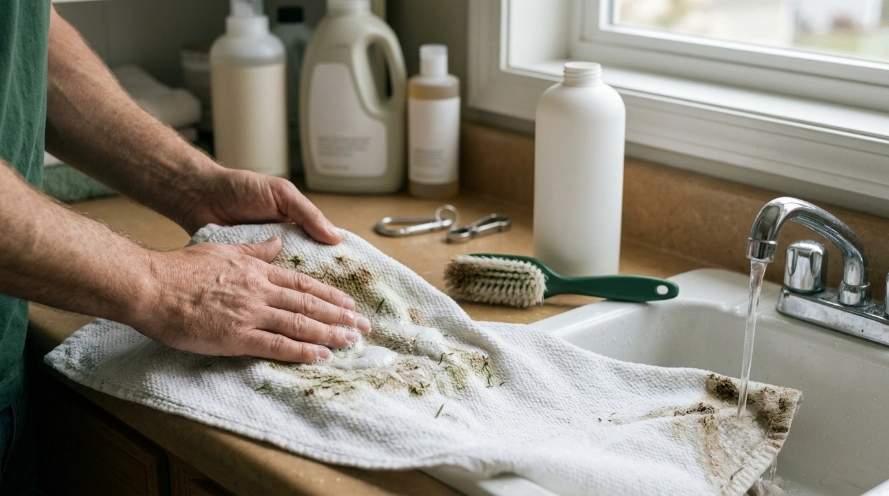
Different course stains respond best to slightly different treatment. Mud is mostly a soil-removal problem, while grass staining can leave pigment behind after the loose dirt disappears.
For mud stains
If the mud is thick, allowing it to dry can make removal easier. Brush off the hardened layer before introducing detergent.
- Remove as much dried mud as possible.
- Rinse the remaining mark with cool water.
- Apply a small amount of liquid laundry detergent.
- Gently work it into the fibers with your fingers or a soft brush.
- Let it sit for roughly 10 to 15 minutes before washing.
Avoid aggressive scrubbing on microfiber. Hard brushing can roughen or damage the fine fibers that give the towel its useful cleaning texture.
For grass stains
Grass marks deserve pretreatment before the towel goes through a dryer. Once a visible stain has been heated and dried repeatedly, it may become much tougher to remove.
- Apply detergent: Cover the stained fibers rather than pouring detergent over the entire towel.
- Work gently: Massage the detergent into the fabric without twisting the towel hard.
- Wait briefly: Give the detergent time to loosen the mark before washing.
- Inspect before drying: If the stain remains, repeat the treatment before using dryer heat.
For clay and bunker dirt
Clay-rich mud often leaves a colored shadow after the loose soil is gone. A second pretreatment is usually more useful than adding excessive detergent to the washing machine.
For white towels, an oxygen-based laundry product may help with stubborn discoloration if the care label allows it. Avoid assuming chlorine bleach is safe for every white golf towel because trims, embroidery and synthetic fibers can react differently.
How Should You Wash Different Golf Towel Materials?
The towel’s material matters because microfiber, cotton and synthetic waffle fabrics don’t respond identically to heat and laundry additives. Always let the manufacturer’s care label override general washing advice.
| Golf Towel Type | Practical Wash Starting Point | Drying Approach | Main Thing to Avoid |
|---|---|---|---|
| Microfiber | Cool wash around 30°C/86°F when the label permits | Air-dry or low heat | Fabric softener and high heat |
| Synthetic waffle weave | Cool to mild wash, commonly around 30°C/86°F | Low heat or air-dry | Excess heat |
| Cotton terry | Cool to warm, roughly 30–40°C/86–104°F if allowed | Label-approved machine drying or air-drying | Excessive heat that can shrink or fade fabric |
These temperatures are conservative starting points for ordinary washable towels, not universal manufacturer specifications. Check the sewn-in label before choosing a hotter cycle.
How to wash a microfiber golf towel
Microfiber works because extremely fine synthetic fibers grab moisture and debris. Residue from fabric softener can coat those fibers, so I leave softener out completely.
- Wash with regular laundry detergent.
- Use a cool or label-approved temperature.
- Avoid fabric softener and dryer sheets.
- Use low heat if machine drying is permitted.
- Consider washing microfiber away from lint-heavy cotton items.
How to wash a waffle-weave golf towel
Waffle texture is popular because the recessed pattern gives soil somewhere to go while you’re wiping a club. Golf Digest has noted how waffle-style towels can reach small areas on irons and hold water for club cleaning.
That same texture can trap sand. Shake and rinse the towel thoroughly before washing it.
How to wash a cotton golf towel
Cotton towels are usually less fussy about laundering, but embroidered logos and colored fabric may still limit heat or bleaching. Check the label before using a hot cycle.
A normal detergent wash is enough for routine dirt once the worst mud has been removed. Don’t assume more detergent means a cleaner towel because leftover soap can make fabric feel stiff.
Section Takeaway: Treat the fabric, not just the stain. Microfiber usually benefits from cooler temperatures, no softener and gentler drying.


How Do You Remove Odor From a Golf Towel?
Bad golf-towel odor usually develops when dirt, moisture and organic residue stay trapped in damp fabric. Leaving a muddy towel rolled inside a bag is one of the quickest ways to create that problem.
Dry it after the round
Even when I don’t plan to do laundry immediately, I remove the towel from my bag after a wet round. I hang it open so moisture can escape instead of leaving it crumpled overnight.
If the towel smells after a normal wash, run it through another label-approved wash rather than masking the odor with fabric softener. The goal is removing residue, not covering it with fragrance.
Don’t store damp towels in closed pockets
A wet towel clipped outside a bag has airflow. A wet towel stuffed inside a zippered pocket does not.
- Unfold the towel when you get home.
- Remove visible grass and dirt.
- Allow it to dry if you’re not washing it immediately.
- Wash promptly after especially muddy rounds.
What Should You Avoid When Cleaning Golf Towels?
The biggest mistakes usually come from trying to make a towel cleaner by using more heat, stronger chemicals or extra laundry products. Those choices can be especially hard on microfiber.
- Don’t use fabric softener on microfiber: Residue can interfere with the fibers’ ability to absorb water and pick up debris.
- Don’t cook stains in the dryer: Check that visible grass and mud marks are gone before applying high heat.
- Don’t overload detergent: Too much can leave residue in a towel’s dense or textured fibers.
- Don’t scrub microfiber aggressively: Use gentle agitation instead of a stiff brush.
- Don’t guess with bleach: Follow the care label, especially on colored fabric and embroidered towels.
- Don’t wash heavy sand blindly: Shake and rinse the towel before it reaches the machine.
Dryer sheets deserve the same caution as liquid softener with microfiber. Both are products I leave out when washing the towels I rely on for wet cleaning.
How Do You Keep a Golf Towel Cleaner During a Round?
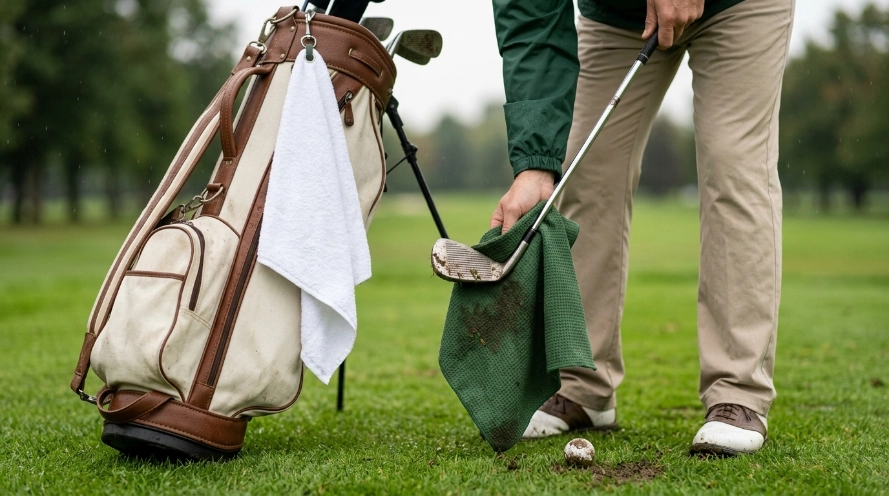
The easiest dirty-towel problem to solve is the one you prevent. I use different areas of the towel for wet club cleaning, drying and cleaner jobs.
Golf Digest’s 2026 discussion of cleaning wedge grooves between shots explains why removing debris from the clubface matters. Keeping the cleaning side of your towel ready makes that habit much easier.
Use a wet side and a dry side
Dampen one portion before you tee off and leave another section dry. The wet area loosens mud, while the dry portion removes remaining moisture.
On rainy days, keeping dry towels available becomes even more important. PGA guidance on playing golf in the rain recommends bringing towels to help keep equipment dry.
Consider carrying two towels
One towel can handle dirty clubfaces and golf balls. The second can stay cleaner for grips, hands or sweat.
- Towel one: Clubfaces, muddy balls and wet equipment.
- Towel two: Hands, grips and cleaner drying jobs.
That separation isn’t essential, but it can keep a club-cleaning towel from becoming a muddy mess across its entire surface.
Frequently Asked Questions
Can you put a muddy golf towel directly in the washing machine?
You can wash a muddy golf towel, but remove heavy soil first. Shake off dry debris or rinse wet mud away so you aren’t sending unnecessary sand, clay and grass into the machine.
Should you wash golf towels in hot or cold water?
Cool or mild water is a safer starting point for many golf towels, especially microfiber. Always follow the specific care label because cotton, polyester and blended towels can have different temperature limits.
Can you use fabric softener on a golf towel?
I avoid fabric softener on microfiber golf towels because it can leave residue on the fine fibers. For other materials, check the care instructions, but softener usually isn’t necessary for a towel used primarily to clean equipment.
How do you get old grass stains out of a golf towel?
Pretreat the mark with liquid laundry detergent, gently work it into the stained fibers, and wash according to the care label. Check the stain before machine drying and repeat the treatment if discoloration remains.
Can you put a golf towel in the dryer?
Many golf towels can be machine dried, but the care label should make the decision. For microfiber and synthetic waffle towels, low heat or air-drying is a conservative choice because excessive heat can damage synthetic fibers.
How often should you wash a golf towel?
Wash it whenever it becomes visibly dirty, develops an odor or starts transferring grime instead of removing it. After wet or muddy rounds, cleaning it promptly usually makes stain removal easier.
Why does my golf towel still smell after washing?
Odor can remain when dirt, detergent residue or moisture stays trapped in the fabric. Rewash the towel, rinse it thoroughly and let it dry completely before putting it back in your golf bag.
Final takeaway: Shake or rinse away course debris first, pretreat the worst stains, and wash according to the fabric rather than automatically choosing the hottest cycle. A few minutes of care after a muddy round can keep your golf towel cleaner, more absorbent and ready for the next tee time.
Make the towel part of your post-round routine just like wiping down your clubs. Clean it before dirt and odor have time to settle in, and you’ll spend far less time rescuing heavily stained towels later.