
How Do You Wash a Cotton Golf Towel?

Quick Answer
Wash a cotton golf towel with regular laundry detergent using the warmest water allowed on its care label. Skip fabric softener when you want maximum absorbency, remove heavy mud before washing, and dry on low to medium heat unless the label says otherwise. For general towel-care guidance, see Whirlpool’s towel washing guide.
Quick washing steps
- Check the label: Follow the manufacturer’s temperature and drying limits first.
- Shake off debris: Remove loose sand, dried mud, grass, and leaves before the towel enters the washer.
- Wash by color: Separate dark or strongly colored towels from whites and light fabrics.
- Use detergent: Add the normal recommended amount without overloading the washer.
- Skip softener: Fabric softener can leave a coating that reduces towel absorbency.
- Dry completely: Use low or medium heat, or air-dry if you want to reduce heat exposure.
One rule matters most
- Treat the care label as the final authority because decorative trim, embroidery, printing, and blended fibers can change the correct washing method.
A cotton golf towel can collect mud, grass, sand, sweat, sunscreen, and moisture during one round. Washing it correctly keeps the towel useful without unnecessarily wearing down the fibers.
As of 2026, my routine starts with one simple check: I look at the care label before choosing water temperature or dryer heat. Below, I’ll show you how to handle everyday dirt, stubborn stains, odors, drying, and the differences between cotton and microfiber.
In This Guide
- What Is the Safest Way to Wash a Cotton Golf Towel?
- Should You Machine-Wash or Hand-Wash a Cotton Golf Towel?
- What Detergent and Water Temperature Should You Use?
- How Do You Remove Mud, Grass, and Odors?
- Can You Put a Cotton Golf Towel in the Dryer?
- How Does Washing Cotton Differ From Microfiber?
- Frequently Asked Questions
What Is the Safest Way to Wash a Cotton Golf Towel?
The safest method is to remove loose debris, check the care label, wash with detergent at an approved temperature, rinse thoroughly, and dry completely. You don’t need an aggressive cleaning routine after every round.
Definition: A cotton golf towel is a reusable natural-fiber towel carried on a golf bag for wiping clubs, golf balls, hands, grips, and moisture during play.
I like to deal with heavy dirt before it reaches the washing machine. A quick shake outdoors stops clumps of dried soil, bunker sand, and grass from going straight into the wash.
Then inspect the towel for concentrated stains. Mud around one corner or a sunscreen mark near the clean section deserves attention before the main cycle.
Use this basic washing sequence
- Read the care label. Check the maximum wash and drying temperature.
- Remove loose dirt. Shake or lightly brush away sand, grass, and dried soil.
- Separate colors. Keep strongly colored towels away from whites when dye transfer is a concern.
- Pre-treat stains. Apply a compatible laundry stain treatment where needed.
- Add detergent. Follow the detergent maker’s dosage rather than pouring in extra.
- Run the wash. Choose a normal or towel-compatible cycle unless the label requires gentler treatment.
- Dry fully. Don’t put a damp towel back inside your golf bag.
Golf towels get dirtier than ordinary hand towels because clubheads contact soil and turf. That’s why separating a muddy towel from delicate clothing is often sensible.
Also remember that a golf towel can be used for cleaning a ball only when the Rules allow the ball to be cleaned. The USGA’s guidance on marking, lifting, and cleaning the ball explains the relevant exceptions.
Should You Machine-Wash or Hand-Wash a Cotton Golf Towel?
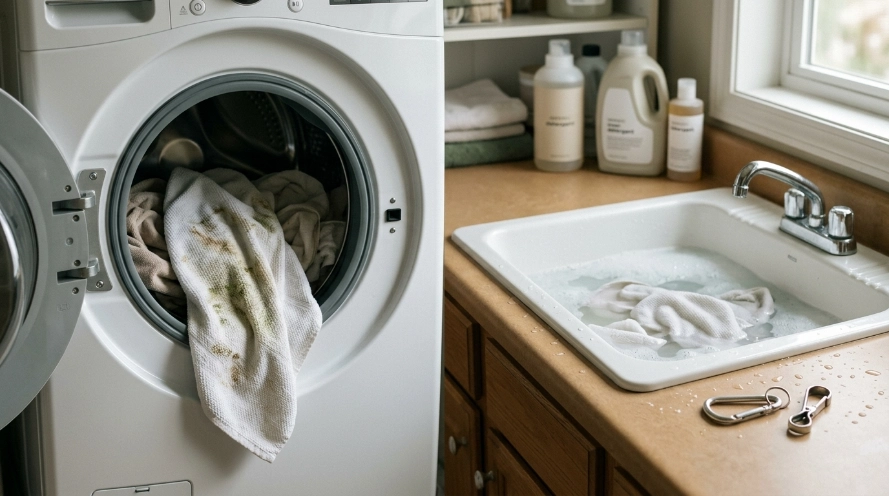
Most machine-washable cotton golf towels can go into a washing machine. Hand-washing makes more sense when the care label requires it or when the towel has delicate decoration or hardware.
Machine washing works best for routine cleaning
A washer is convenient after muddy, wet, or dusty rounds. It also rinses detergent and loosened dirt more thoroughly than a quick rinse at the sink.
- Best for: Standard cotton towels with machine-washable care labels.
- Cycle: Normal, cotton, towel, or another setting permitted by the label.
- Load size: Leave enough room for the towel to move and rinse properly.
- Hardware: Remove detachable carabiners, magnets, or clips before washing when possible.
Hand-washing is useful for lighter cleaning
Hand-washing can be enough when the towel has only a few fresh dirt marks. It also gives you more control around embroidery or decorative details.
- Fill a basin with water at a temperature allowed by the label.
- Add a small amount of laundry detergent.
- Work detergent gently into stained areas.
- Rinse until the water runs clear and suds are gone.
- Press out excess water without aggressively twisting delicate decoration.
- Air-dry completely or follow the approved dryer instructions.
Whatever method you choose, don’t store the towel while it’s damp. Moisture trapped in a closed golf bag can leave the towel smelling musty before your next tee time.
What Detergent and Water Temperature Should You Use?
Use a normal laundry detergent and the warmest water permitted by the towel’s care label. Avoid assuming that every cotton golf towel should automatically be washed on the hottest setting.
Printed graphics, embroidery, trim, or blended materials may have different limits than plain cotton. The label accounts for the complete towel, not just its main fabric.
How much detergent should you use?
Follow the detergent manufacturer’s recommended dose for the load. Adding extra detergent doesn’t automatically make a muddy golf towel cleaner.
Excess product can become harder to rinse away. If a towel starts feeling coated or stiff, detergent buildup is one possible cause.
- Light soil: Use the normal recommended dose for the load.
- Heavy soil: Pre-treat concentrated stains instead of simply doubling detergent.
- Hard water: Follow your detergent maker’s instructions for local water conditions.
Should you use fabric softener on a cotton golf towel?
I skip fabric softener on the towels I want to remain highly absorbent. Softening products can coat towel fibers and reduce their ability to take up water efficiently.
That matters on the course. A towel used for wet clubheads, grips, hands, or morning dew needs to absorb moisture rather than simply feel soft.
Hot, warm, or cold water?
There’s no single temperature for every cotton golf towel. The care label should settle the question.
- Warm or hot water: Often suitable for durable towels when the label permits it.
- Cooler water: May be preferable for dark colors, printed designs, or labels that restrict heat.
- Maximum heat: Don’t exceed the temperature stated by the manufacturer just because the towel is muddy.
High heat can also contribute to cotton shrinkage in some circumstances. Whirlpool’s cotton washing and shrinkage guidance recommends checking the care tag and avoiding unnecessary heat exposure.


How Do You Remove Mud, Grass, and Odors?
Deal with concentrated stains before the main wash rather than hoping a normal cycle removes everything. Fresh dirt is usually easier to address than residue left to dry for days.
Mud and soil
Let heavy clumps dry enough to brush or shake away without smearing them deeper into the towel. Then rinse or pre-treat the stained area before washing.
A towel that cleaned several muddy irons may need more than one rinse. Don’t dry a visible stain with high heat before checking whether it has disappeared.
Grass stains
Apply a laundry stain remover that’s compatible with the towel’s color and care label. Let it work for the product’s instructed time before washing.
Avoid aggressive scrubbing around embroidery. Friction can damage decorative stitching long before the cotton body wears out.
Sunscreen and oily marks
Golf towels often pick up sunscreen or skin oils when players wipe their hands and face. Pre-treat the affected section with a suitable laundry detergent or stain product before the wash.
Musty odors
Persistent odor often starts when a wet towel remains bunched inside a bag, trunk, or laundry basket. Drying the towel promptly after both golf and washing helps prevent that situation.
- Hang a wet towel after arriving home.
- Wash heavily soiled towels instead of leaving them in the bag for days.
- Remove the towel from the washer promptly after the cycle.
- Let it become completely dry before storage.
One habit makes a noticeable difference: don’t wait until the next round to discover yesterday’s towel is still wet. Getting it out of the bag takes seconds.
Can You Put a Cotton Golf Towel in the Dryer?
Yes, many cotton golf towels can be tumble-dried, but the care label should determine the heat setting. Low to medium heat is a conservative choice when permitted.
High heat and overdrying can stress fibers and may increase shrinkage risk. Decorative printing or trim may also tolerate less heat than plain cotton.
Machine drying
- Check the label: Confirm tumble drying is allowed.
- Use controlled heat: Choose low or medium unless the manufacturer specifies another setting.
- Avoid overdrying: Remove the towel when it is dry rather than repeatedly baking the fibers.
- Inspect attachments: Don’t tumble-dry removable magnets, clips, or hardware unless their manufacturer allows it.
Air drying
Air drying limits heat exposure and works well when you’re not in a hurry. Spread or hang the towel where air can circulate around the fabric.
Avoid folding it while the center is still damp. Thick cotton can feel dry on the surface before all retained moisture has escaped.
How Does Washing Cotton Differ From Microfiber?
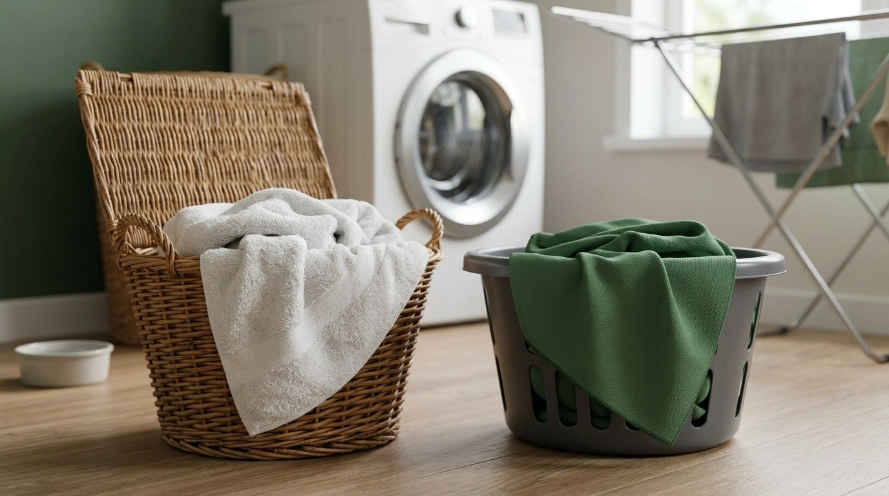
Cotton and microfiber golf towels shouldn’t automatically share the same laundry routine. Cotton is a natural fiber, while common microfiber cleaning towels use fine synthetic fibers that can respond differently to heat, lint, and additives.
That distinction matters if your golf bag holds both types. Maytag’s microfiber washing guidance recommends cool or warm water, avoiding fabric softener, and using low heat or air drying.
| Care Point | Cotton Golf Towel | Microfiber Golf Towel |
|---|---|---|
| Fiber type | Natural cotton fiber | Fine synthetic fibers |
| Wash temperature | Warmest temperature allowed by care label | Typically cool or warm |
| Fabric softener | Best skipped when maximum absorbency matters | Avoid because coatings can interfere with cleaning performance |
| Lint | Cotton can shed lint | Wash away from lint-shedding natural fibers when practical |
| Drying | Low or medium heat when label permits, or air-dry | Low heat or air-dry |
This is one reason I don’t toss every golf towel into the same load without checking its material. A cleaning method that’s acceptable for sturdy cotton may be unnecessarily harsh for microfiber.
How can you keep a cotton golf towel cleaner between washes?
Separate dirty and clean working areas during the round. Use one section for clubheads and another for grips, hands, and final drying.
- Brush major mud first: Don’t use the towel as the only tool for thick packed soil.
- Keep one section dry: It remains useful for grips and hands.
- Hang it after play: Don’t leave a wet cotton towel balled up in the bag.
- Rotate spares: A second clean towel helps when you play frequently.
That routine also prevents the entire towel from becoming saturated with mud halfway through a wet round. Cotton can absorb plenty of moisture, but it still needs usable clean surface area.
Frequently Asked Questions
Can you wash a cotton golf towel in a washing machine?
Yes, if its care label says it’s machine washable. Remove detachable clips or accessories, shake away loose dirt, use the recommended detergent amount, and choose a wash temperature and cycle allowed by the manufacturer.
What temperature should you wash a cotton golf towel at?
Use the warmest temperature permitted by the care label rather than assuming hot water is always required. Colors, printing, embroidery, and blended materials may reduce the safe temperature even when most of the towel is cotton.
Should you use fabric softener on cotton golf towels?
I would skip fabric softener when absorbency is important. Fabric-softening products can leave coatings on towel fibers, which may reduce how efficiently the towel takes up water from clubs, grips, or hands.
Can cotton golf towels go in the dryer?
Many can, provided the care label permits tumble drying. Low or medium heat is a practical approach for reducing unnecessary heat exposure, while air drying is another option for towels prone to shrinkage or with delicate decoration.
How often should you wash a golf towel?
There’s no universal round count. Wash it when it becomes visibly dirty, develops an odor, stays heavily damp, or collects enough mud and debris that clean sections are no longer available during play.
How do you stop a golf towel from smelling?
Don’t leave it wet inside your golf bag or car after a round. Hang it where air can circulate, wash it when needed, remove it from the washer promptly, and make sure it’s fully dry before storing it again.
Can you wash cotton and microfiber golf towels together?
It’s better to separate them when practical because cotton can shed lint and microfiber has different heat and care needs. Check each label and use the more appropriate washing routine for each fabric instead of treating every towel identically.
Final takeaway: Washing a cotton golf towel doesn’t require special golf-specific detergent. Check the label, remove heavy debris, use the correct detergent amount, skip softener when absorbency matters, and avoid unnecessary drying heat.
Make that routine part of unpacking after a round. Your towel will be clean, dry, and ready when the next tee time arrives.