
Grip for Drivers: How to Choose the Right Golf Grip for Your Driver

Quick Answer
The right grip for drivers should fit your hands, give you secure traction, and let you hold the club without excess pressure. Start with a comfortable size, then compare texture, taper, firmness, and weather performance while making sure the grip follows the USGA equipment rules for golf grips.
What I check first
- Grip size: Your fingers should sit naturally around the grip without feeling cramped or stretched.
- Surface texture: Choose enough traction to stop the driver twisting without squeezing harder.
- Firmness: Firmer grips give clearer feedback, while softer grips often feel more comfortable.
- Weather: Corded or aggressive textures can help when your hands or grips get damp.
- Taper: Reduced-taper designs can make the lower hand feel less active for some golfers.
My simple test
- Hold the driver at normal pressure and make several smooth swings. If you must squeeze to feel secure, test another grip size or texture.
I used to pay far more attention to the driver head and shaft than the grip. That changed once I noticed how much a worn or poorly sized grip affected my hand pressure.
A good grip for drivers will not cure a faulty swing. It can, however, make the club easier to hold consistently from setup through impact.
In This Guide
What Is the Best Grip for Drivers?
The best driver grip is one that lets you hold the club securely with light, repeatable pressure. There is no single size, material, or model that suits every golfer.
I normally judge a driver grip by feel before worrying about its appearance. If I feel as though the club could slip during a fast swing, I know something needs changing.
- Comfort: The grip should not dig into your fingers or force your hands open.
- Traction: You should feel secure without squeezing harder.
- Control: The club should remain stable through the fastest part of your swing.
- Feedback: The grip should provide the level of firmness you prefer.
- Condition: A polished, cracked, or slick grip can undermine otherwise good fit.
What exactly is a golf grip?
A golf grip is the material fitted over the upper part of a club shaft so the golfer can hold and control the club. On a driver, that grip must also meet equipment requirements for woods.
As of 2026, the rules place specific limits on grip construction. That matters if you play competitions or experiment with unusual grip designs.
| Driver Grip Specification | USGA Requirement |
|---|---|
| Minimum grip length | At least 7 inches (177.8 mm) |
| Maximum cross-sectional dimension | 1.75 inches (44.45 mm) |
| Cross-section for a driver | Circular, with limited permitted exceptions such as a slight reminder rib |
| Grip shape | Straight and plain, without a bulge or waist |
| Grip position | Fixed to the shaft and extending to its end |
The R&A Equipment Rules provide another useful reference when checking whether a club setup conforms. For most golfers buying normal commercial grips, conformity is rarely complicated.
Section Takeaway: The best driver grip is not the fanciest one. It is the grip that gives you secure control with comfortable, repeatable hand pressure.
How Does Grip Size Affect Driver Control?
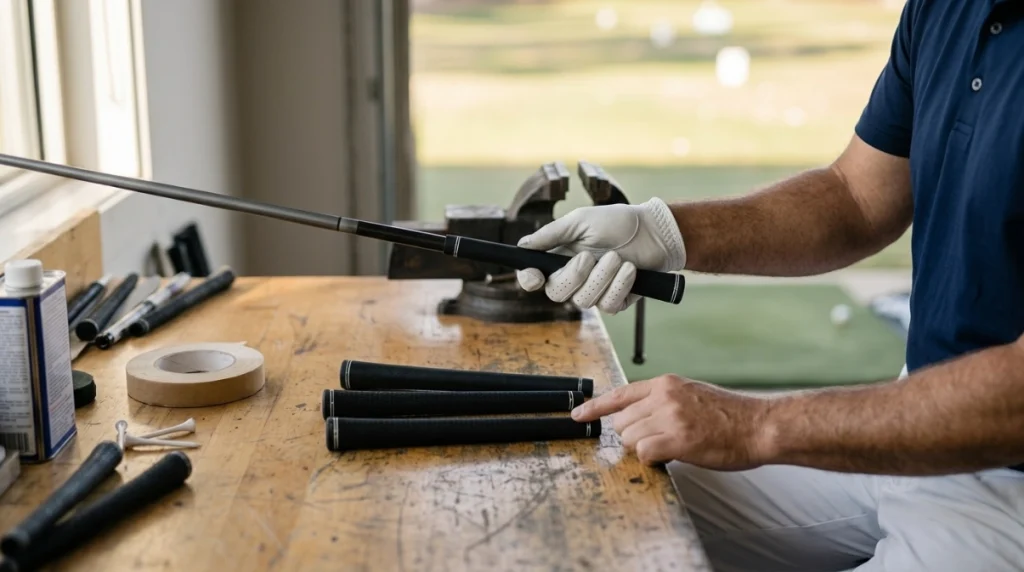
Grip size changes how your hands sit around the club. It can also change how much pressure you feel you need to apply.
This is one reason I avoid choosing a grip only because another golfer uses it. Two golfers can swing the same driver and prefer completely different grip diameters.
Standard, midsize, and larger grips
Golf grips are commonly sold in categories such as undersize, standard, midsize, and jumbo. Exact finished dimensions can vary between manufacturers and installation methods.
| Grip Category | Typical Feel | Worth Testing If… |
|---|---|---|
| Undersize | Smaller in the hands | A standard grip feels bulky or difficult to wrap your fingers around |
| Standard | Neutral, familiar profile | You want a common starting point for fitting |
| Midsize | Fuller through both hands | Standard feels too narrow or encourages excess squeezing |
| Jumbo | Much larger overall profile | You strongly prefer a larger, more substantial hold |
Can the wrong grip size cause a slice or hook?
A grip can influence how your hands feel and work, but I would not treat grip size as a guaranteed slice or hook fix. Clubface control depends on the entire swing.
A grip that feels badly matched can still encourage tension or inconsistent hand action. That may make an existing swing problem harder to manage.
- Too small: You may feel as though you need extra finger pressure to hold the driver securely.
- Too large: You may struggle to establish a natural hold if the grip overwhelms your hands.
- Correct size: Your hands should feel secure without conscious squeezing.
Current golf grip fitting guidance also treats hand size as the foundation while allowing swing tendencies to influence final adjustments.
Pro tip: If you are changing grip size to alter ball flight, work with a certified PGA professional or experienced club fitter. They can separate a grip issue from a swing-path or clubface problem.
Which Driver Grip Material and Texture Should You Choose?
The best grip texture depends on your hands, climate, glove use, and preferred feel. I pay particular attention to traction because the driver is often swung faster than the other clubs.
A grip that feels fine during a slow practice swing can feel completely different at full speed. Testing it with normal driver swings tells me much more.
Rubber and softer synthetic grips
Traditional rubber-style grips are common because they can balance traction, feedback, and durability. Softer synthetic designs can feel more cushioned in the hands.
- Choose softer feel: If comfort is your main priority.
- Choose firmer feel: If you prefer clearer feedback from the shaft and clubhead.
- Choose stronger texture: If your hands tend to slip during aggressive swings.
When does a cord grip make sense?
Cord grips use fibrous material within the gripping surface to create stronger traction. They are popular with golfers who play in humidity, rain, or with sweaty hands.
The trade-off is feel. A heavily corded grip can feel rougher than a soft rubber or polymer design.
Should you use the same grip on every club?
You do not have to use the same grip model throughout your bag. Still, consistent size and feel can make hand placement easier to repeat.
I prefer starting with one familiar profile across the full-swing clubs. I only change the driver grip separately when there is a clear reason.
- The driver feels less secure at full speed.
- You want stronger wet-weather traction.
- You prefer a different taper in the driver.
- Your driver shaft has been fitted with a different finished grip size.
Section Takeaway: Choose texture for the conditions you actually play in. The right surface should reduce the need to squeeze harder when your swing speed increases.


Does Grip Taper or Alignment Matter on a Driver?
Yes, taper and alignment can change how a driver grip feels in your hands. They are secondary fitting details, but they are worth testing once the overall size feels right.
What is grip taper?
Grip taper is the gradual reduction in grip diameter from the butt end toward the lower hand. Traditional grips usually become narrower as they move down the shaft.
Reduced-taper designs keep more thickness under the lower hand. Some golfers like that because it changes the pressure and feel between the two hands.
- Traditional taper: Familiar shape with a narrower lower section.
- Reduced taper: More material under the lower hand.
- Extra build-up: Grip tape can sometimes change finished size or taper during installation.
What are alignment and reminder grips?
Some grips include visual alignment markings. Others use a subtle raised feature that can help a golfer sense the grip’s orientation.
These features can help repeat hand placement, but installation becomes more important. A misaligned grip can make a square clubface look or feel unusual at address.
I always set the driver down in its normal address position before deciding whether an alignment feature looks correct. Adjustable driver settings can also change how a logo or visual line appears relative to the golfer.
Pro tip: If you rely on a reminder feature for hand placement, have a qualified fitter or club technician install it. Small orientation errors can become distracting at address.
How Do You Fit a Driver Grip to Your Hands and Swing?
Start with hand comfort, then confirm the choice by hitting shots at normal speed. A grip fitting should feel natural rather than forcing you into an unfamiliar hold.
I use a simple process because changing several variables at once makes it difficult to identify what helped.
- Start with your current grip. Decide whether it feels too small, too large, too firm, too soft, or too slick.
- Compare one nearby size. For example, test standard against midsize instead of jumping between several extremes.
- Hold each grip naturally. Do not deliberately change your normal grip pressure for the test.
- Make full-speed swings. A driver grip must remain secure when you swing normally.
- Check hand tension. Notice whether your hands or forearms tighten before the takeaway.
- Compare face control. Look for repeatable contact and start direction rather than one perfect shot.
Should glove size determine golf grip size?
Glove size can provide a useful starting clue, but it should not make the final decision. Finger length, palm shape, grip preference, and swing feel also matter.
I have found that the physical test is more useful than trusting a chart alone. If a recommended size feels awkward at speed, I keep testing.
Should you test a midsize grip on your driver?
A midsize driver grip is worth testing when standard feels narrow or encourages excessive squeezing. It is also useful when you simply prefer more material in your hands.
Do not assume larger automatically means straighter. Compare the grip by comfort, tension, contact, and face control.
- Hit several drives with your normal setup.
- Use the same tee height and ball model.
- Avoid changing swing thoughts during the comparison.
- Judge the overall pattern, not your single best drive.
- Pay attention to hand comfort after repeated swings.
Does grip weight matter?
Yes. Changing grip weight can alter the club’s measured swing weight and may change how the club feels during the swing.
That does not mean every golfer will notice a small change. If you are making a large jump in grip size or weight, ask a club fitter to check the complete build.
Section Takeaway: Fit your driver grip by feel and repeatability, not by a label alone. Hand size gives you a starting point, while full-speed testing confirms the choice.
When Should You Replace a Driver Grip?
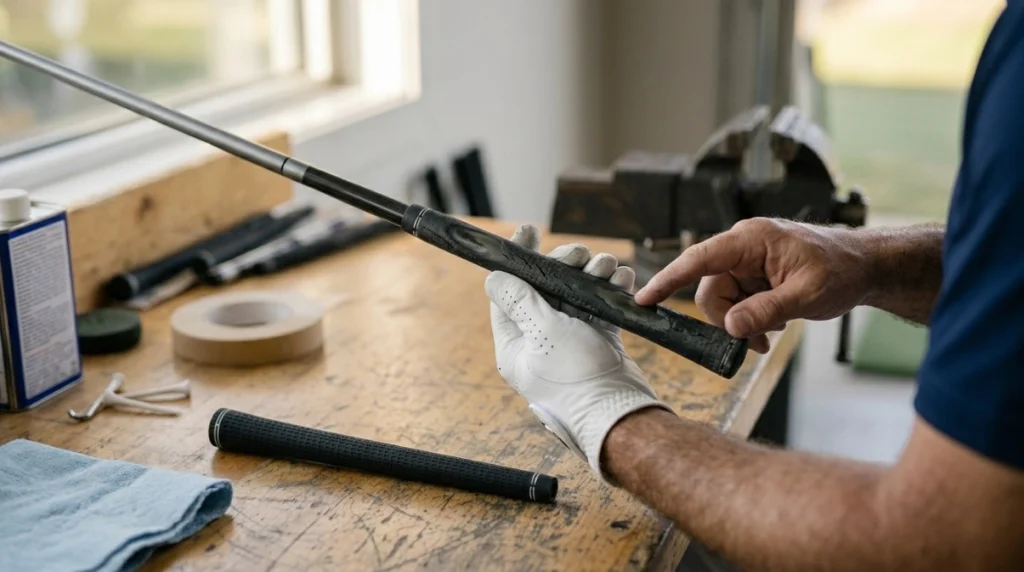
Replace a driver grip when its surface becomes slick, hard, damaged, or difficult to hold securely. Visible wear is useful, but feel is often the better warning sign.
I once spent too much time checking setup and tempo when the driver simply felt unstable in my hands. The grip had become smooth in the exact areas where my fingers applied pressure.
- Slick surface: The grip feels polished even after cleaning.
- Cracks: Rubber or synthetic material has started splitting.
- Hardening: The grip no longer has its original texture or resilience.
- Wear spots: Smooth patches have formed under your thumbs or fingers.
- Extra pressure: You find yourself squeezing harder to keep the driver stable.
Can cleaning restore an old golf grip?
Cleaning can remove sweat, sunscreen, dirt, and oils that reduce traction. It cannot reverse material that has hardened or worn smooth.
Use the cleaning method recommended by the grip manufacturer. Harsh solvents may damage some grip materials.
Can you regrip a driver yourself?
Yes, golfers commonly replace conventional grips at home with the correct tools and installation supplies. Careful alignment and secure installation matter.
- Remove the old grip without damaging the shaft.
- Remove old tape and inspect the shaft.
- Apply fresh grip tape correctly.
- Use an installation method suitable for the grip.
- Slide the grip fully into position.
- Align logos or reminder features before the installation sets.
- Allow the installation to become secure before playing.
Graphite shafts deserve particular care during grip removal. I would use the proper hook-style blade or let a club technician handle the job if there is any risk of cutting into the shaft.
Section Takeaway: Do not wait for a driver grip to fall apart. Once you need extra hand pressure to create traction, replacement is worth considering.
Grip for Drivers FAQs
What grip size is best for a golf driver?
There is no universal best size. Standard is a useful starting point, but undersize, midsize, or jumbo may feel better depending on your hands, finger length, pressure, and swing preferences.
Is a midsize grip good for a driver?
Yes, a midsize grip can work well on a driver when standard feels too narrow or makes you squeeze excessively. Test it at full swing speed before changing the rest of your clubs.
Do thicker grips help a slice?
A thicker grip is not a reliable slice cure. It can change hand feel and pressure, but a slice usually involves clubface and swing-path factors that should be checked separately.
Should a driver have a different grip from the irons?
It can. Some golfers prefer stronger traction, a different taper, or a larger size on the driver, while others prefer identical grips throughout their full-swing clubs for consistency.
Are cord grips better for drivers?
Cord grips can be useful when moisture makes ordinary grips slippery. They provide aggressive traction, but golfers who prefer a softer feel may find full-cord designs less comfortable.
How tight should I hold my driver?
Hold it firmly enough that the club remains secure without creating unnecessary tension in your hands and forearms. If you constantly need to squeeze harder, check the grip’s size, texture, and condition.
Can changing a driver grip affect club feel?
Yes. Grip size, material, firmness, taper, and weight can all change how the club feels in your hands, even though the driver head and shaft have not changed.
Choosing a grip for drivers comes down to fit, traction, comfort, and consistency. Start with your hand size, test the grip at normal swing speed, and pay attention to how much pressure you need.
Do not expect a grip to repair a swing fault. Choose one that gets out of the way and lets you control the driver naturally.